Ding dings, five-year plans, bamboo scaffolding, life imprisonment for selling CBD, and phone zombies?! Must be Hong Kong! It’s quite a unique and memorable place.
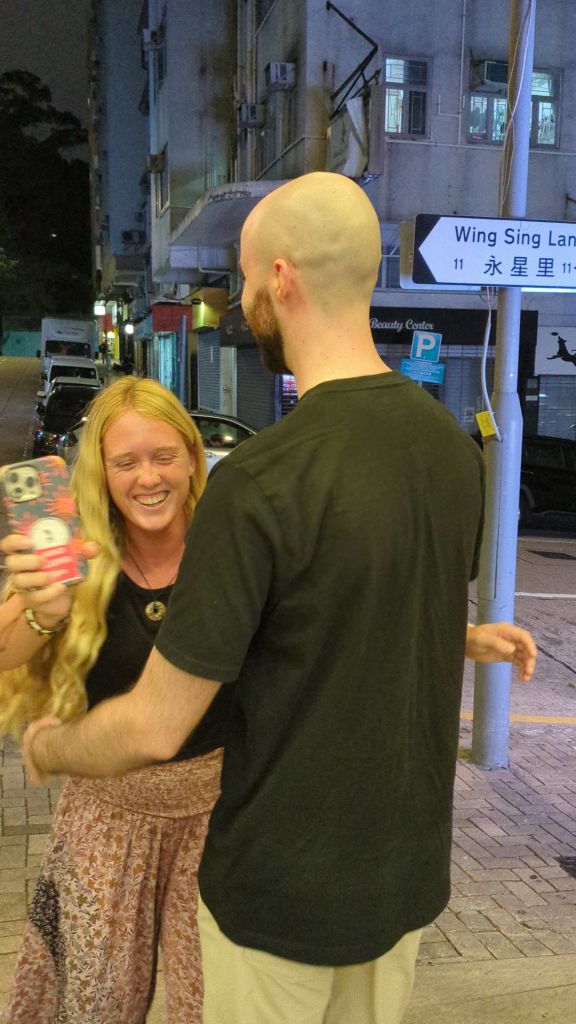
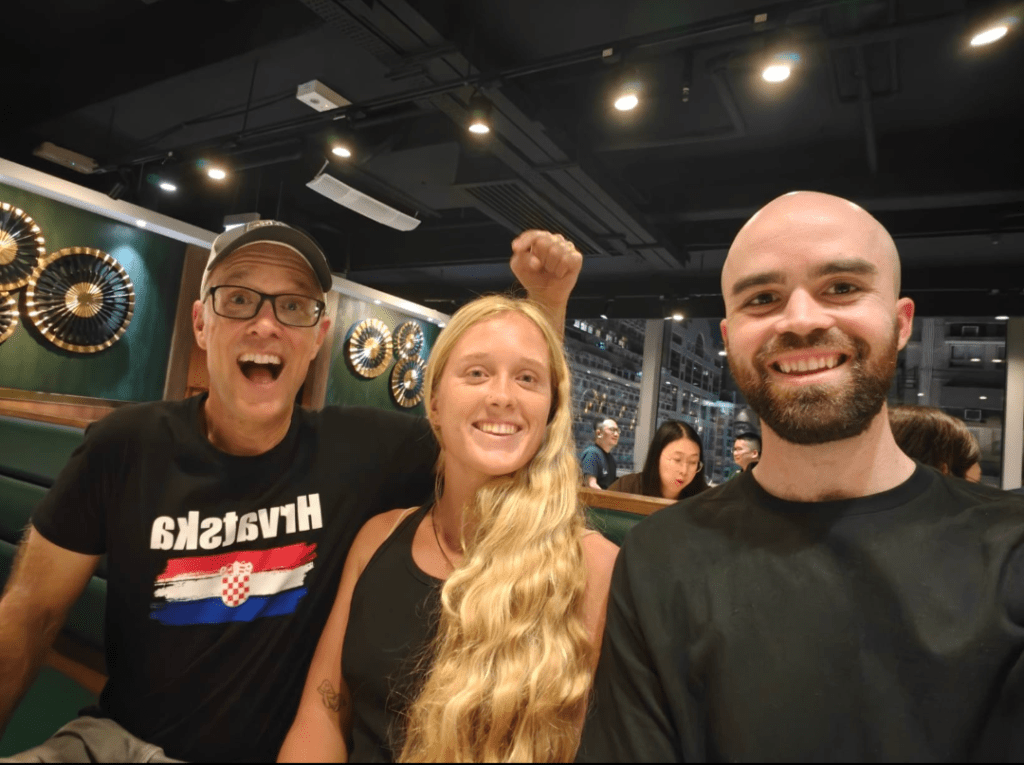
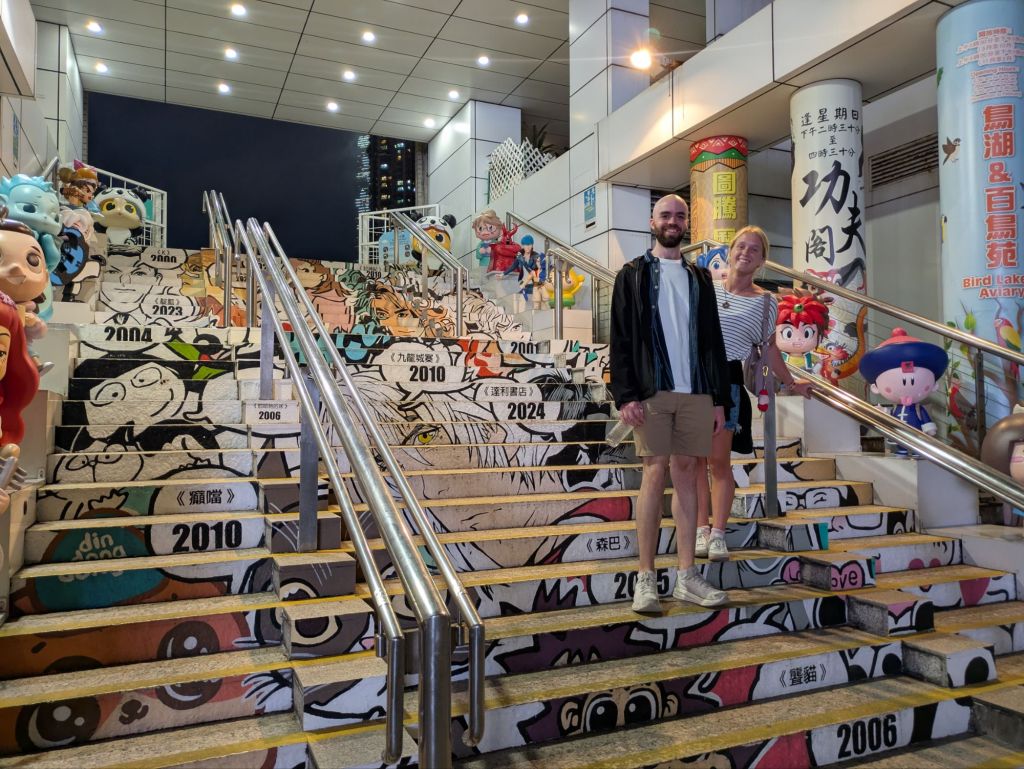
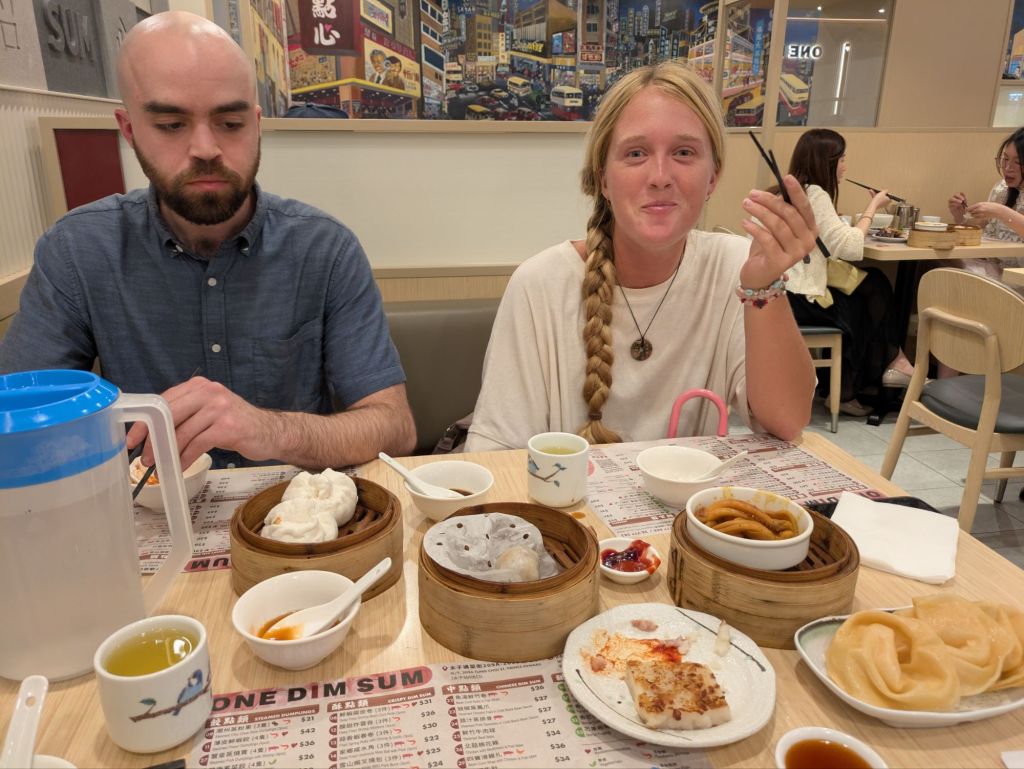
This was Ben’s and my second destination, and in advance I coordinated with my niece (Ben’s cousin) Katelyn, who had been traveling solo around southeastern Asia, to meet us in Hong Kong at the end of her travels. But we kept it secret from Ben so her presence would be a surprise to him. And boy, was it! You can probably imagine his confusion and shock at Katelyn suddenly jumping out in front of him as he and I exited our hotel soon after arriving from the airport! Katelyn is a great travel partner, and Ben and I both thoroughly enjoyed having her join us in our exploration of Hong Kong. She stayed separately in different lodging, and sometimes we did different things, but for the most part we all three hung out together, which was so fun!!
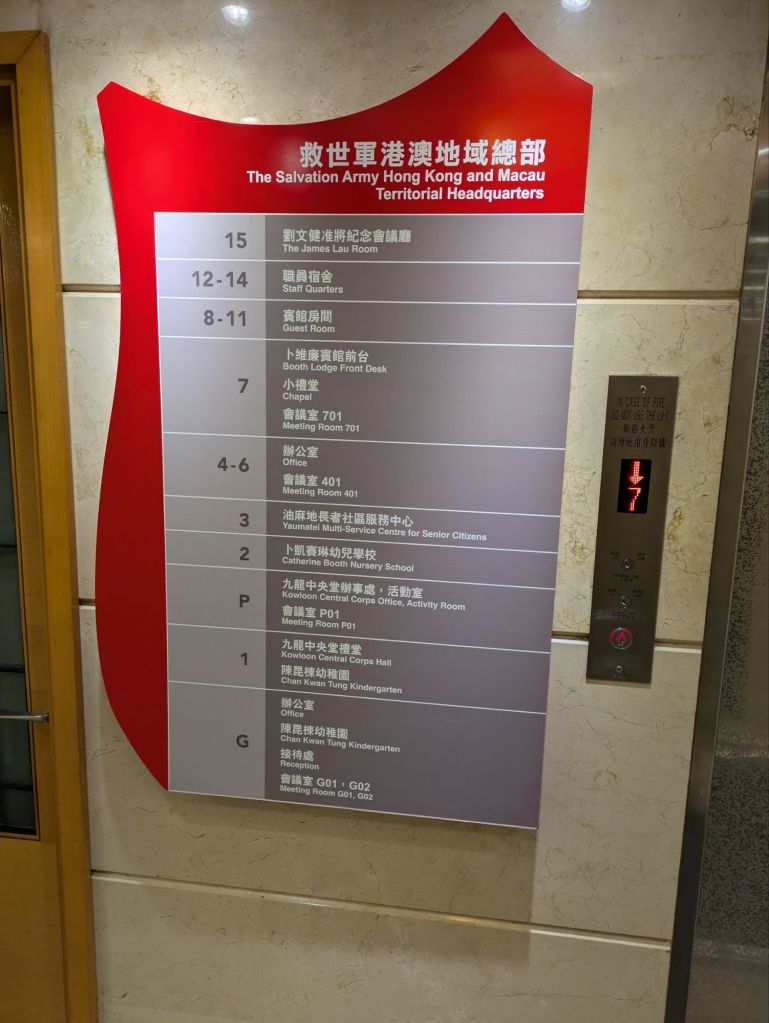
Ben and I lodged at what seemed like a good balance of location, niceness of the facilities, and cost. We were admittedly initially confused and a bit hesitant because the hotel indicated that it was run by the Salvation Army! We knew that the Salvation Army provides supported accommodation services for the unhoused, but not as a normal hotel. I’ve searched a bit, but I have yet to find another example beyond this Booth Lodge in Hong Kong of a Salvation Army hotel. The room was comfortable, and a decent breakfast was included. The guest rooms are on only four floors in a tall building, with the other floors providing other functions for the Salvation Army. But the hotel’s front desk and breakfast area share space with the chapel and some meeting rooms where we saw folks in “army” uniforms meeting for morning prayer and for training. Yet another new experience, haha. As China continues to extend their influence and control over this region, I’m worried about the future of the Salvation Army here, given that it is a Christian organization which will likely be eyed with suspicion.
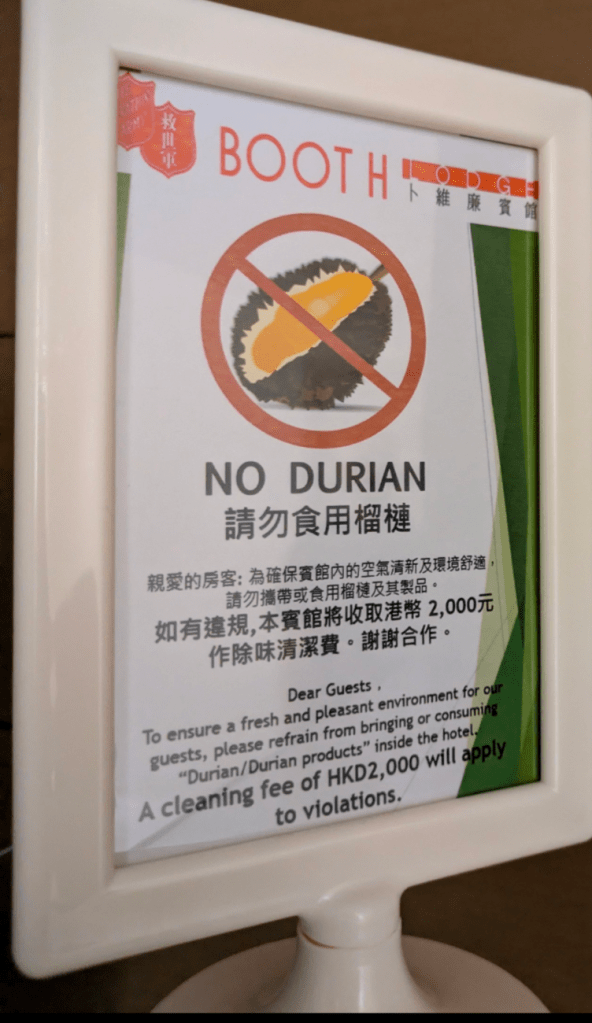
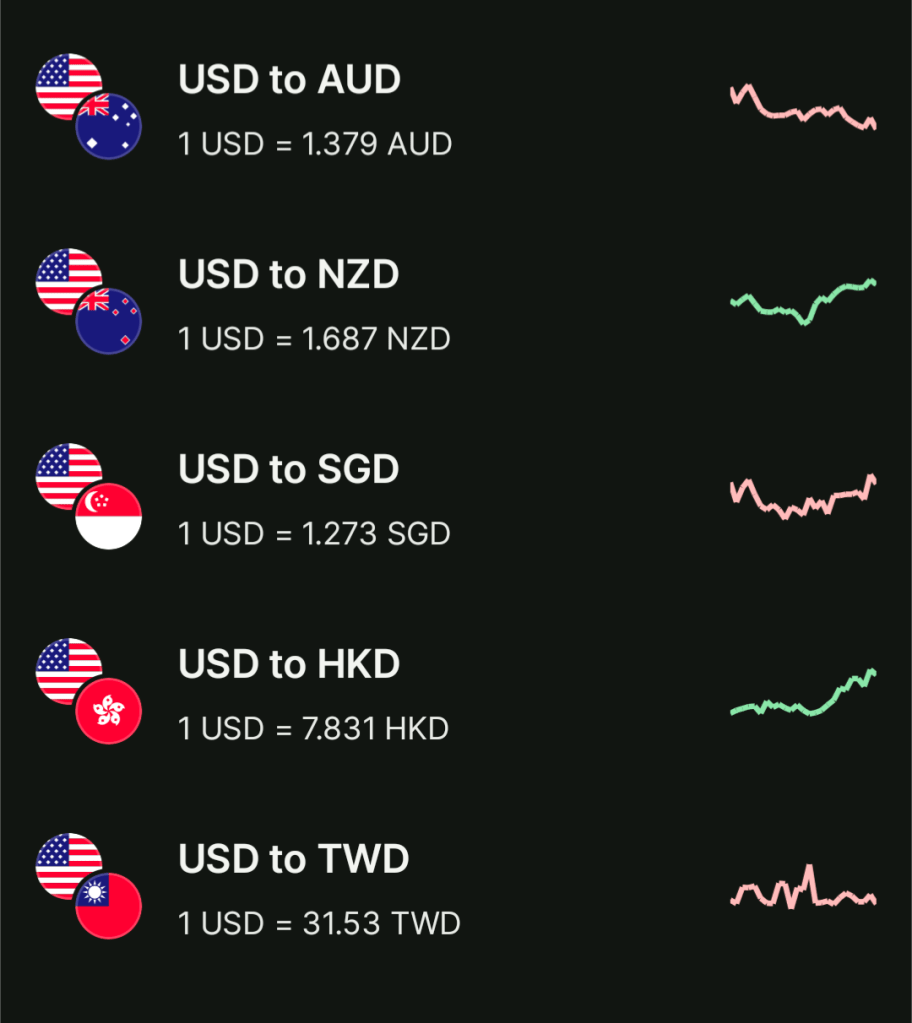
To keep their rooms from becoming overwhelmingly malodorous, consumption or possession of durian fruit is prohibited, subject to a 2000 HKD ($255 USD) fine! You may have learned in an earlier post for Taiwan that stinky tofu is a particularly bad-smelling food, and durian may be even worse in closed quarters! During my travels in the region I saw a lot of durian and got some whiffs, but never was present for the opening of a fresh durian, so it’s hard for me to compare. I even tried a durian mochi in Hong Kong, and it smelled and tasted fine. I don’t believe I’ve yet experienced the full knock-down effect, haha.
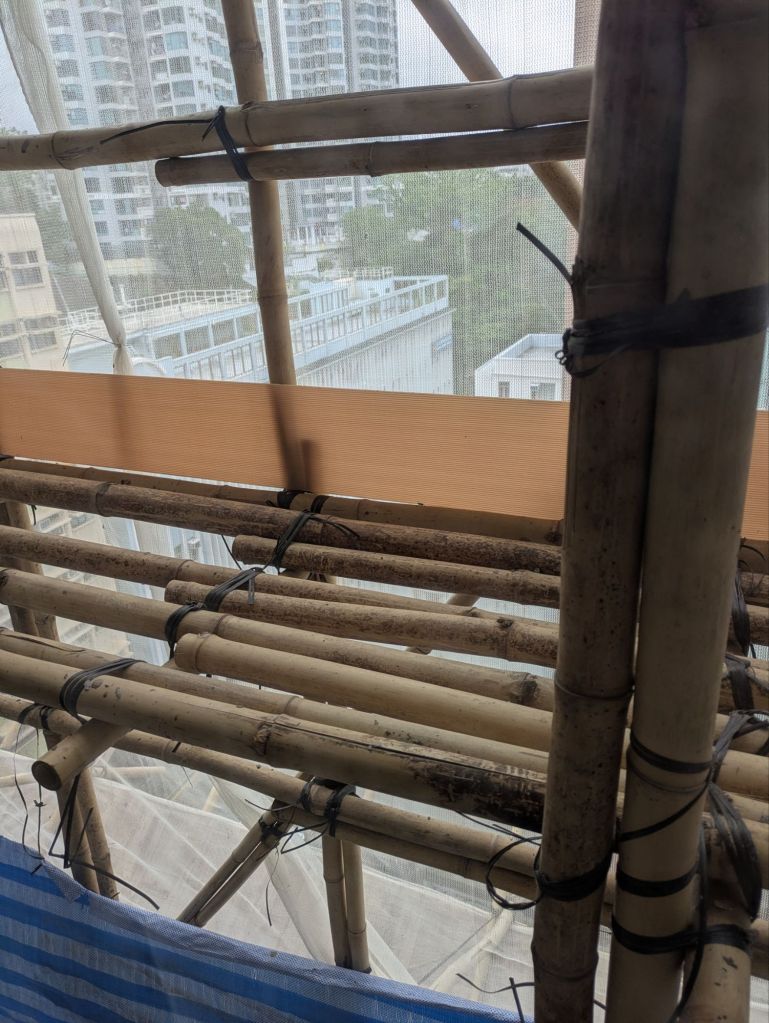
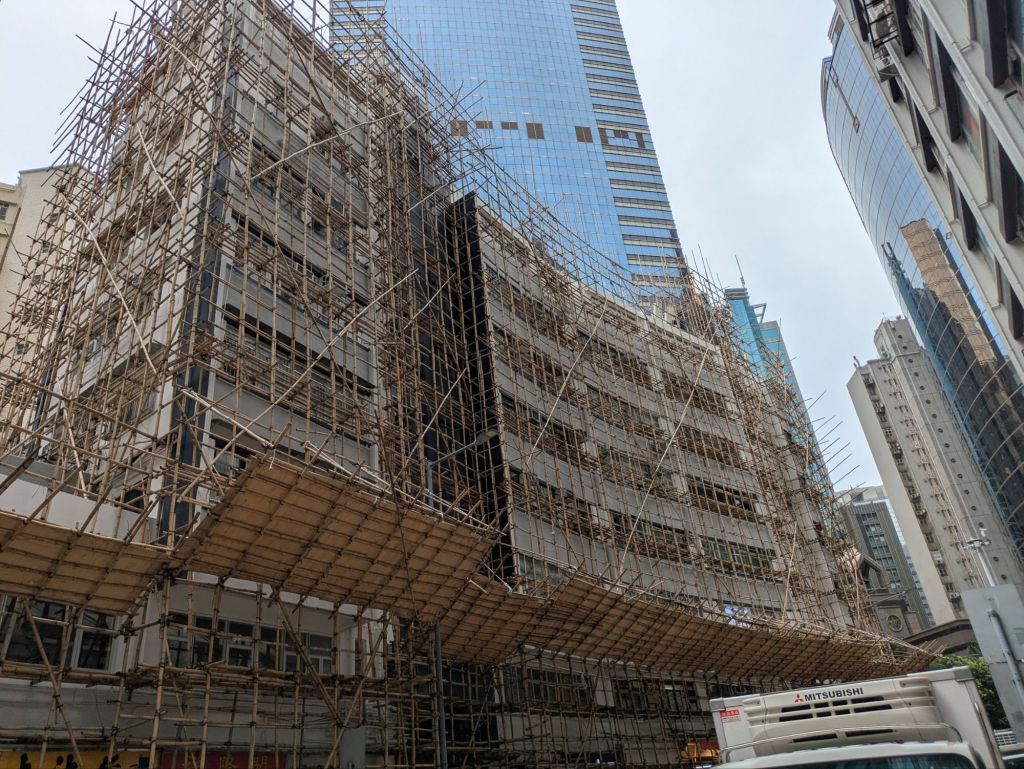
Another remarkable finding at this hotel was that in Hong Kong they use bamboo scaffolding for building work! The photo below is looking out our hotel room window. It seems like a cheap and convenient solution, but I’d like to learn about the relative safety record as compared to typical metallic contraptions. I mean, the rods here are just tied together, nothing is perfectly even, and there are gaps everywhere. Good luck.
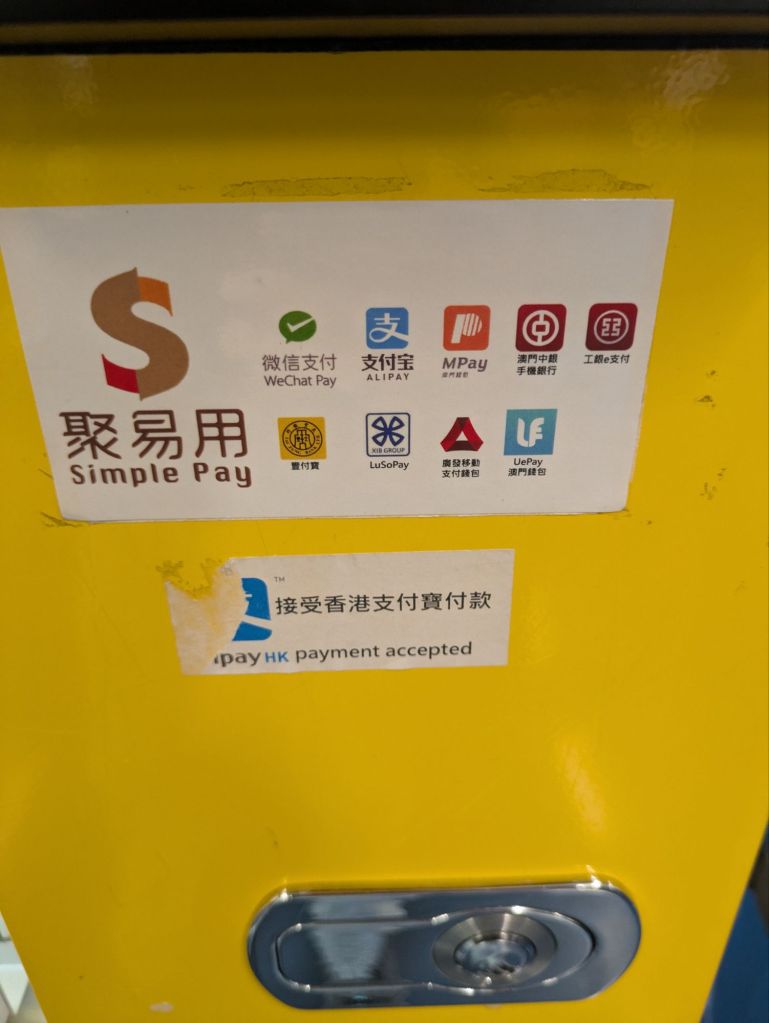
As I mentioned above, the hotel cost was reasonable (unless you insist on eating durian 😜), and we were able to pay with credit card. But many establishments, particularly in Macau, which Ben and I also visited (more on that in a separate post), did not accept Visa or MasterCard payments. While cash was usually accepted, often electronic payments were also taken, but not necessarily from US-based cards. There are numerous other regional electronic payment offerings (presumably mostly or exclusively from China). In Hong Kong they use cash currency called dollars, as did every other country on my trip, other than Macau. And perhaps more surprisingly, Hong Kong banknotes are actually issued by three different banks!
Three commercial banks are licensed by the Hong Kong Monetary Authority to issue their own banknotes for general circulation in Hong Kong. These banks — HSBC, Bank of China, and Standard Chartered — issue their own designs of banknotes in denominations of HK$20, HK$50, HK$100, HK$150, HK$500, and HK$1000, with all designs being similar to one another in the same denomination of banknote. However, the HK$10 banknote and all coins are issued by the Government of Hong Kong. – https://en.wikipedia.org/wiki/Hong_Kong_dollar
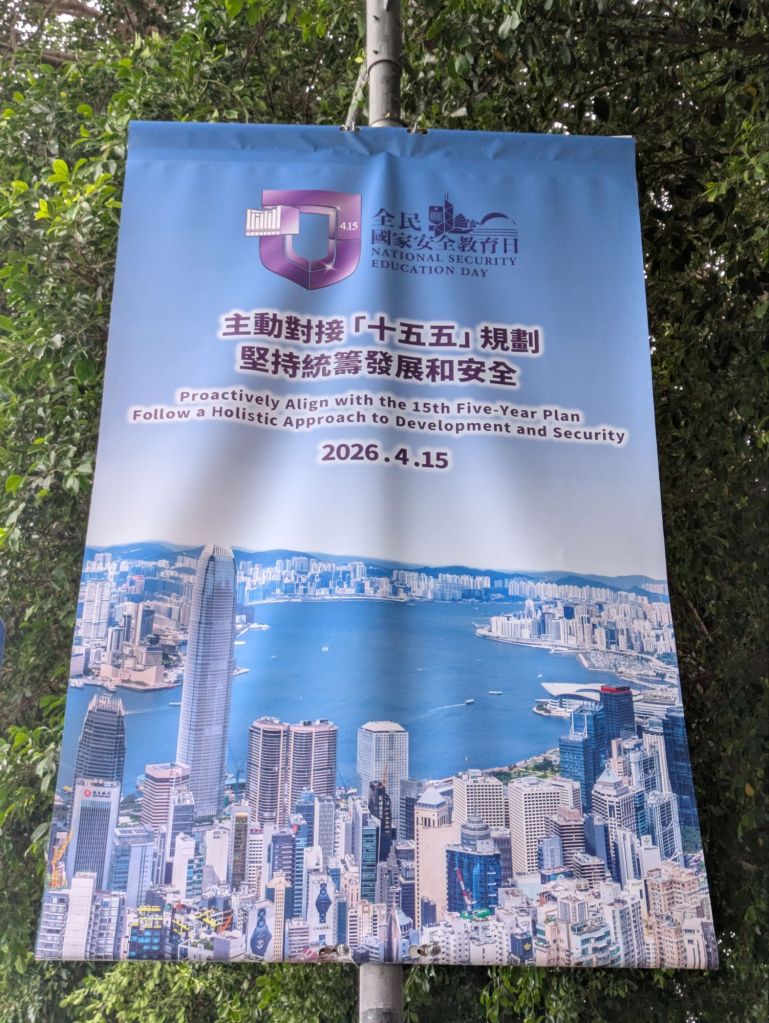
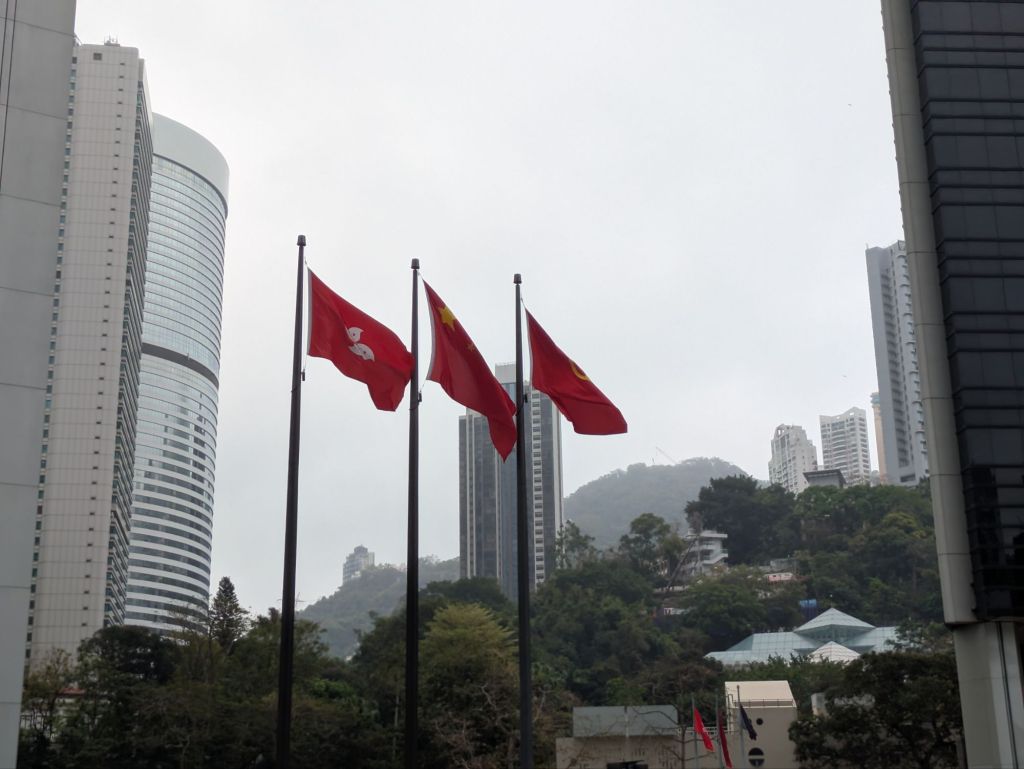
Hong Kong is a special administrative region of China, and it’s one of the most densely-populated regions in the world. Over 7.5 million people live there, and it was a British-controlled possession from 1841 until being handed back over to China in 1997. On paper Hong Kong currently maintains separate governing and economic systems from those of mainland China. This is under the principle of “one country, two systems”, which is supposed to last through at least 2047 (50 years from British turnover). However, things have been changing such that Hong Kong is becoming more and more aligned and connected to the Chinese government. From Wikipedia: “Twenty-two political parties had representatives elected to the Legislative Council in the 2016 election. These parties have aligned themselves into three ideological groups: the pro-Beijing camp (the current government), the pro-democracy camp, and localist groups. However, by 2021, the pro-democracy camp and the localist groups lost all representation in the Legislative Council as a result of the 2021 electoral changes imposed by the National People’s Congress, and since 2025 all 90 members of the Legislative Council have been from the pro-Beijing camp.” We saw multiple signs of communist and Beijing leanings in the city, such as 5-year plan signage like the following:
Interestingly, despite technically being part of China, all travellers between Hong Kong, Macau, and mainland China are required to pass through border controls, regardless of nationality. We found this when traveling by ferry over to Macau from Hong Kong (and back) on a day trip. Mainland Chinese residents do not have the right to live in Hong Kong and are subject to immigration controls, though about 92% of Hong Kong residents are ethnic Chinese.
Also, the Hong Kong Garrison of the People’s Liberation Army is responsible for the region’s defence, and this garrison is composed entirely of army personnel who do not originate from Hong Kong.
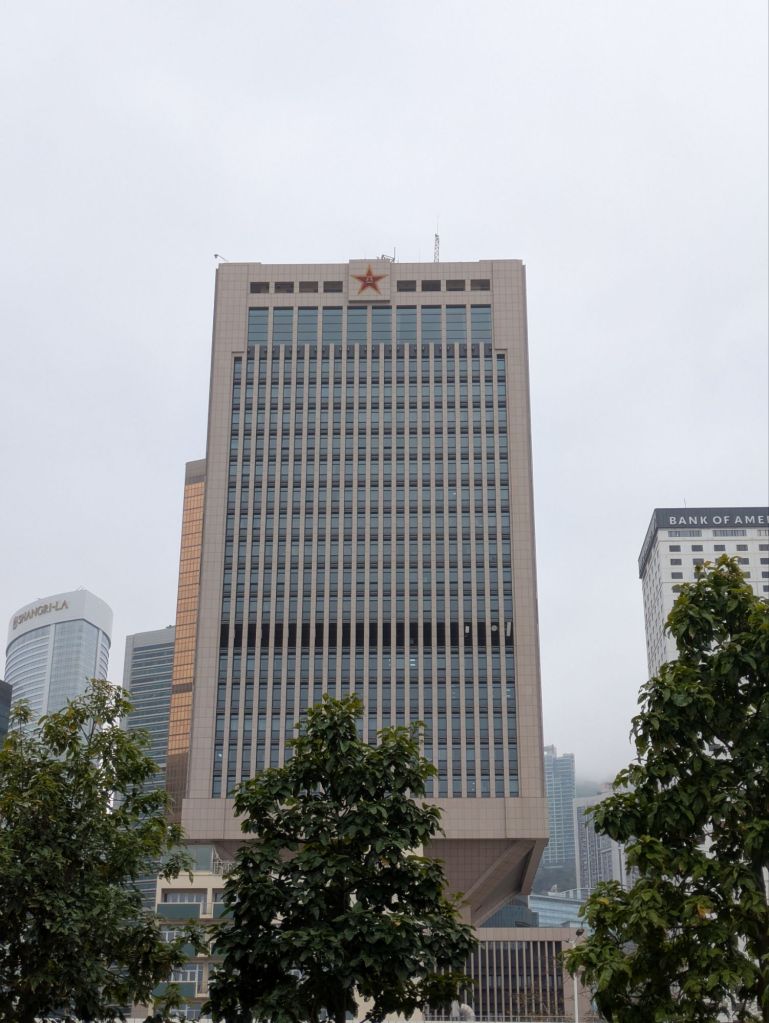
Since Covid and student protests in 2020, the security and legal situation has changed fairly dramatically. From Wikipedia: “The imposition of the Hong Kong national security law by the central government in Beijing in June 2020 resulted in the suspension of bilateral extradition treaties by the United Kingdom, Canada, Australia, New Zealand, Finland, and Ireland. The United States ended its preferential economic and trade treatment of Hong Kong in July 2020 because it was no longer able to distinguish Hong Kong as a separate entity from the People’s Republic of China. In 2024, the Safeguarding National Security Ordinance was passed by the Legislative Council to grant officials the power to prosecute crimes such as treason and insurrection. Critics state that this expansion will give more powers to crack down on opposition to the central government of China and the Hong Kong government as well as strike a lasting blow to the partial autonomy China had promised the city in the Sino-British Joint Declaration.”
Harsh new laws continue to be introduced. For example, I received the following message from the US State Department (I signed up for STEP announcements in advance) before we arrived:
On March 23, 2026, the Hong Kong government changed the implementing rules relating to the National Security Law. It is now a criminal offense to refuse to give the Hong Kong police the passwords or decryption assistance to access all personal electronic devices including cellphones and laptops. This legal change applies to everyone, including U.S. citizens, in Hong Kong, arriving or just transiting Hong Kong International Airport. In addition, the Hong Kong government also has more authority to take and keep any personal devices, as evidence, that they claim are linked to national security offenses.
Further, there’s a crackdown on CBD, such that manufacturing, importing, or exporting CBD is punishable by life imprisonment, and even just possession or consumption of any amount of CBD is punishable by seven years in prison and a fine of 1 million HKD ($127,607)!
So frankly, knowing all this, I felt a little conceptually uncomfortable at times during the visit, but practically I didn’t see many overt indications of security or restrictions. To be fair, entering the region was a lot simpler than going into any other on this entire trip, other than Macau. The countries of Taiwan, Australia, New Zealand, and Singapore all required pre-registering in advance of arriving at the border, and Australia and New Zealand both charge for entering. No one searched my bags, and I didn’t see a higher number of police or army personnel than I do in any typical country. Perhaps there was more covert surveillance, but I didn’t notice it. I didn’t witness anyone getting into trouble for anything either. So, I suppose it’s a complicated reality.
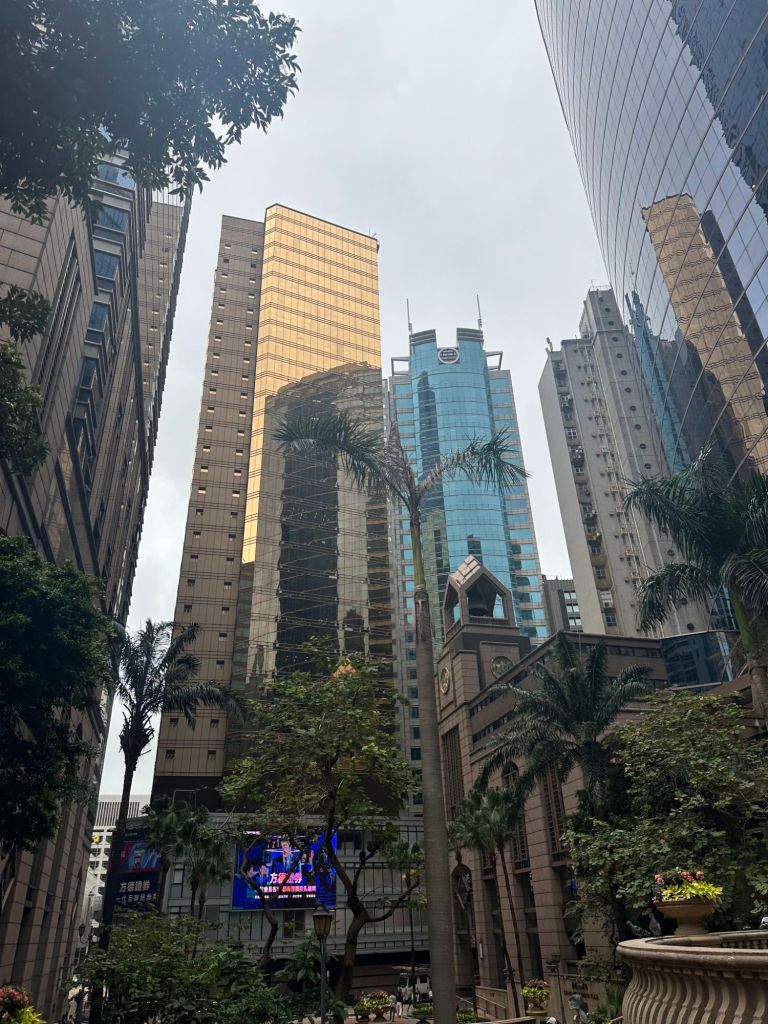
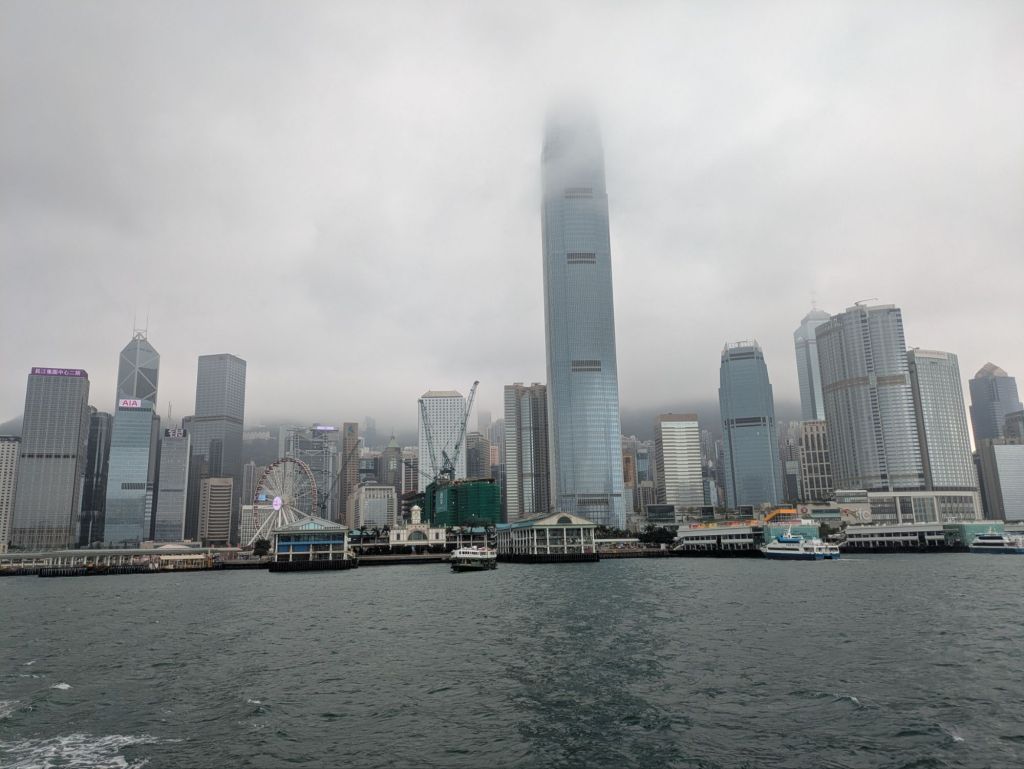
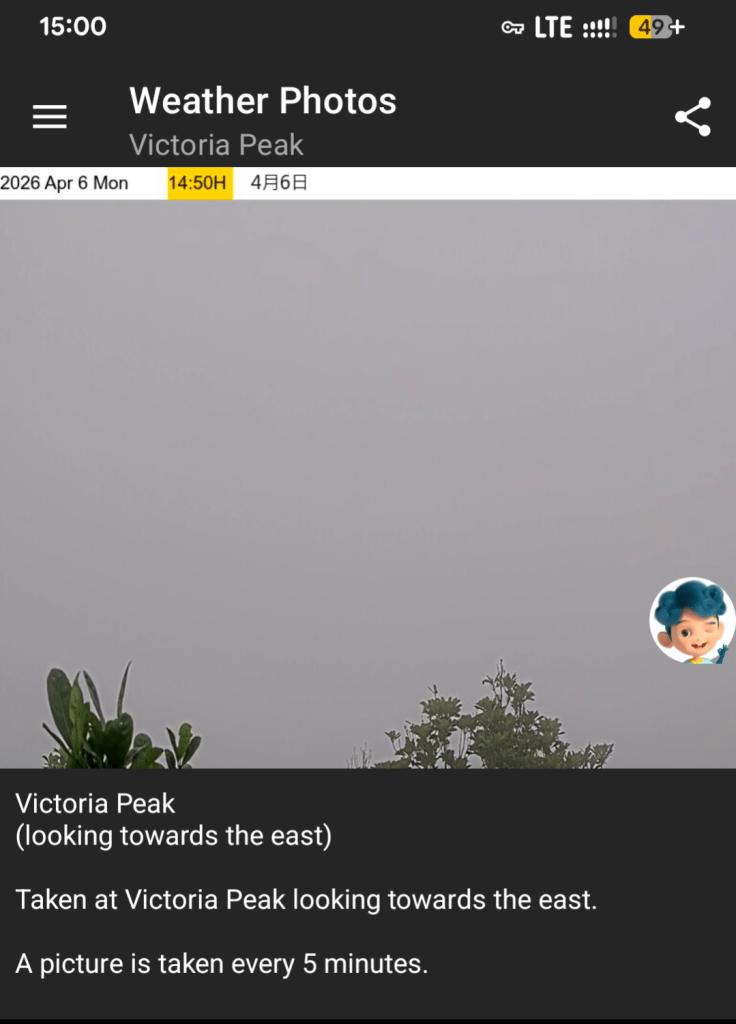
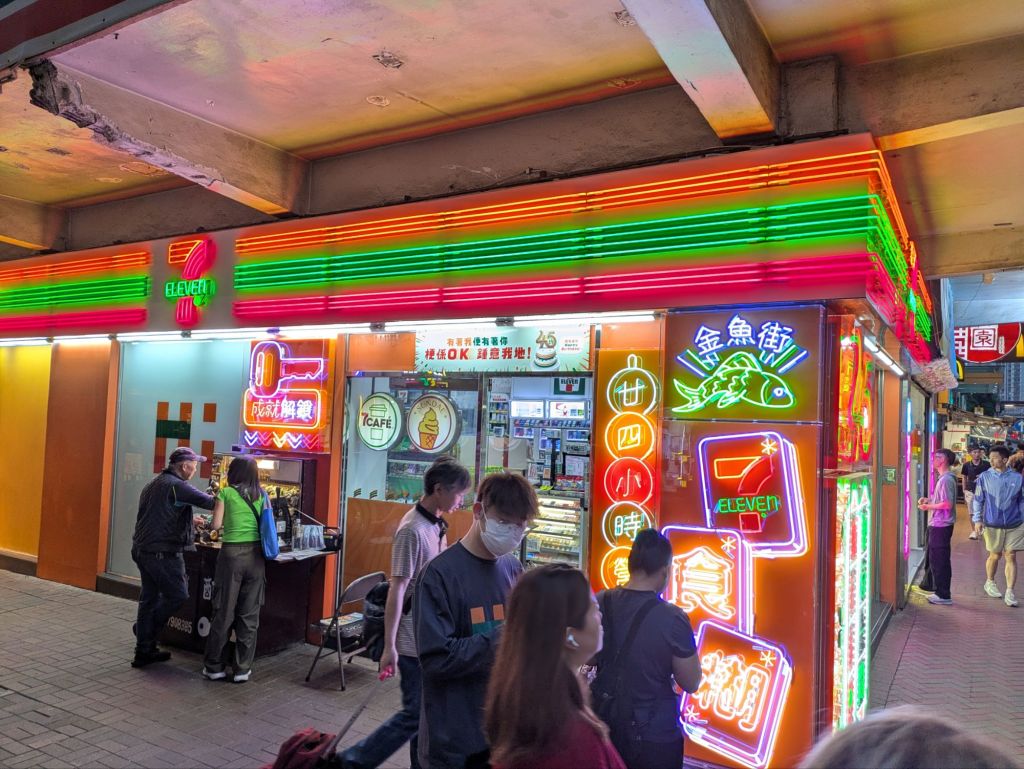
On a lighter note, there are many interesting places to visit and explore in the region. Alas, we had poor weather, with it being overcast and/or rainy, during our entire trip. So we didn’t end up heading up into the mountains, and we never even went up Victoria Peak behind downtown because it was always embedded in the clouds with little to no visibility. But otherwise we were able to walk and ride buses, trams, ferries, and subways to explore the region and its islands.
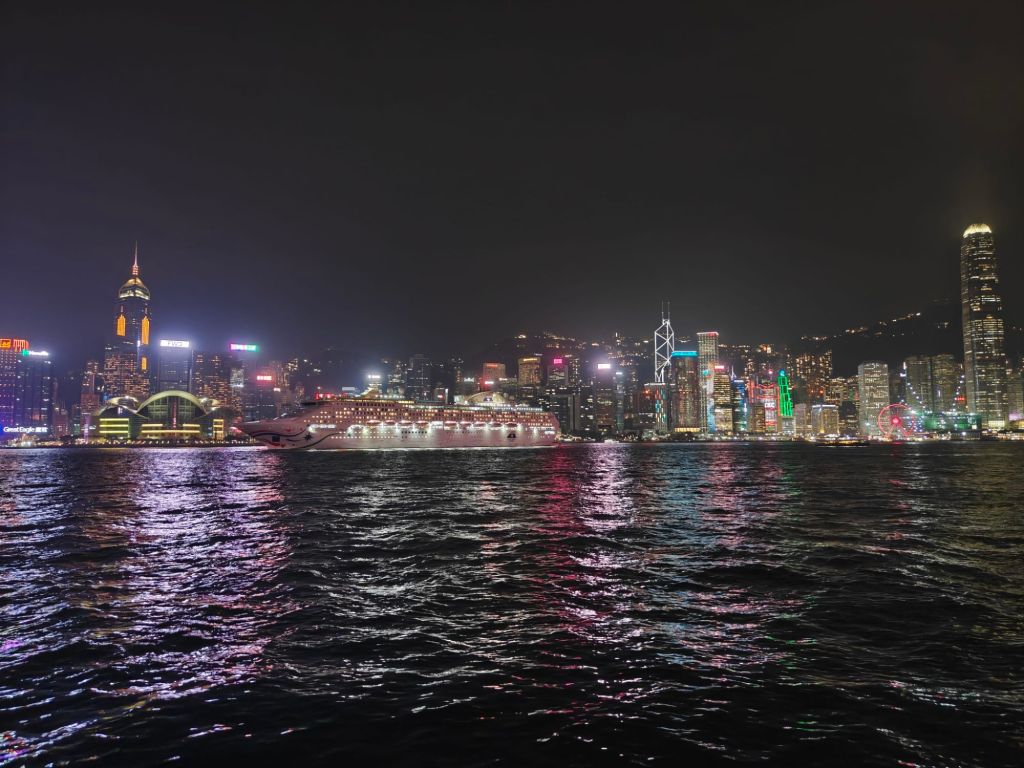
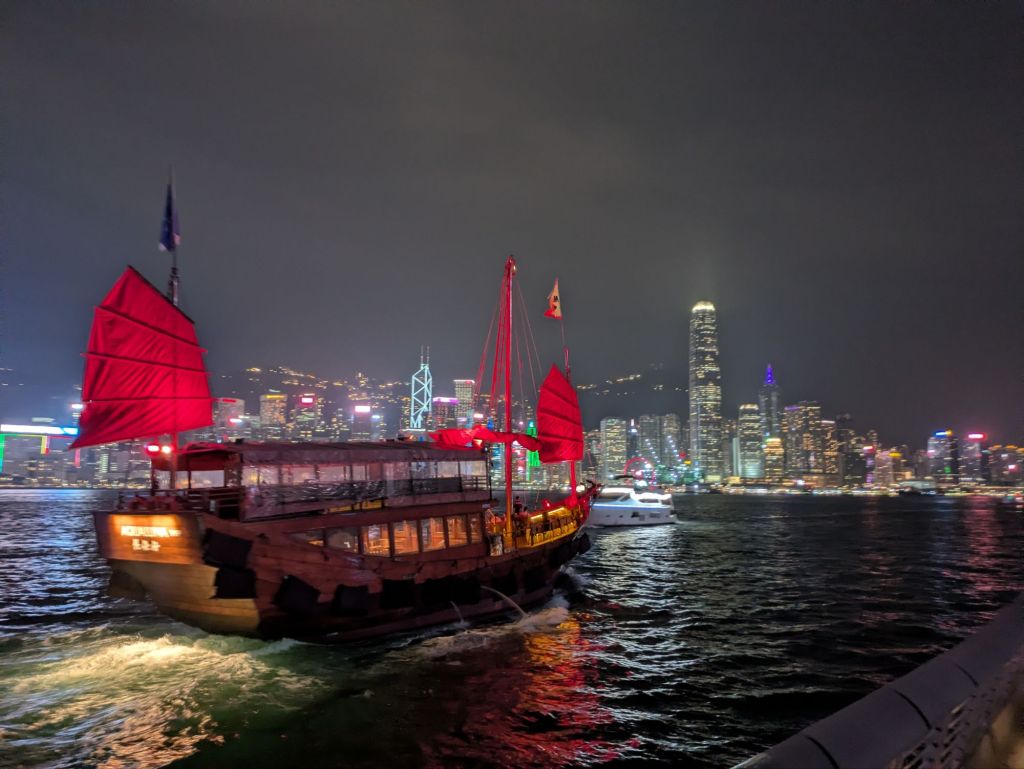
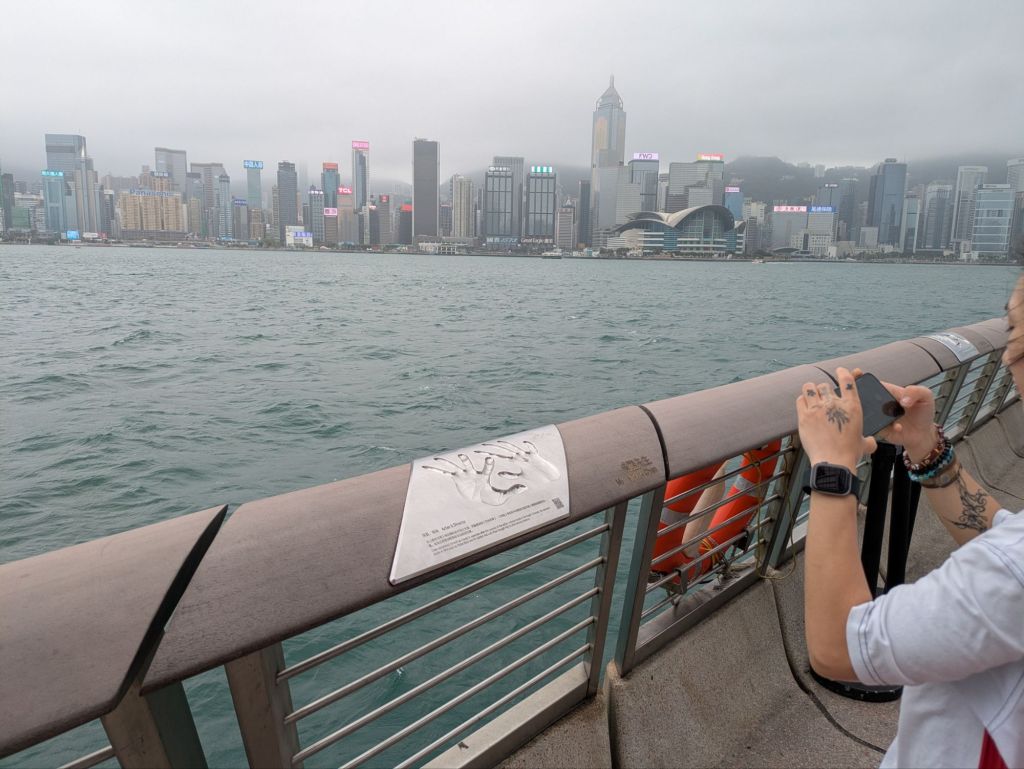
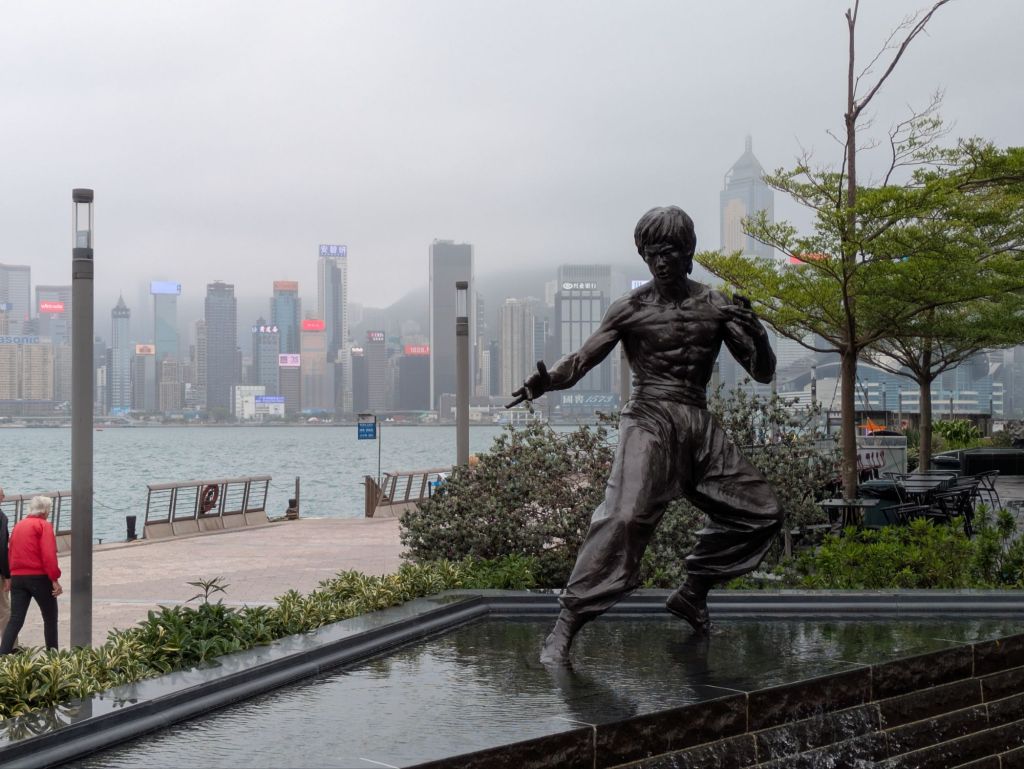
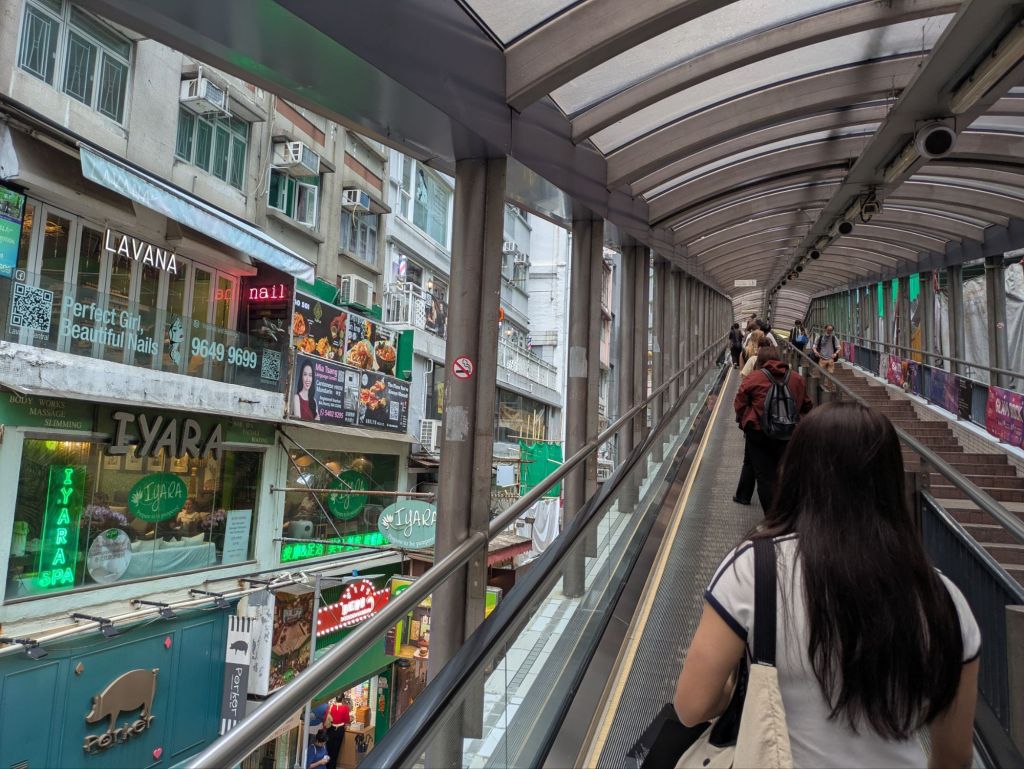
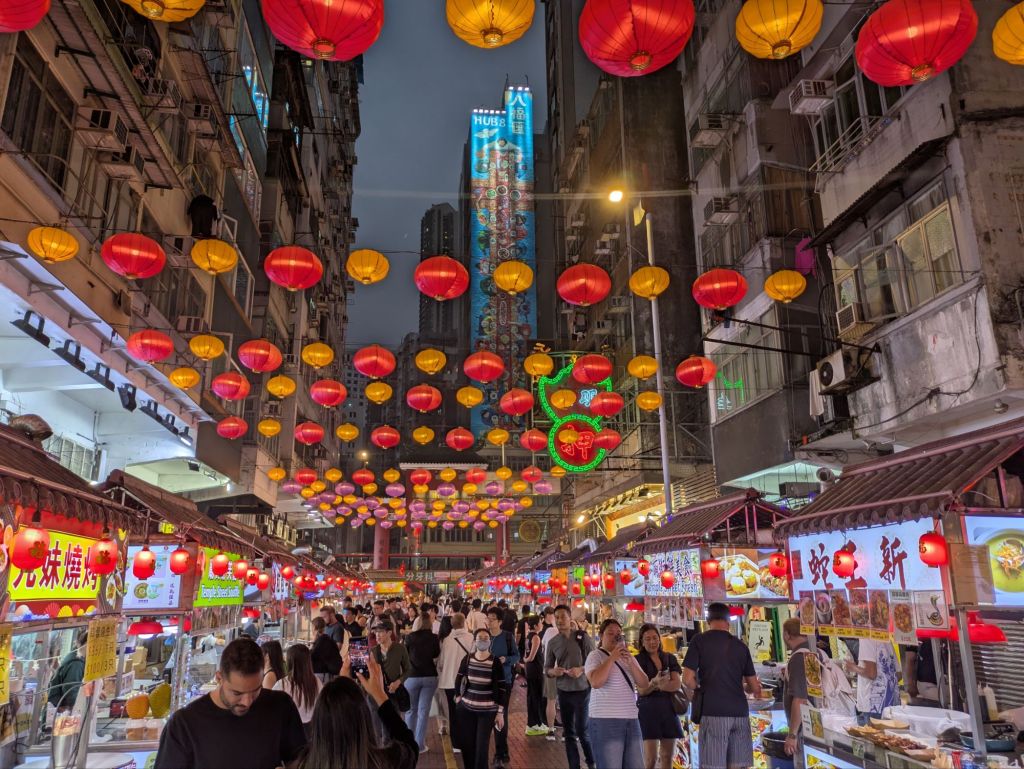
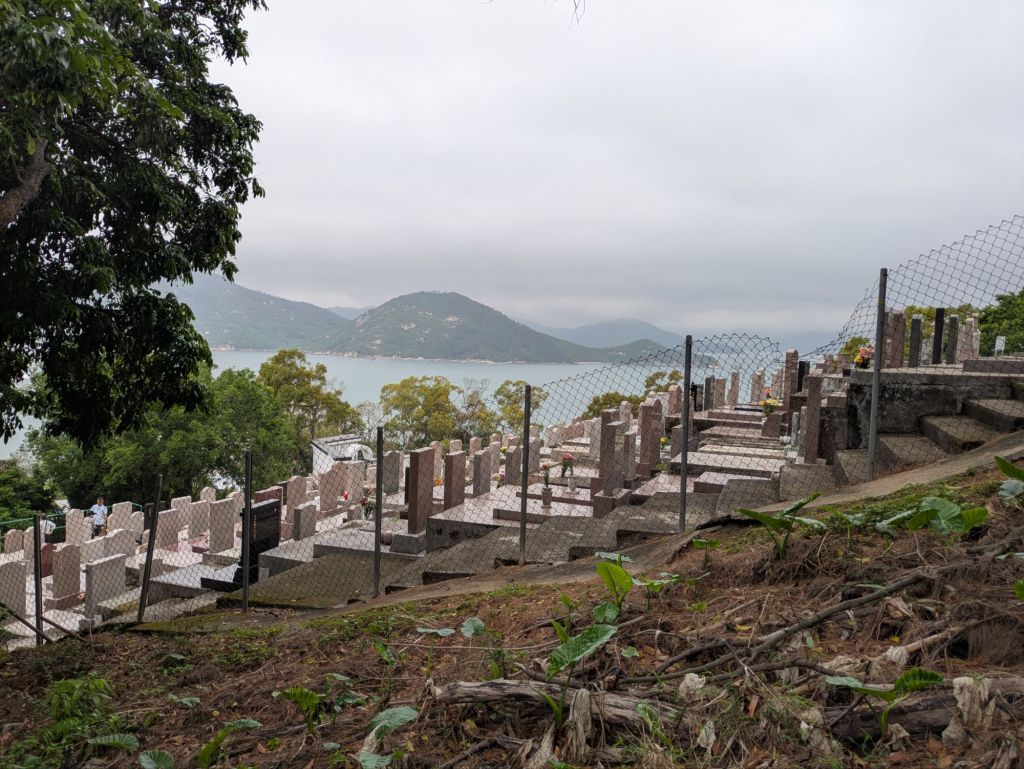
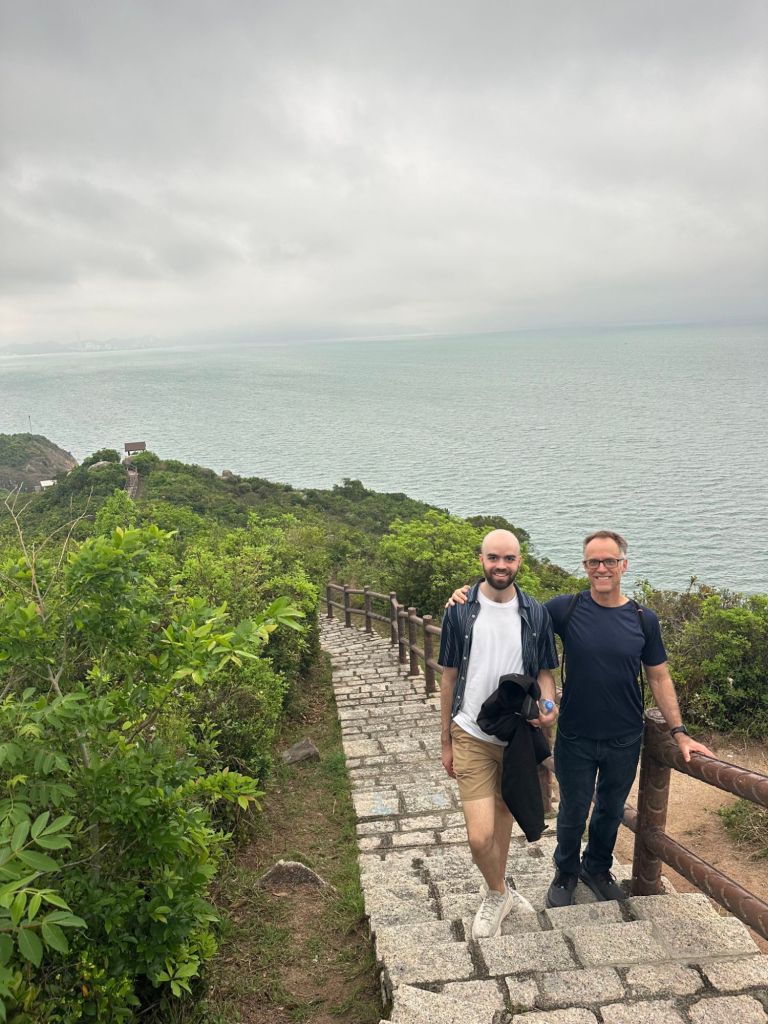
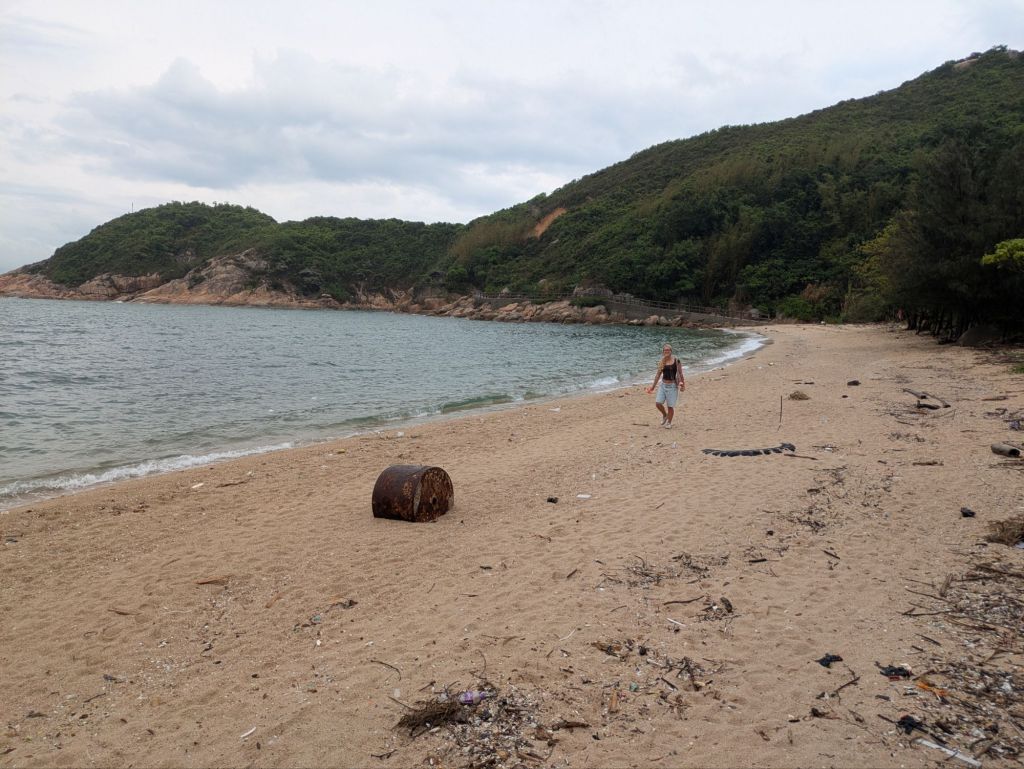
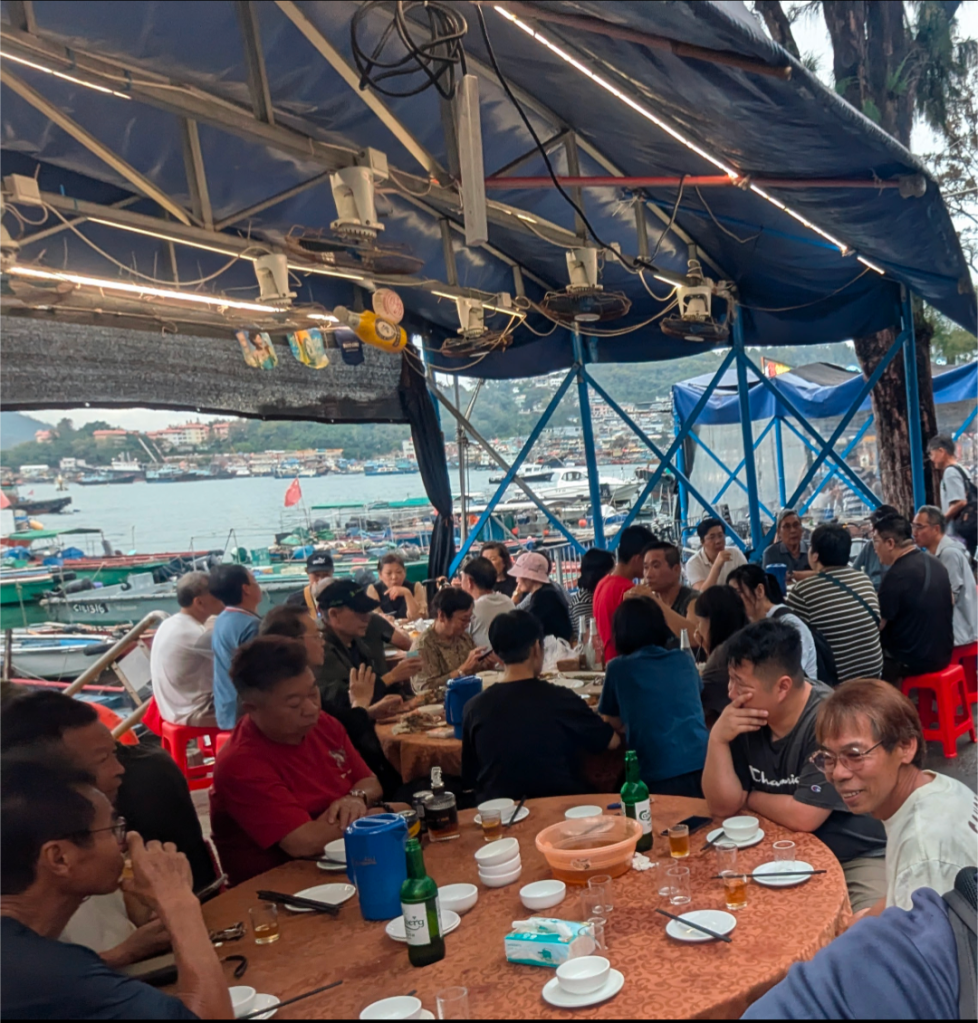
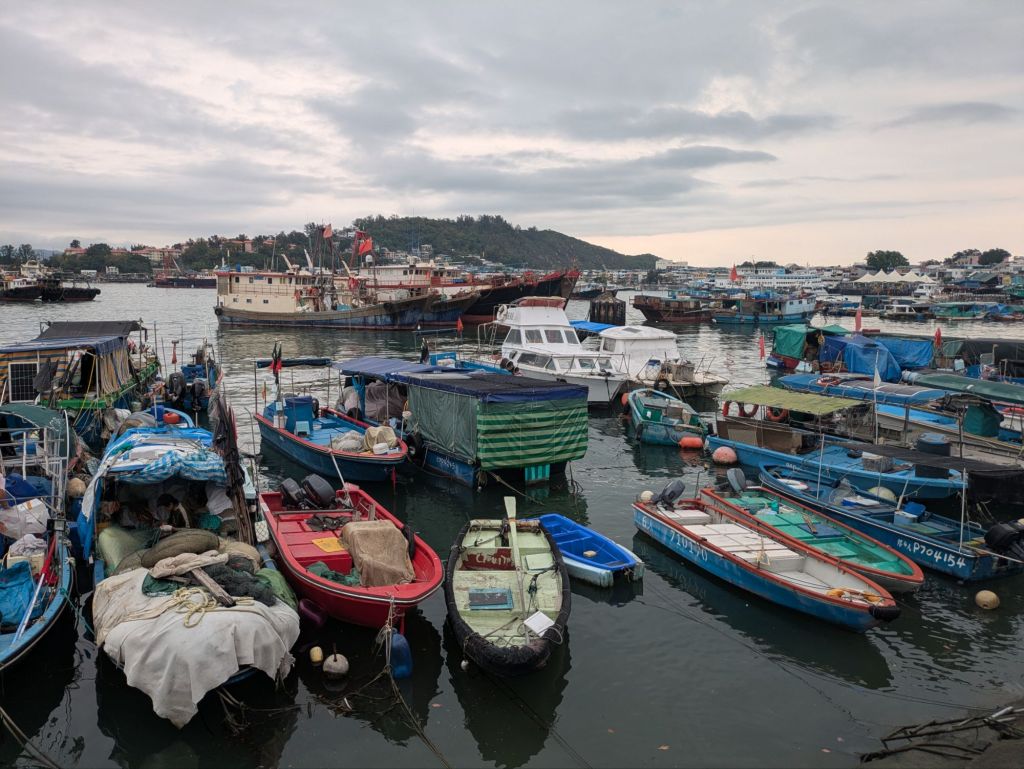
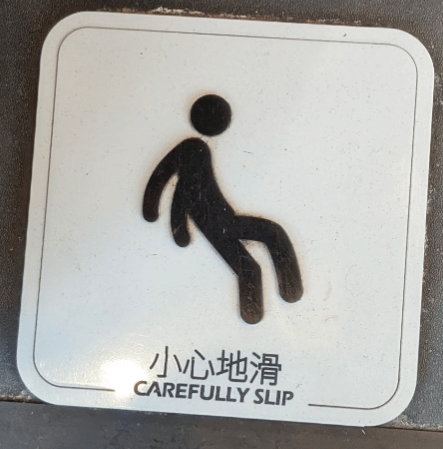
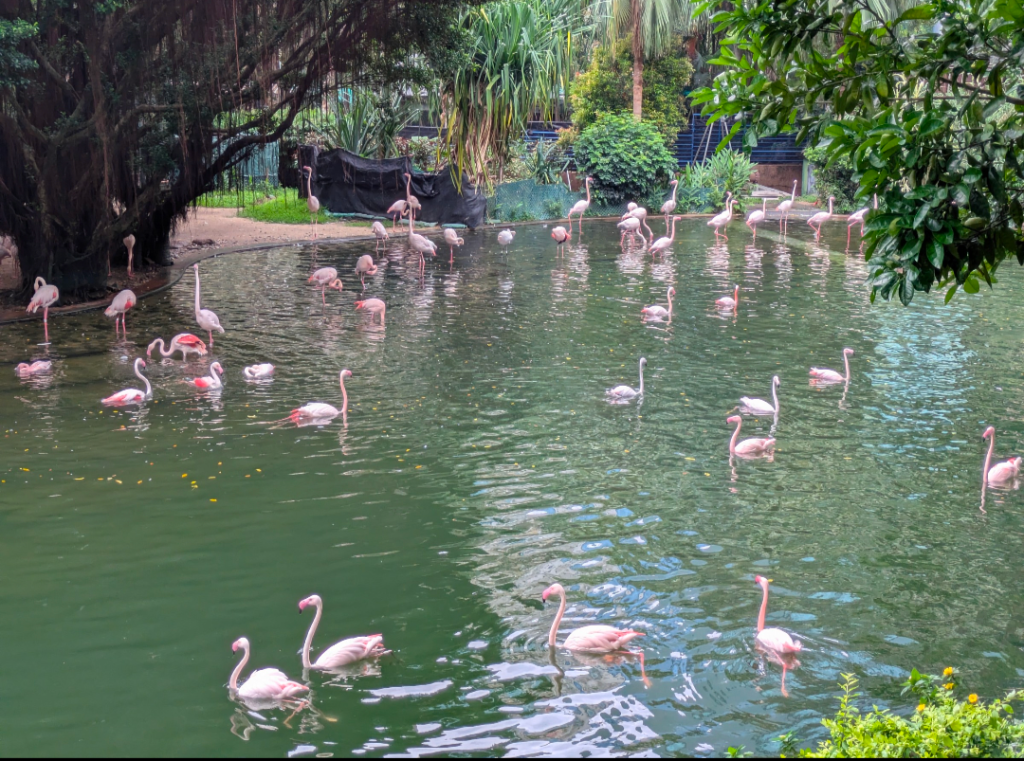
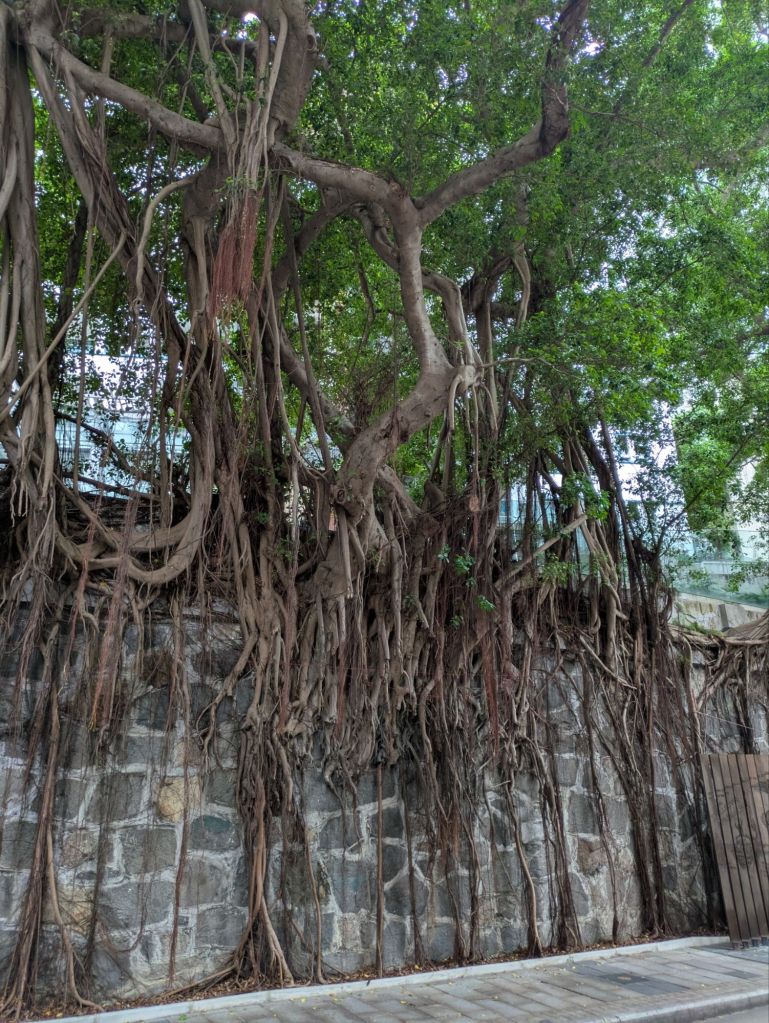
The Hong Kong region consists of many islands, and the three of us took a day trip to Cheung Chau island to explore the natural areas and see the beaches and towns. As it turned out, it was a holiday that day, called Qingming Festival, or grave-sweeping day, a traditional Chinese event. Chinese families visit gravesites of their ancestors to clean them and make ritual offerings. We encountered large family groups heading to cemeteries around the island, after which they gathered at big tables outside at various restaurants for lunch. I’m glad we ran into the events associated with this tradition.
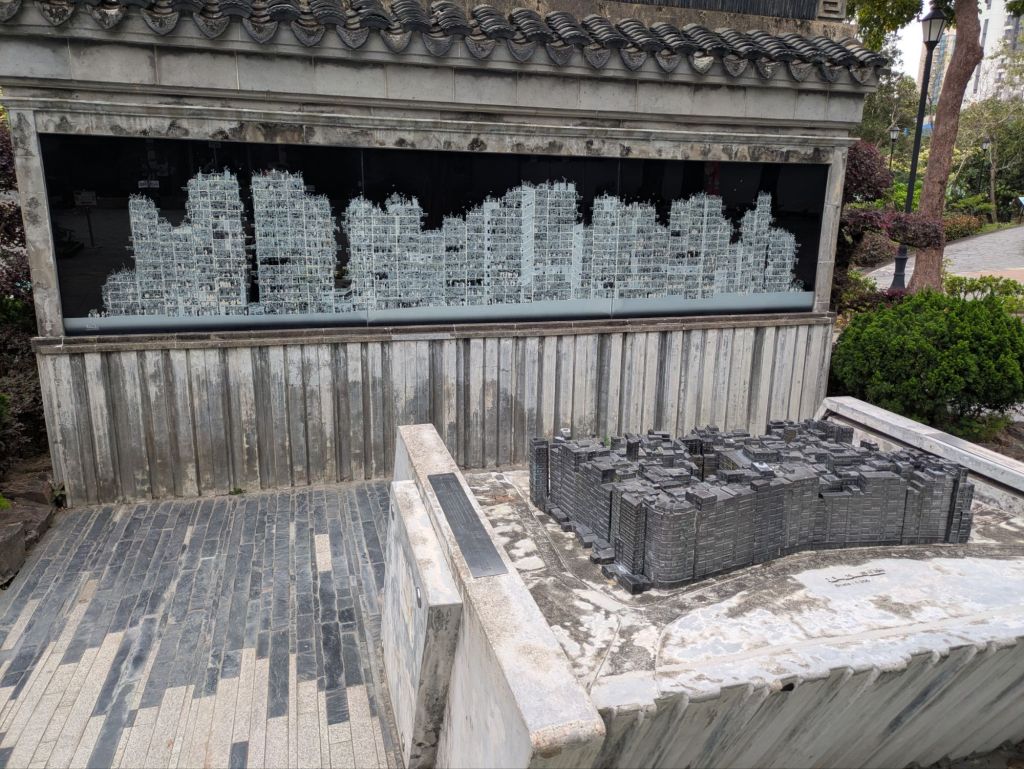
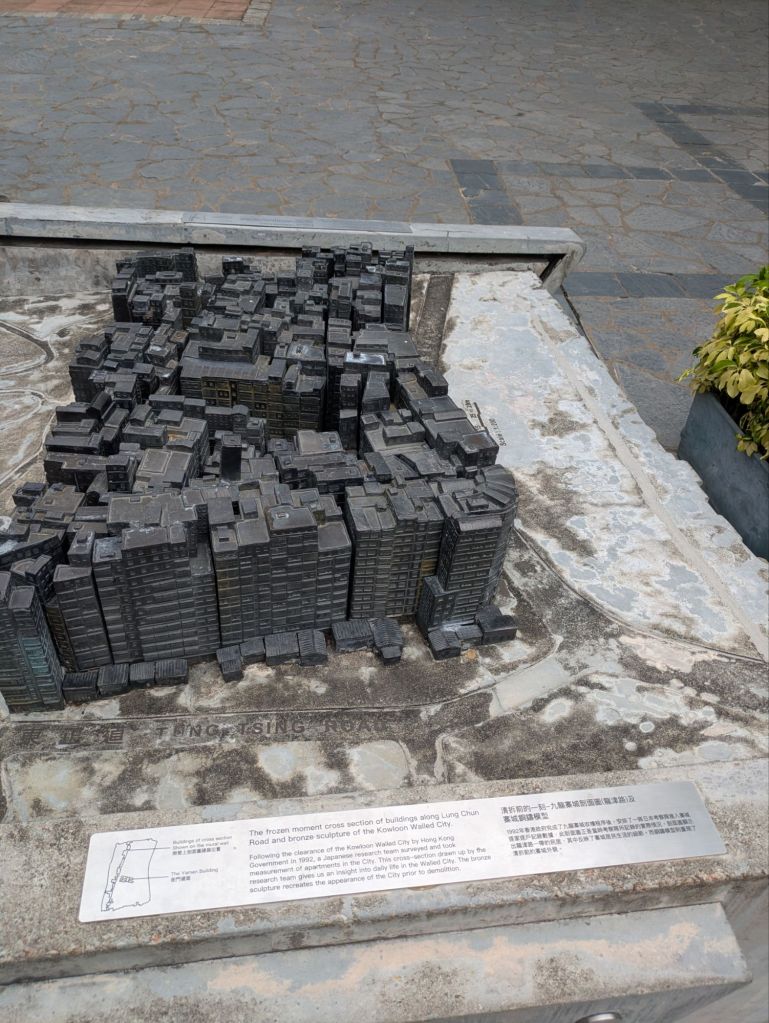
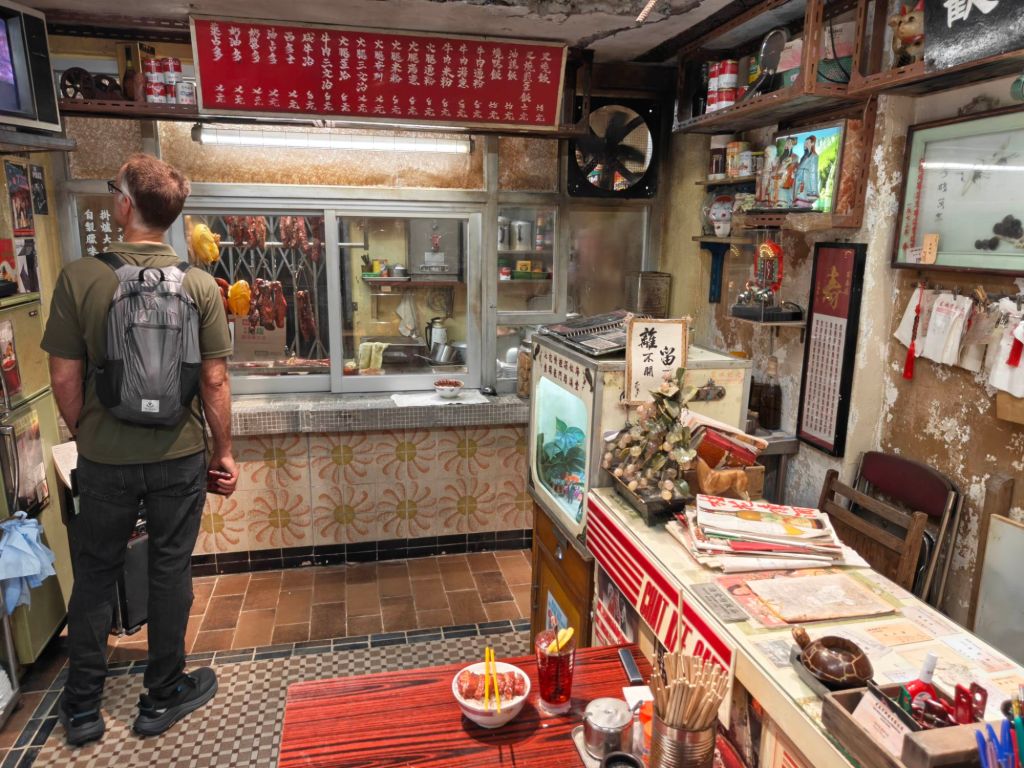
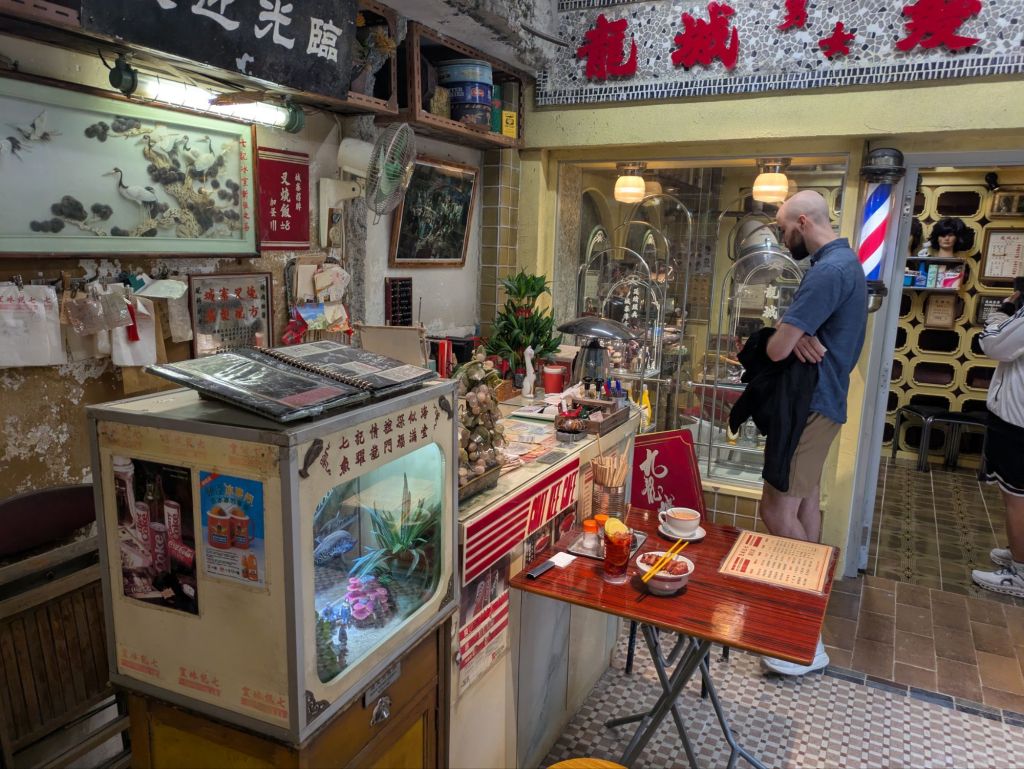
One of my personal favorites from exploring Hong Kong was a visit to the Kowloon Walled City Park. It’s mostly a nice nature park now, but it marks the site of the Kowloon Walled City, an extremely densely populated enclave during British rule of the region. It was formerly a Chinese military fort, but after British takeover, for various reasons neither the UK nor China took jurisdiction of this enclave, which caused a power vacuum and led to general lawlessness. Without city regulations, people built very densely and in many ad hoc manners, with narrow lanes, poor foundations, little electricity or drainage, and all the associated problems. When its population was estimated in 1987, Kowloon Walled City was the most densely-populated place in the world. Perhaps it would have had even more residents if the buildings could have been made taller, but height was necessarily constrained due to a nearby airport, and planes flew directly overhead. I find the history fascinating, and I wish I could have seen the city in person while it still existed, but given various safety and security concerns, it was torn down between 1993-94. In the park there is a paid attraction to see sets for various rooms for the filming of the movie Twilight of the Warriors: Walled In, which went to great lengths to attempt to capture the essence of this one-of-a-kind human creation. One could touch everything in the rooms in the exhibit, and it was all out in the open and accessible. If this was in the US or Europe, I’m confident that some dummies would steal and/or break pieces in these rooms. I enjoyed watching the movie (after returning to Prague) to get some sense, even if exaggerated, of what things looked and felt like in the city.
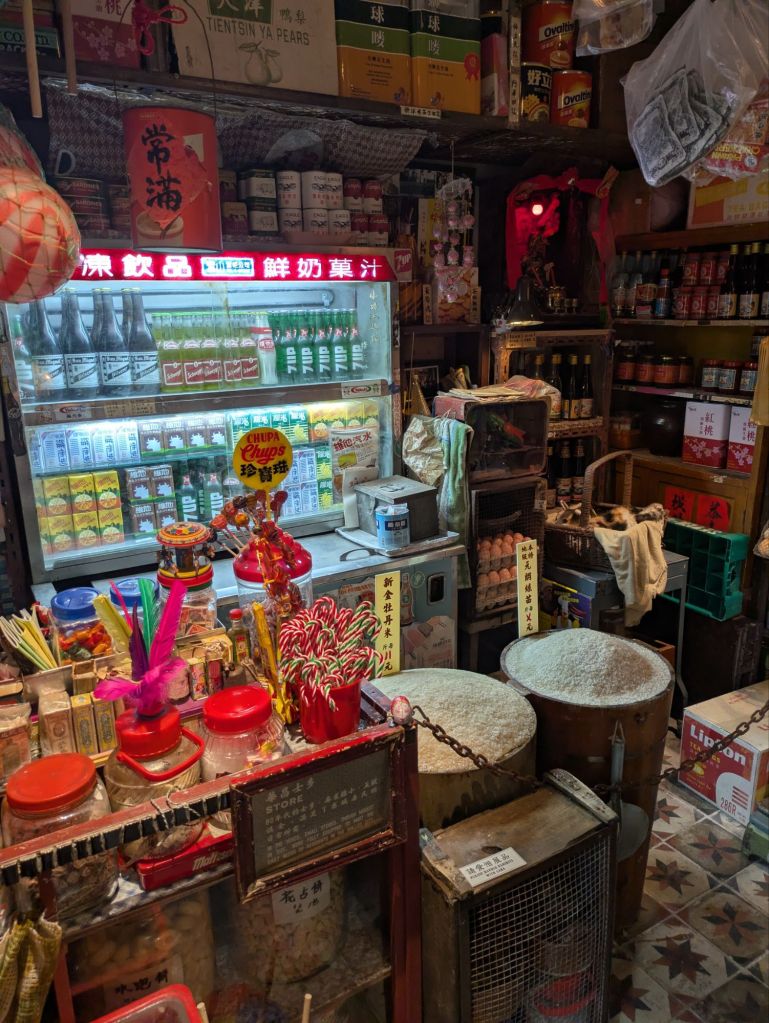
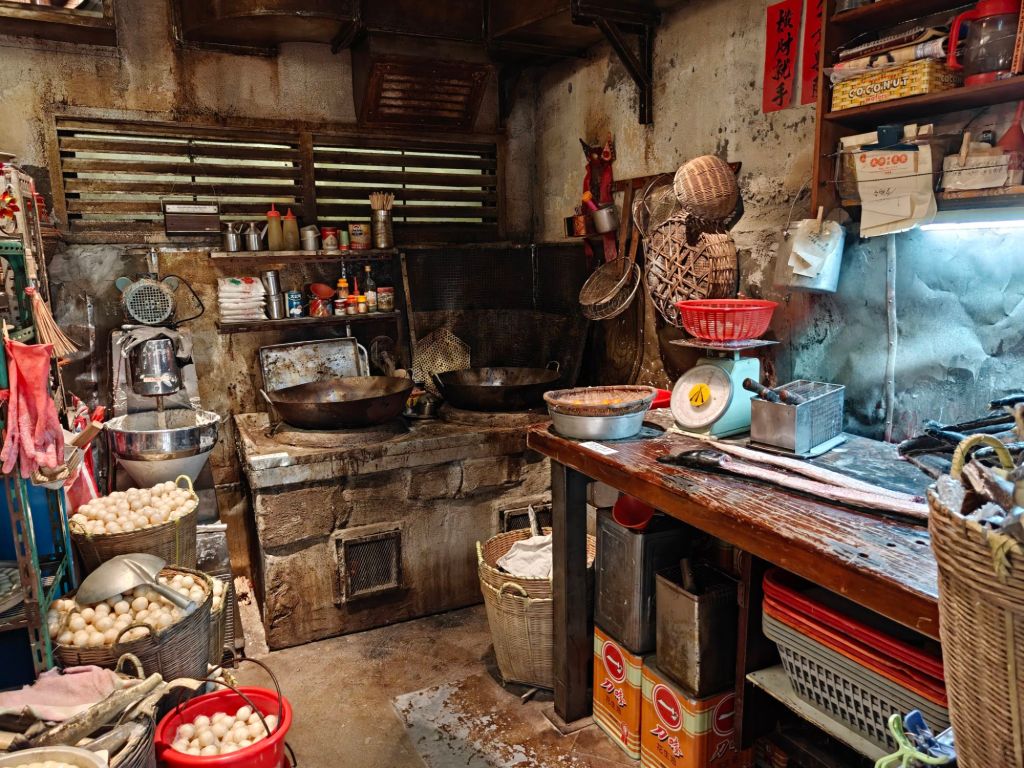
One observation I made while in Hong Kong was that the younger people there seemed to me to be struggling a bit. I might be reading too much into it, but I have to wonder if the backlash to protests in 2019-2020 have some causal impact. The protests, which began in response to the controversial introduction of a bill to amend the Fugitive Offenders Ordinance in regard to extradition, resulted in multiple controversial national security laws being put into place: “66 articles target crimes of secession, subversion, terrorism and collusion with foreign forces, and includes serious penalties between 10 years of prison to life imprisonment.” (Wikipedia) We found that quite often young people were walking alone, very slowly, with their mobile phone held close to their face, while interacting with it and mostly ignoring the outside “in real life” world around them. Males tended to be playing games, while females were typically texting. It was sad, and also very often inconvenient for those of us trying to get past their slow plodding in the hallways to and from the metro or on the sidewalks outside. I dubbed them “phone zombies”. And on the metro it was a rather dystopian picture, to the point that if it were portrayed on a movie or TV show one would think it was quite exaggerated, but normally every single person in sight was looking down at their phone while riding. No one interacting with each other, no one reading a book, picking their nose, meditating, looking around, nothing like that. Just deep fixation on their personal device. When outside, wherever there was a pretty spot for photo-taking, there were hoards of young women posing for dozens of mobile phone photos captured by a friend. Not one quick shot, but various poses, different angles, still and video. I was never patient enough to wait to see if any one amateur “model” ever finished — perhaps they’re all still there today trying to capture the perfect shot. I hope the Hong Kong youth will be okay.
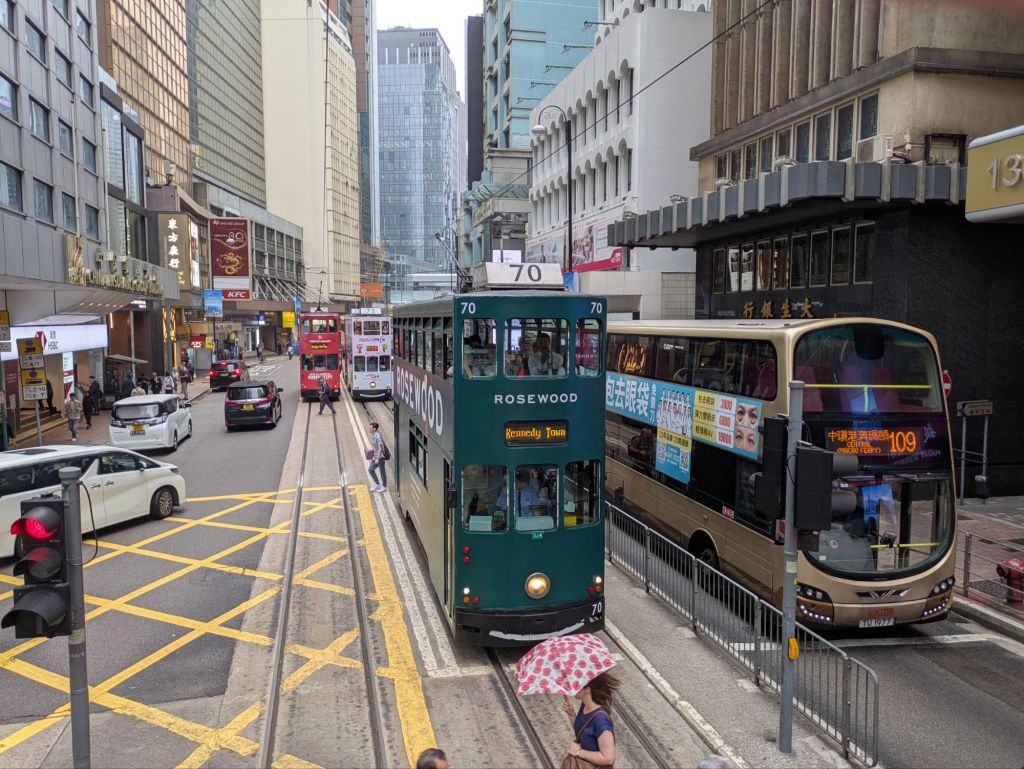
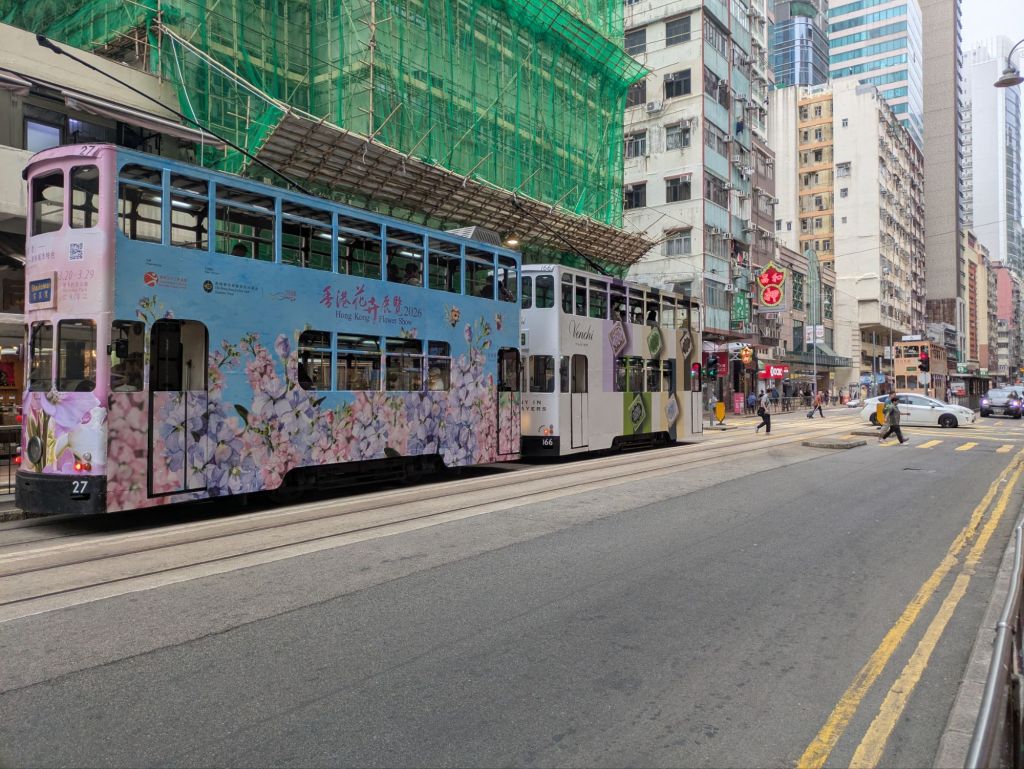
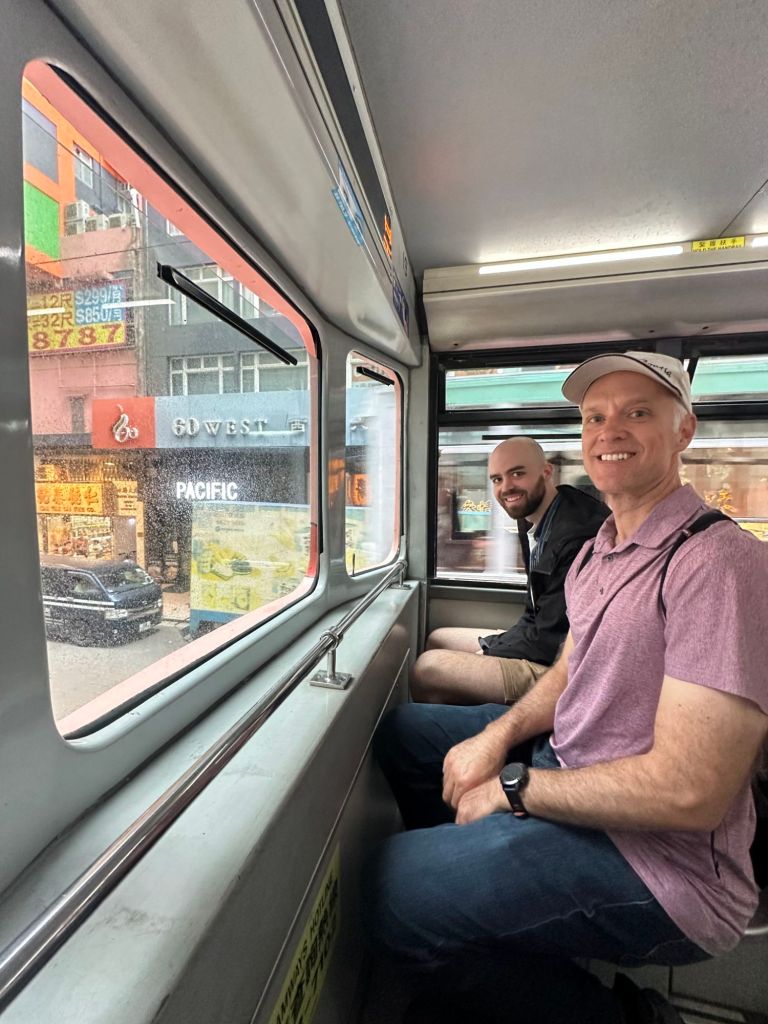
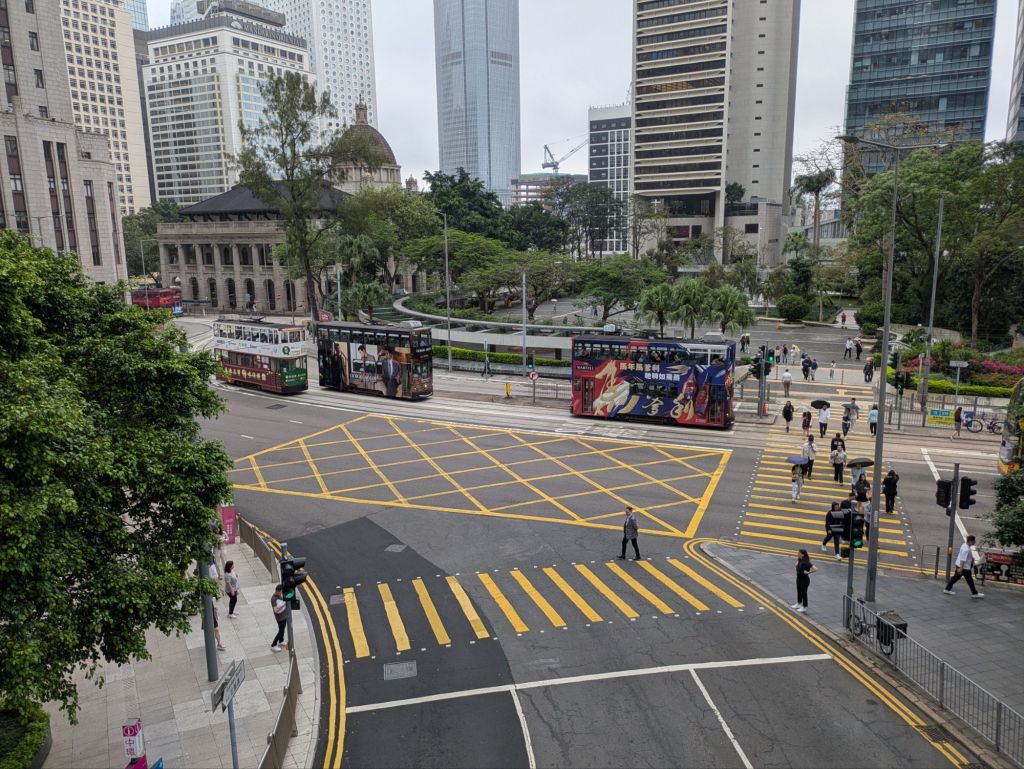
And finally, coming back to the post title — ding dings! They captured my heart — narrow, two-story trams, arriving very often, and covered in colorful advertising. They are so cool.
Today’s English ambiguity:
English is spoken in Hong Kong, though not nearly as well as in Singapore. But even native English speakers can create some pretty ambiguous phrases, particularly news headline creators attempting to be pithy. From a publication from Columbia Journalism Review, here are some real ambiguous headlines:
– New Housing for Elderly Not Yet Dead
– 12 on Their Way to Cruise Among Dead in Plane Crash
– N.J. Judge to Rule on Nude Beach
– Chou Remains Cremated
– Chinese Apeman Dated
– Hershey Bars Protest
– Reagan Wins on Budget, But More Lies Ahead
– Deer Kill 130,000
– Complaints About NBA Referees Growing Ugly
Today’s Stoic quote:
“The things you think about determine the quality of your mind. Your soul takes on the color of your thoughts.” ~ Marcus Aurelius


