Ah, but not the US state. The country where Stalin was born and raised. Aka, in Georgian, “Sakartvelo” — land of the wine makers. The place where 8000-year-old evidence has been found of winemaking, the oldest in the world. The land where Jason and the Argonauts came for the golden fleece. Georgia is a dynamic, somewhat chaotic-feeling place with some jaw-dropping scenery, loads of ancient churches and monasteries, and a variety of wonderfully flavorful foods.
But one must also tolerate innumerable feral dogs, highway-wandering and shitting cows and pigs, crazy unpredictable drivers, alcohol-driven anger, car-focused sidewalk-lacking cities, the nastiest public toilets I’ve ever encountered, and next-level cigarette smoking.
And those stunning Instagram-worthy shots of a monastery complex with a towering snow-peaked mountain backdrop? Definitely there once you’re past all the above, and after hours in a cramped tour bus with a stomach-churning lurching and swerving ride driven by a man who doesn’t speak English and who refuses to turn on the air conditioning despite the hot blazing sun. Oh, and after you’ve somehow disentangled yourself from the dozens of additional tour buses, taxis, cars and the other tourists disgorged from those vehicles. Have you ever seen those online videos demonstrating social media perceptions versus reality? I thought about those often while in Georgia.
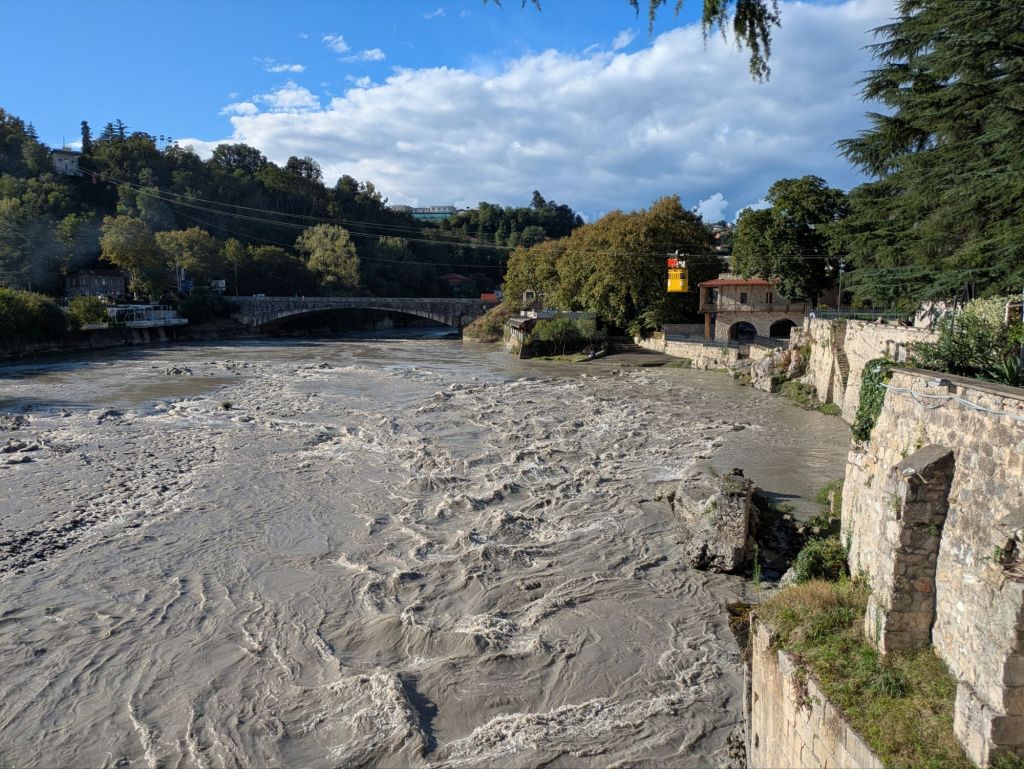
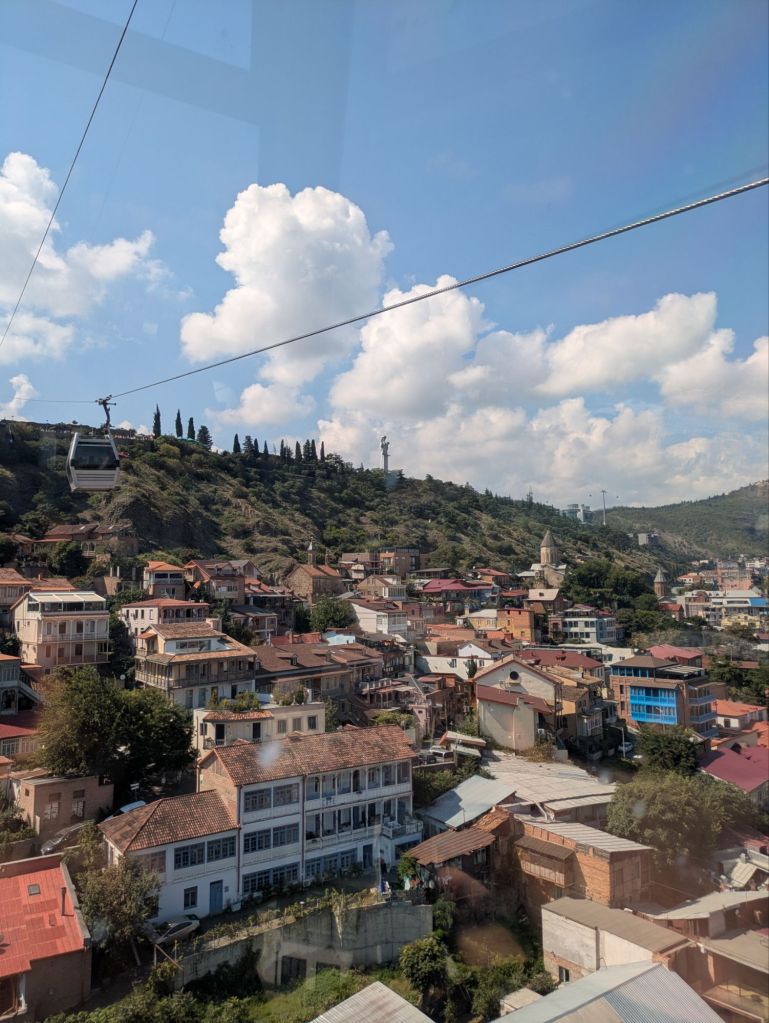
Select an image below to see details. There are some really great views around this diverse country:
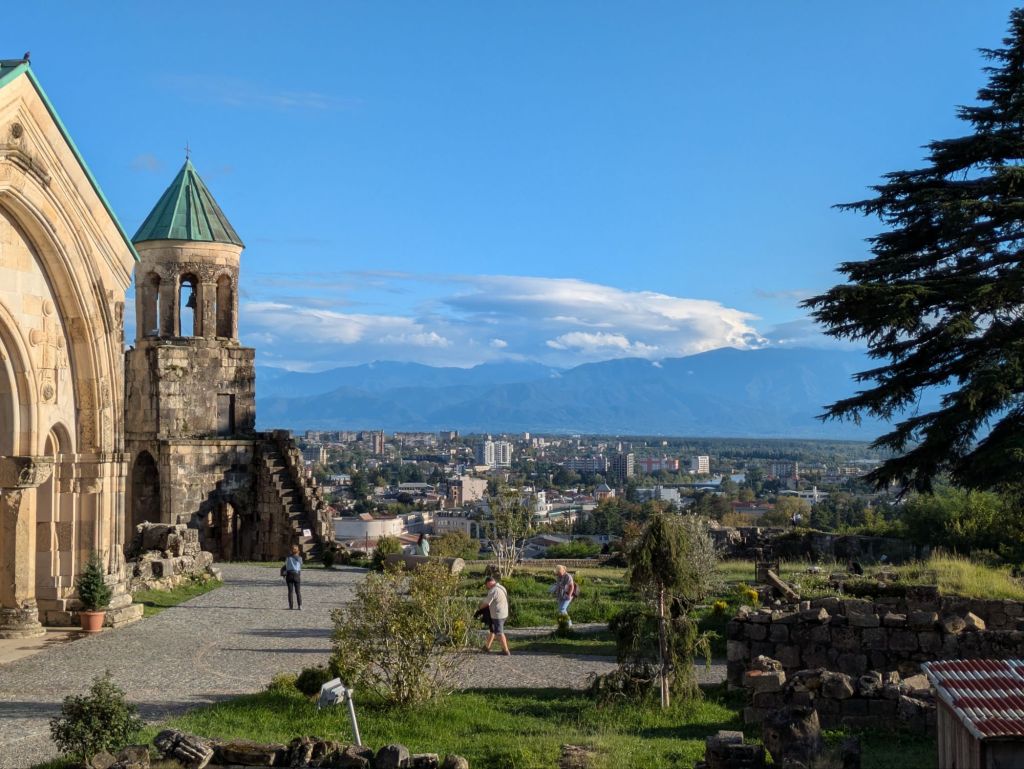
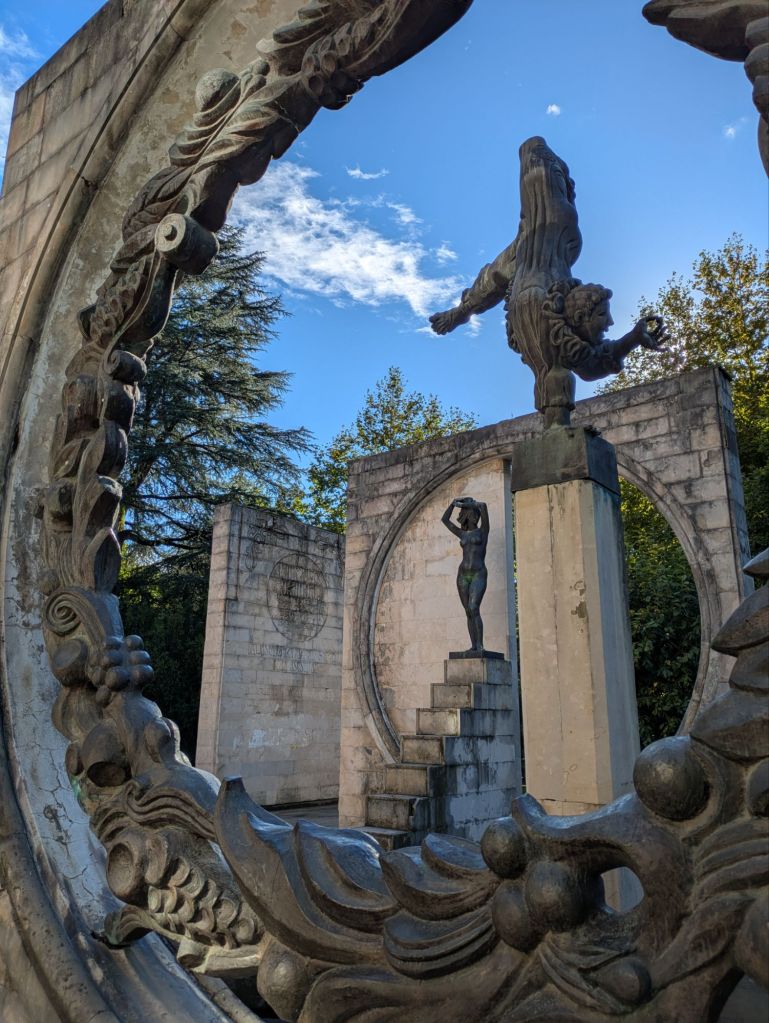
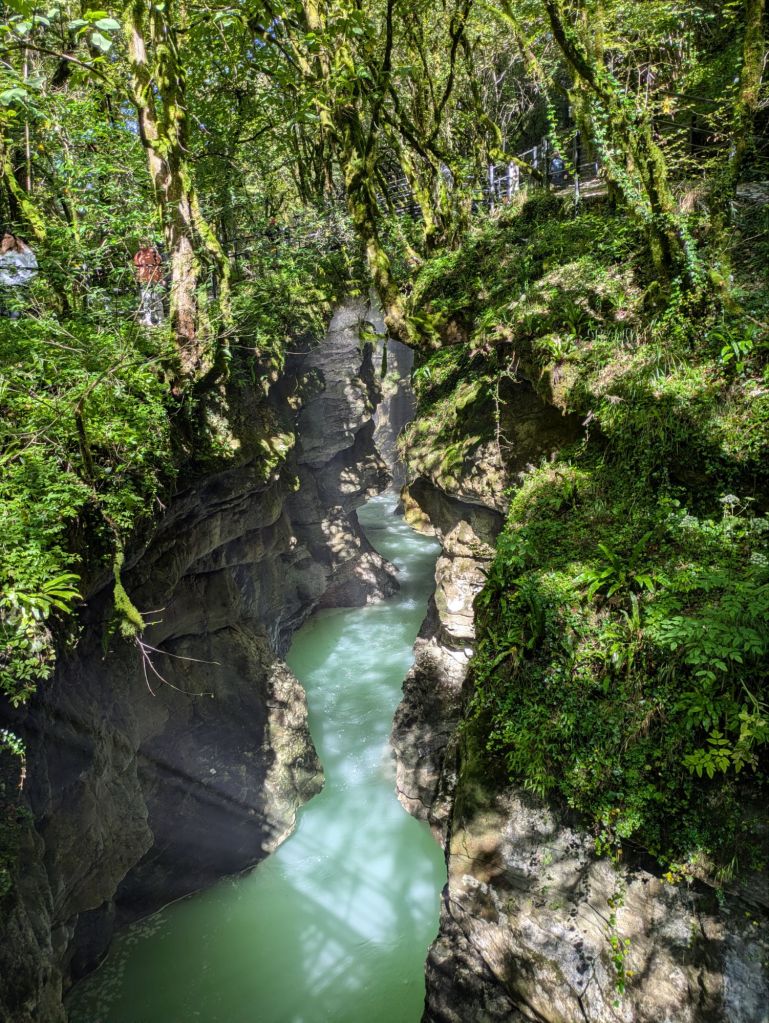
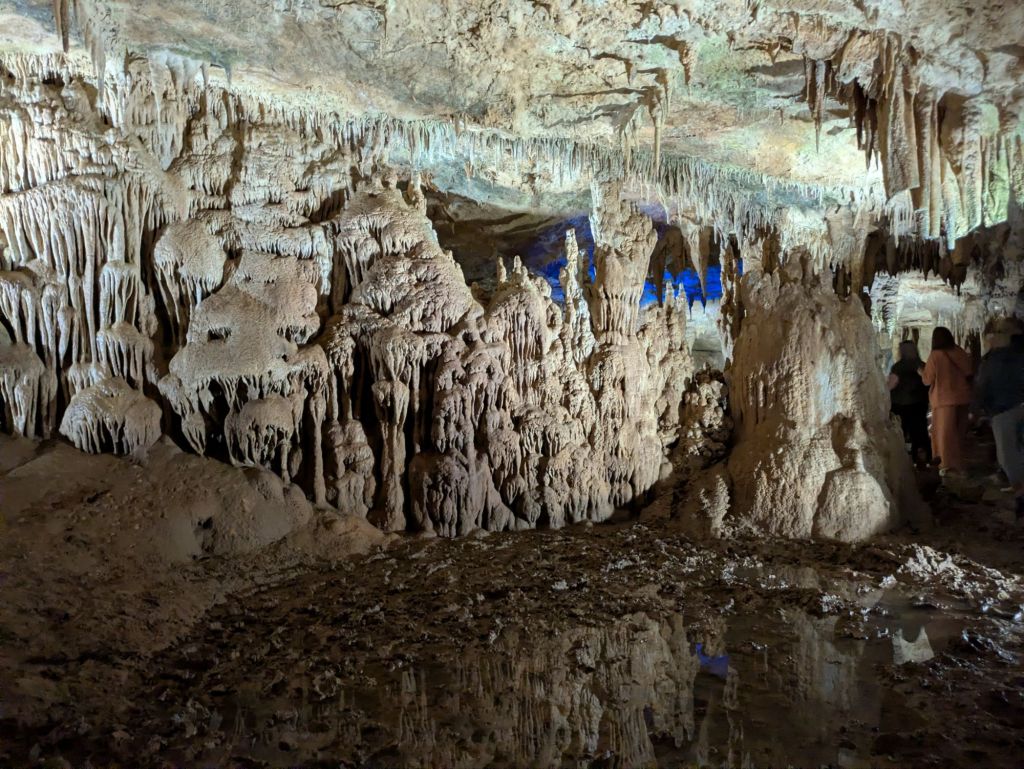
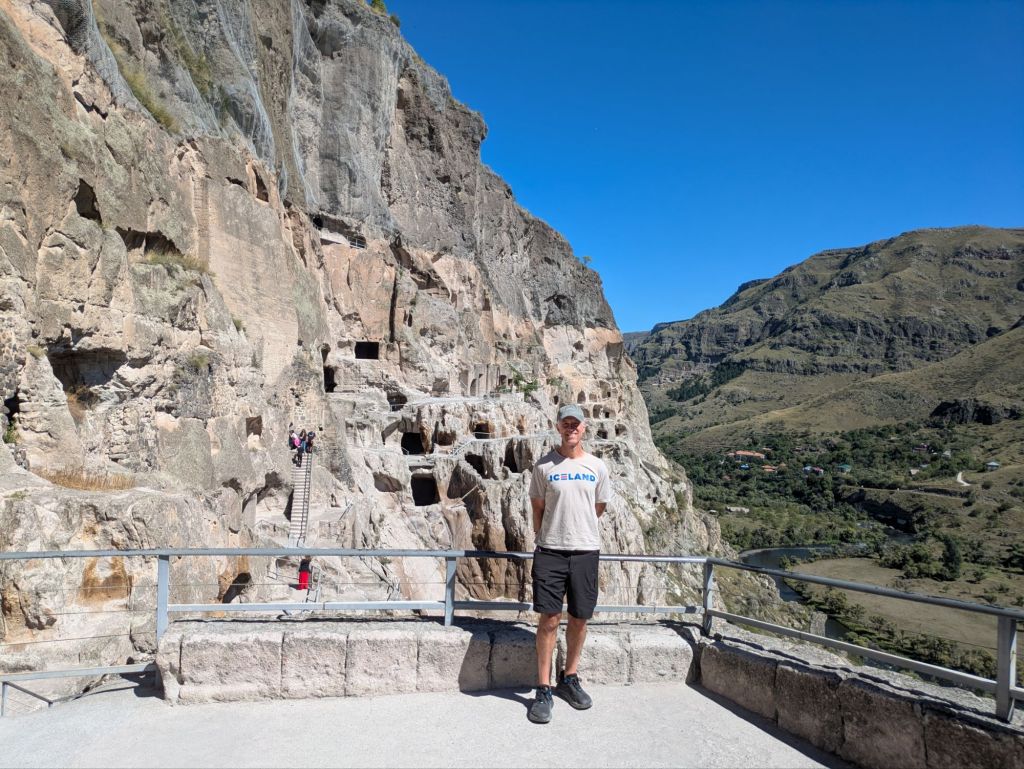
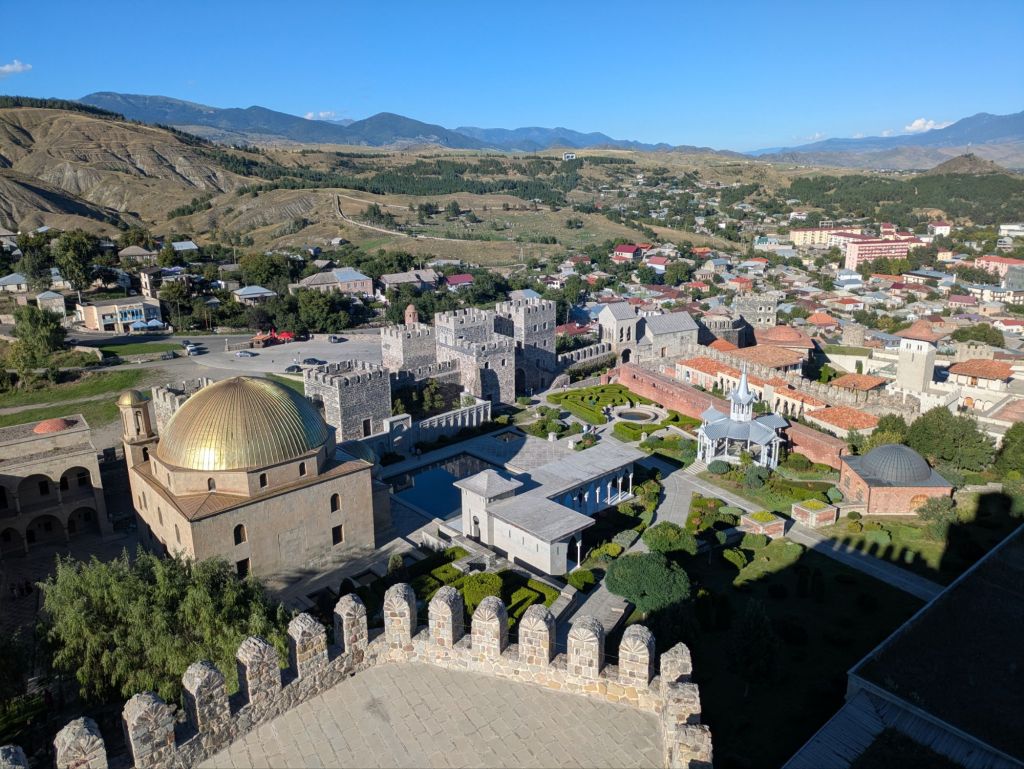
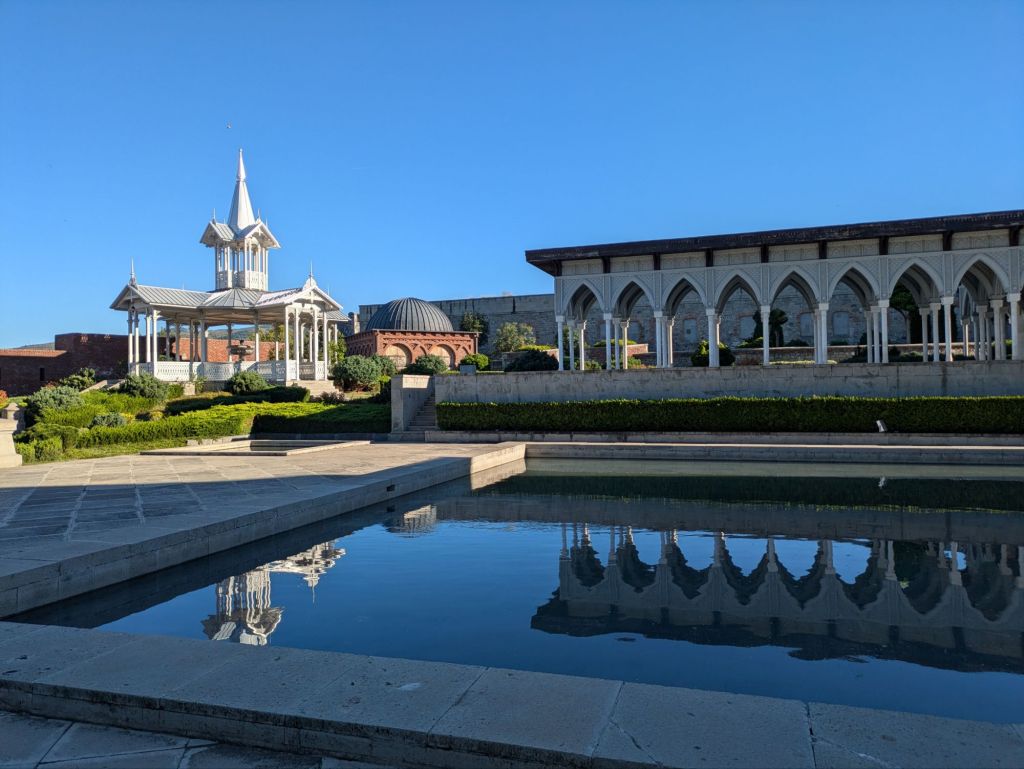
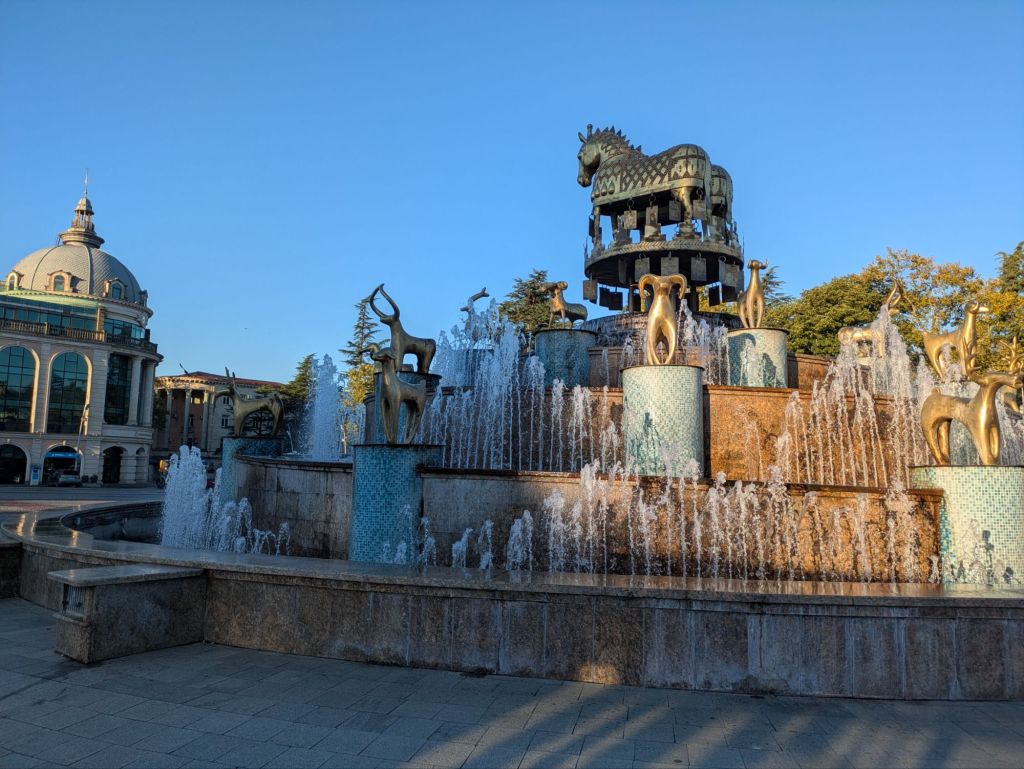
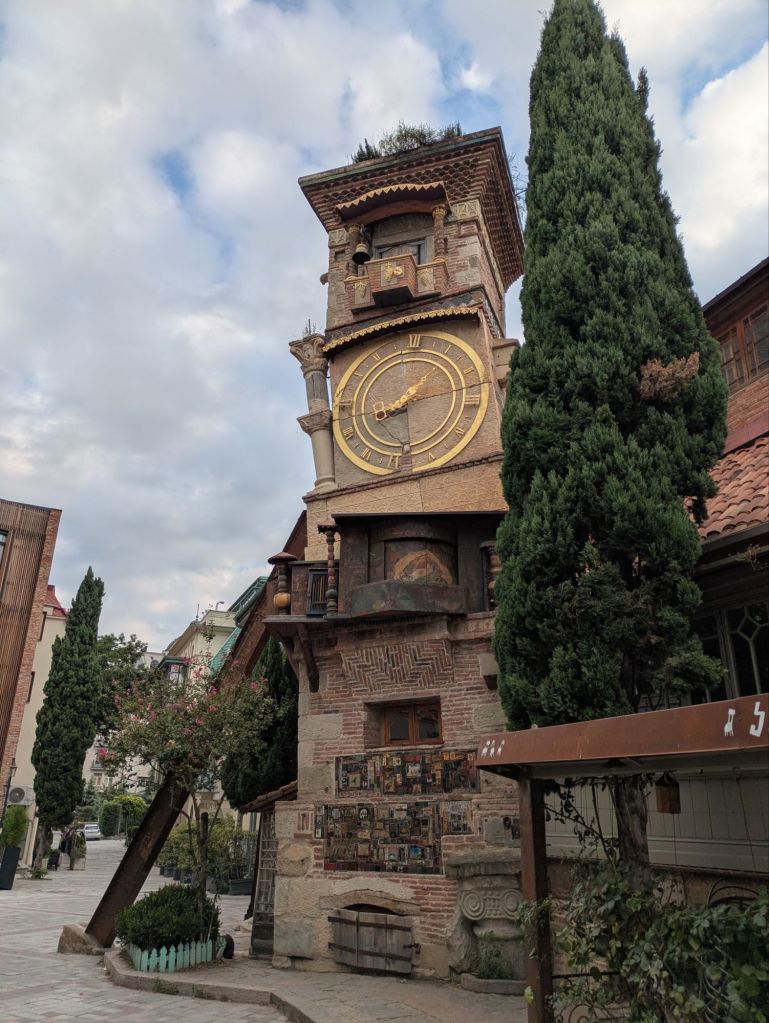
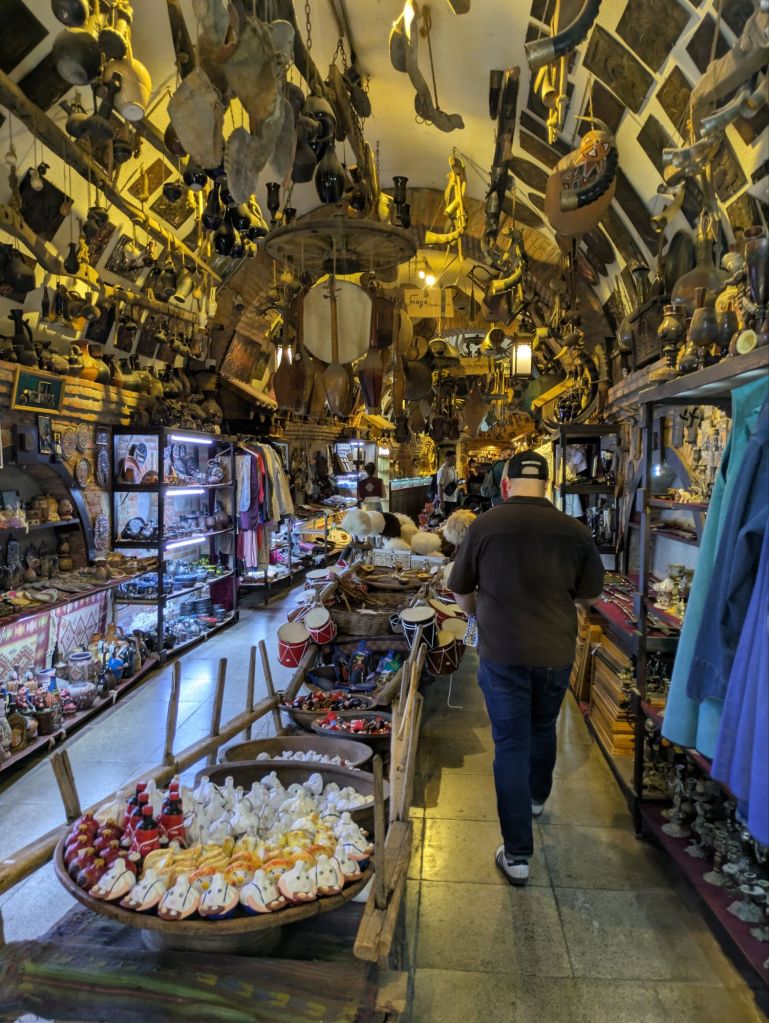
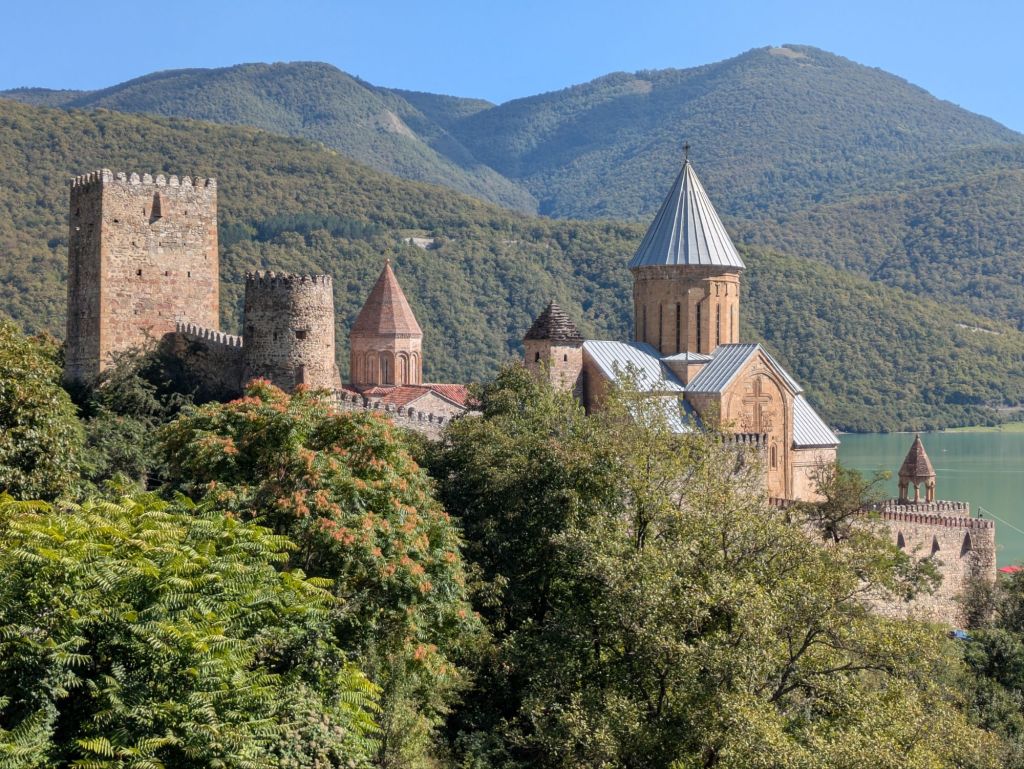
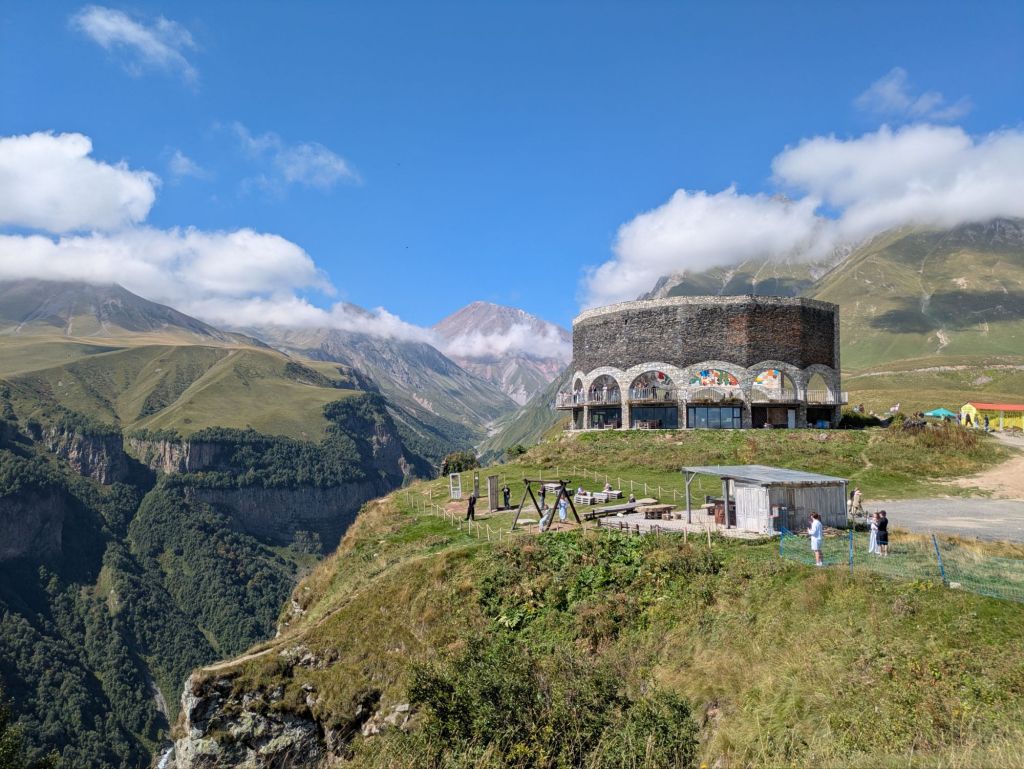
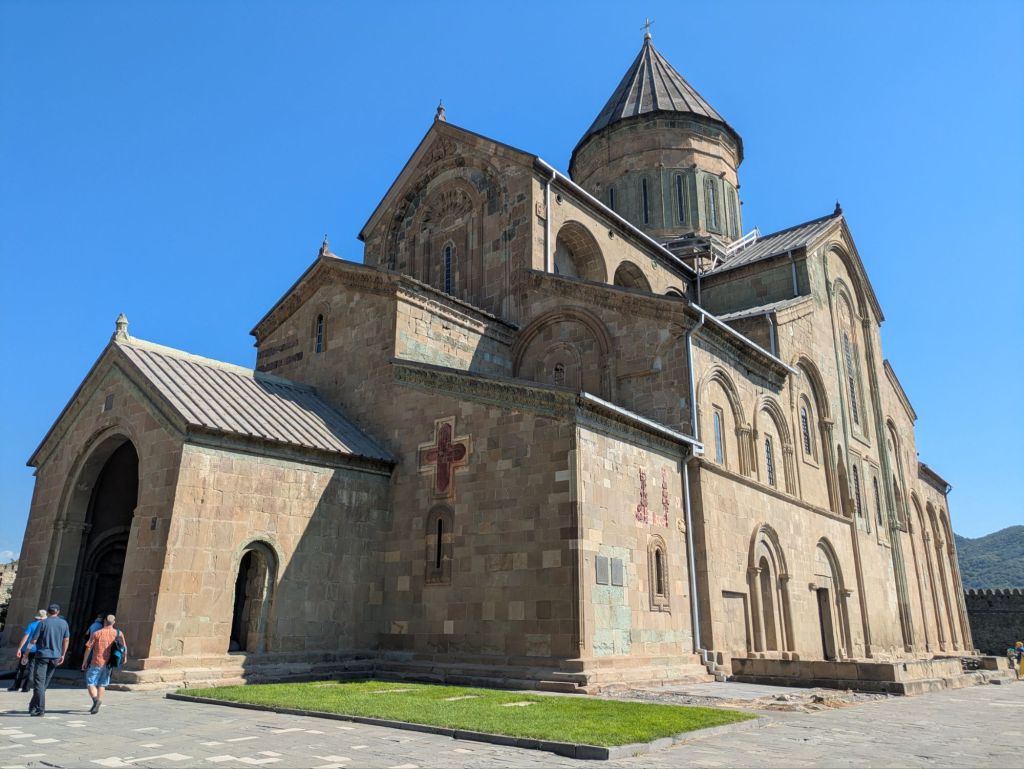
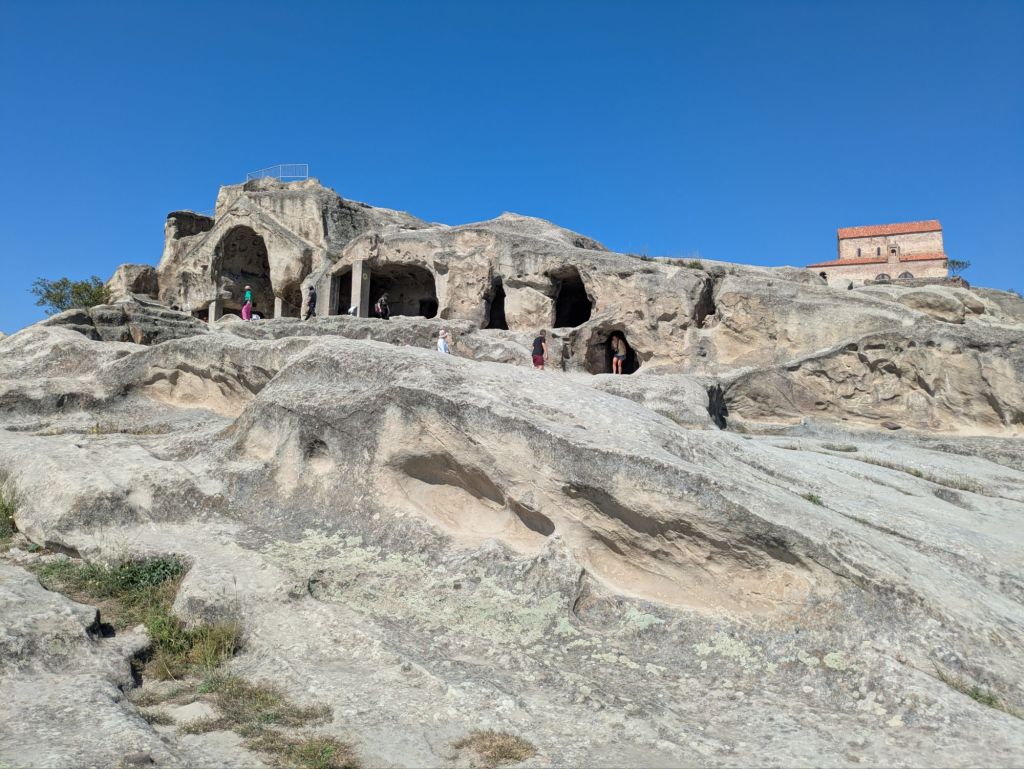
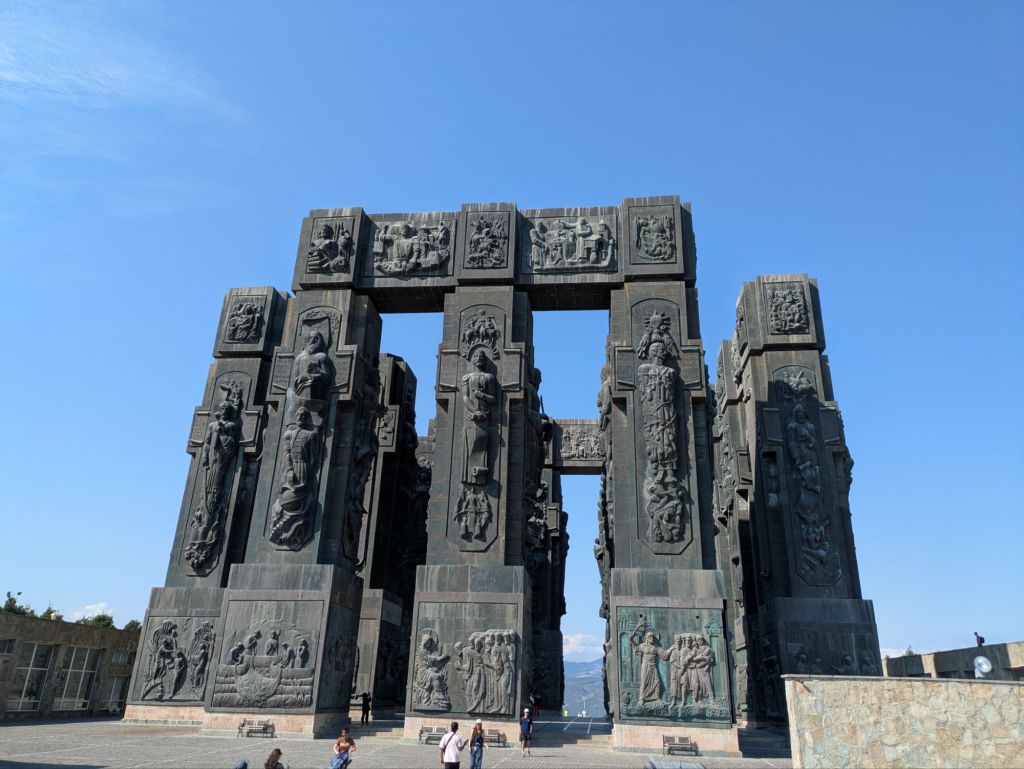
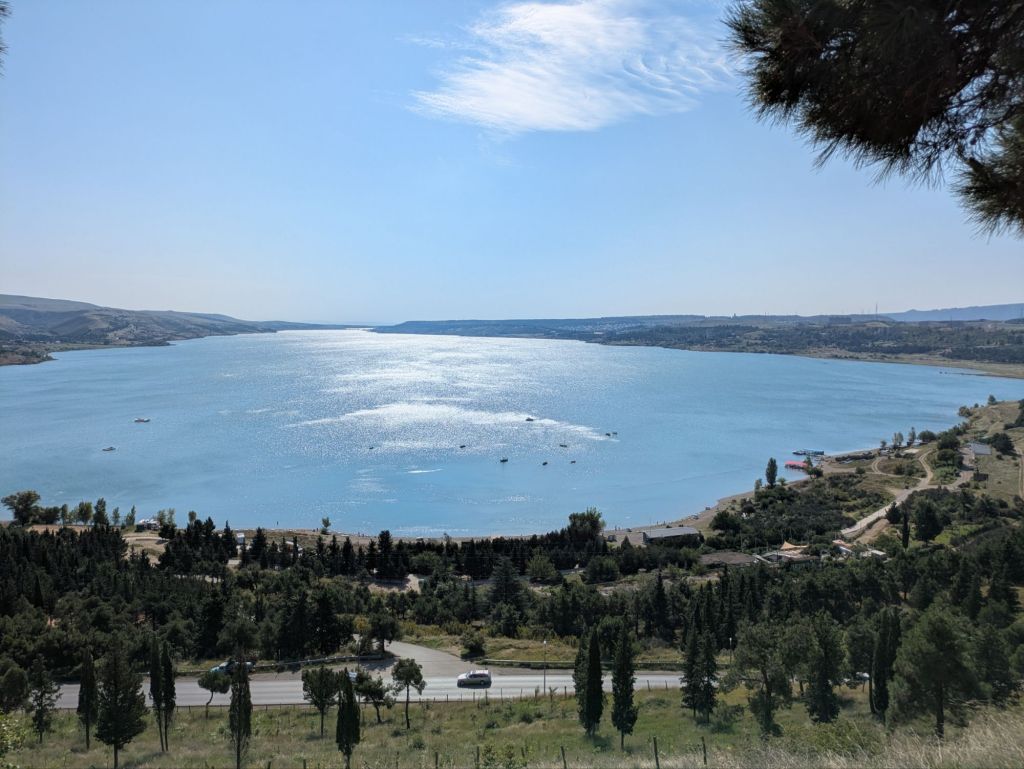
So, yes, lots of tradeoffs, but overall a very engaging and memorable place, and I’m glad I visited. But in retrospect I traveled there with unrealistically high expectations, and I had truly believed that I was going to fall in love with the country and the people, but that didn’t happen. I’m not planning a return. Luckily, I saw almost everything I had hoped to, other than the Black Sea city of Batumi.
Here’s where you can find Georgia (and Armenia, which I also visited during this same trip), in what’s called the Caucuses region. I toured Azerbaijan, the third Caucuses country in the trifecta (to the east, on the Caspian Sea) last year.
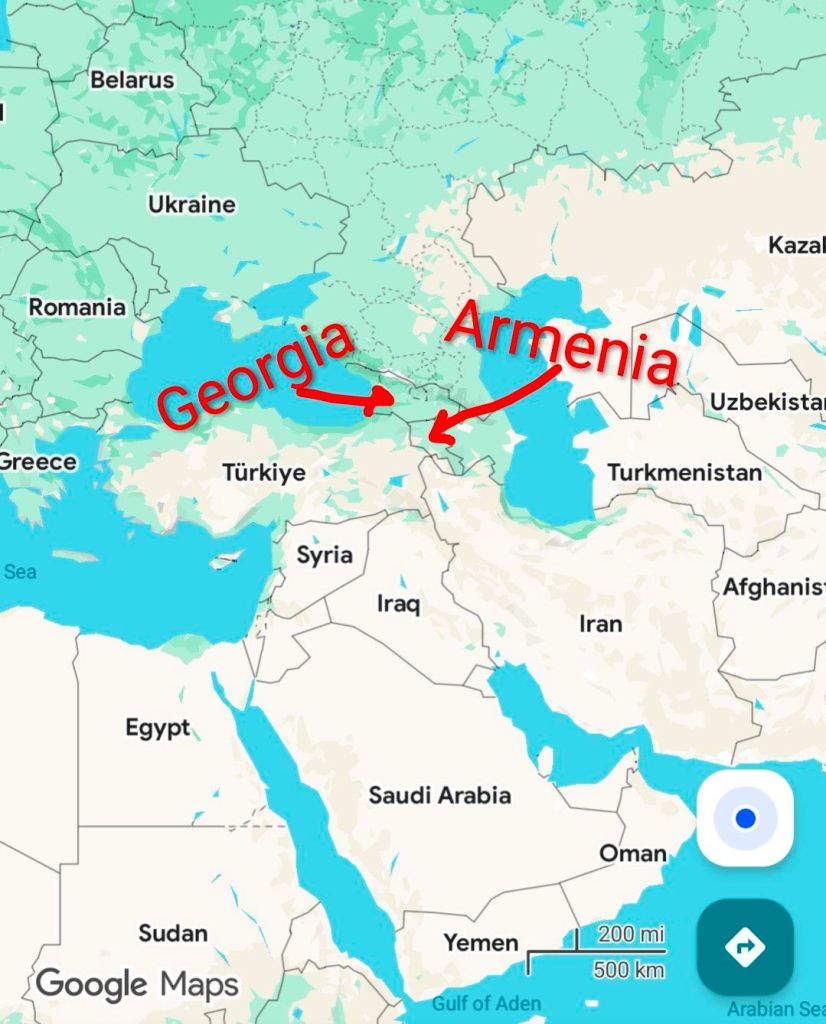
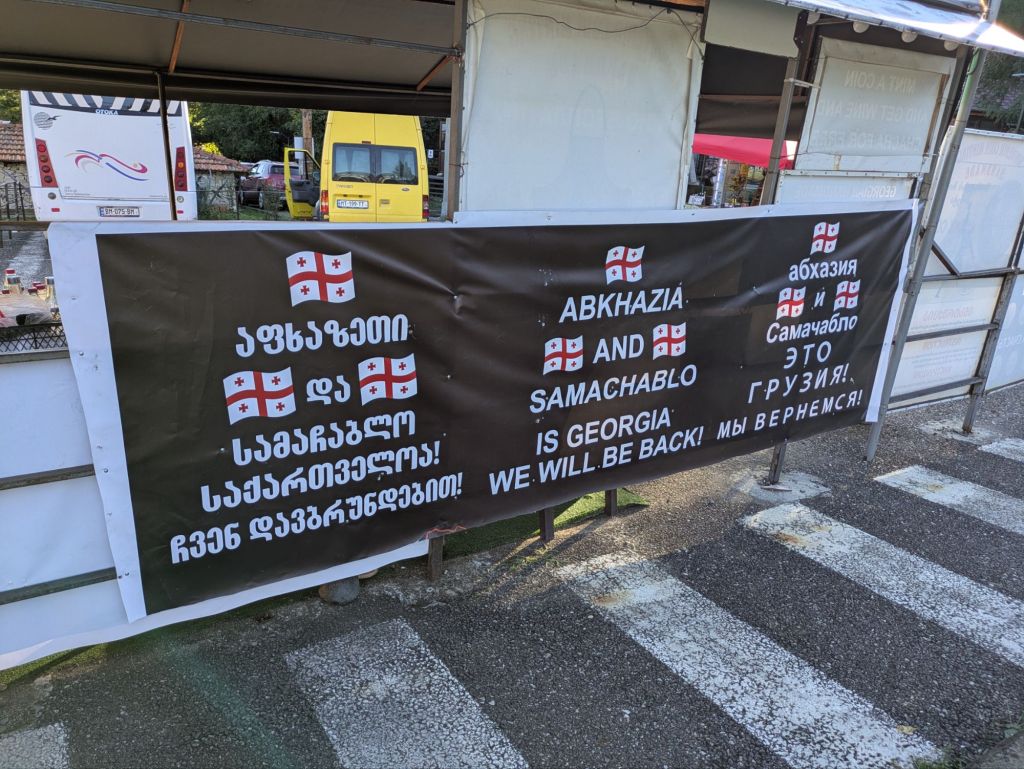
With neighbors like Russia and Turkey, it’s quite the feat that Georgia has survived as a nation. That said, there are two Russian-occupied break-away regions from the 1990s, Abkhazia and South Ossetia. These remain contentious issues through today, as you can imagine. As Georgia was formerly in the USSR, Russian is still widely spoken, but at the same time there isn’t a great love of the Russian government. It was often helpful for me to know how to transliterate Cyrillic characters into Latin characters in my head, and then use my limited Czech to get the gist when English wasn’t available. And Russian numbers are pronounced almost exactly like numbers are in Czech, so that helped when my first host asked in Russian for payment in cash for the apartment. He spoke Georgian and Russian, but no English, and I suppose he rightly figured that I’d more likely understand Russian than Georgian, haha.
Speaking of the Georgian language, it has its own unique alphabet.
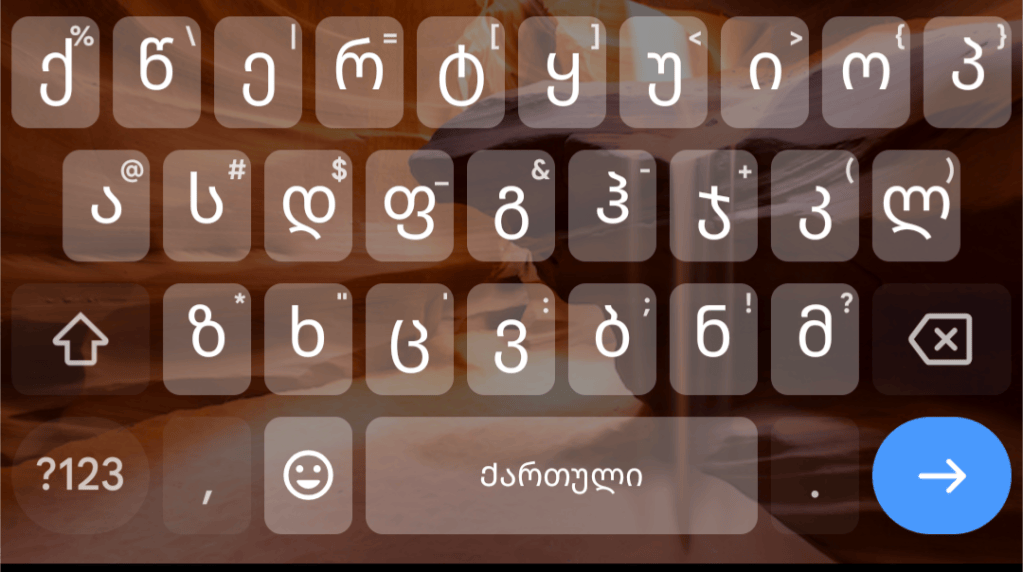
Georgian has simple vowel sounds, but some tough-to-pronounce consonants, and many of these are quite similar and difficult to distinguish. Georgian also commonly has complex consonant clusters — here’s an example: გვბრდღვნი. The Latin spelling would be “gvbrdghvni”! (“you pluck us”). Gesundheit.
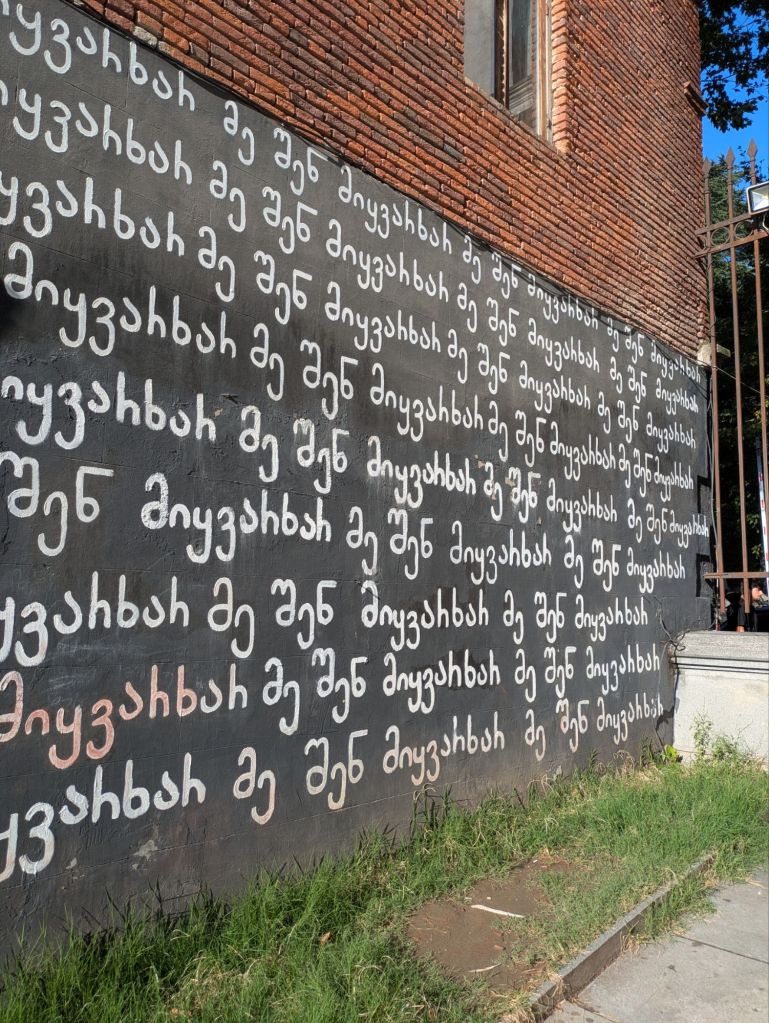
Beyond language and character sets, here is a handful of varied observations made while visiting Georgia:
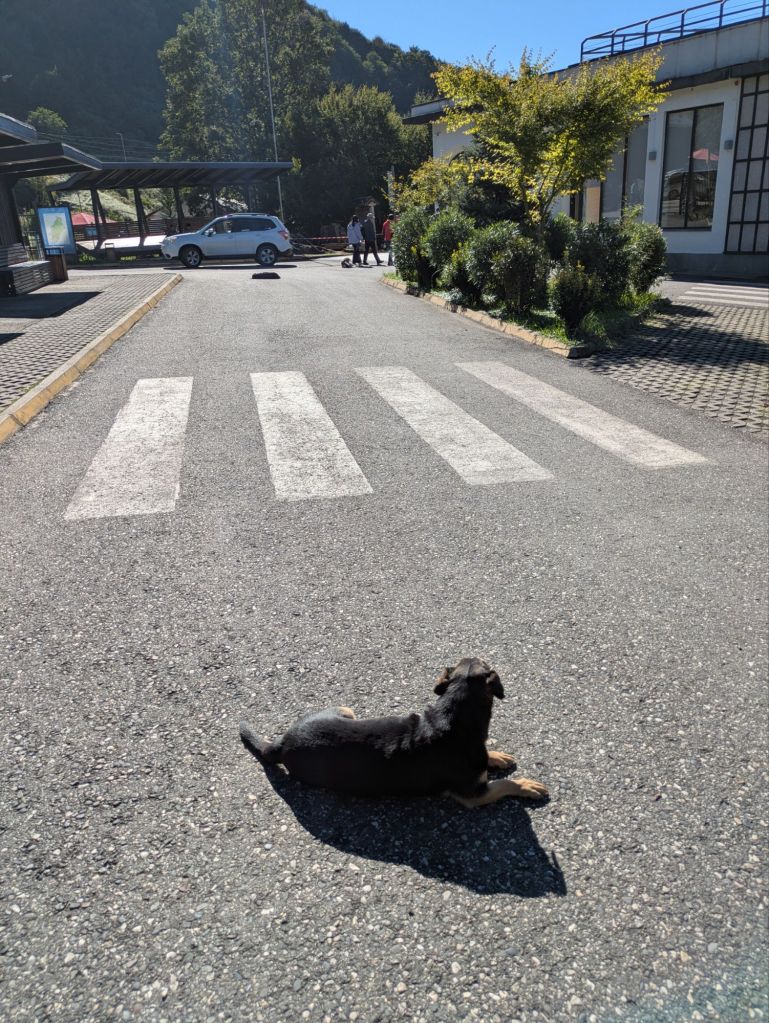
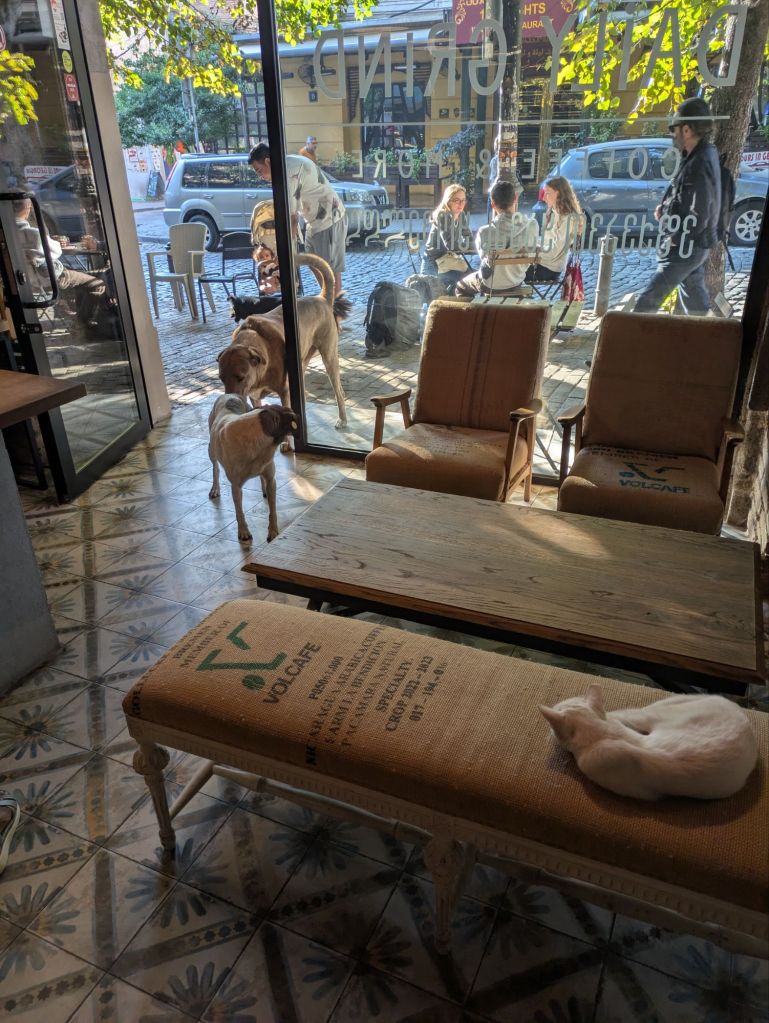
– Dogs: There are dogs EVERYWHERE in the towns and cities, such as Kutaisi and Tblisi. Authorities immunize and sterilize the dogs so as to keep them healthy while also preventing a future generation. They also put colored tags on the dogs’ ears to indicate their temperaments. While pretty rare, green tags indicate super-chill canines, while the common yellow tags denote a sort of average mutt. I don’t know why they bother with reds, but I did see some, and I tried to stay away from those dogs — I’m surprised those aren’t put down. But the dogs I avoided with the most haste were those without an ear tag — too unknown. Snacking while outside is a fool’s errand if you want some peace and quiet. As soon as you pull out some food, there’s suddenly at least one begging dog by your side from out of nowhere. They are persistent too, and they will follow you for a long ways hoping to get a nibble or two. The dogs are also funny in that they will take a nap anywhere they please, whether it’s in the middle of a street, or at the entrance to a museum, directly in front of the door such that the humans are forced to take a big step over the resting pooches, haha.
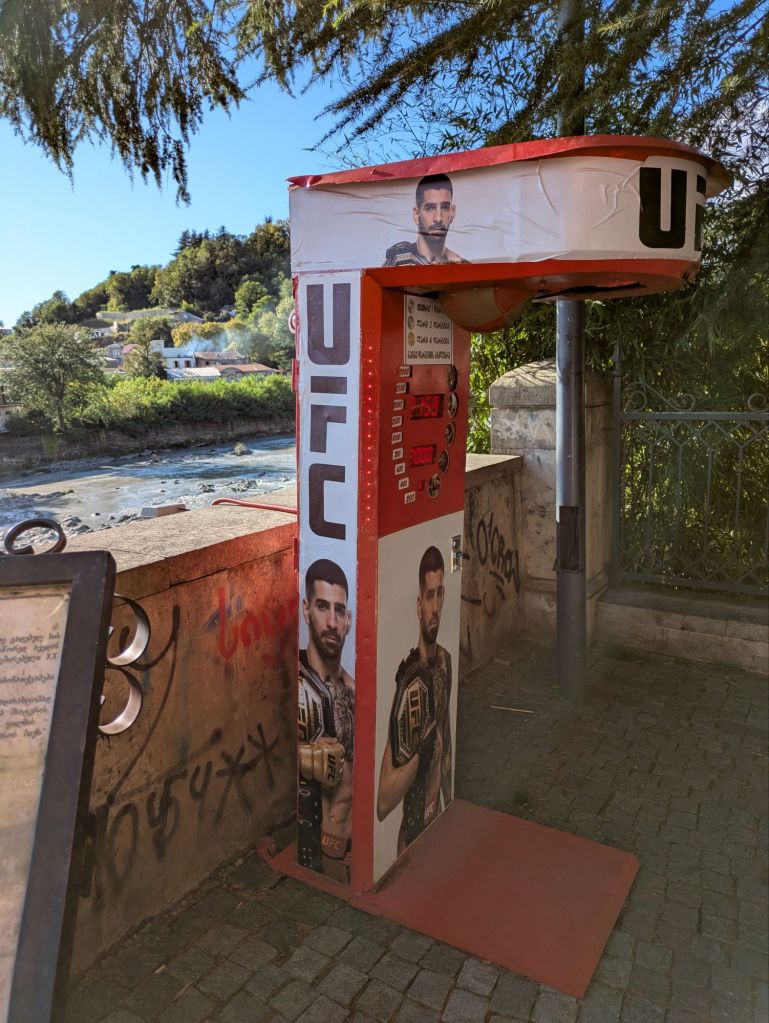
– Punching bag games are unusually popular, and it is common to see multiple, even in small towns. There are also numerous cryptocurrency “vending” machines, sometimes beside the punching bag stands.
– Another very common sight in Georgian cities, and even often in smaller towns, is a cable car line. Tblisi has at least three that I saw, plus a funicular. It’s an excellent method of transportation in urban areas with rivers and tall hills or mountains. And these often lead to old hilltop or mountaintop Soviet-era rickety amusement parks.
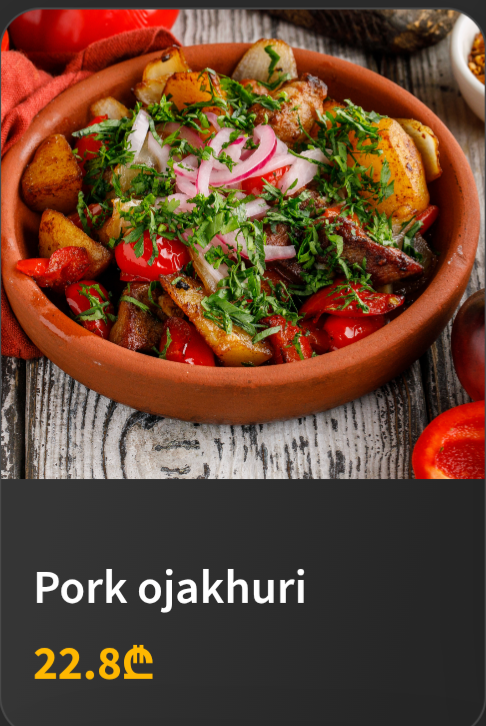
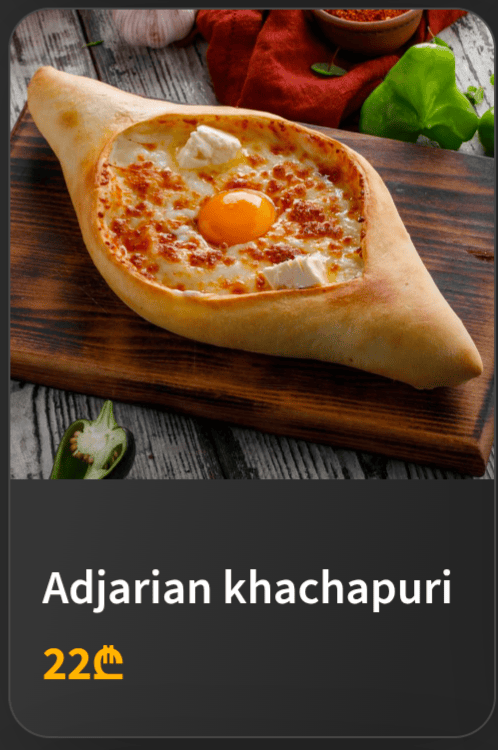
-Food, as mentioned, is excellent and varied. I learned about many dishes new to me, and I was happy for it. There’s the classic khachapuri, with all its regional variations, but with so much bread, cheese, and butter at the least, it’s very popular. Though it’s often so much dairy that it can induce hours-long GI distress, so I avoided that dish (I learned my lesson two years ago after a Georgian restaurant in Prague). Khinkali, Georgia’s dumplings, are quite tasty, and I savored many different types. But my favorite two dishes were pork ojakhuri (“family-style” pork, potatoes, peppers, and onions with perfect spices) and mchadi (the best cornbread ever), paired together. Here’s an example restaurant menu. Below are a few highlights from that menu (select an image to enlarge).

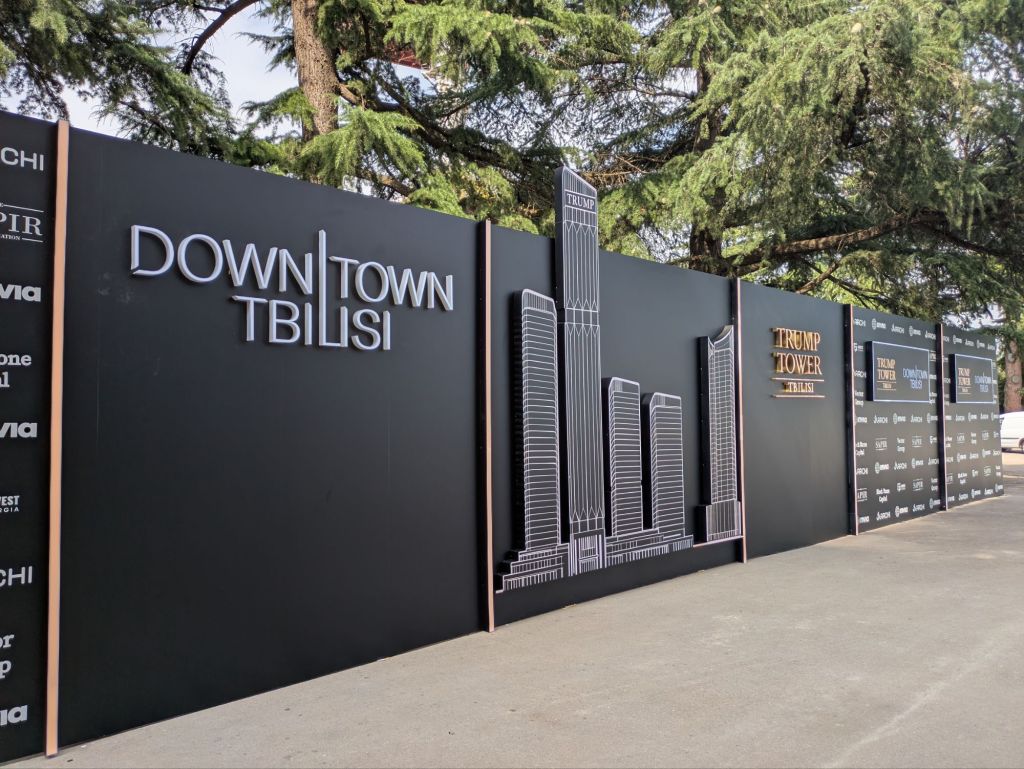
– I thought I could take a break from the T-man in the Caucuses, but alas, what will become the tallest building in Tblisi will be emblazoned with his name: https://www.forbes.com/sites/alisondurkee/2026/05/06/first-look-at-trump-tower-tbilisi-unveiled-amid-ethics-concerns/
I’ll provide additional Georgian insights in a subsequent post. But for now, let me leave you with this interesting tidbit: in Georgian, “mama” refers to a father, while “deda” is directed to a mother.
Today’s dad joke:
What do they call an audio series installment about the history of hard liquor in former Soviet republics?
A “vodkast” episode!
Today’s country-specific video:
Prior to visiting Georgia I often heard how friendly and hospitable Georgian people can be. That was usually not my experience, alas. I received similar sentiment from other foreigners in my tour groups as well, though I also met two tourists in Armenia who said they couldn’t wait to go back to Georgia because of how much nicer (relatively) people were there compared to in Armenia. The couple in the following video spent four months in Georgia, and they too had the impression that the locals were typically not overly friendly. Grocery store clerks were without fail always rude to me in Georgia, and they normally seemed pretty perturbed when I would arrive at the counter with something to buy. I never experienced that in Armenia, where clerks often even said “thank you” after the transaction. Imagine that. At one point while walking down a main street in Tblisi, I heard very aggressive bidirectional yelling, and I looked over to see two men getting in each other’s face and screaming back and forth. I moved on quickly because it felt like there was about to be serious fisticuffs.
Today’s Stoic quotes:
I’m not sure if Quincy Jones would be considered to be a Stoic per se, but I really like this quote from him: “I don’t have any problems, I have puzzles.” ~ Quincy Delight Jones
Here’s another winner: “No rational argument will have a rational effect on a man who does not want to adopt a rational attitude.” ~ Karl Popper


