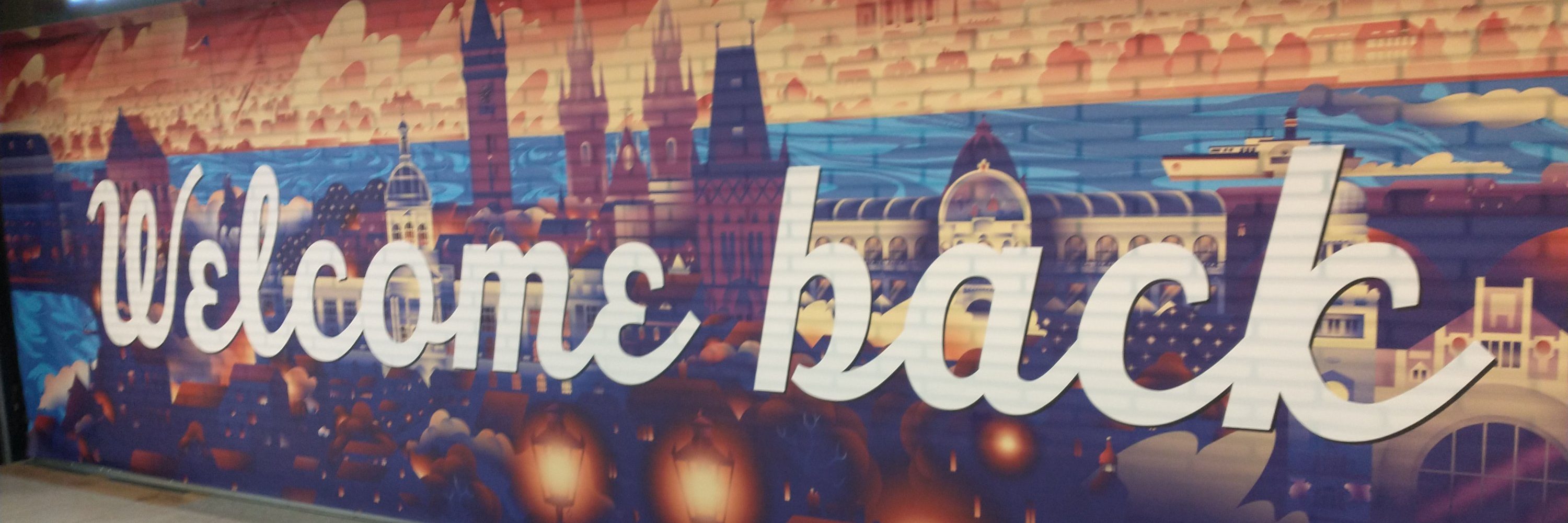
Fine dining, fine views, and hefty fines — this is Singapore! Keep your gum at home, and properly dispose of your litter.
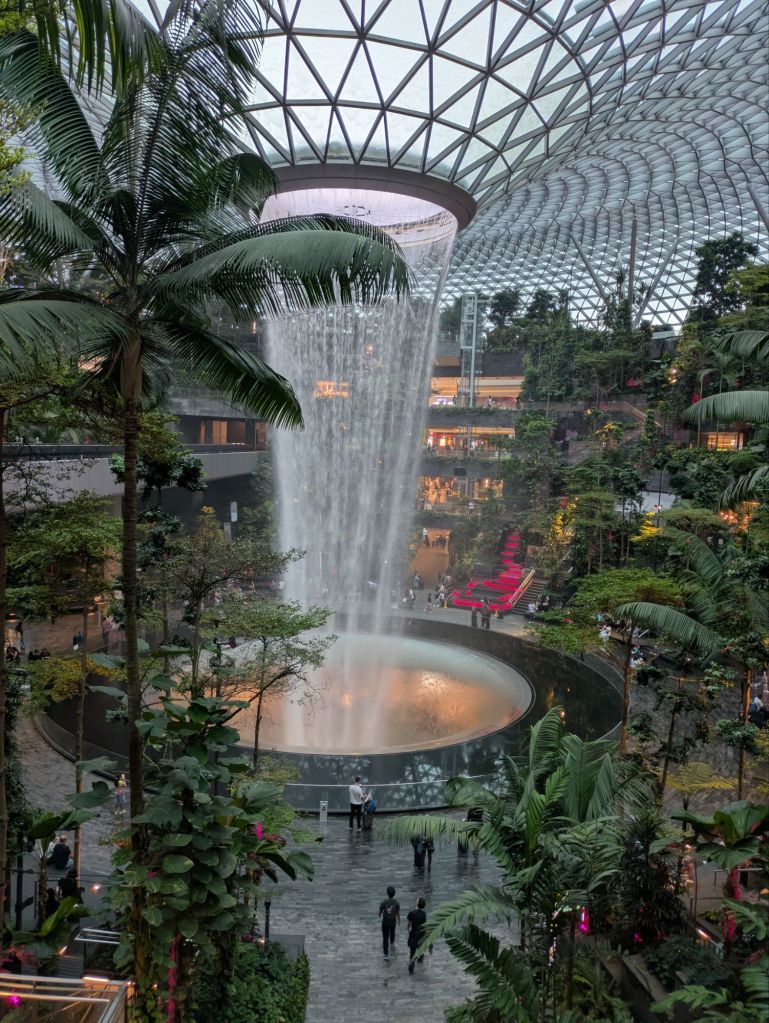
Singapore (a city-state) is definitely worth a visit for a few days. English is spoken well, there’s lots to see and do, and it’s memorable and even a bit strange. It’s full of incomparable and recognized landmarks seen in movies and TV shows. The most remarkable sight I encountered during the five-week trip to Asia, Australia, and New Zealand was in the Singapore airport! Changi Airport is its own great destination, with the world’s tallest indoor waterfall, surrounded by a lush indoor rain forest, with airport trains passing through periodically. It’s stunning, and the brain has a difficult time taking it all in. I have a DK Top 10 Singapore book, and this space in the airport is on the front cover of the book.
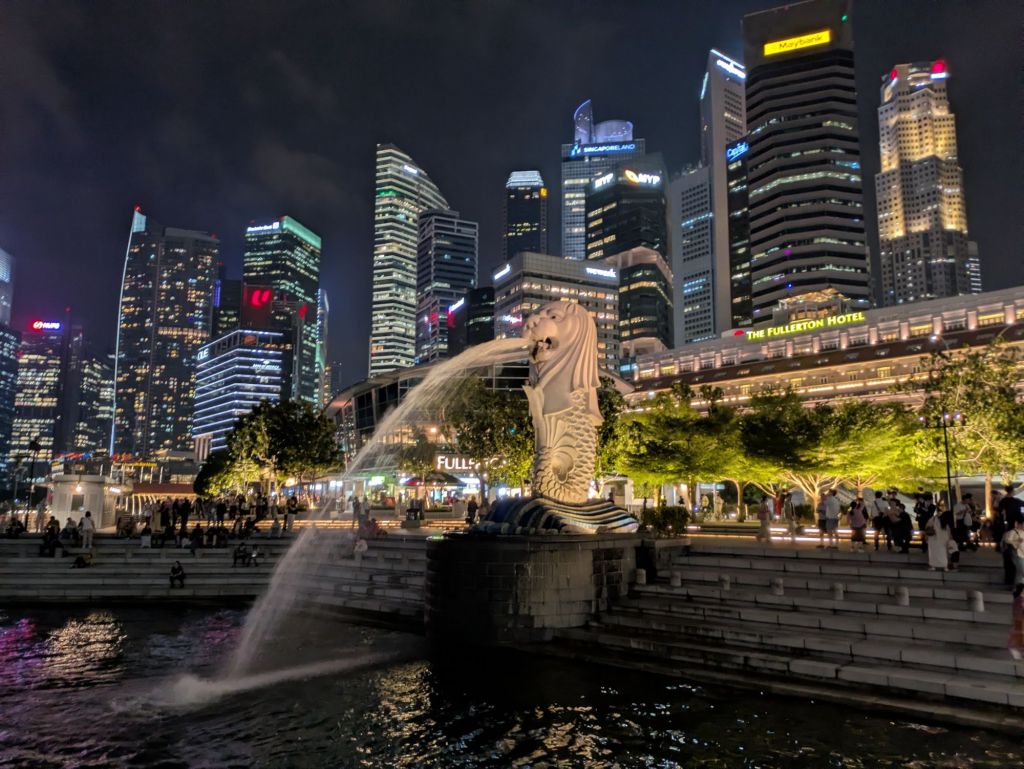
Singapore gets its name from “Singapura”, meaning Lion City: a prince from Sumatra sailed to Temasek, now Singapore, in the 14th century. He saw an animal he thought was a lion, and accordingly he named the place “Singapura” or “Lion City”, which stuck. The “mer-lion” is an iconic symbol of the city which you can find in various areas, and it’s half-lion, half-fish, representing the city’s fishing roots and the Lion City name.
A Brit named Stamford Raffles established Singapore as a trading post of the British Empire in 1819, and Singapore came under direct British control in 1867. In 1959 the city-state gained self-governance and is now one of the very wealthiest countries per capita in the world. The legacy of the British rule includes English being widely spoken, along with driving on the left.
Beyond English there are three other official languages: Malay, Mandarin, and Tamil. And unofficially, an English creole language called Singlish is often used by locals with each other. Singlish is mainly English, but is influenced by Malay, Cantonese, Hokkien, Mandarin, Teochew, and Tamil! A tour guide I had told us that he speaks Singlish with his family and friends.
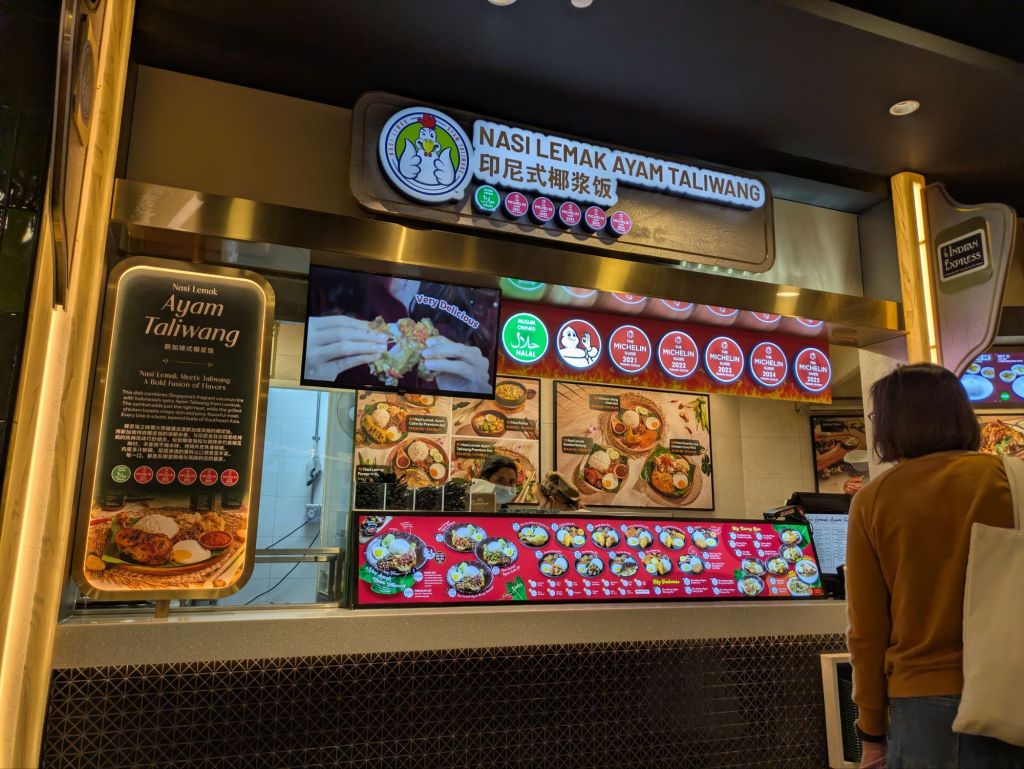
Food in Singapore is amazing, and it could easily be the sole focus of a visit here. My very favorite meal, and one I had three times, was nasi lemak, a Malaysian dish, with my preferred version including an Indonesian spicy sauce on fried chicken which has a flavor profile not unlike Nashville hot chicken. Also included are rice, a fried egg, cucumber slices, dried peanuts, and dried anchovies. It’s unbelievably good, and I hope to ever find such a combo again. Here’s what it looks like, from my favorite Singapore restaurant, Wild Coco:
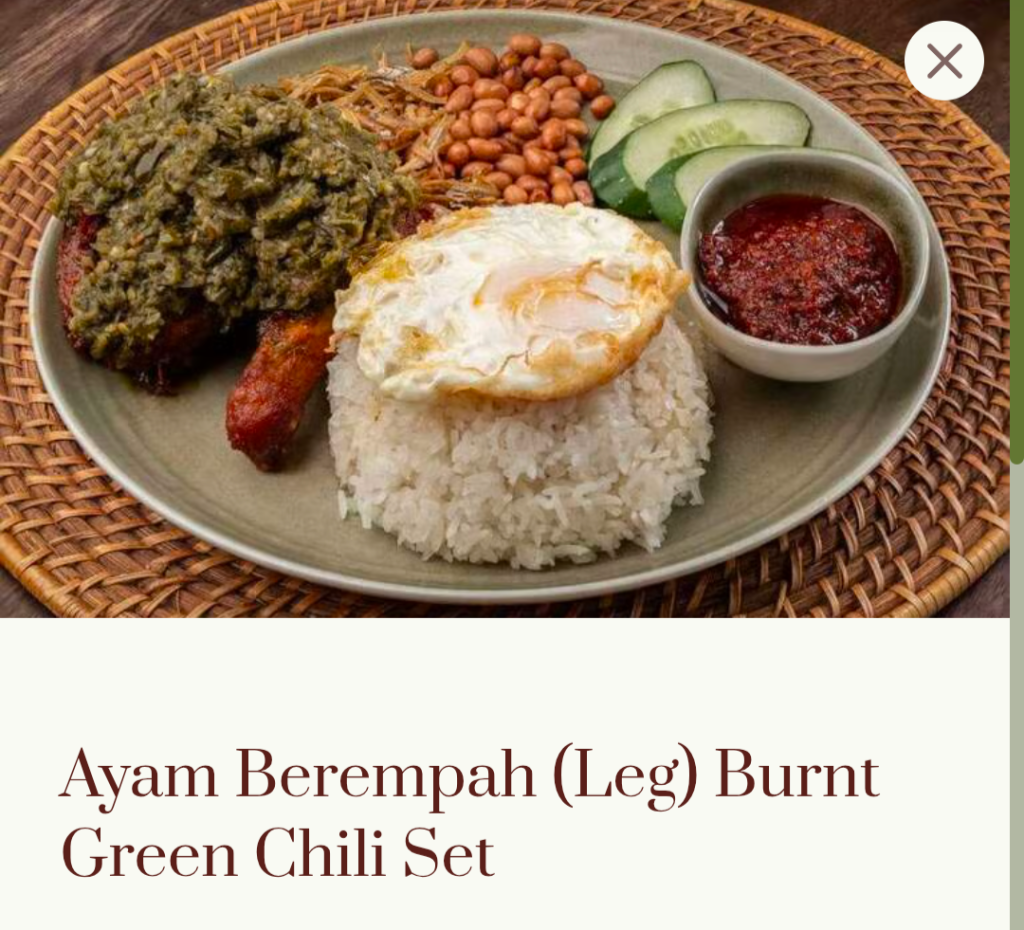
Wild Coco’s menu is chock-full of terminology I was previously unfamiliar with. It’s layers upon layers of new food names. It was fun to experience a completely new world of flavors.
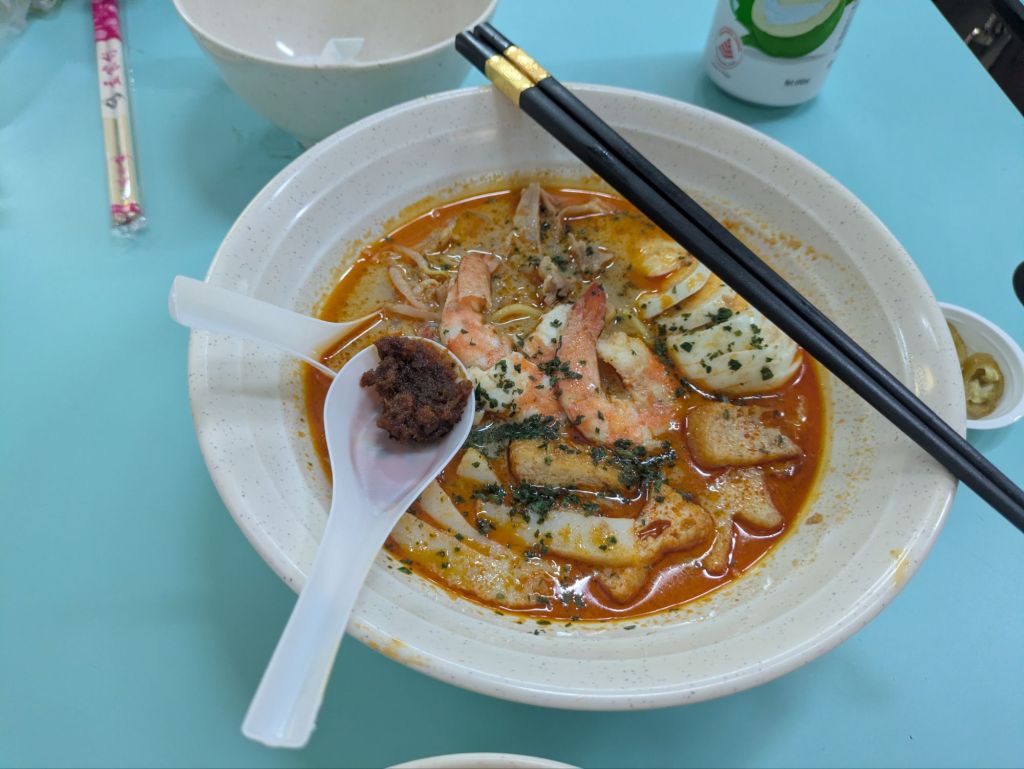
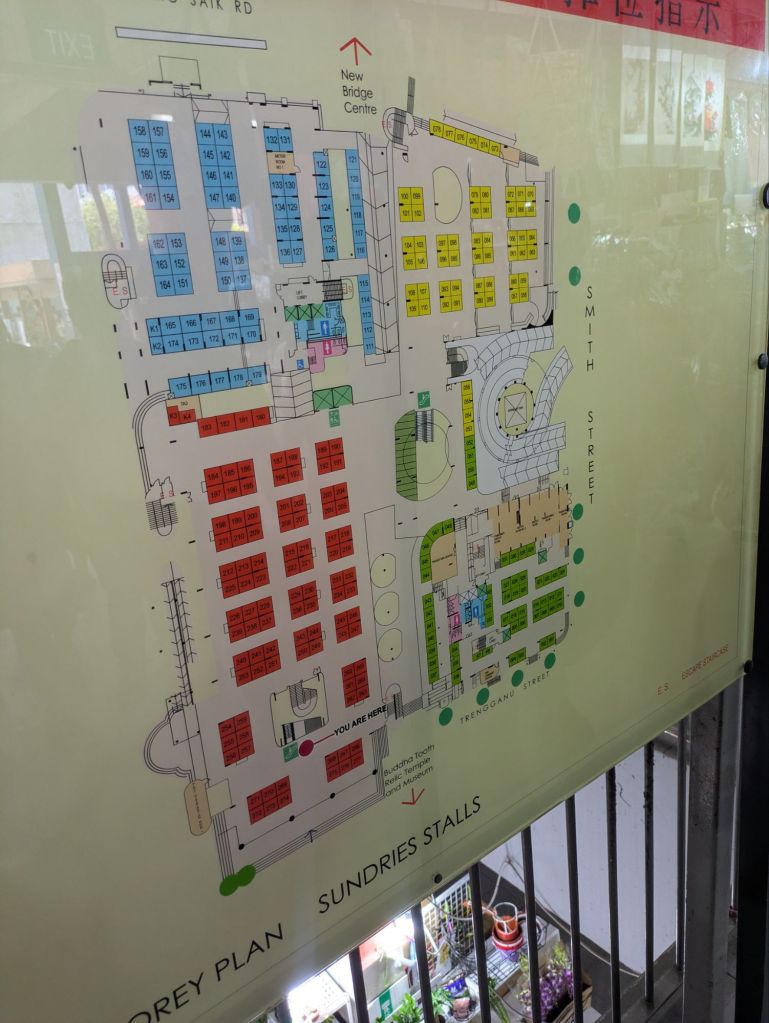
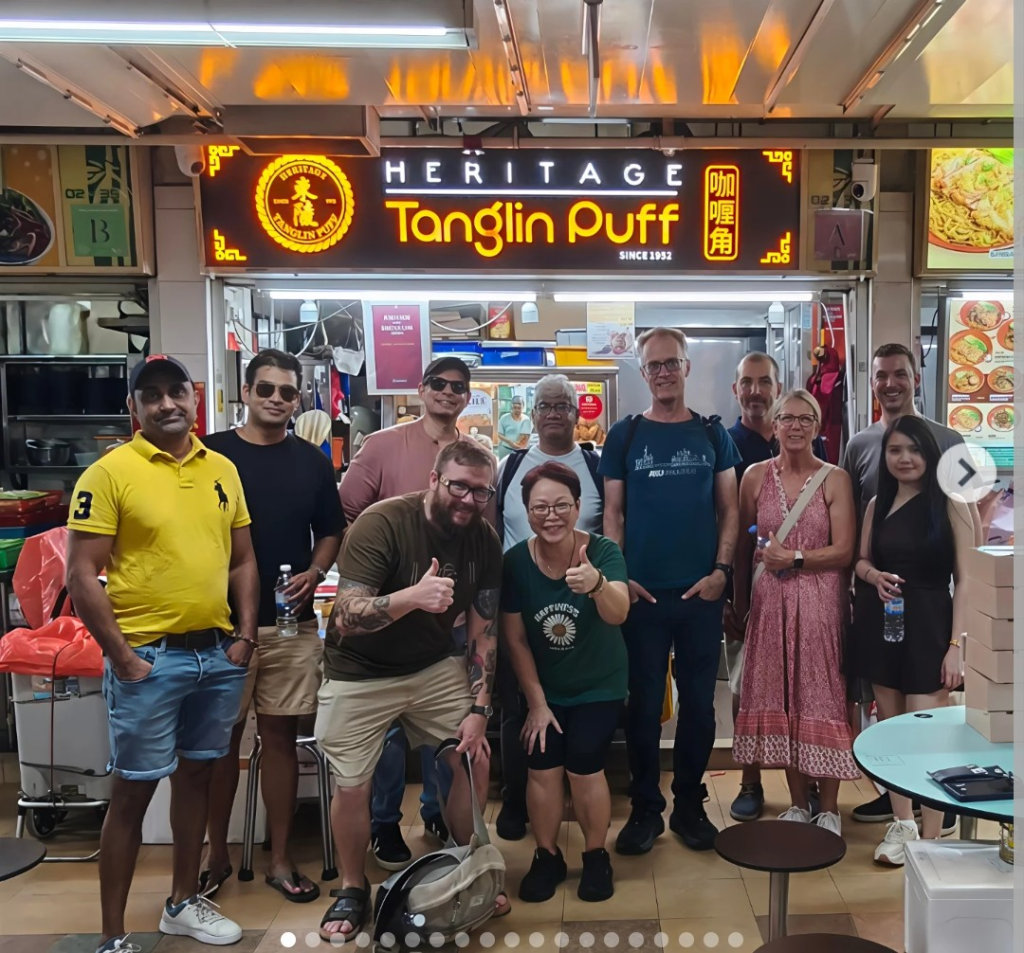
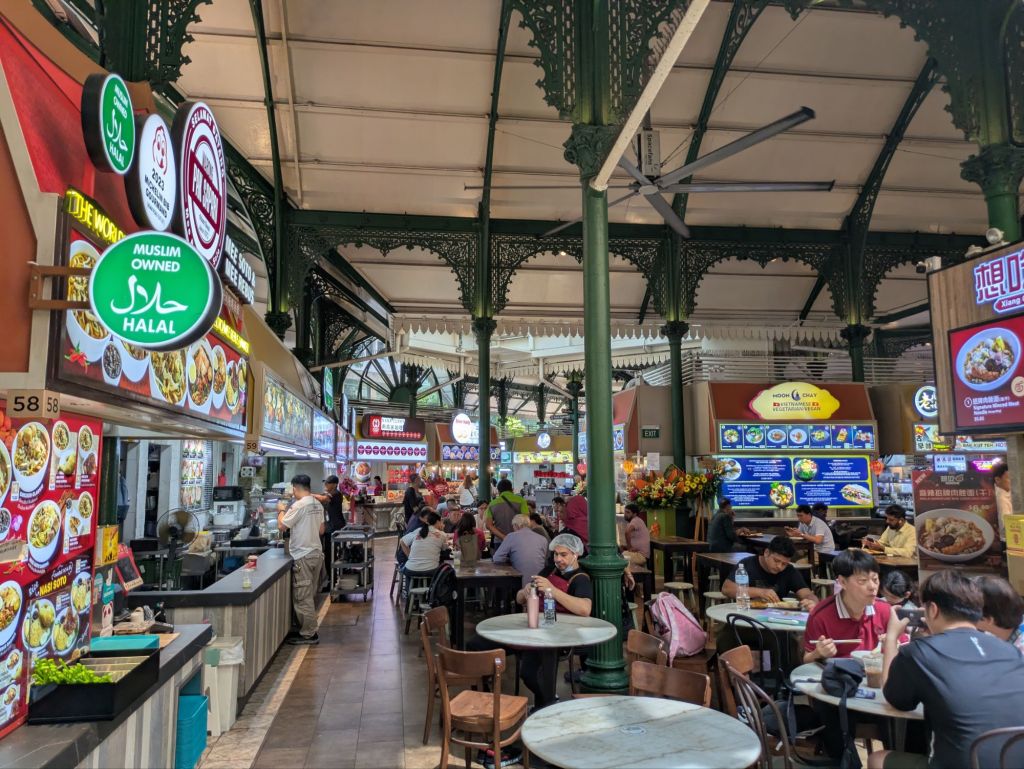
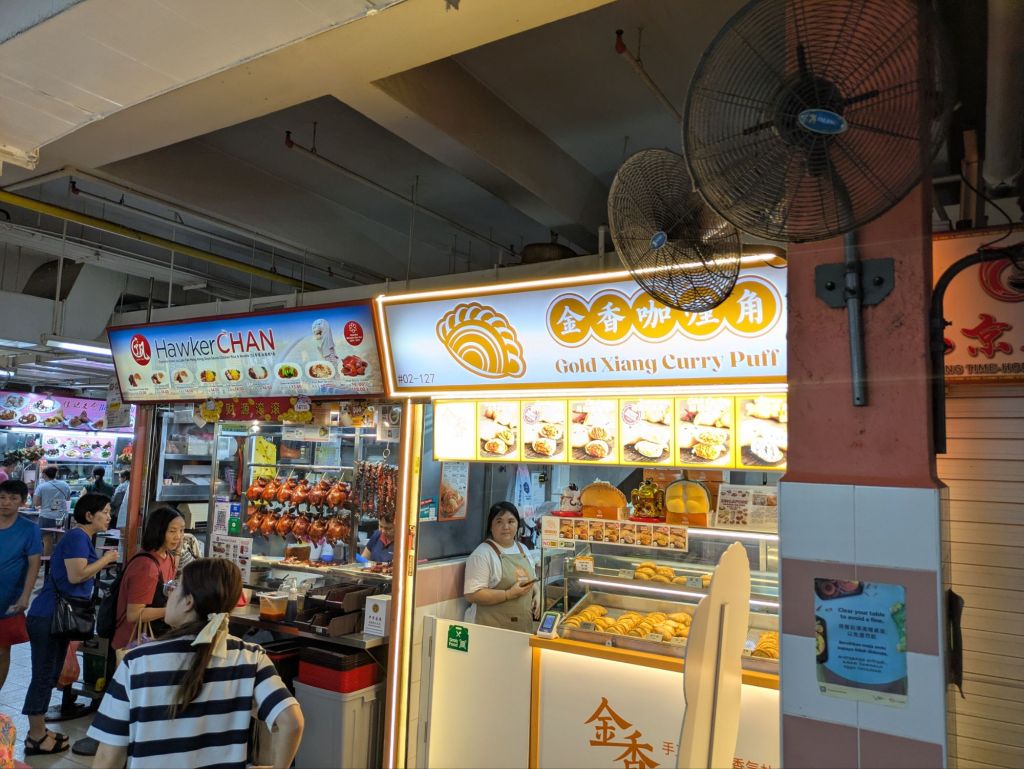
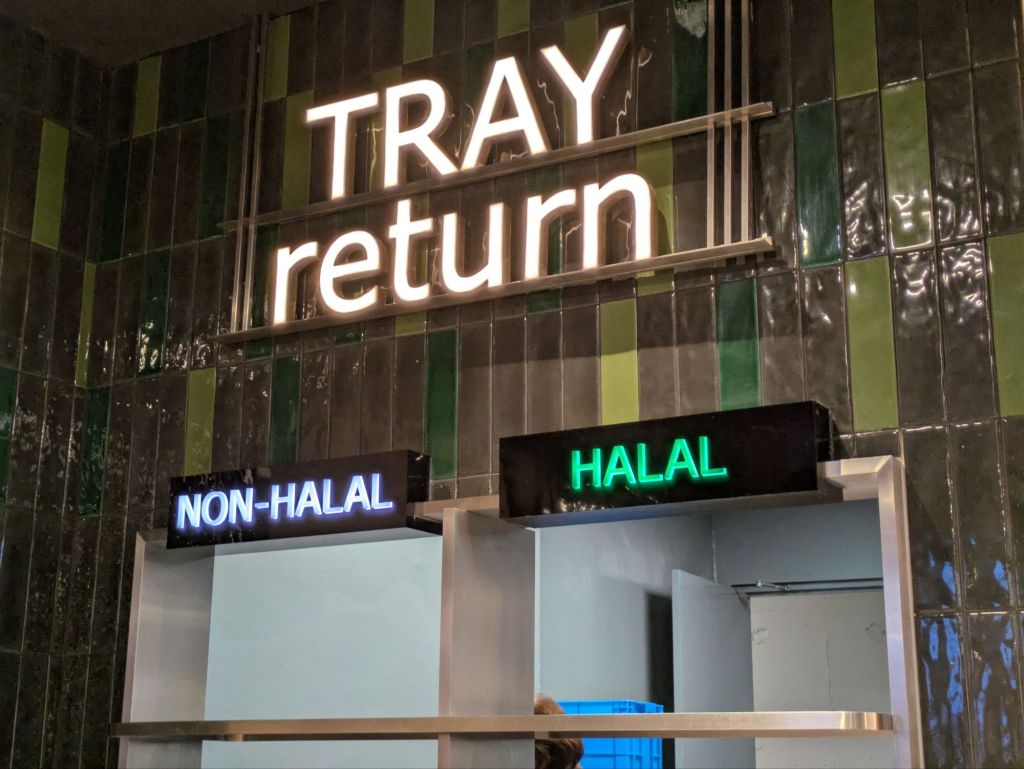
I also took a Singaporean food tour, which didn’t include nasi lemak, but which did include other dishes, including laksa, a spicy noodle soup which includes various treats, often with seafood. Singaporeans live much longer than most other nationalities, and I can see why with their excellent and healthy food choices (other than kaya toast, which is very buttery and white, haha). To get your mouth watering, check out these top dishes: https://www.chefspencil.com/25-most-popular-foods-in-singapore/ The food tour was great, and we sampled numerous different foods, and even had some coffee, which I’ll come back to below, as coffee in Singapore warrants its own separate description. Traditionally food hawkers sold their products all over the city, wherever they could find a spot, and eventually it became a problem with waste, hygiene, and other problematic disadvantages of an unregulated setup. So the city created rules around forcing these stalls to be collected together in regulated spaces with proper water, sewer, electricity, etc. The city apparently even regulates that these food hawker centers be located in concentrated population areas such that residents can easily access a food center close to where they live. It’s fantastic, and one food hawker center had 277 stalls! That’s quite the food court with so many options.
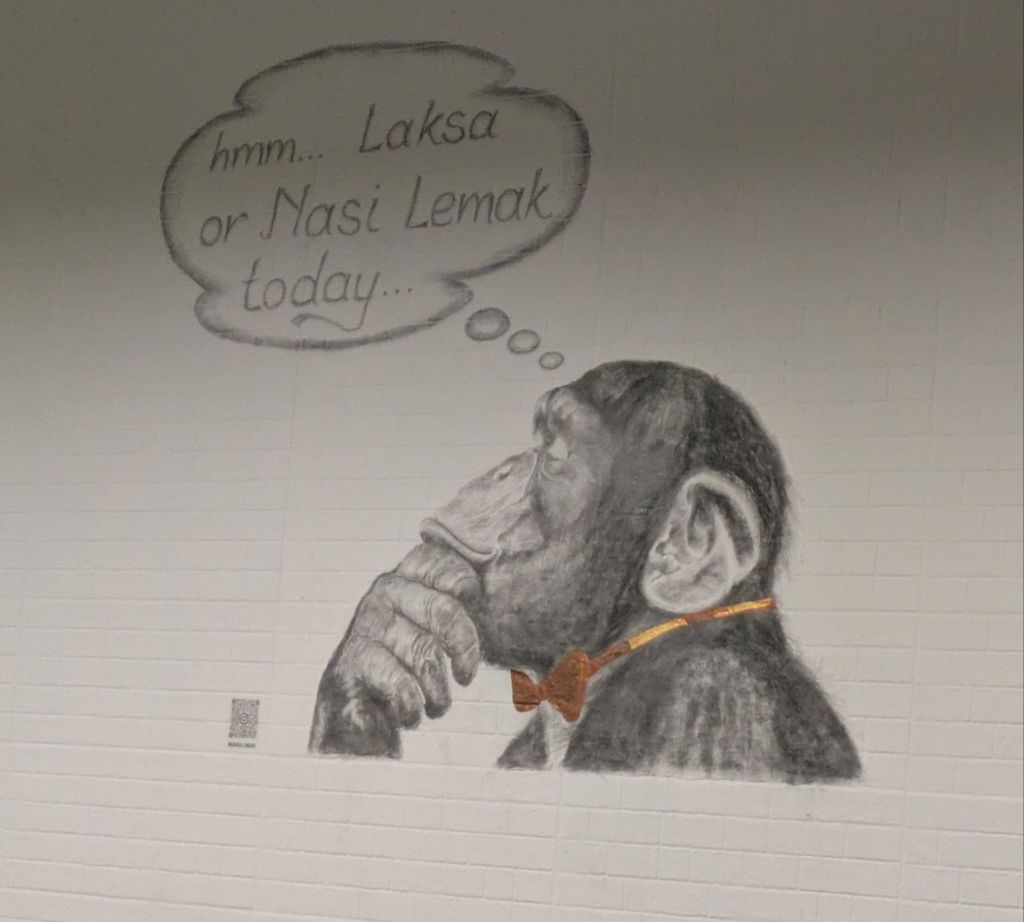
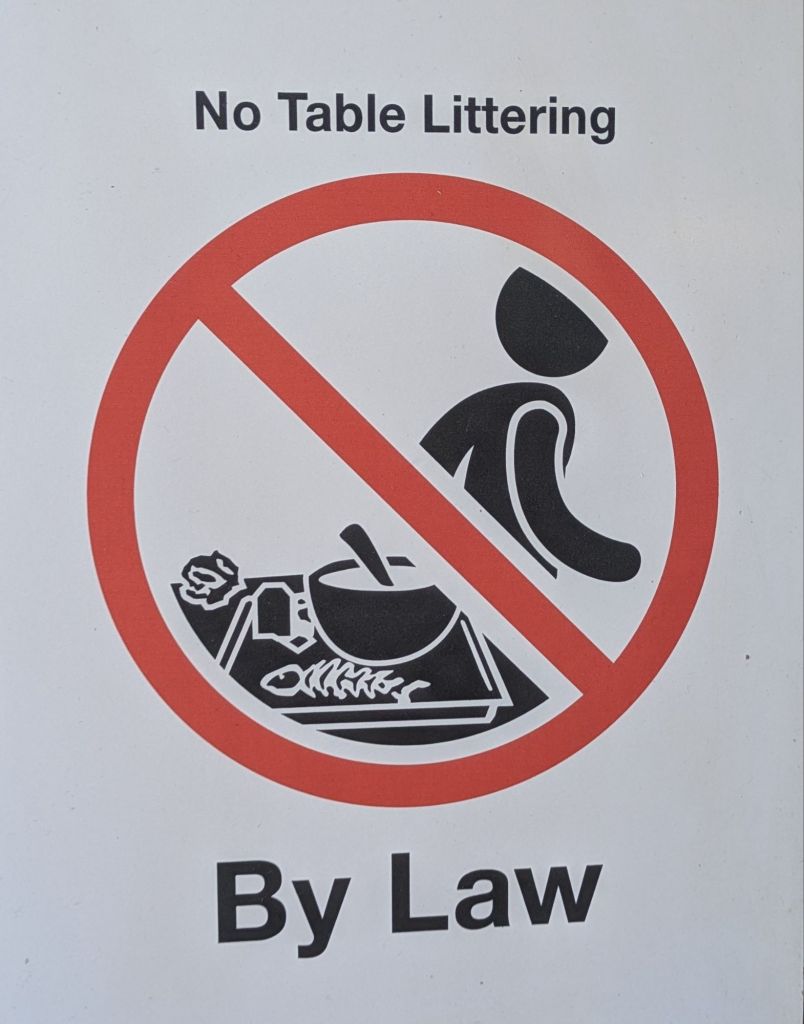
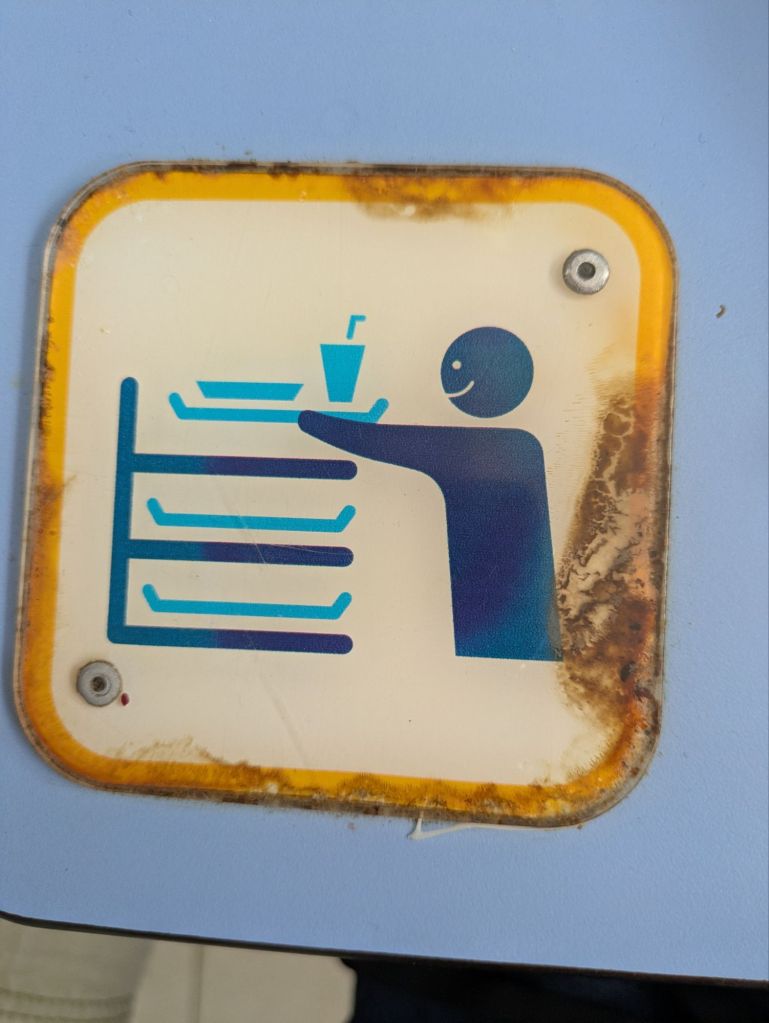
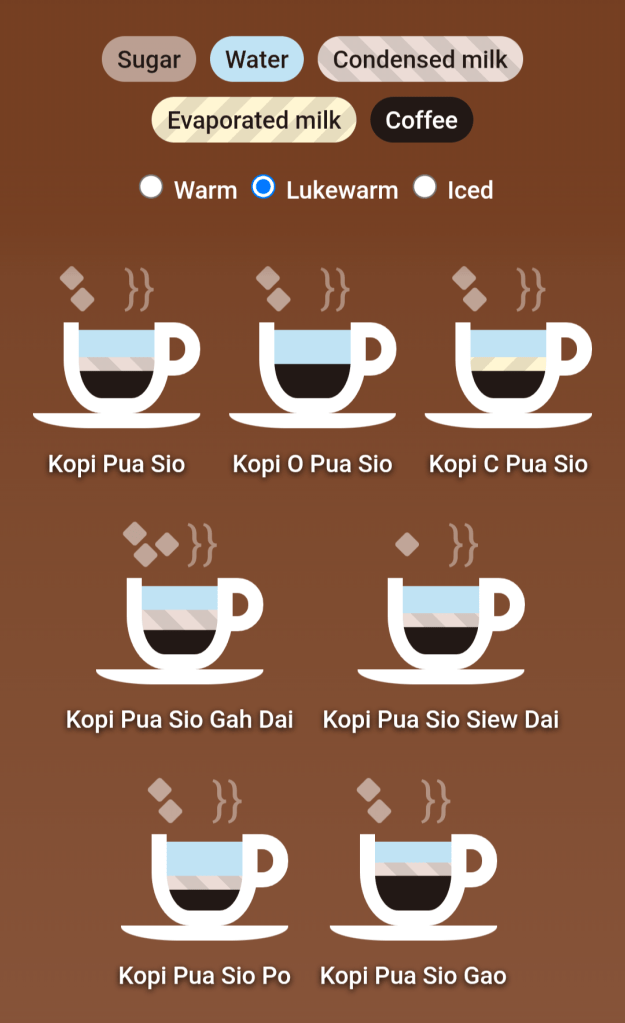
In menus one section you’ll often find is dedicated to Singaporean coffees (“kopi”). This is a broad, confusing collection of various options with names you’ve likely never heard before, with condensed or evaporated milk usually featured as a main ingredient. Explore the visual guide at https://kopi.guide/:
You have probably heard about how safe, clean, and strict Singapore is. It felt pretty safe and was clean, though not as sparkling as I had expected, and some streets actually felt a bit sketchy. There was one particular street which was the most direct route to get from my hotel to the main attractions, but I eventually avoided it at night in order to keep away from the numerous women who would call out to me asking me to join them for a drink. I assumed at first that they were prostitutes, but from what I’ve read they are hired by bars to get (mostly?) unsuspecting tourists to buy them drinks, for which the tourists are then charged exorbitant prices, and the ladies take a cut — everyone wins except the tourists. That said, I suppose some lonely men might enjoy some conversation and company, even with the high price, but I didn’t ever see anyone reeled in.
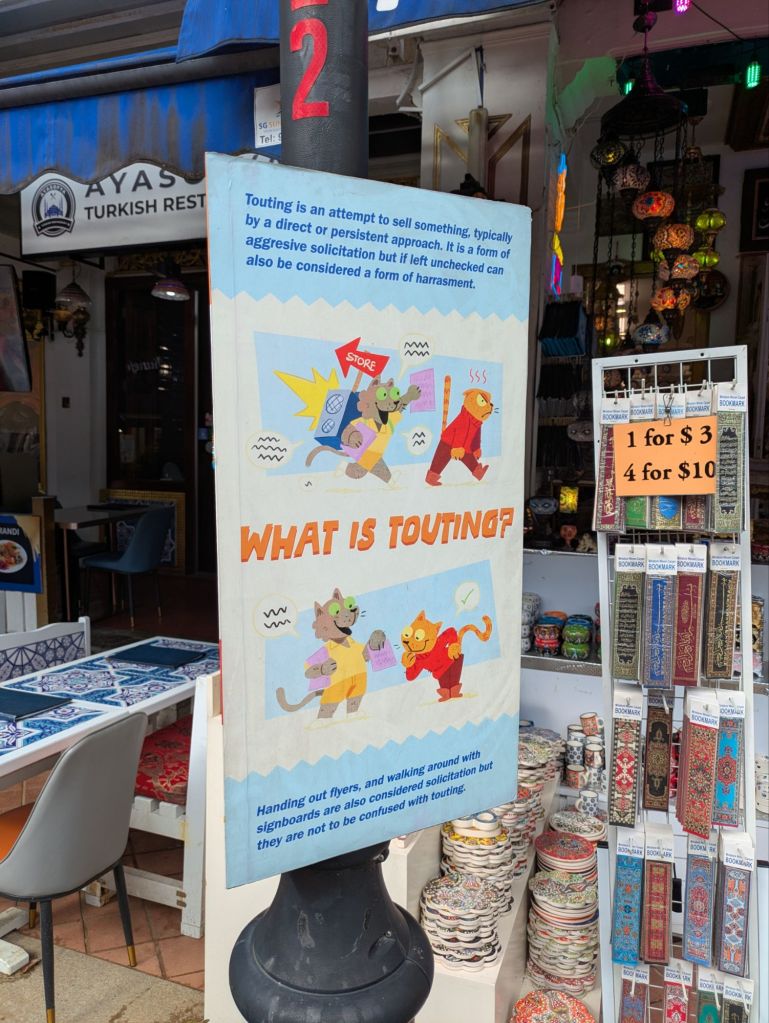
In general, I was turned off by how relatively aggressive restaurant and bar salespeople could be in the streets, often stepping in front of you as you tried to pass, asking you if you would like whatever it was they were selling. I hadn’t experienced this level of in-your-face sales tactics since Egypt, and I certainly didn’t ever see it in Japan, Korea, Taiwan, or Hong Kong. It’s enough of an issue that punishment can be severe, but enforcement seems lax. It’s called touting:
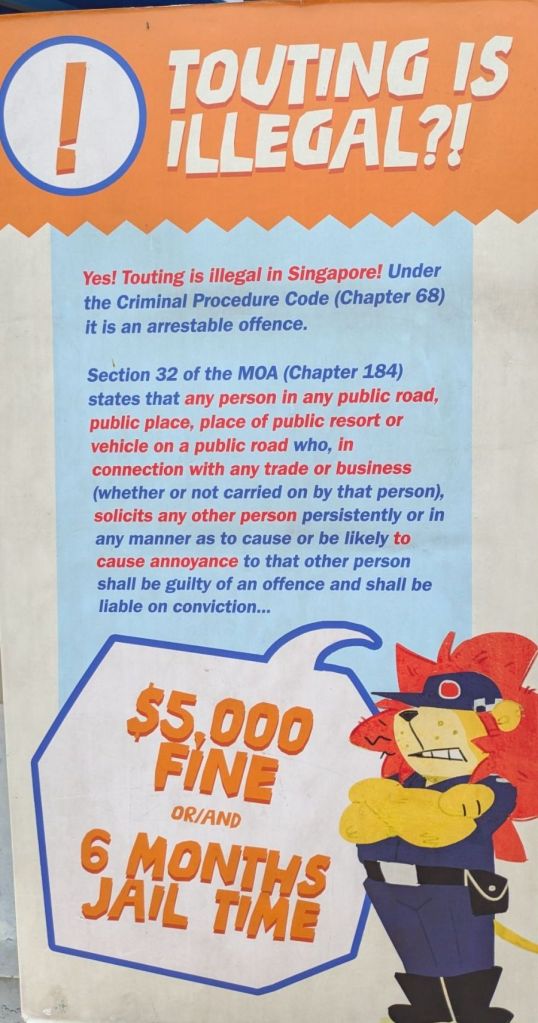
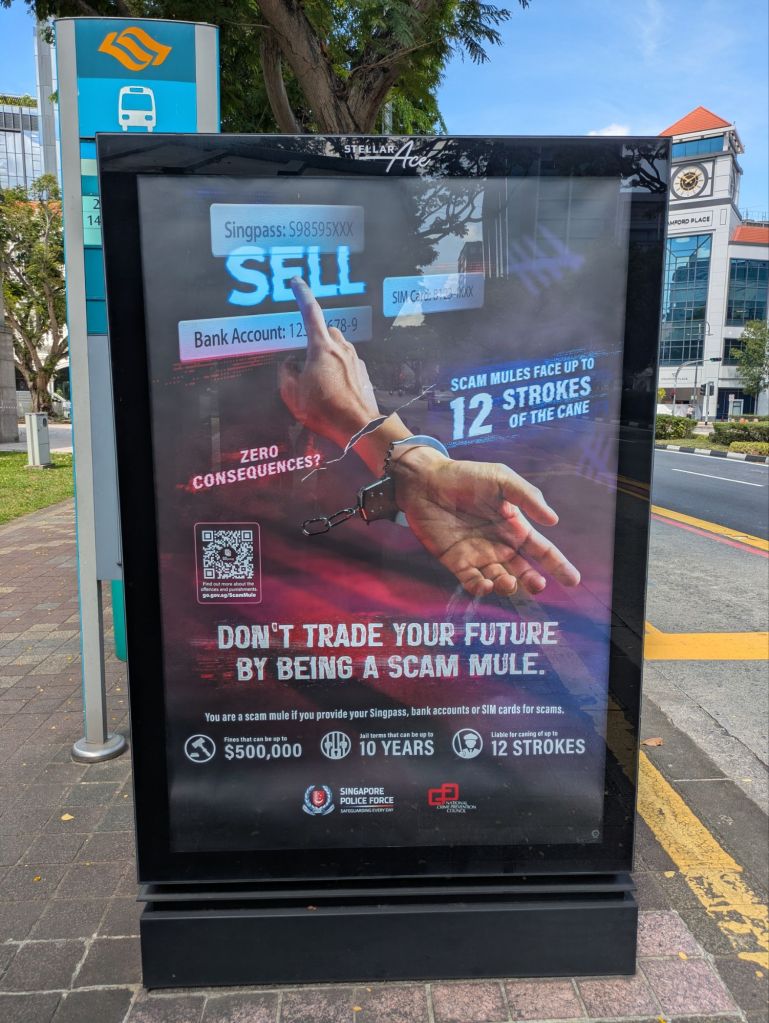
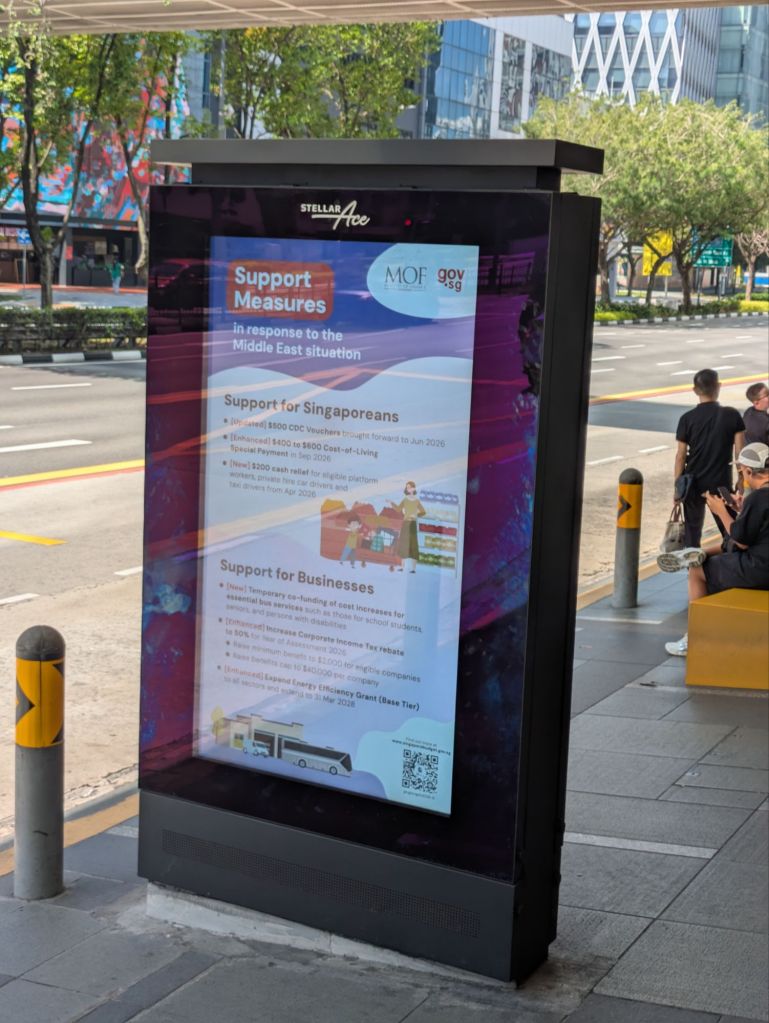
I didn’t see anyone getting into trouble for anything, and I rarely visibly encountered law enforcement personnel. But I recall the international news story from 1994 when an American teenager was convicted of vandalism in Singapore and received a caning. The number of cane strokes was reduced from six to four after United States officials requested leniency. One can still receive a punishment of caning in Singapore. “Scam mules” can face up to 12 strokes of the cane according to this bus stop ad:
Singapore continues to be known as “fine city” in addition to its lion city moniker. They love them some fines. Here are some examples in addition to the ones above:
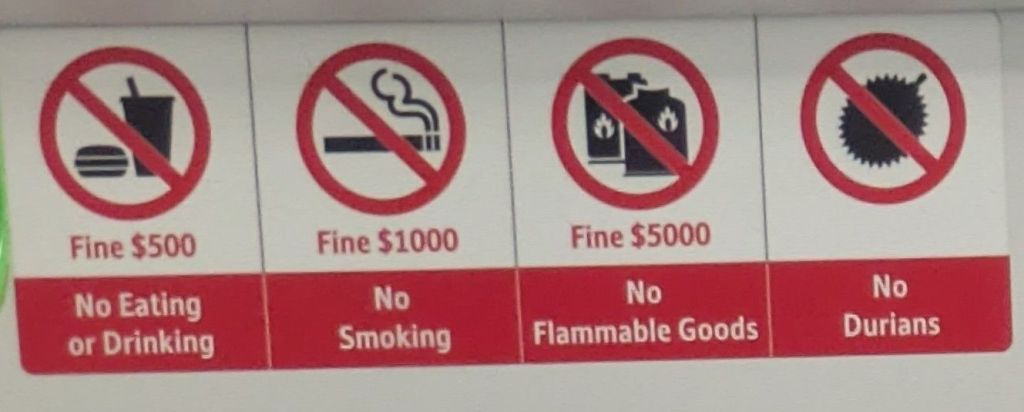
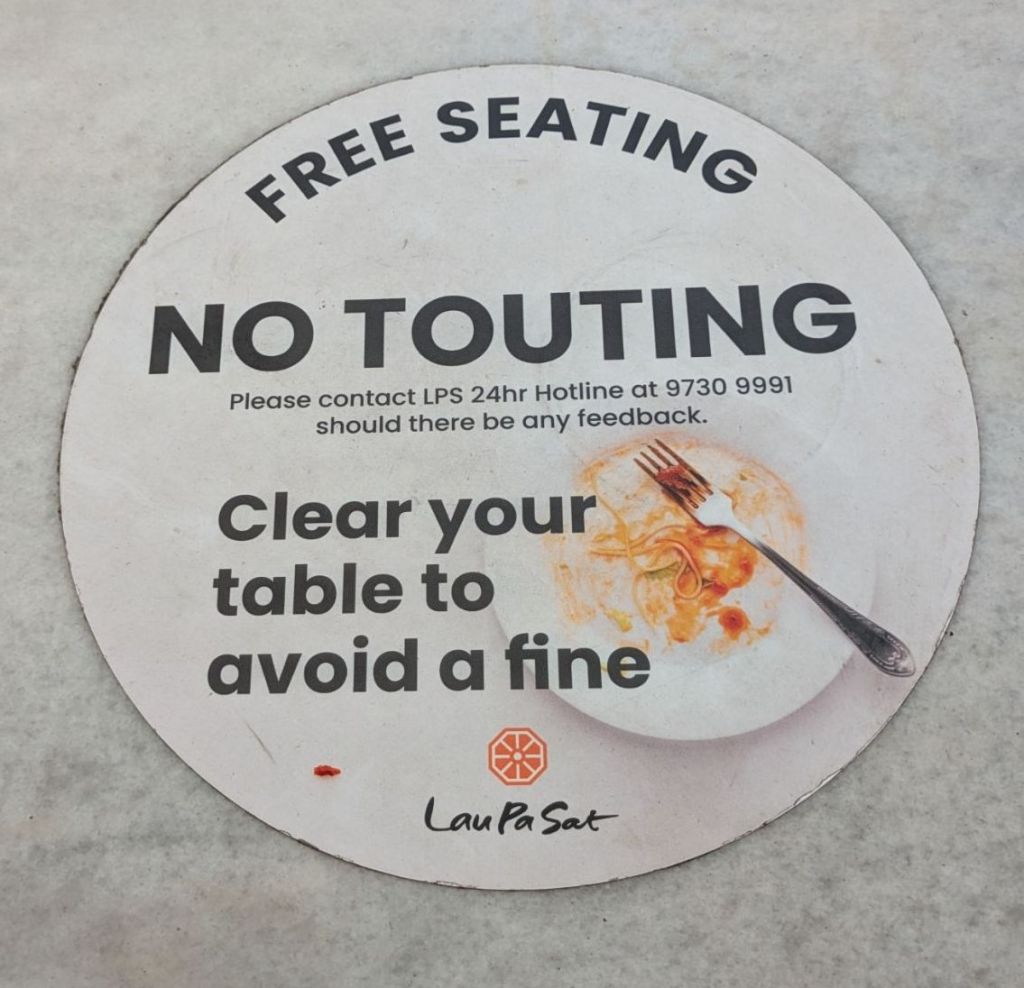
It’s even illegal to sell, advertise, or import chewing gum! You can get into trouble for bringing gum into the country, though normally they’ll just confiscate it. It’s actually not illegal to chew it, but don’t litter after you’re done, because you’ll pay a fine if caught, of course! This reference provides the rationale behind the chewing gum ban: “Singapore’s chewing gum ban took effect on 3 January 1992, after vandals began sticking used gum on the door sensors of the newly launched Mass Rapid Transit (MRT) trains, causing expensive service disruptions. Gum stuck in keyholes, on elevator buttons, and on public benches had been a recognized nuisance since the early 1980s, but the MRT problems finally pushed the government to act.”
One of the fascinating aspects of Singapore is its cultural diversity, with different historical ethnic neighborhoods, including Chinatown, Little India, Kampong Glam (Muslim Quarter), and Geylang Serai Malay District.
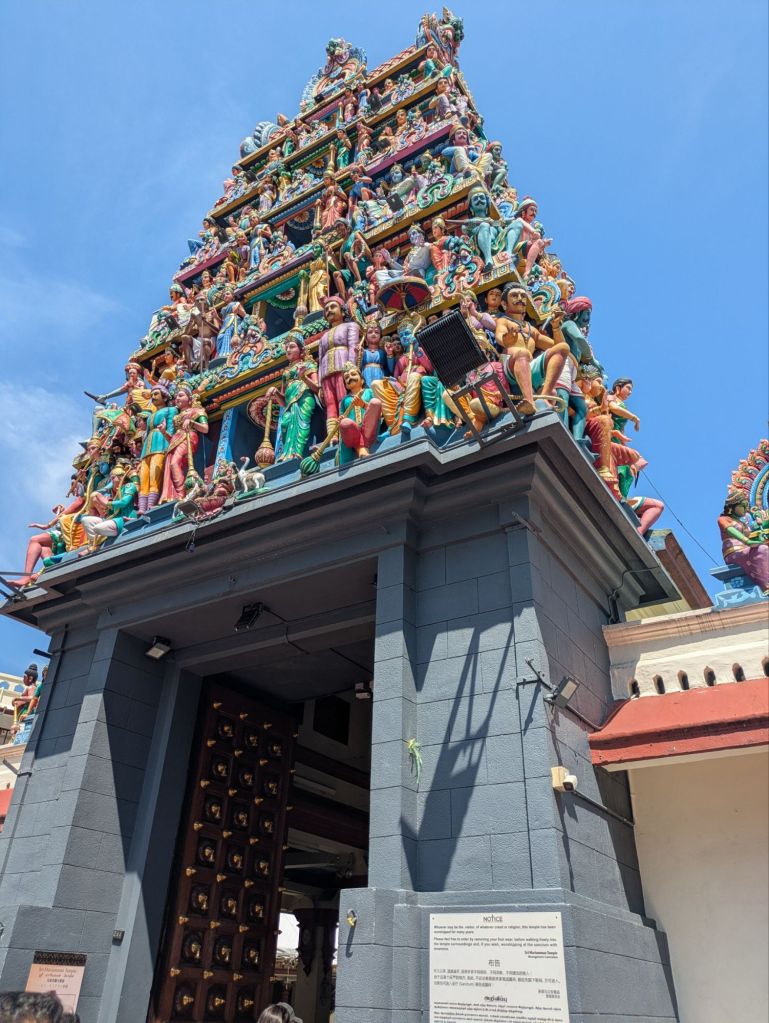
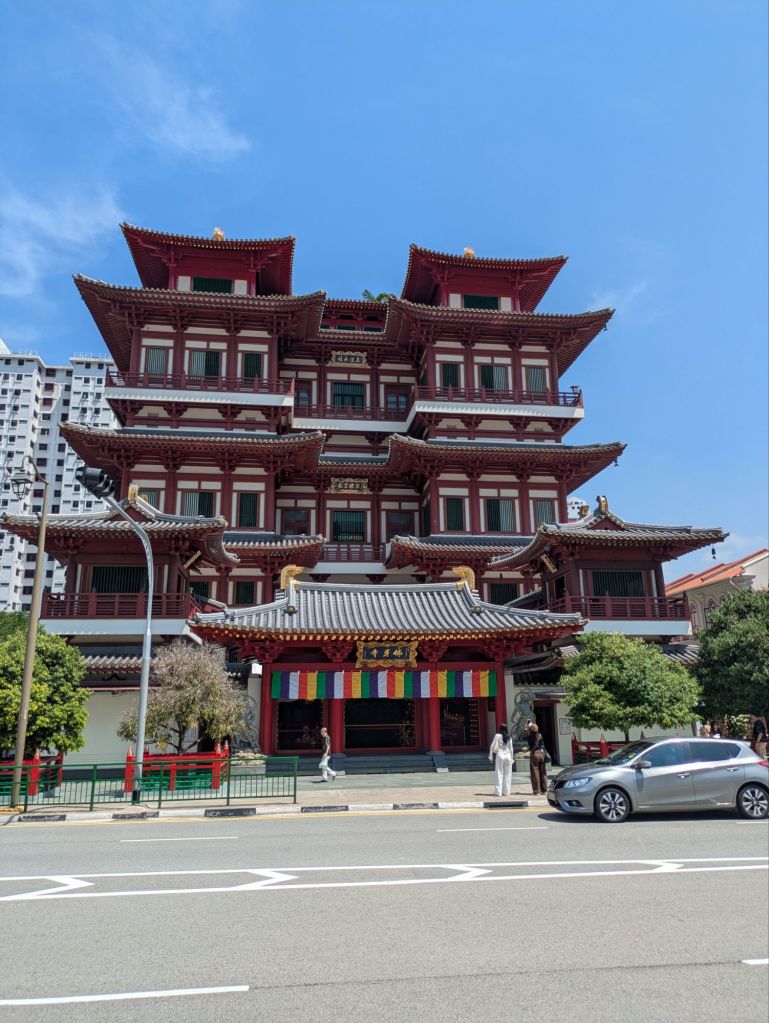
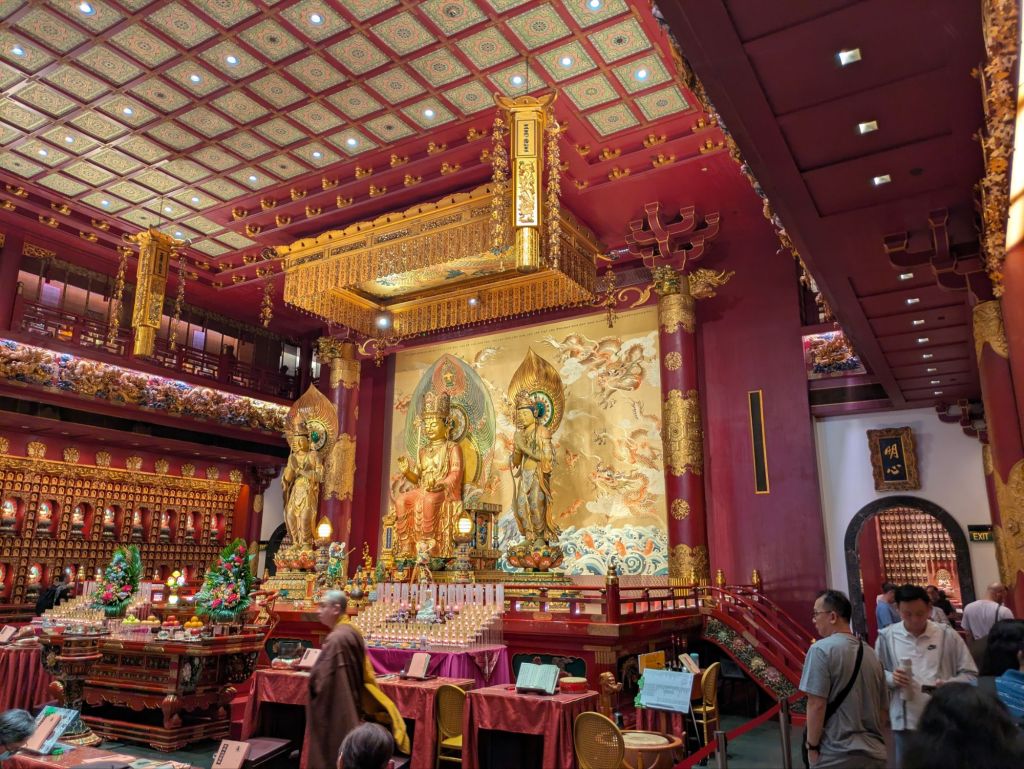
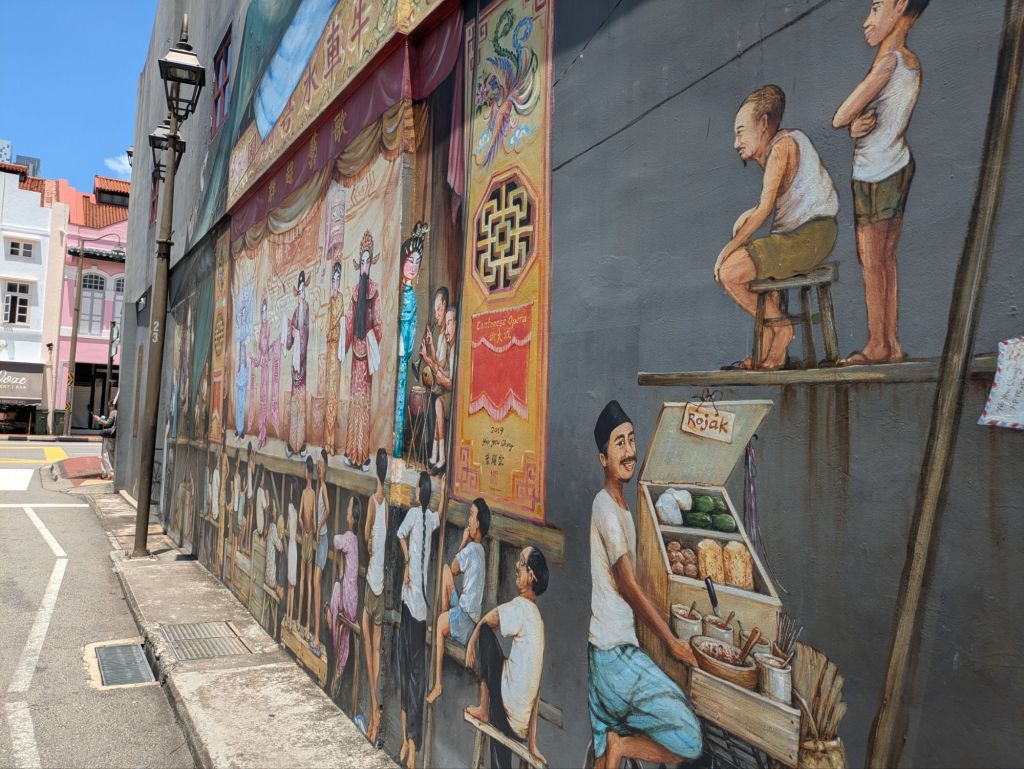
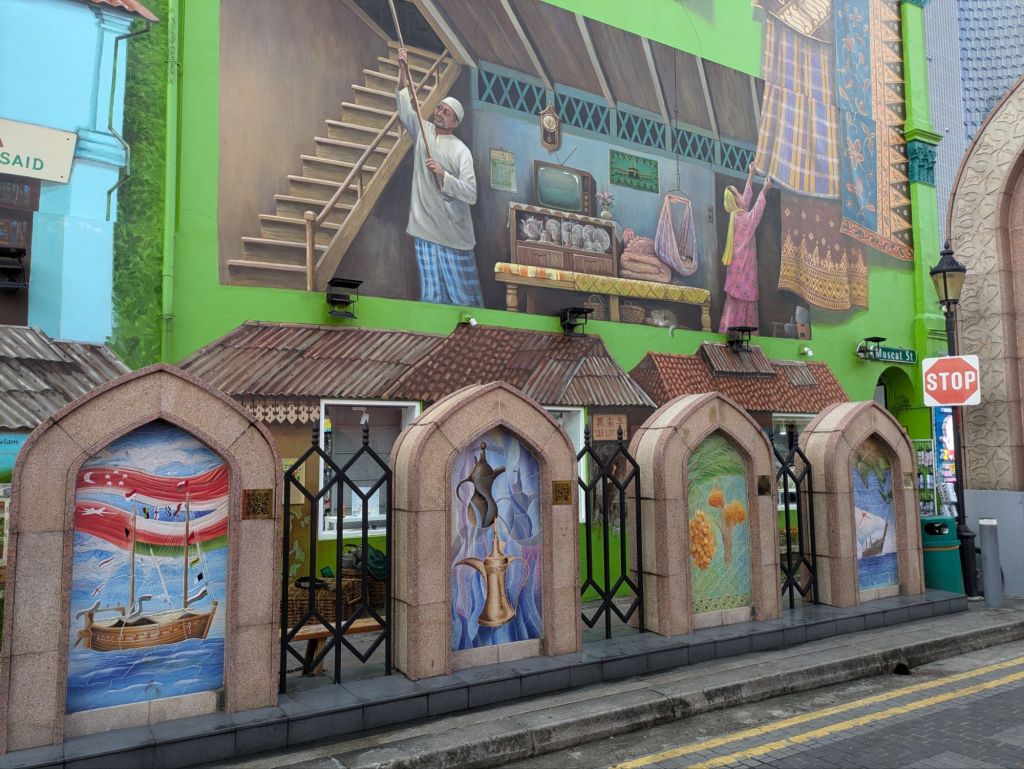
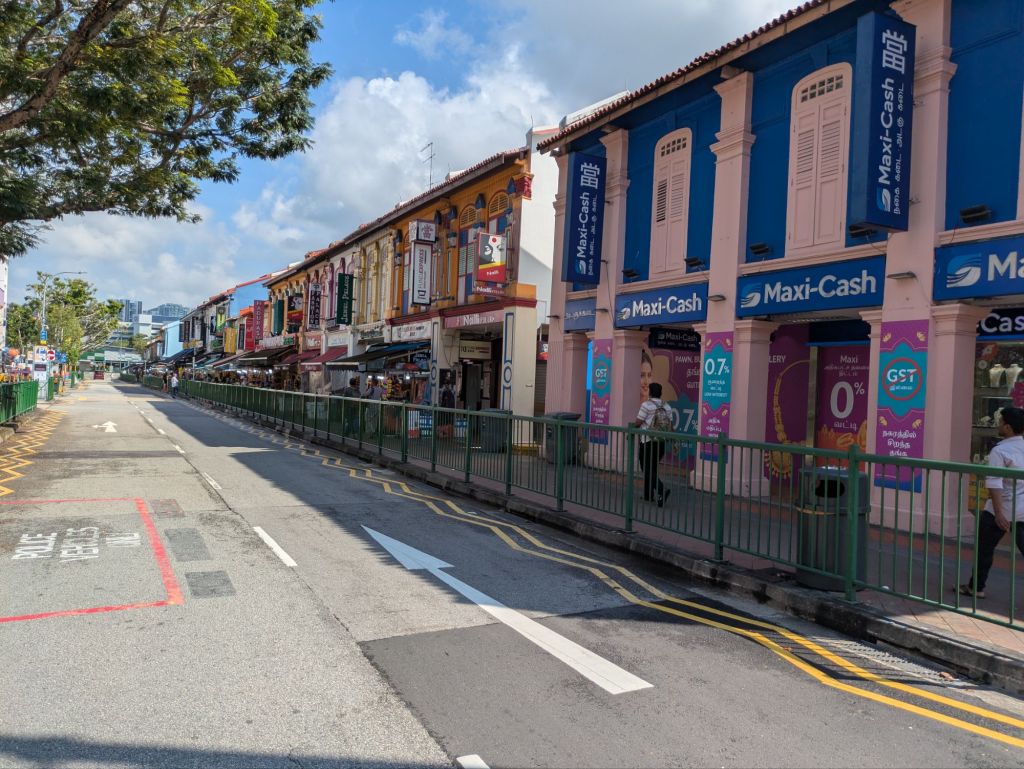
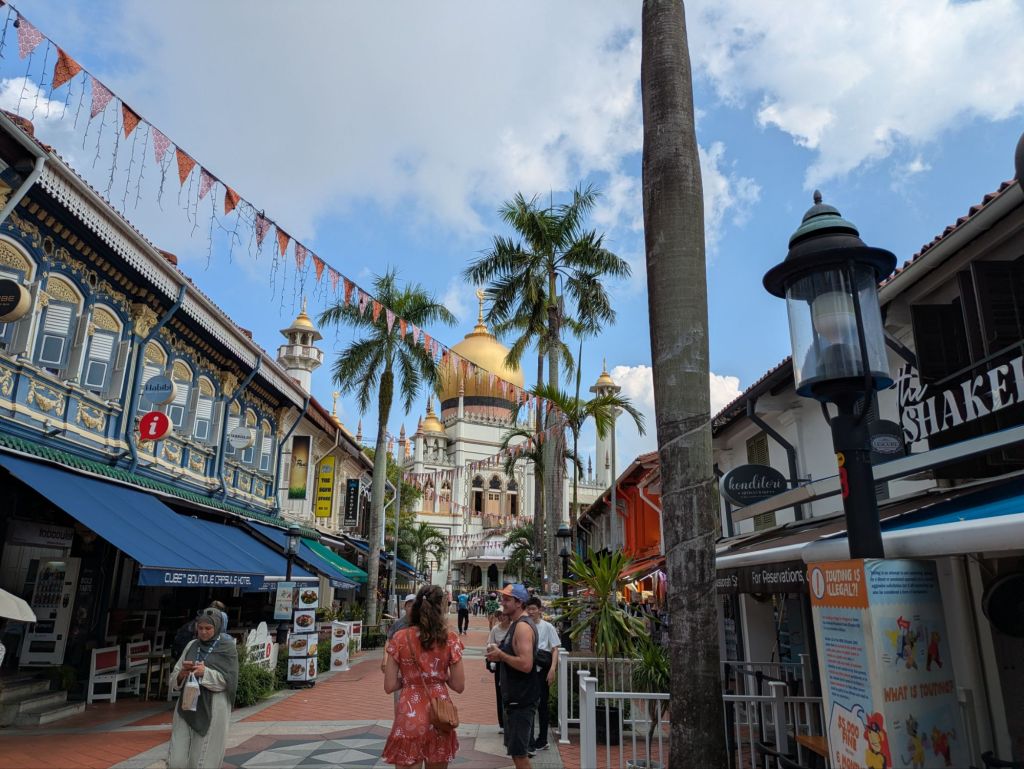
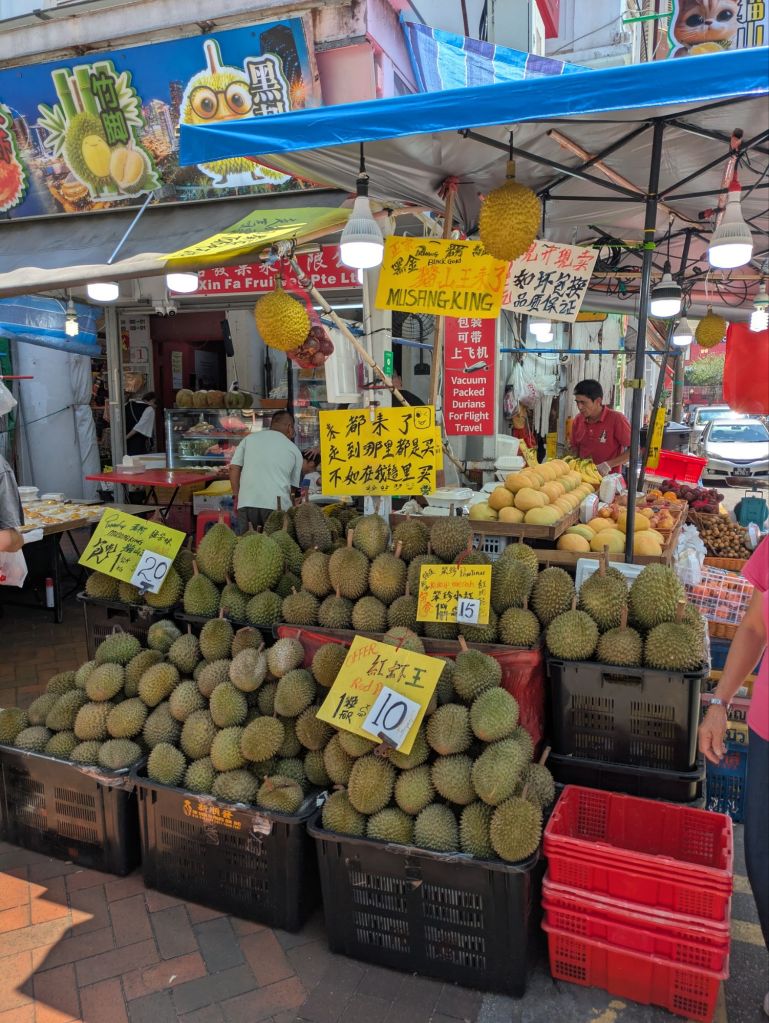
With limited land, Singapore has a high population density, and the Singapore Land Authority (SLA) has to manage how best to allocate such a limited resource. There has been land “reclamation”, and giant public housing projects are built by the government, with apartments being sold to Singaporeans, over 80% of whom live in public housing. The rules around public housing complexes include requirements to be within a defined limited distance to transport, food, shops, etc. Our tour guide informed us that newer, nicer public housing apartments can be quite expensive to buy.
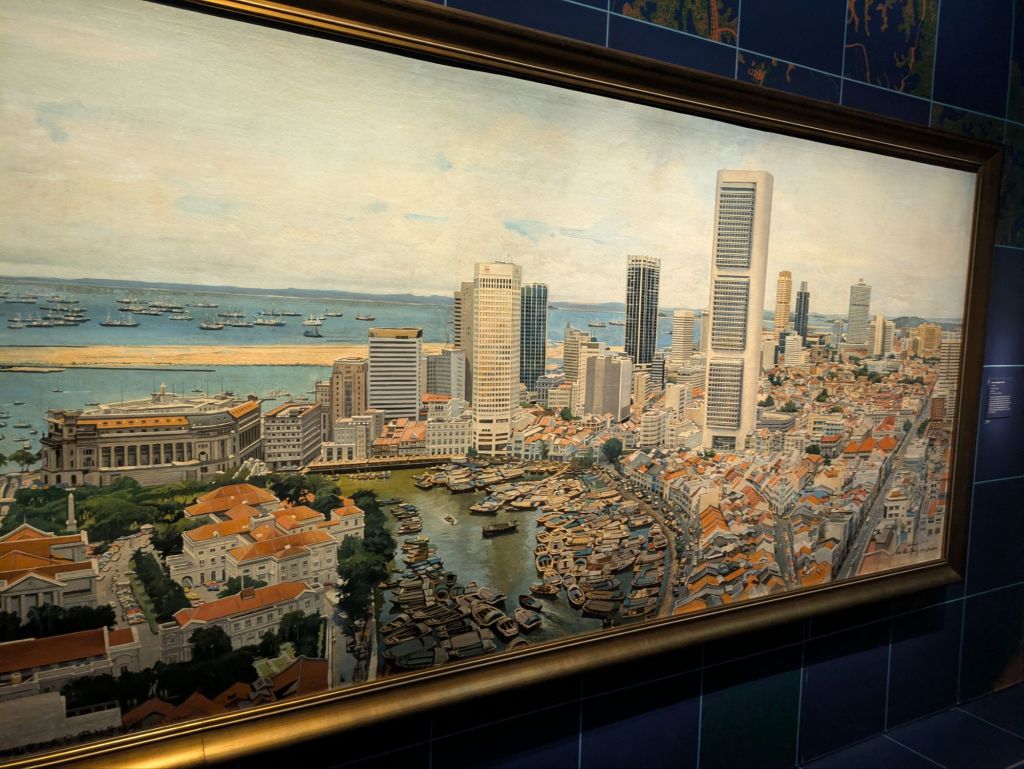
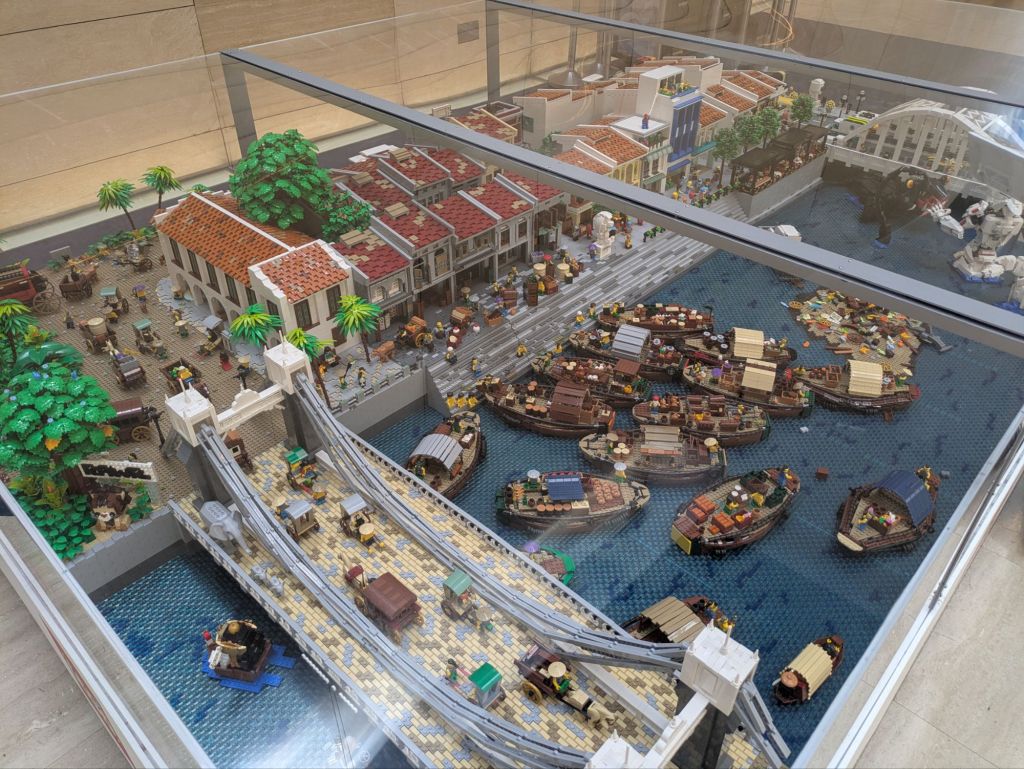
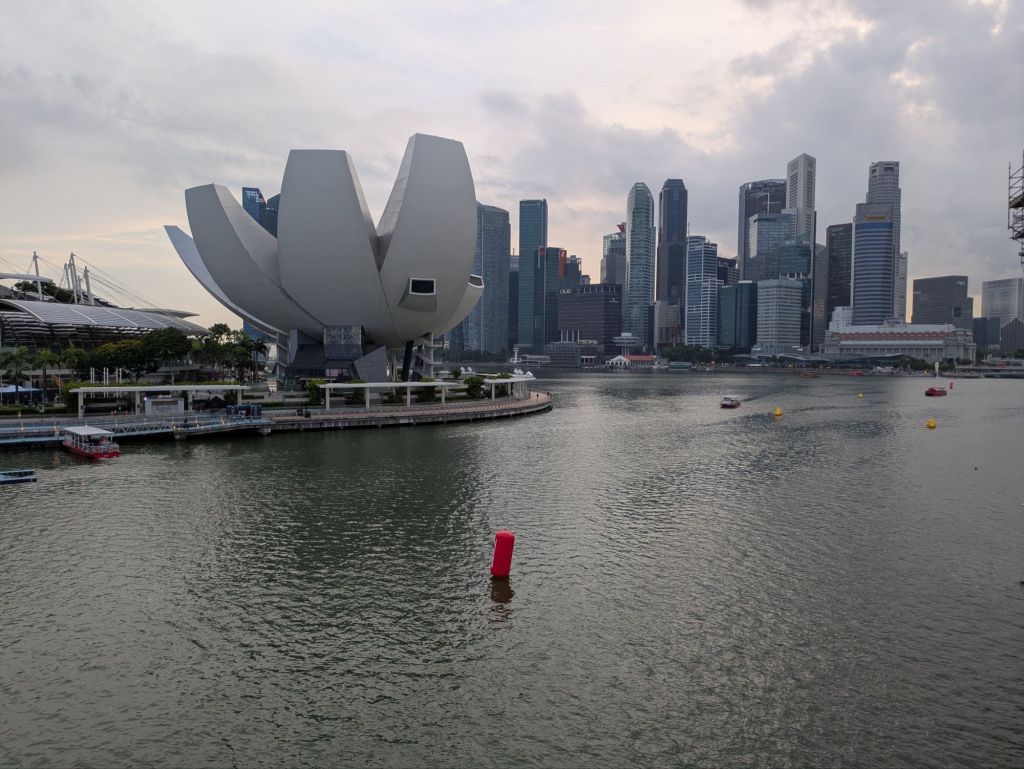
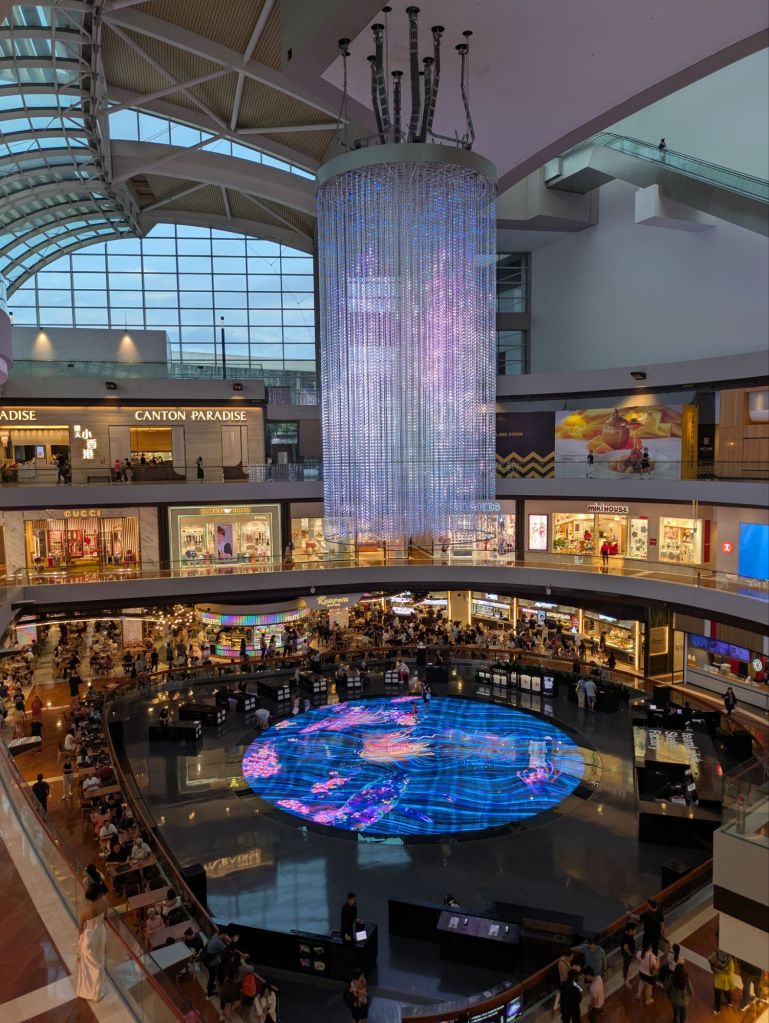
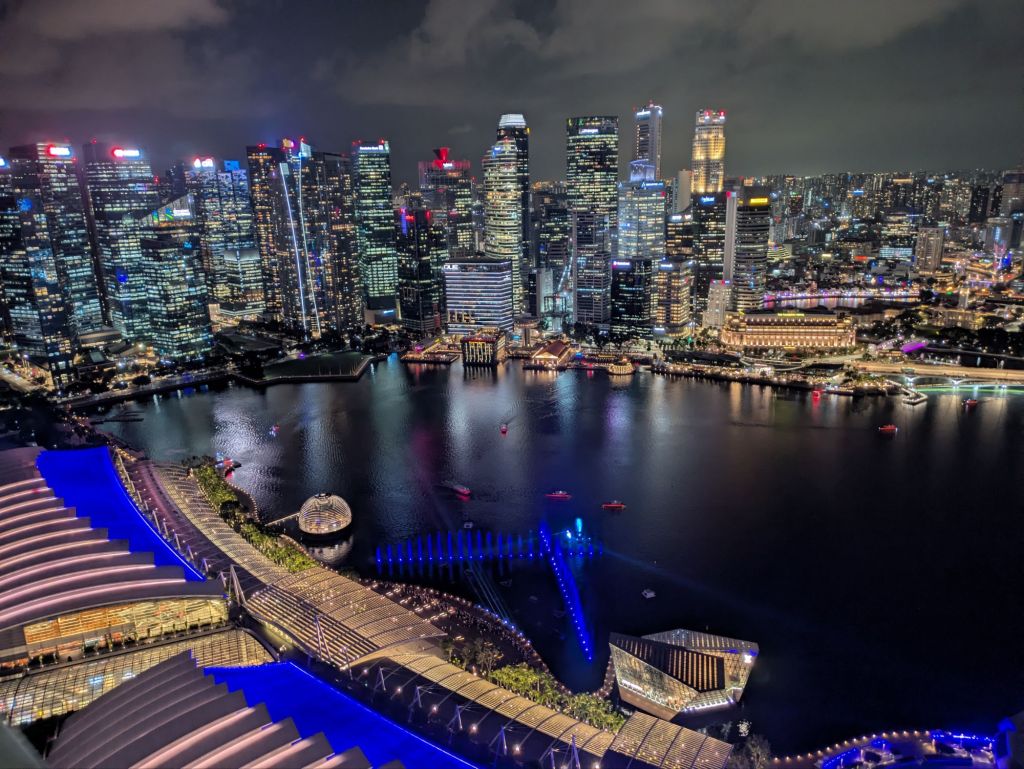
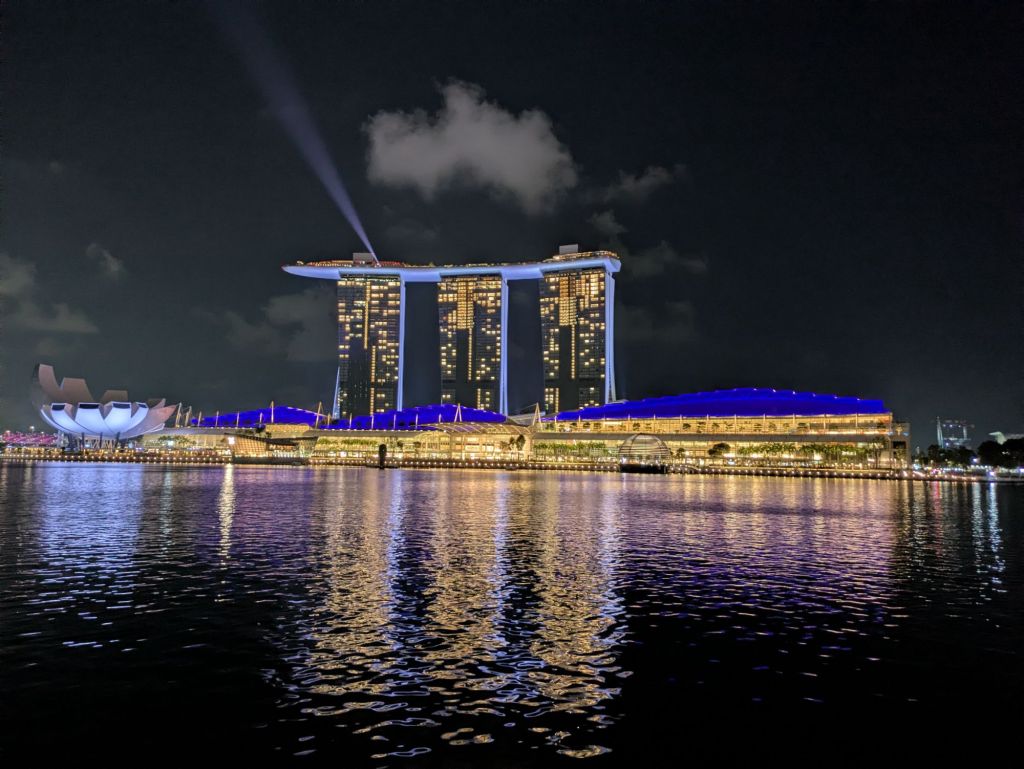
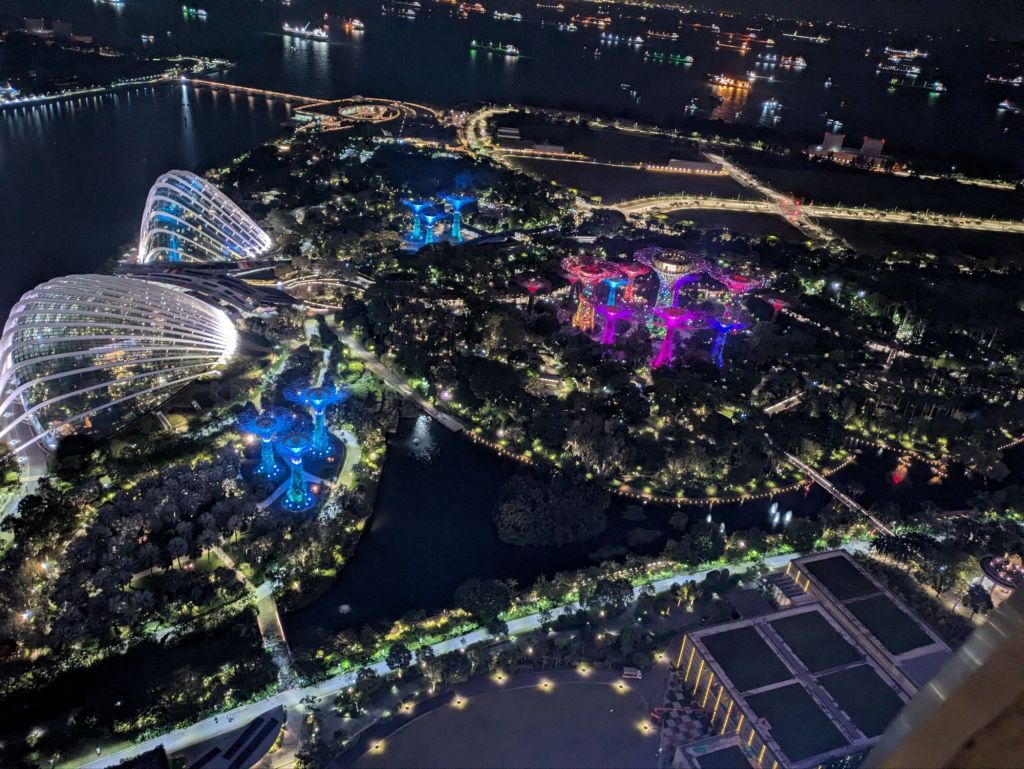
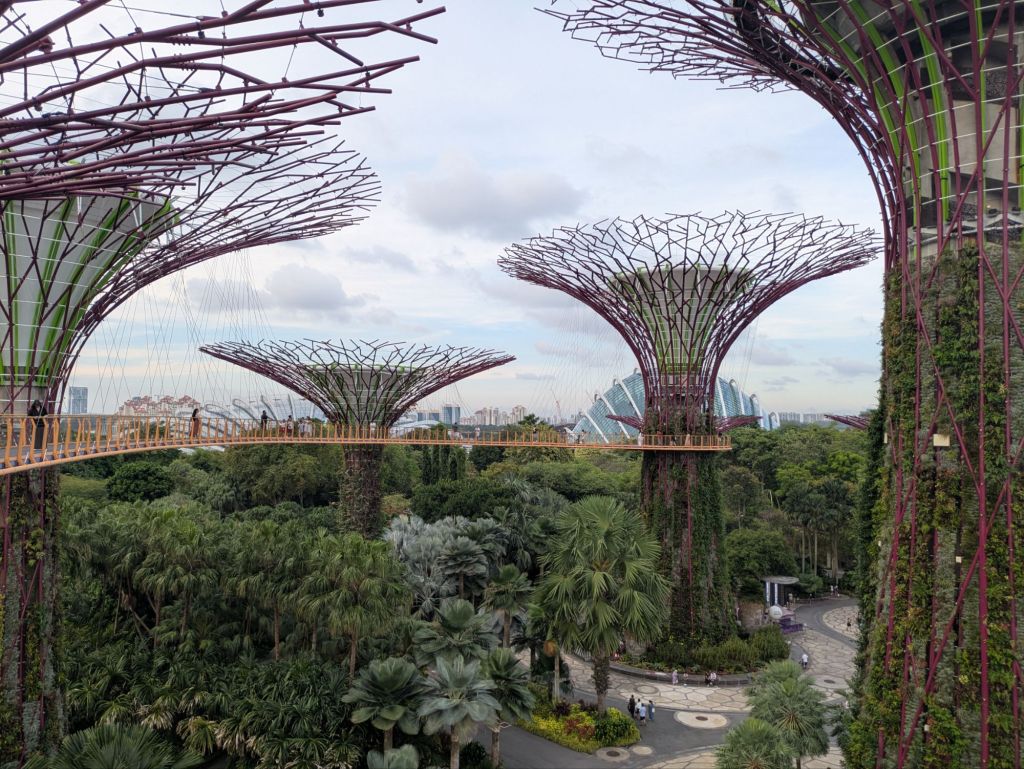
All in all, Singapore is a fascinating and often beautiful place, with remarkable human creations, especially around Marina Bay and Gardens by the Bay. I hope to return one day, where I envision concentrating my time on food and the bay area.
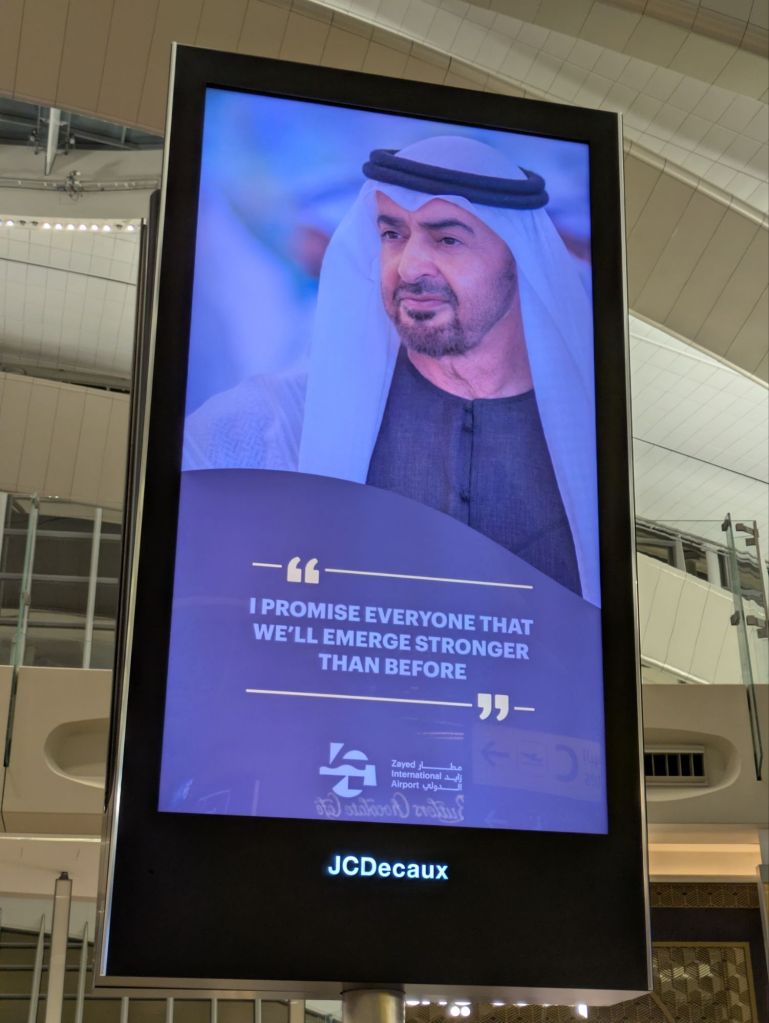
Before the war with Iran and the associated closure of the Strait of Hormuz, I had booked a return journey from Singapore to Prague through Abu Dhabi, UAE. There currently isn’t a direct flight between Singapore and Prague. When the war began, and Iran started dropping bombs and drones into the UAE, including on the Dubai and Abu Dhabi airports, I became concerned that I wouldn’t, couldn’t, or shouldn’t fly through Abu Dhabi to get back to Prague. Despite some other carriers cancelling all flights through the UAE, especially Dubai, my Etihad Airways flight was never cancelled. Things had been relatively quiet in that timeframe of my return, so I decided to take a chance. I was surprised that both flights to and from Abu Dhabi were full and that the airport itself seemed busy. We flew in a path such that I could even clearly see the Strait of Hormuz, but I didn’t witness any evidence of explosions. In the airport, it was almost possible to not know anything might be amiss, other than an ad from whom I assume is His Highness Sheikh Mohamed bin Zayed Al Nahya, president of UAE and ruler of Abu Dhabi, making a promise I’m not convinced he can keep:
Arriving back in Prague was a balm on the soul. It’s remarkably quiet here (comparably), and so pleasant. At the time, it was cool and crisp, which I welcomed heartily given how hot and humid Singapore is! It’s like Raleigh in July, all the time. One residual influence I had from all the weeks in areas formerly controlled by the British was that I kept walking on the left in those first days back in Prague, haha! It wasn’t a convenient habit.
Today’s funny video:
Somehow I’d missed Big Train all these years, but now that I’ve learned about it from a Czech friend, I have loads of laughs to come! Here’s one skit about speaking foreign languages — instant classic, and it features Simon Pegg, one of the funniest actors around:
Today’s WTF music video:
Decidedly not Singaporean, check out this music video from the most unusually quirky band and sounds I’ve seen and heard in a very long time. They use what are called micro-tones, and it’s difficult to understand how so much output is produced by just two people. I’m totally hooked on Angine de Poitrine from Quebec! The costumes, the loops, the micro-tones, the noses, the strange voices during interviews — what’s not to love?! Rabbit hole opened…
Today’s Stoic quote:
It seems like more than “one thing”, but you get the idea:
“There is but one thing of real value – to cultivate truth and justice, and to live without anger in the midst of lying and unjust men.” ~ Marcus Aurelius


