Friend (?) of the blog Vlad the Impaler founded Bucharest in the mid-1400s, so it’s a relatively young city in this region of the world. Its population is over 2 million, and despite still recovering from WWII and decades of crushing communist policies and neglect, it’s now quickly regaining ground. It’s even ranked as one of Europe’s fastest-growing high-tech cities, and economically, Bucharest is the most prosperous and populous city in Romania, by far. People move here from all over the rest of Romania for opportunities. My tour guides all moved to the city from other places in the country, or from Moldova. One tour guide said that only lazy people don’t find multiple work options in Bucharest. It’s also actually the richest capital and city in the region, having surpassed Budapest years ago. Speaking of Budapest, one tour guide told us that when Michael Jackson came to perform at a concert in the city, tens of thousands of adoring fans heard that he would be visiting the Palace of Parliament, and so they showed up outside chanting “Michael, Michael!” The Romanian president asked Michael to step outside and wave to the crowd. He went out onto the balcony and said two words: “Hello, Budapest!” Oops. Maybe apocryphal, but funny nonetheless, and apparently a common mistake. Side note: There’s a great film covering Mr Jackson’s concert in Bucharest. Here’s a really funny story of French football fans traveling to Bucharest to see their team, who were actually playing in Budapest!

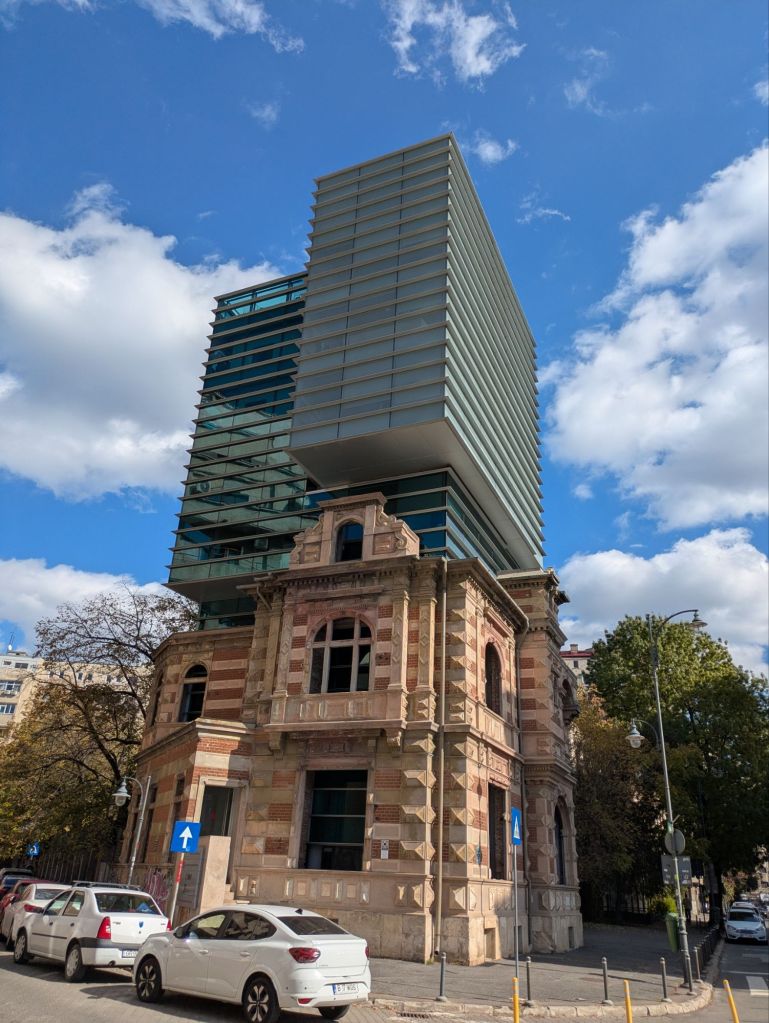
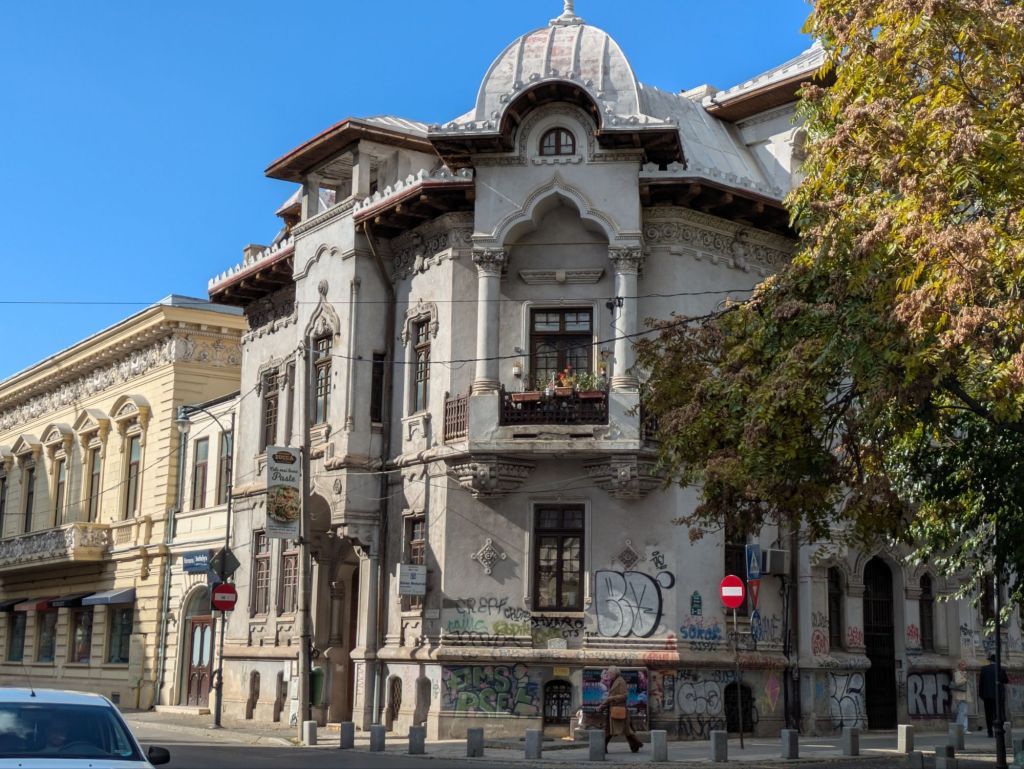
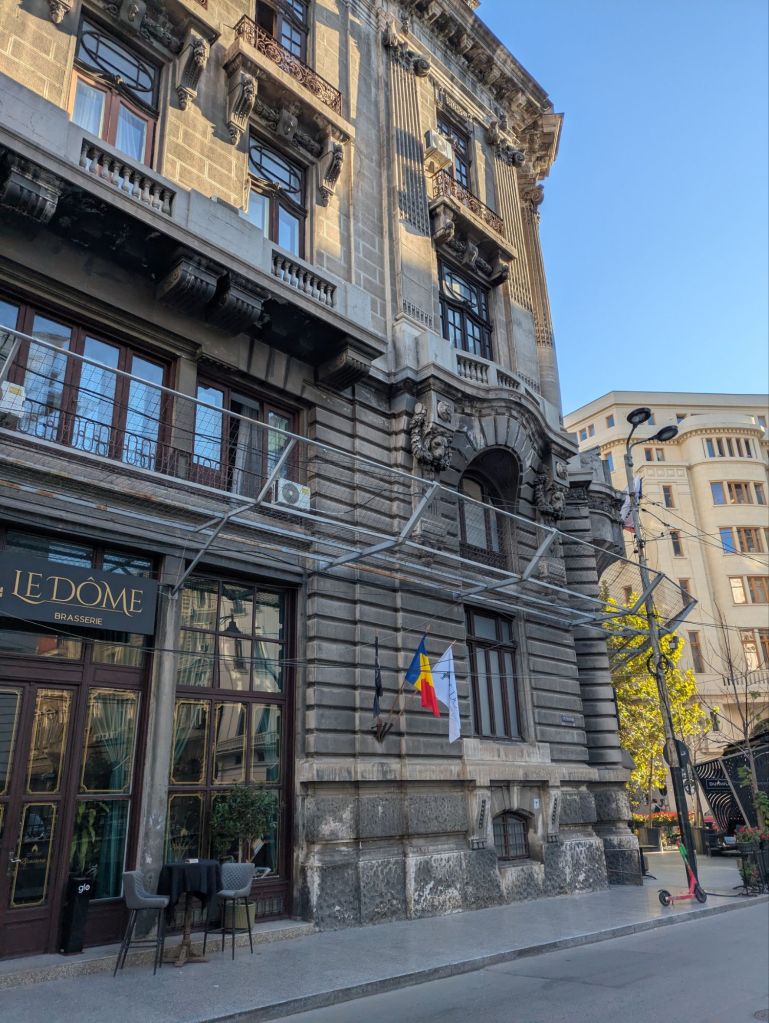
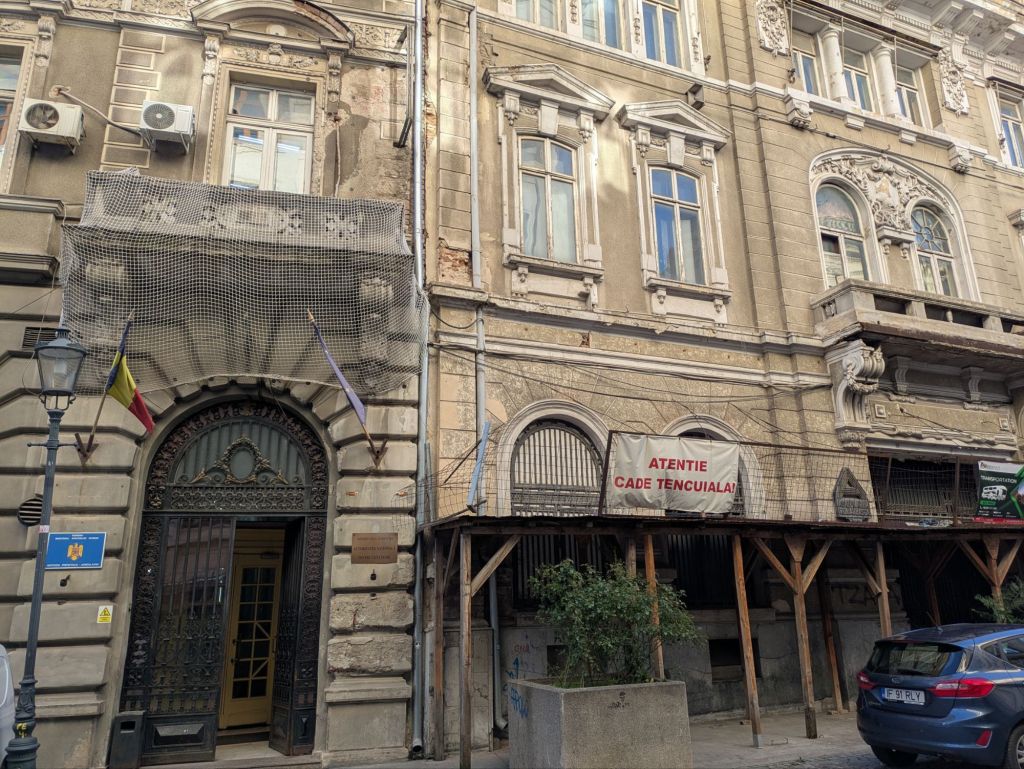
Bucharest became Romania’s capital in the late 19th century, a time of flourishing and massive population growth. Like numerous other central and eastern European cities, many of Bucharest’s main halcyon and prosperous years were during the interwar period. The city continued to grow, and a large percentage of the surviving good-looking buildings were constructed during this time. It’s hard to describe how eclectic Bucharest’s architecture is, with a crazy amalgam of medieval, neoclassical, Art Deco, Art Nouveau, “neo-Romanian”, socialist brutalist, modernist, and even Ottoman and North Korean! One can find buildings inspired by those in places as diverse as Greece, Italy, Paris, Moscow, and Pyongyang (more on this below). Further mixing things up is that given strict historic building requirements, many owners opt to let their building crumble and become condemned so that they can then construct something new instead of renovating an old crumbly edifice. This means that directly beside a gleaming new glass and metal structure one can often find a building collapsing in upon itself. Complicating matters even more is the fact that private property was seized when communism was introduced, and post-communism reacquisition of family properties is a long, litigious battle, so many buildings are still being fought over in the courts, decades after the fall of communism, sometimes with dozens of claimants, most of whom are charlatans. But how does one choose to whom to give a building when there are so many legitimate heirs? Seems super-messy.

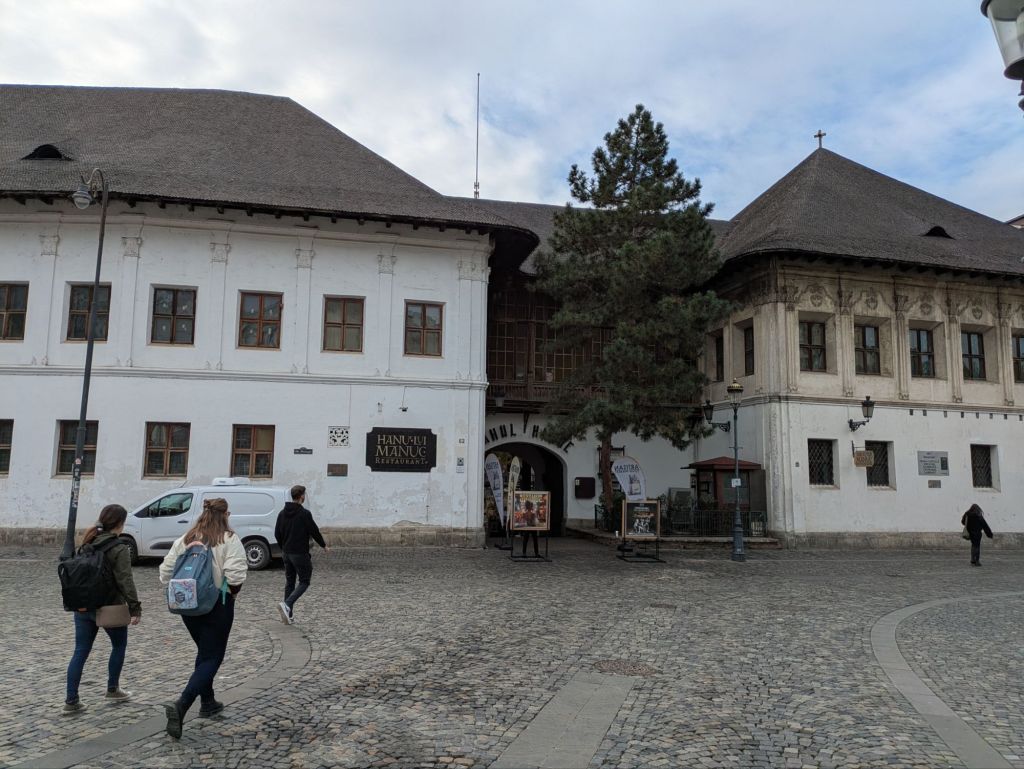
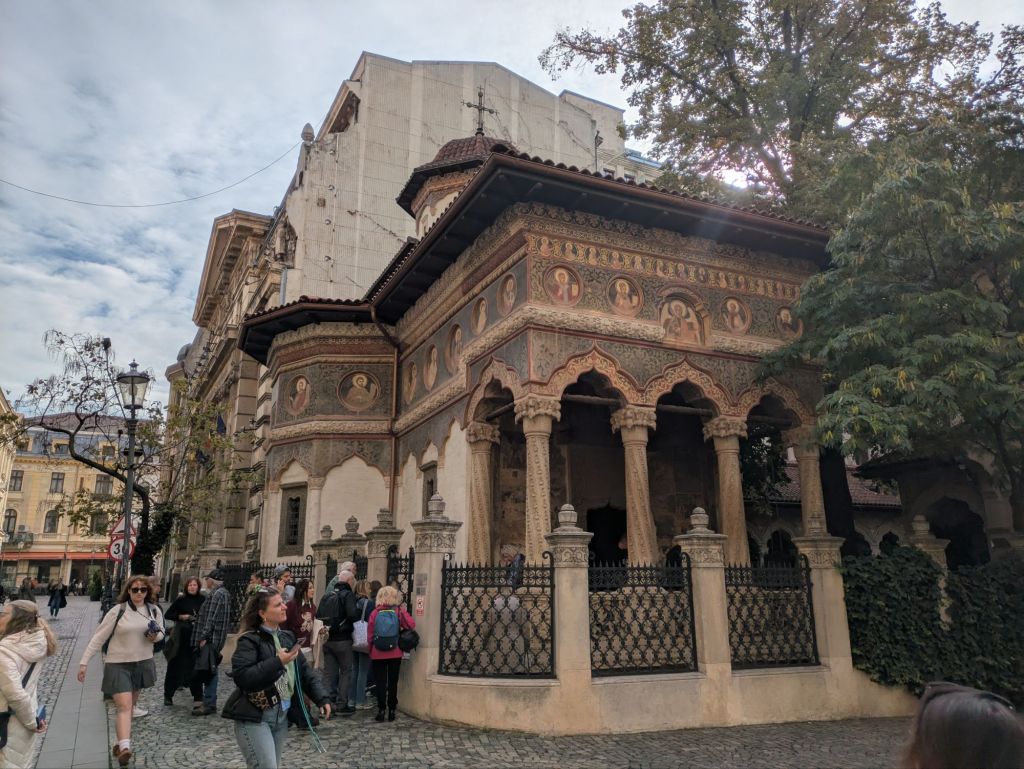
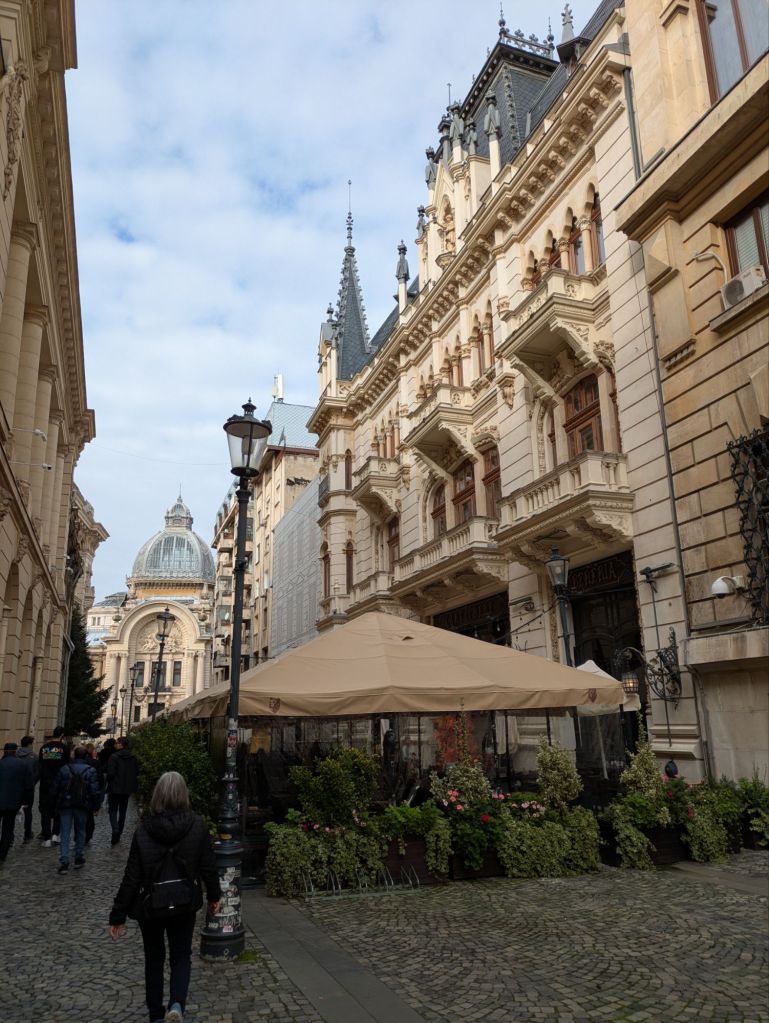
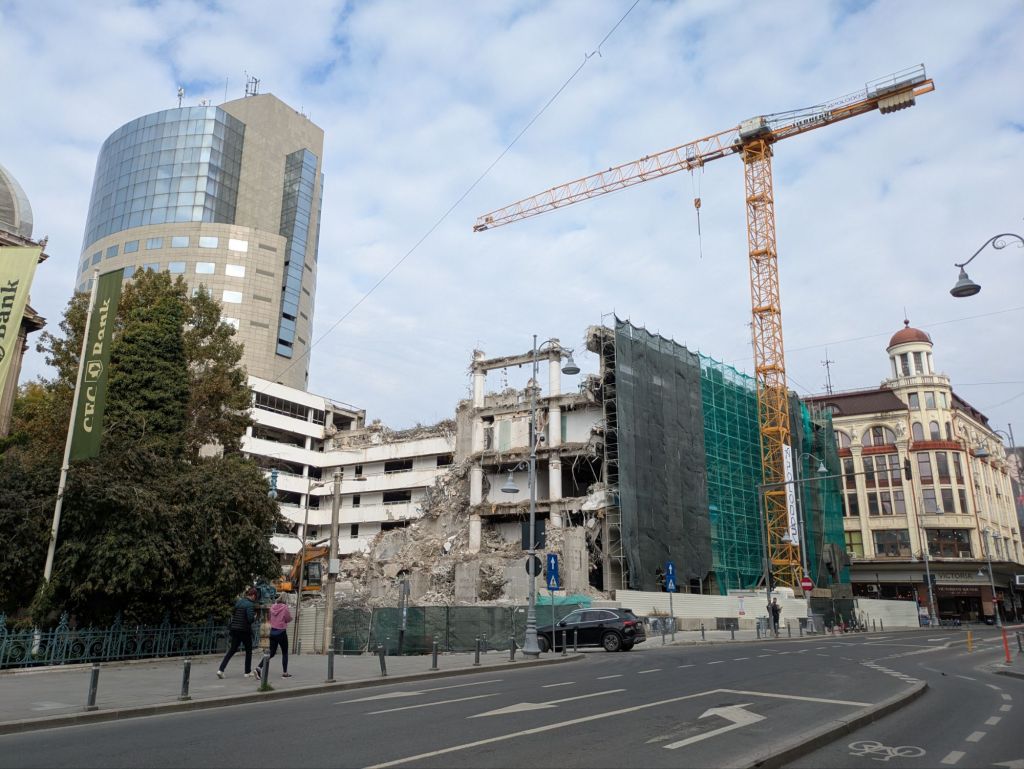
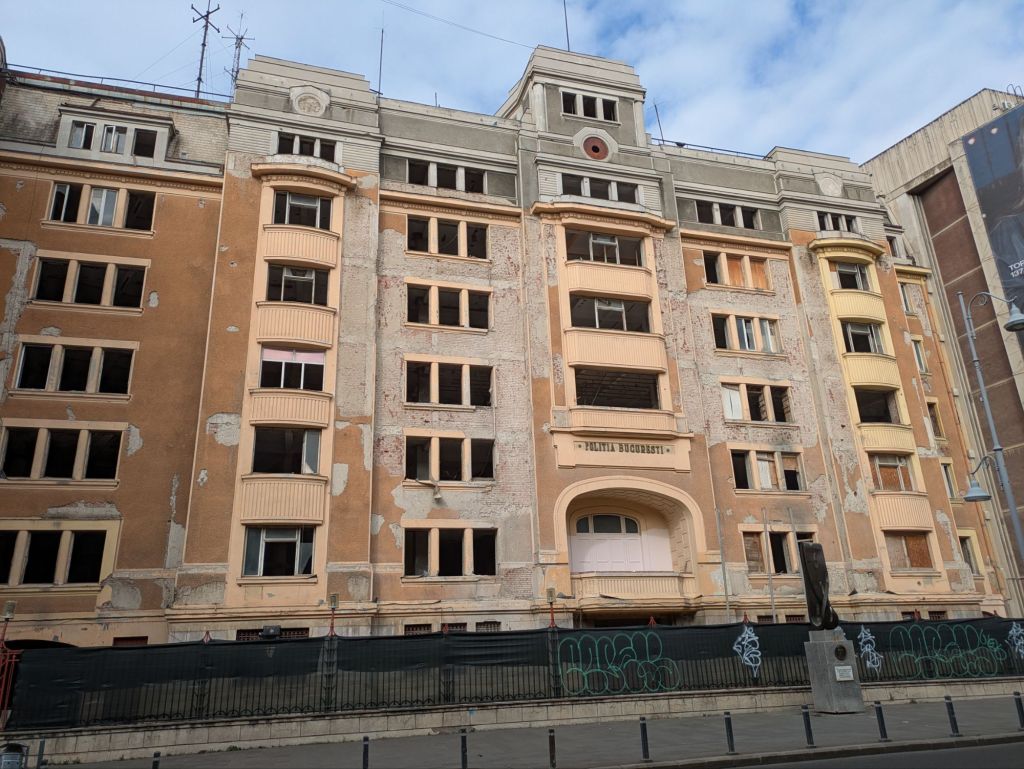
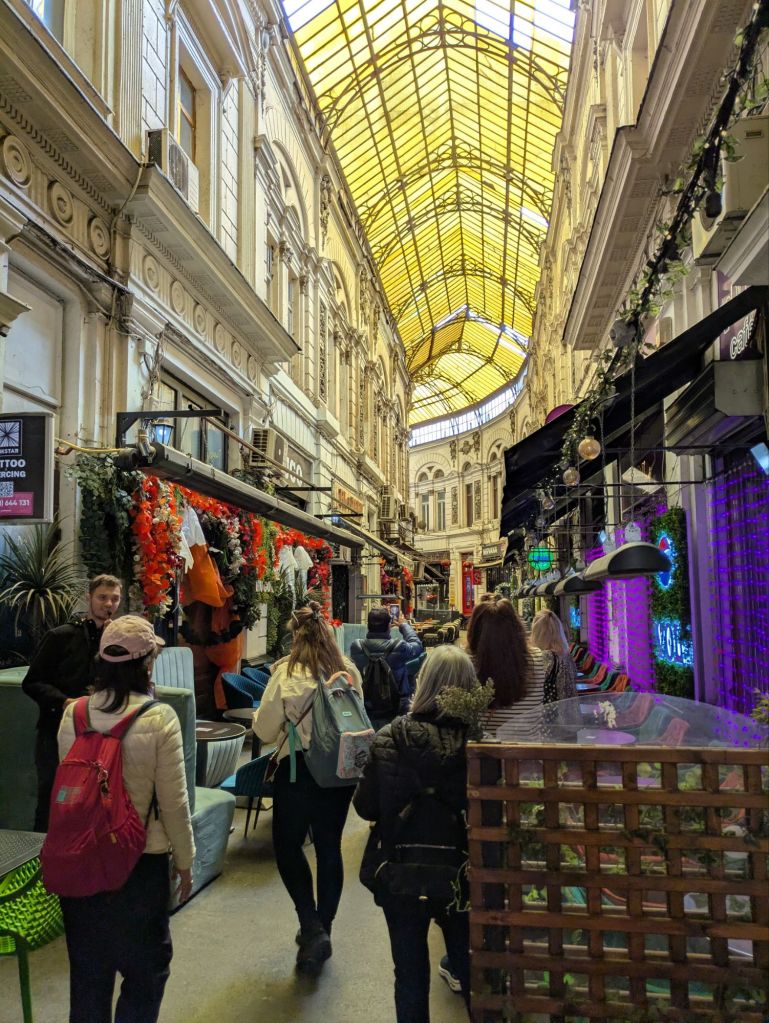
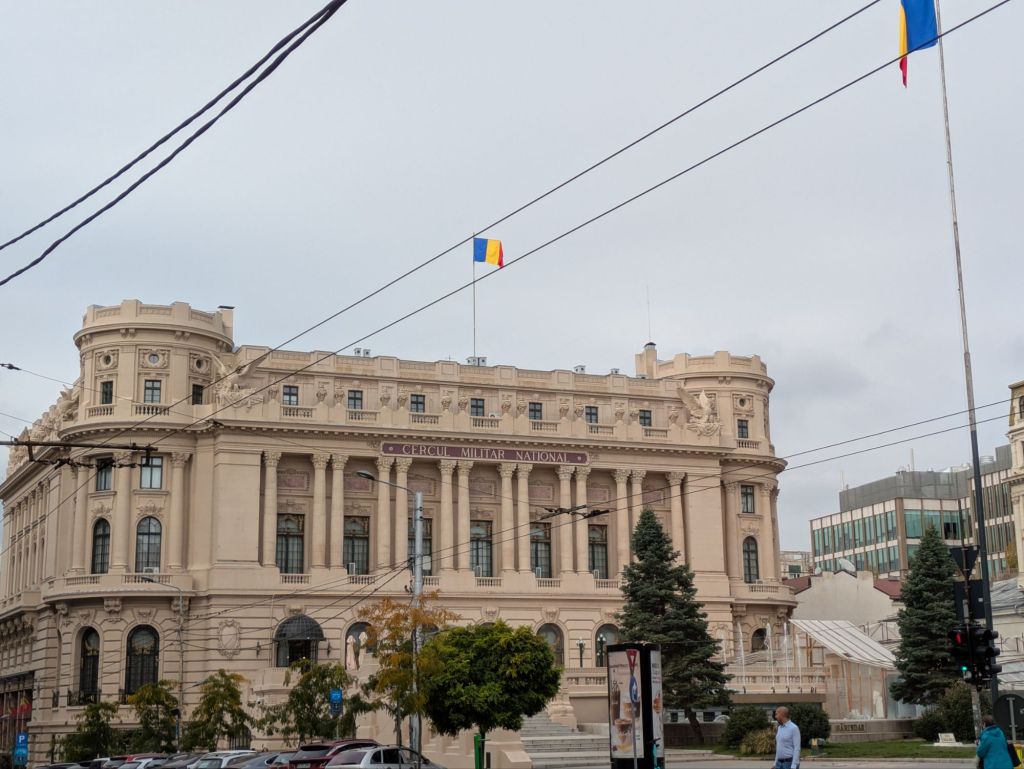
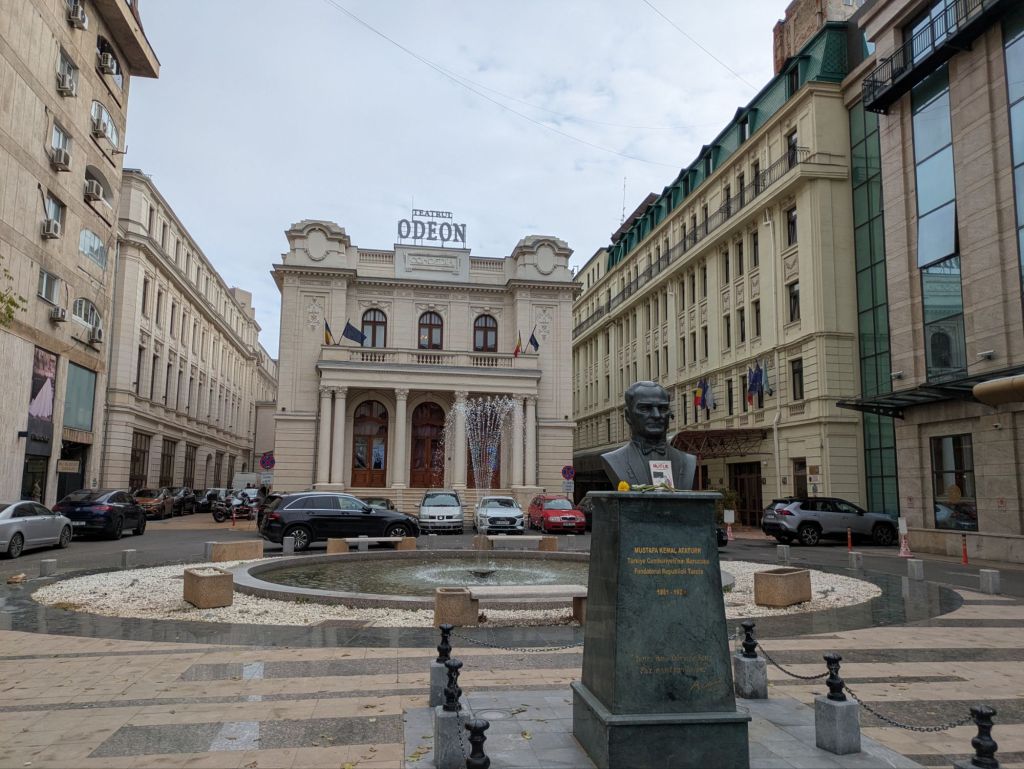
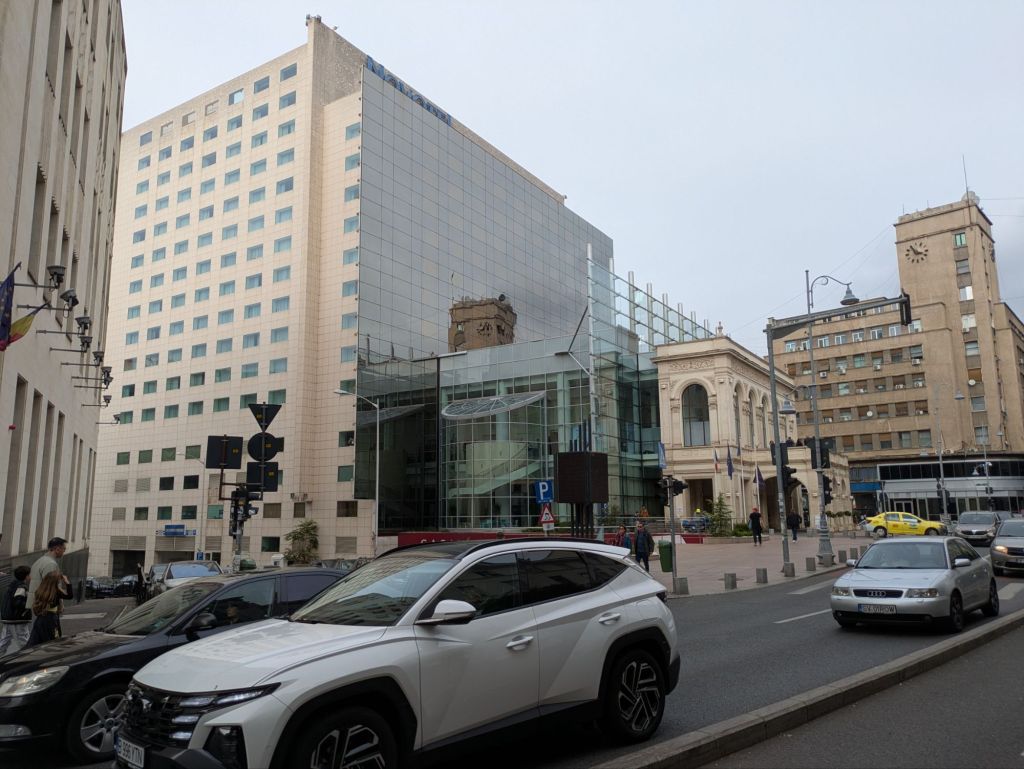
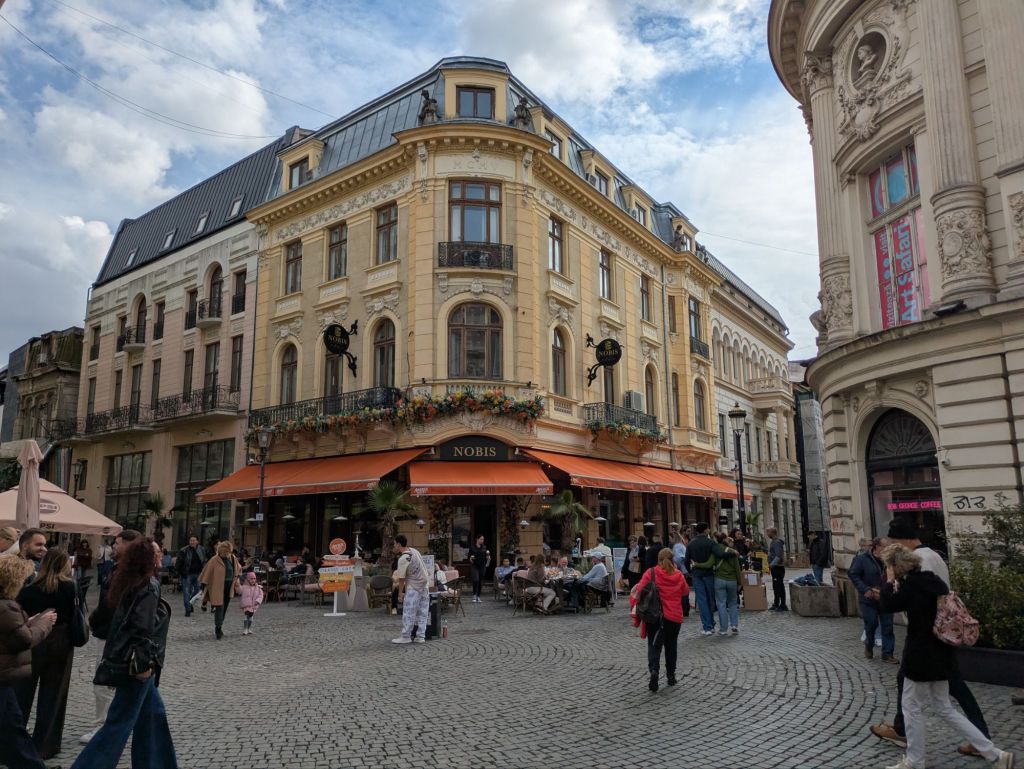
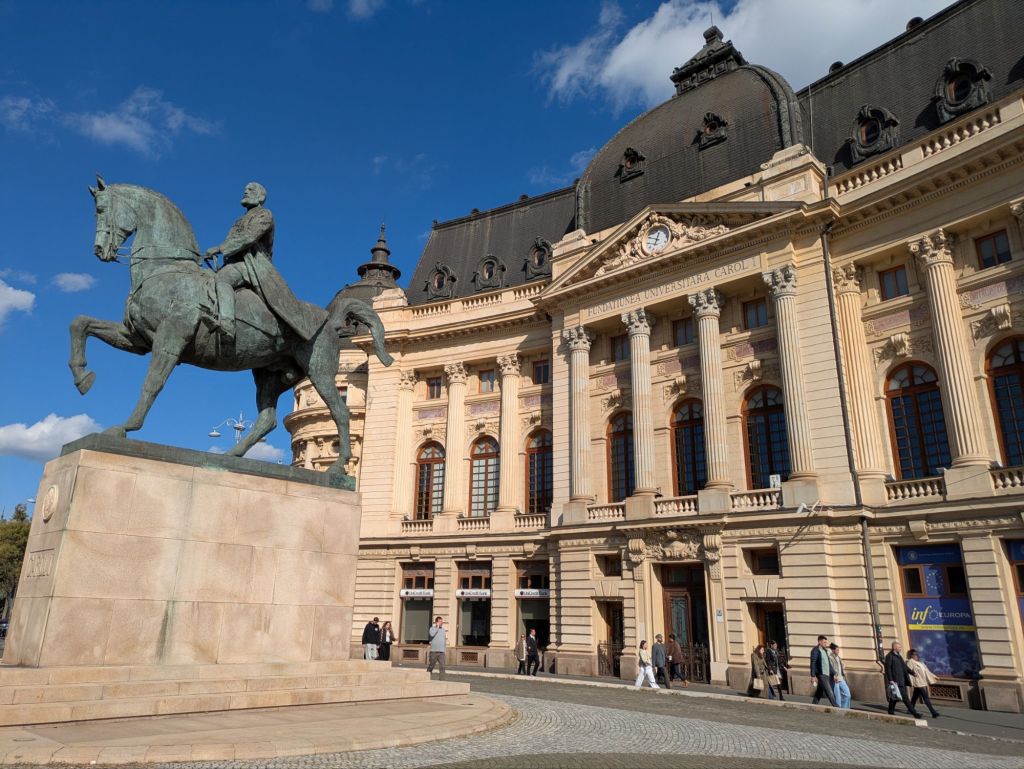
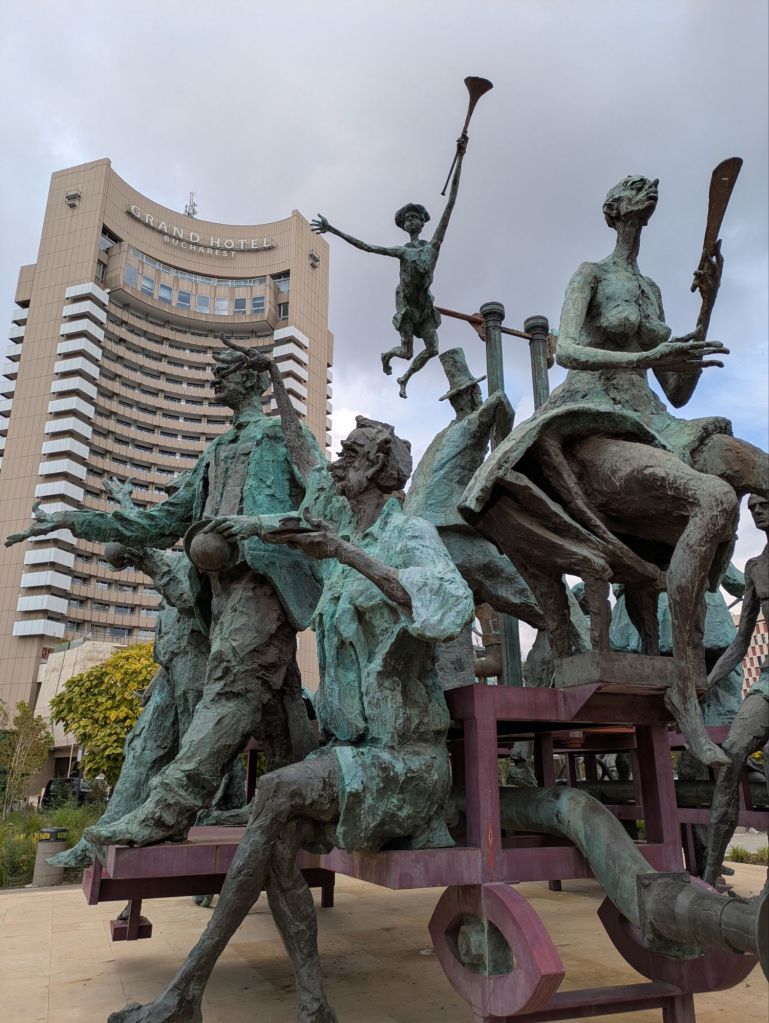

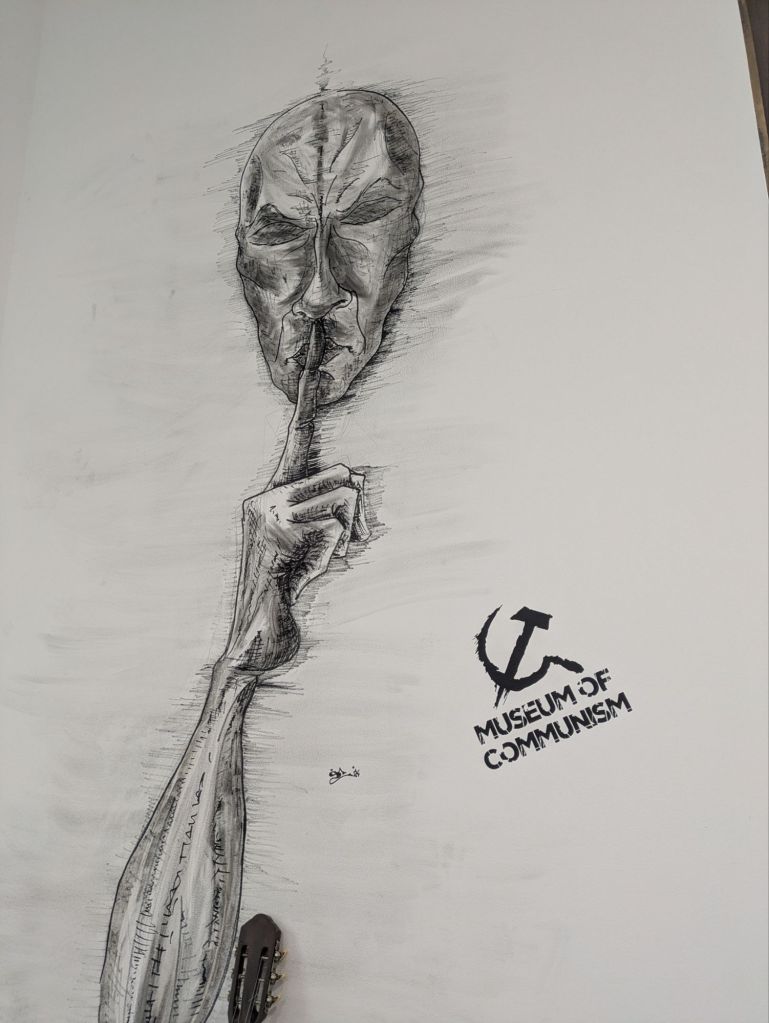
Communism was hugely negatively impactful on Romania and Romanians, and not just for the buildings. So many unnecessary hardships were caused during those years, and the echos of that time still reverberate throughout the country. As messed up as some of Bucharest still is, I met an Argentinian couple at dinner one evening, and the husband had last visited the city in 1999. That was still after the end of communism, but he told me that the city has improved so much since then that he doesn’t recognize much of anything! It took decades of communist policies and neglect to get to this point, so it will be a while before things get to be as good as they once were long ago.
The most important figure in the story of the communist years in Romania is certainly Nicolae Ceaușescu, president from 1967 until his execution in 1989.
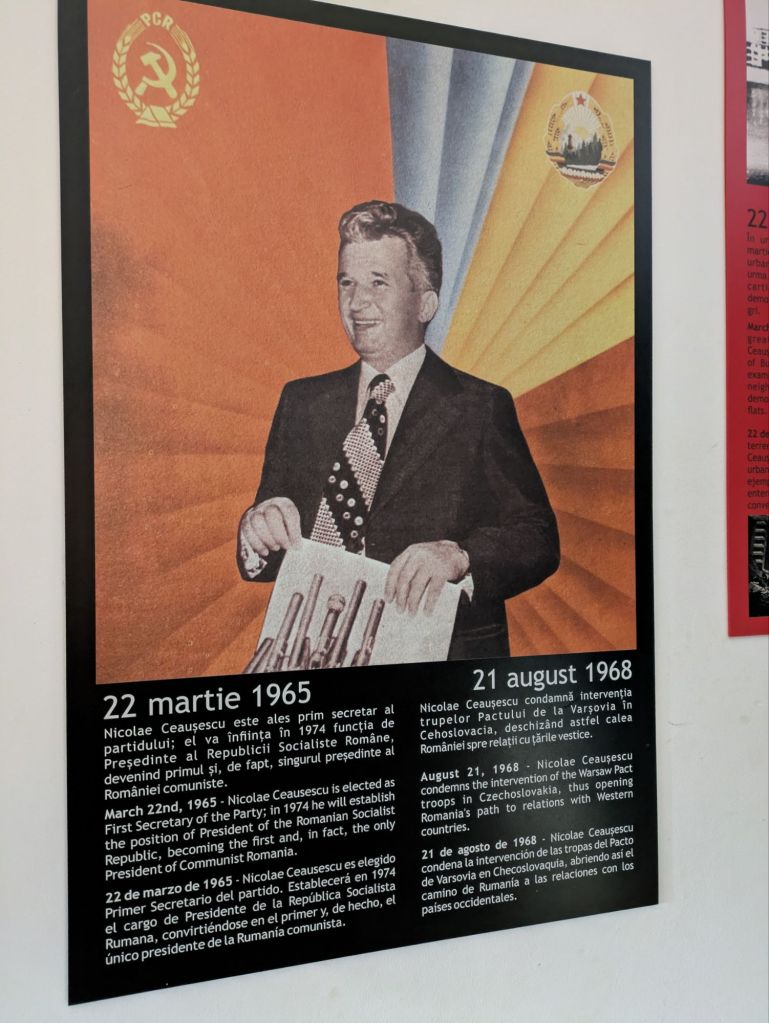
Here’s a great short summary of the highlights of his years as leader:
Ceaușescu’s early rule was marked by a degree of independence from the Soviet Union, earning him international recognition after he condemned the USSR’s invasion of Czechoslovakia in 1968. Over time, however, his regime became increasingly authoritarian and personalist, characterised by an extensive cult of personality, pervasive censorship, and the repressive control of the Securitate, Romania’s secret police. His economic policies—particularly his drive to repay foreign debts and his systematisation programme—led to severe shortages of food, fuel, and electricity during the 1980s.
By the end of 1989, mounting discontent over the state of the nation and Ceaușescu’s authoritarian rule erupted into the Romanian Revolution. The army defected to the protesters, and Ceaușescu and his wife, Elena, fled the capital but were captured soon afterwards. Following a brief military trial, they were executed by firing squad on Christmas Day 1989, bringing an end to more than four decades of communist rule in Romania. (https://en.wikipedia.org/wiki/Nicolae_Ceau%C8%99escu)
Over time as Ceaușescu became more authoritarian, he also became more paranoid. Here’s an example:
“The most challenging road connecting Bucharest to Transylvania—and, quite possibly, between any two points in Europe—is the Transfăgărășan (trans-fah-gah-rah-SHAHN) Road. It twists and turns and bends back on itself several times as it crosses the cut-glass peaks of the Făgărăș Mountains, summiting at 6,670 feet. This improbable road is another artifact of Nicolae Ceaușescu’s rule. Following the 1968 Soviet invasion of Czechoslovakia to put down the Prague Spring uprising, a paranoid Ceaușescu wanted an escape route from Romania’s flat capital to its easier-to-defend mountains. According to the story, Ceaușescu simply put his finger on a map and said, “Build it here.” And they did. After incalculable costs and 40 workers’ lives lost, Ceaușescu’s dream was complete.” (Rick Steves Eastern Europe)
Our walking tour guide informed us that Ceaușescu was particularly fearful of traitors and earthquakes (earthquakes are unfortunately somewhat common and quite destructive in Bucharest). A devastating earthquake in 1977 provided Ceaușescu with an excuse to demolish a large part of the old town, with over 40,000 residents kicked out, and numerous buildings were destroyed in order to make room for Ceaușescu’s vanity project, which included not only the now Palace of Parliament building, but also a long wide boulevard lined with other new buildings. The project was surprisingly modeled on Pyongyang architecture based on an earlier visit by Ceaușescu to North Korea and on the respect he had for North Korean President Kim Il Sung. Numerous architects from Romania were sent to study in Pyongyang! The Palace of Parliament is now the heaviest building in the world, estimated to be over 9 billion pounds (4 billion kilos)!! It’s also said to be the most expensive administrative building ever constructed.
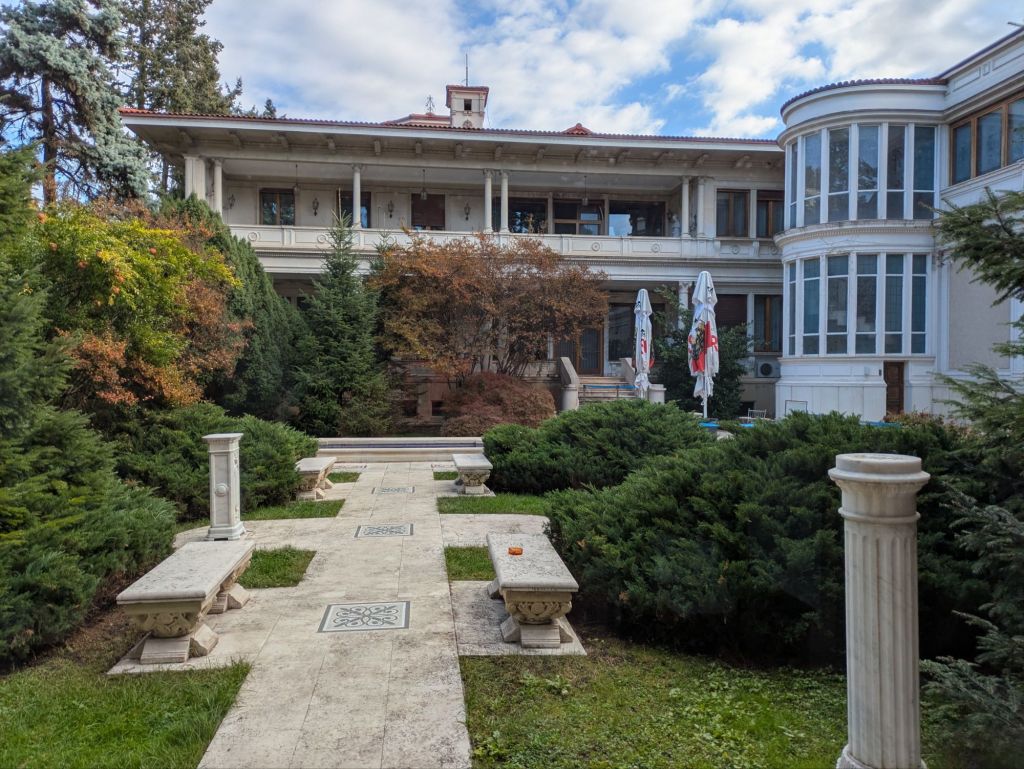
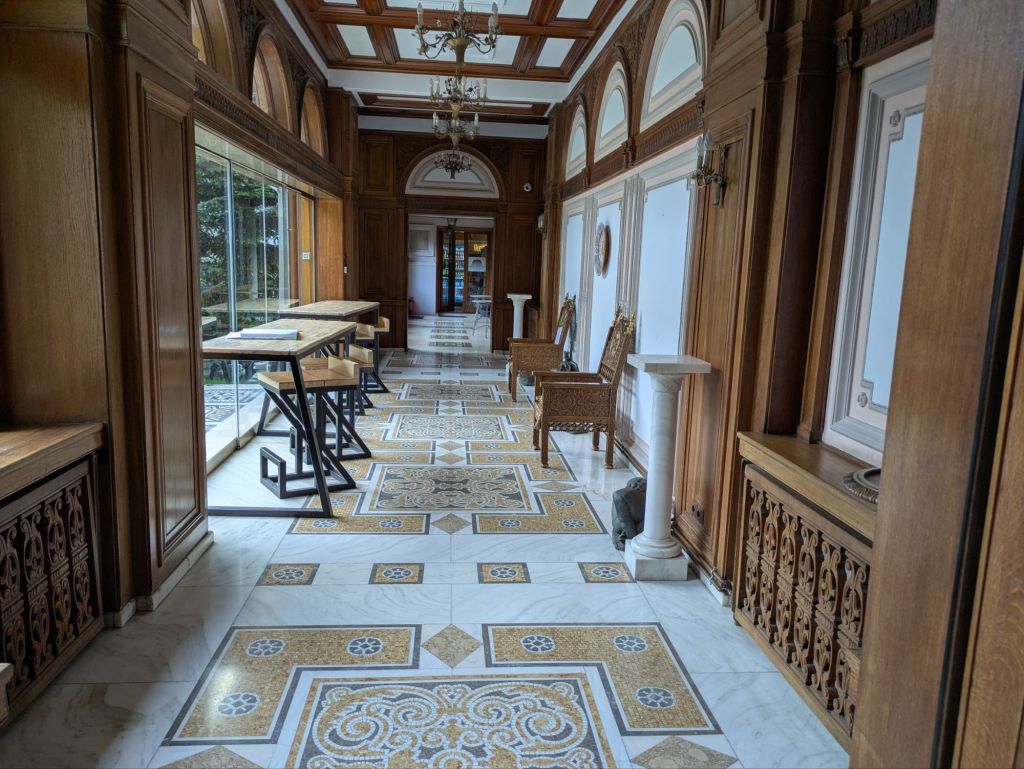
Of course Nicolae lived in a fancy house while the average Romanian resided in much less fabulous lodging.
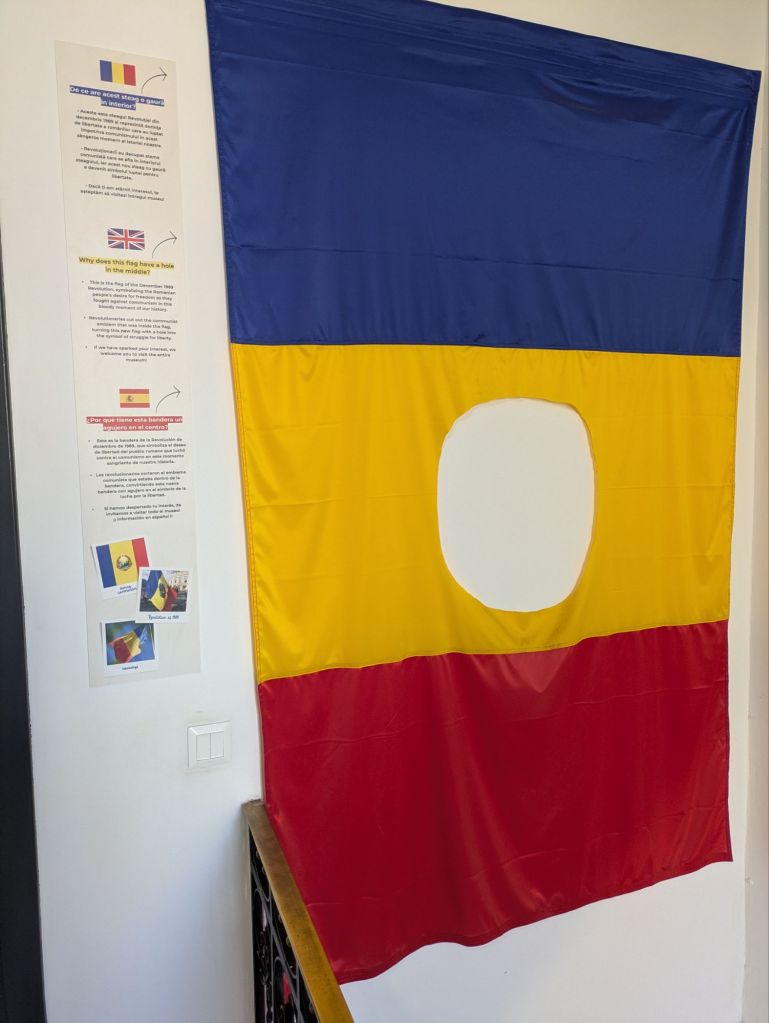
Fast forward to 1989, and the people were completely fed up, as populations were in all the communist countries by that time. But Romania was the only country in which citizens used violence to overthrow its communist regime, and it was ugly. In December of that year Ceaușescu gave a speech which was interrupted by boos and jeers from some attendees, and by people pushing forward to try to overtake the building he was in. He ordered the military to quell the protests and riots, which led to many being killed or injured. Eventually the next day protestors were able to break into the building, and the president and his even less popular wife Elena barely escaped by helicopter. Soon after, the military switched sides, and the Ceaușescus’ days were numbered. I listened to a podcast back in 2024 about their escape and capture, which is fascinating. The couple were quickly tried and then executed on Christmas Day. I learned that Romania’s revolution was the last removal of a Marxist–Leninist government in a Warsaw Pact country during 1989. There is actually video footage of the dead couple from after their execution, which was televised, but the video below does not include that. The reason the video was shared publicly was because many felt the need to prove that the execution truly happened. During the televised broadcast of his speech before everything fell apart, it’s remarkable to hear the crowd start to boo and charge forward and to see Ceaușescu’s utter confusion, and then to hear his and Elena’s shouts and attempts to restore order. They were clueless to the end.
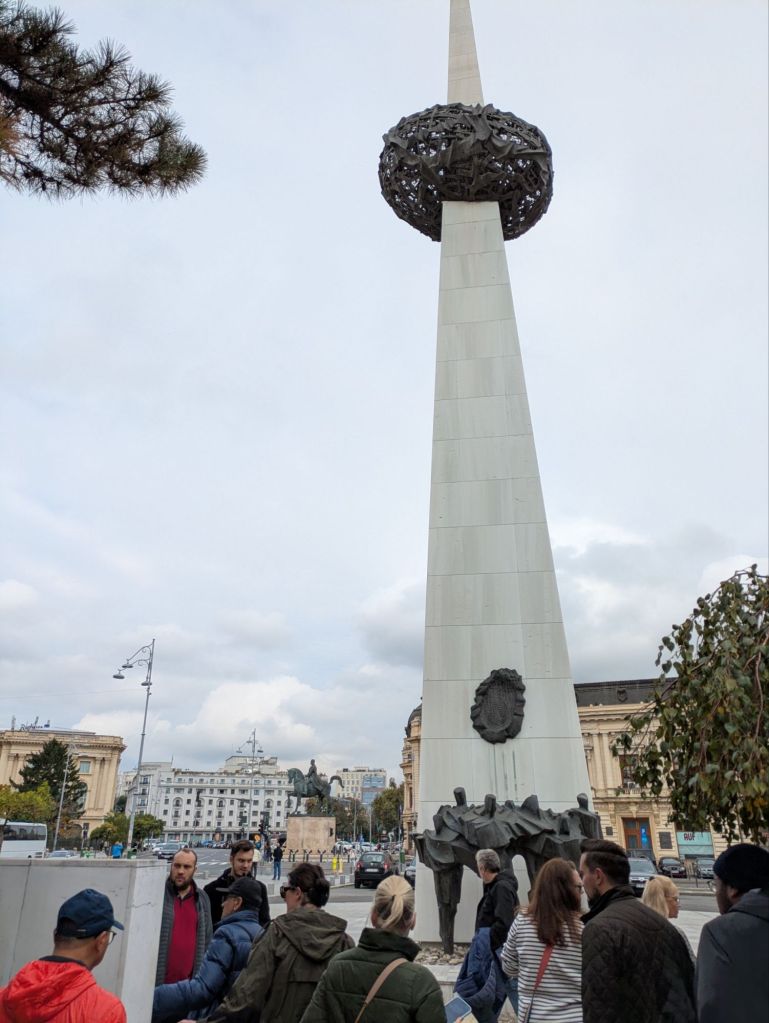
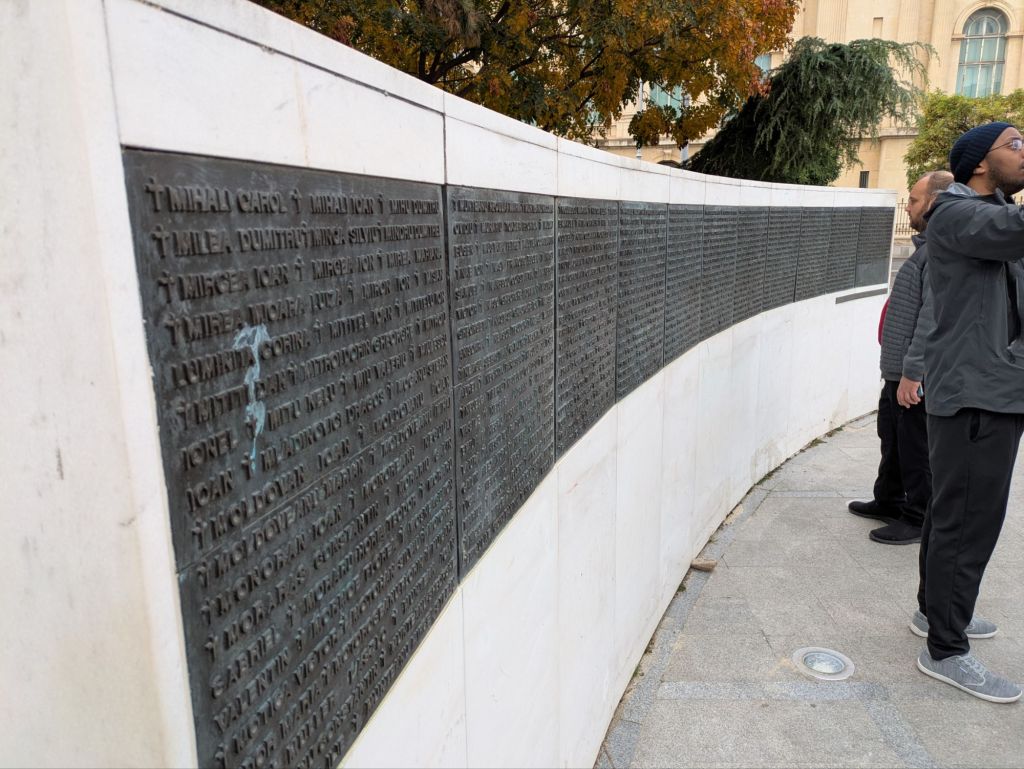
“Revolution Square”, directly in front of the building where Ceaușescu gave his final public speech, has a monument and a list of the names of over 1000 citizens who lost their lives during the final days of communist control.
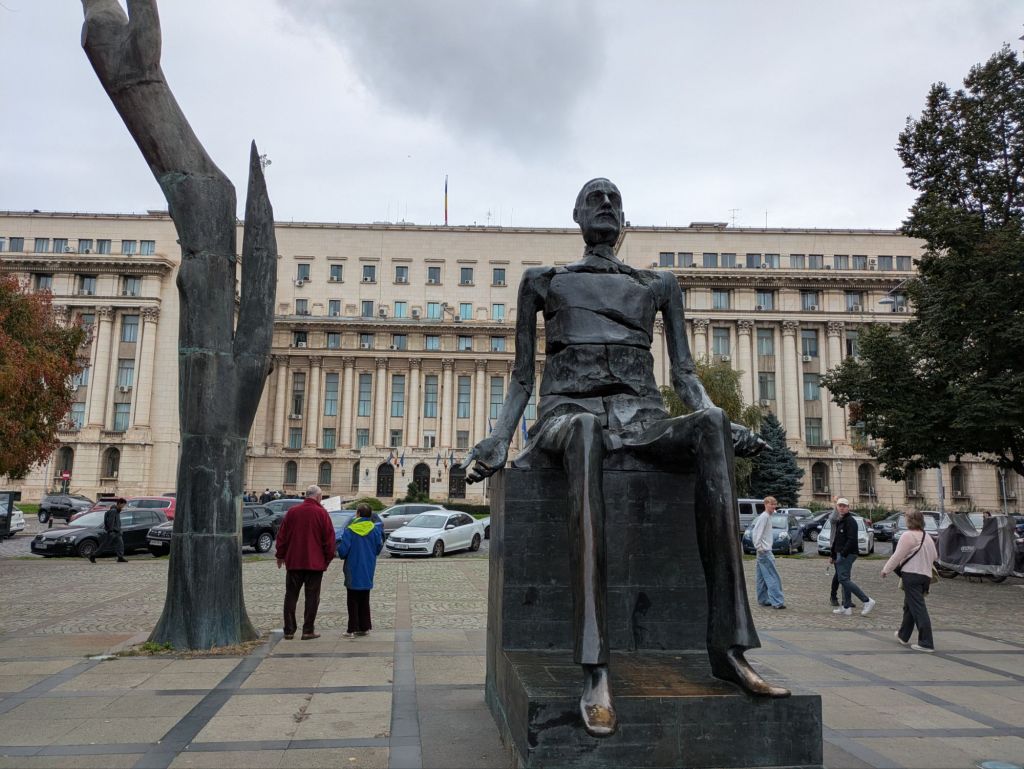
So as to finish on a happier note, I must say that things are much better now in Bucharest and Romania. From the 1989 human rights index, when Romania was ranked below North Korea, to now, when Romania has the fastest-growing economy in the EU after Poland, according to our walking tour guide.
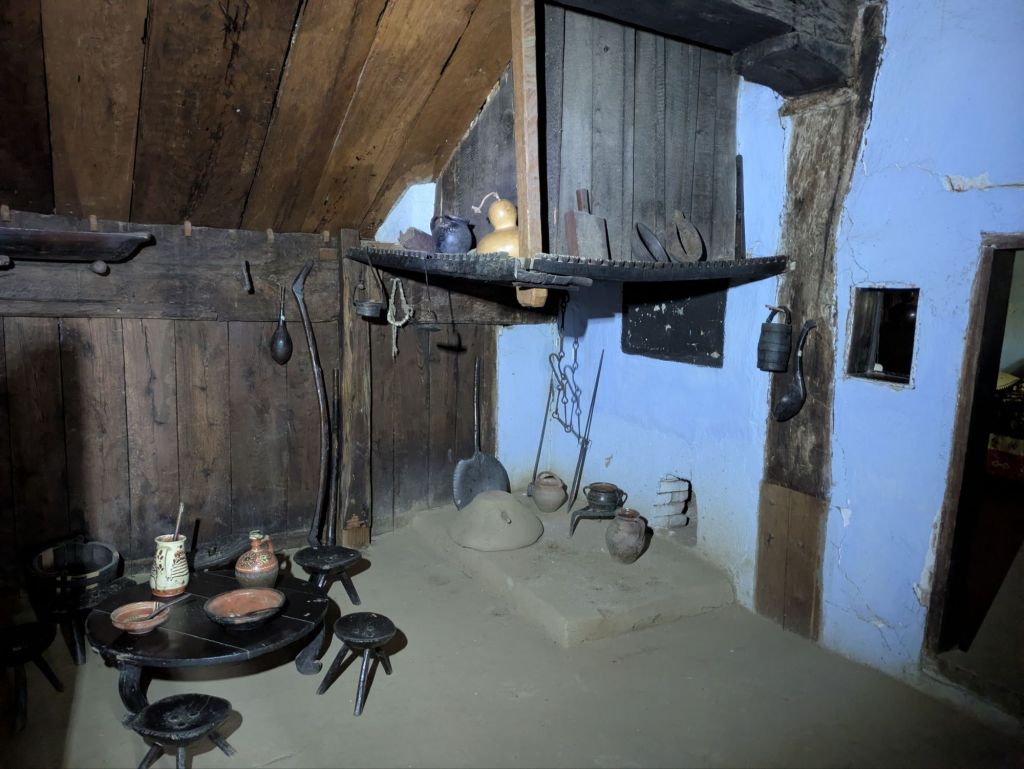
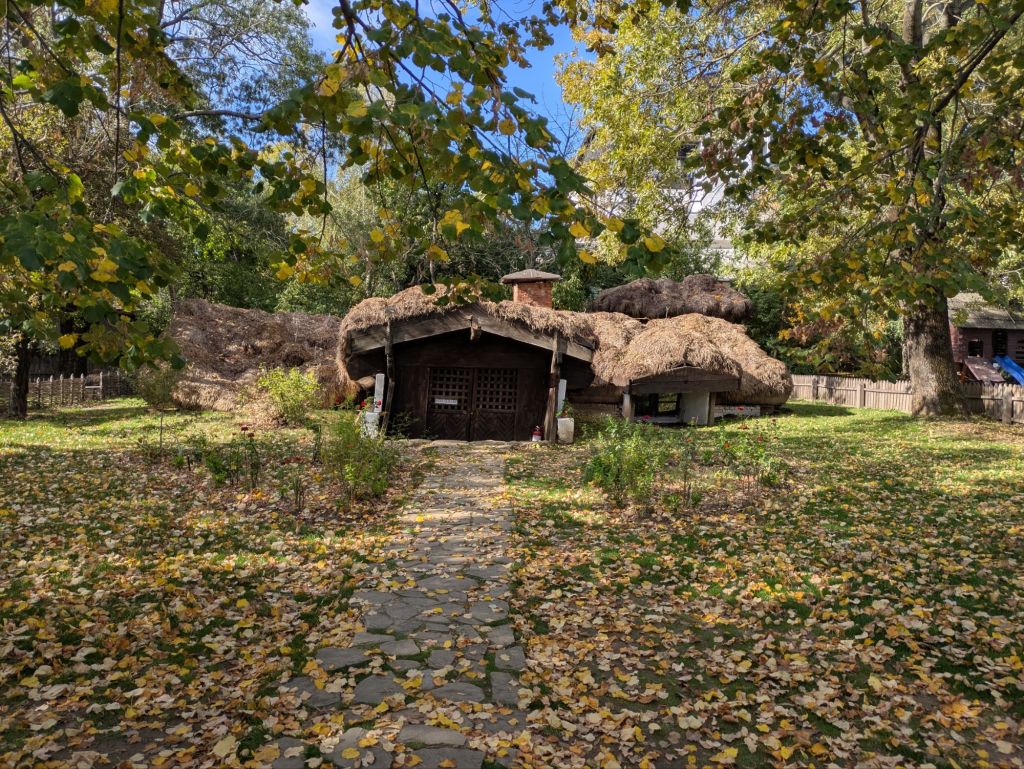
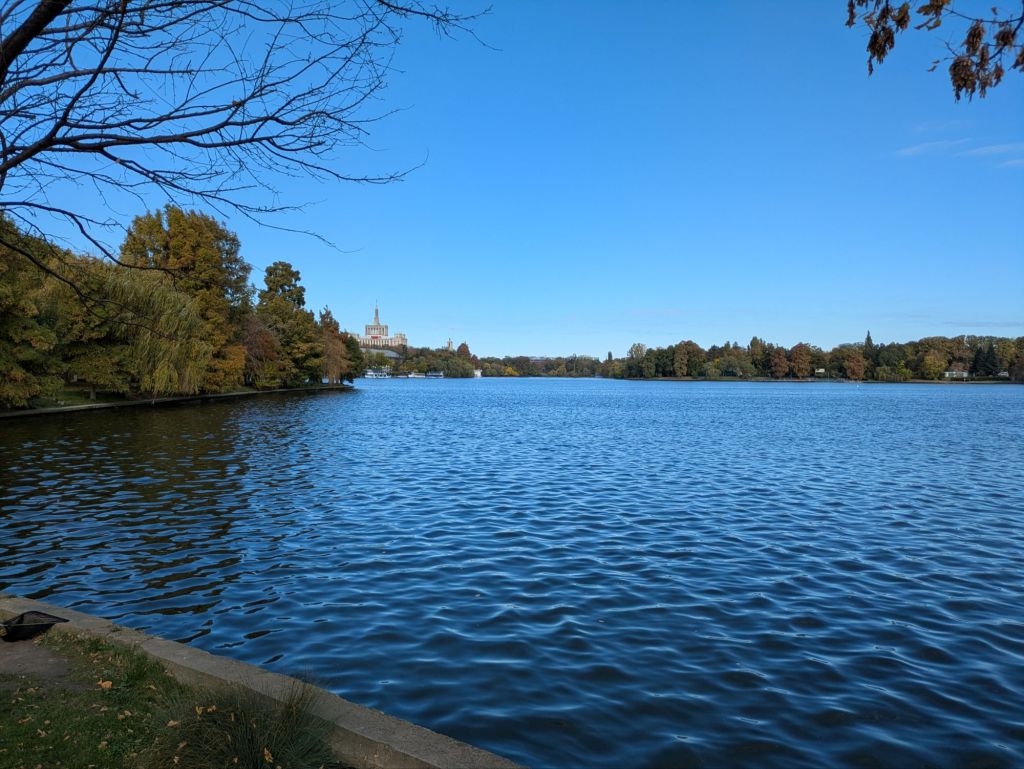
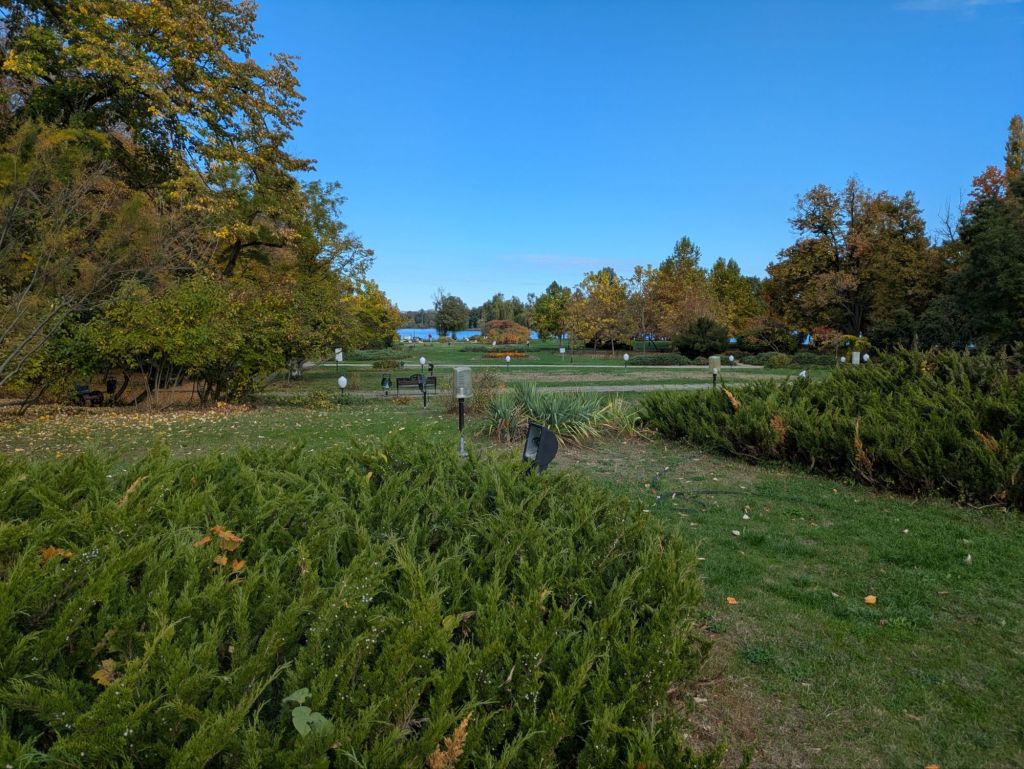
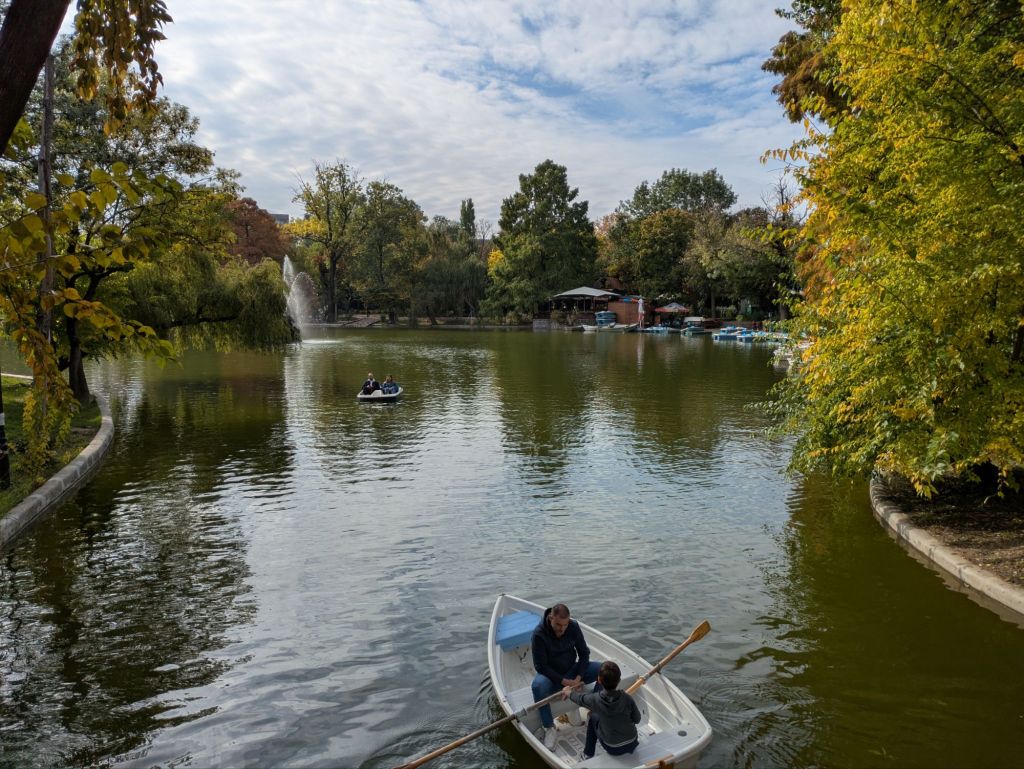
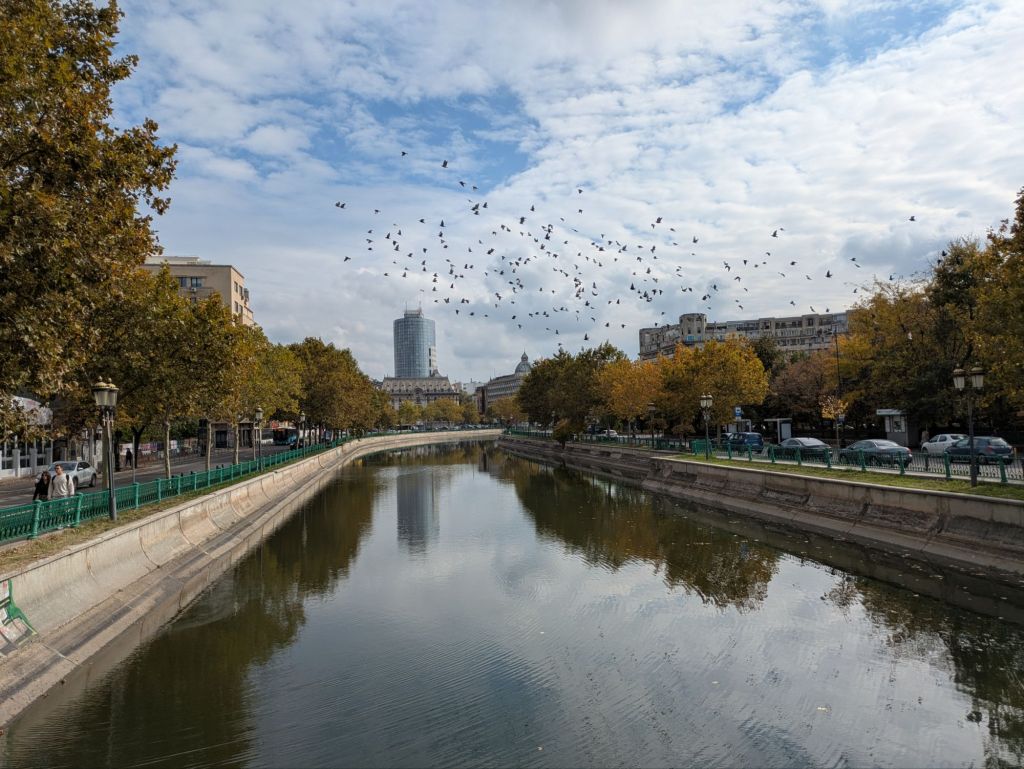
And Bucharest is surprisingly green, loaded with pleasant large parks. There’s also a big open air museum which proudly exhibits old houses, farm buildings, mills, presses, and other buildings and equipment from around the country.
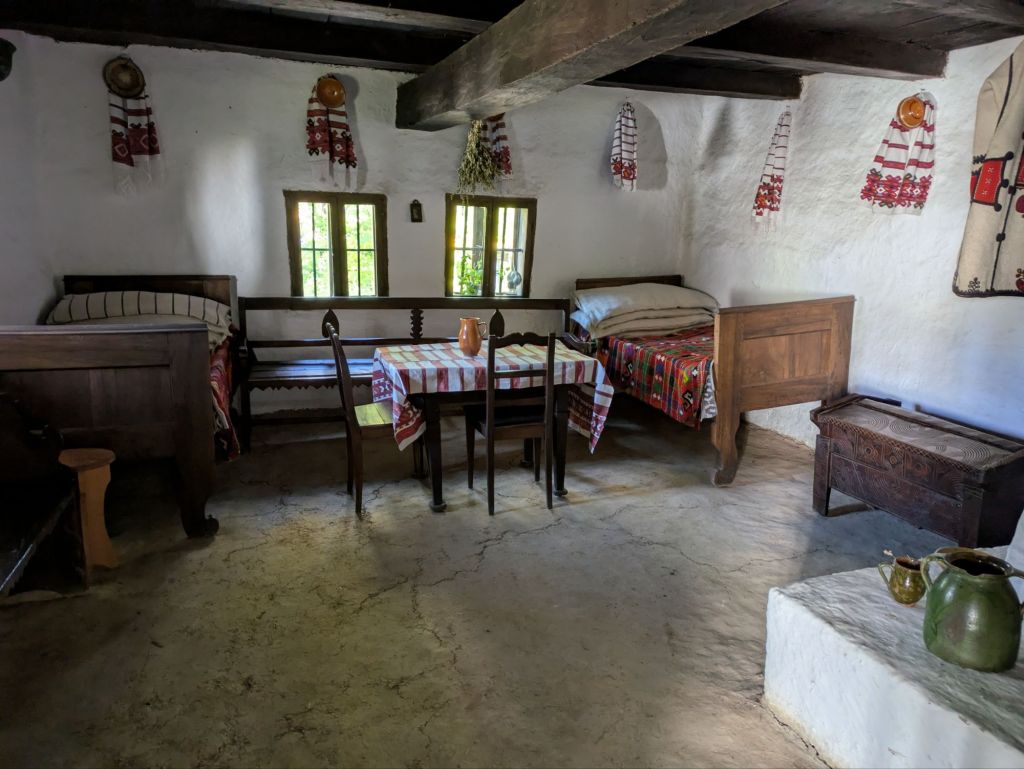
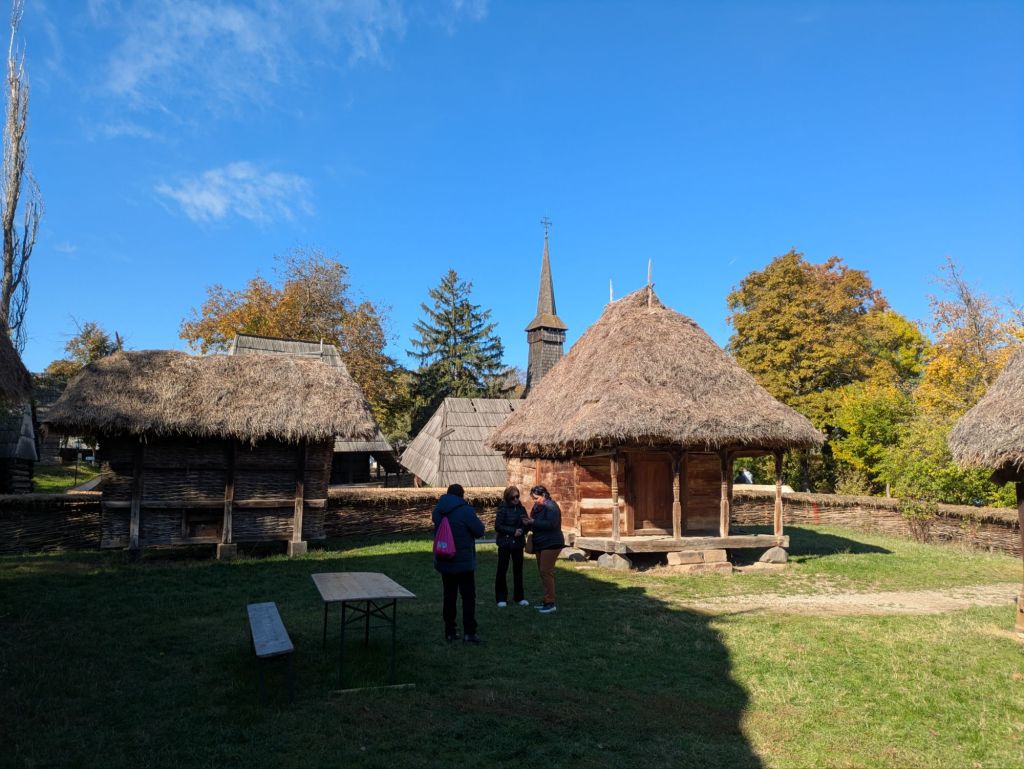
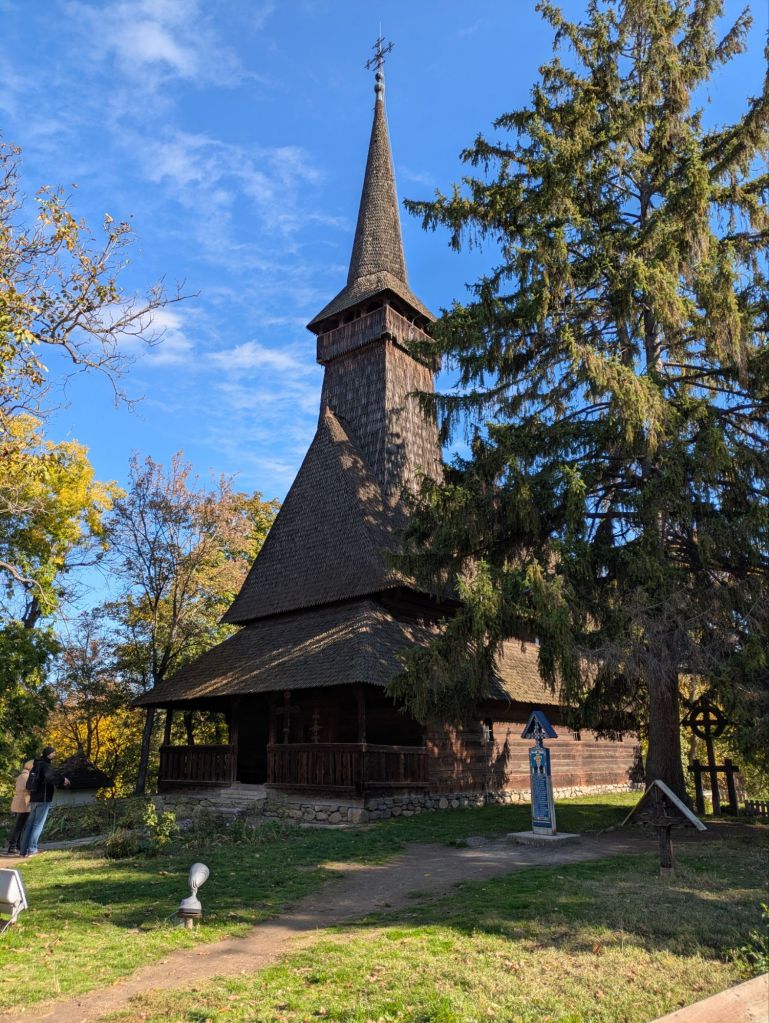
Today’s groan, man:
After all the tiring travel around various countries this October and November, I’m going to Book-a-rest in December!
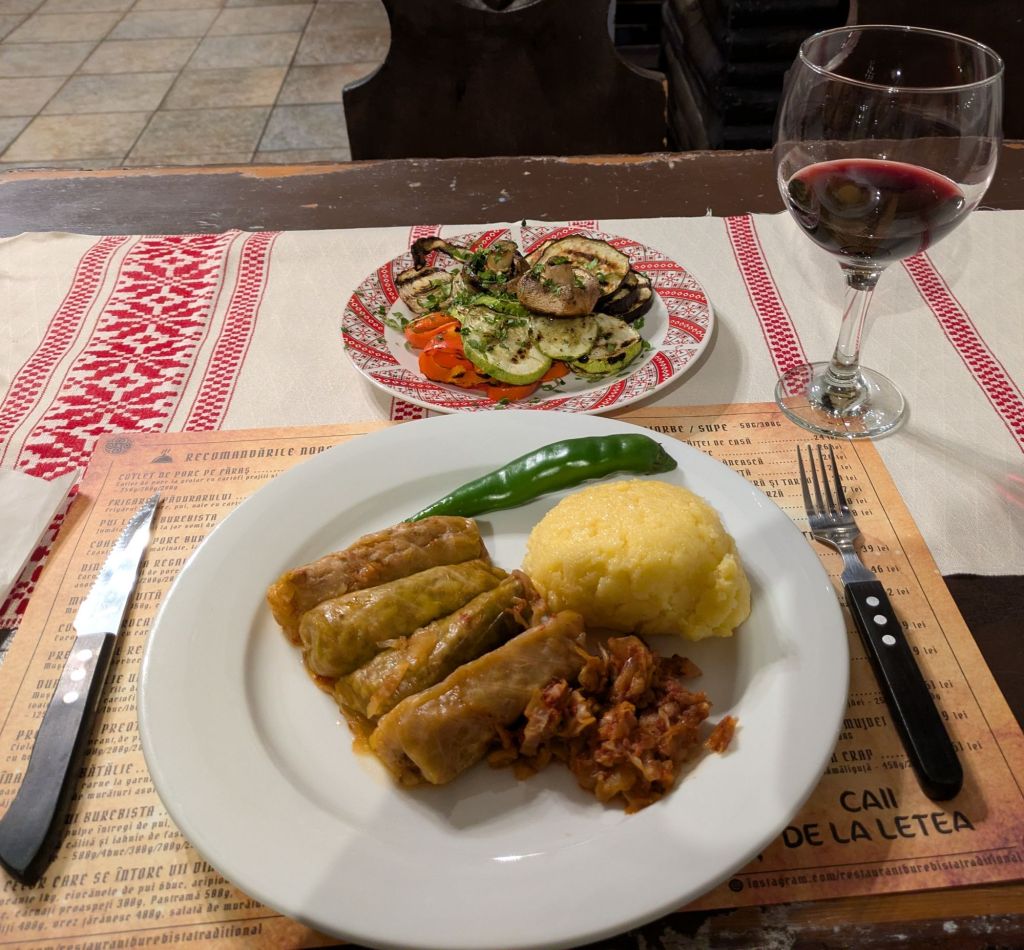
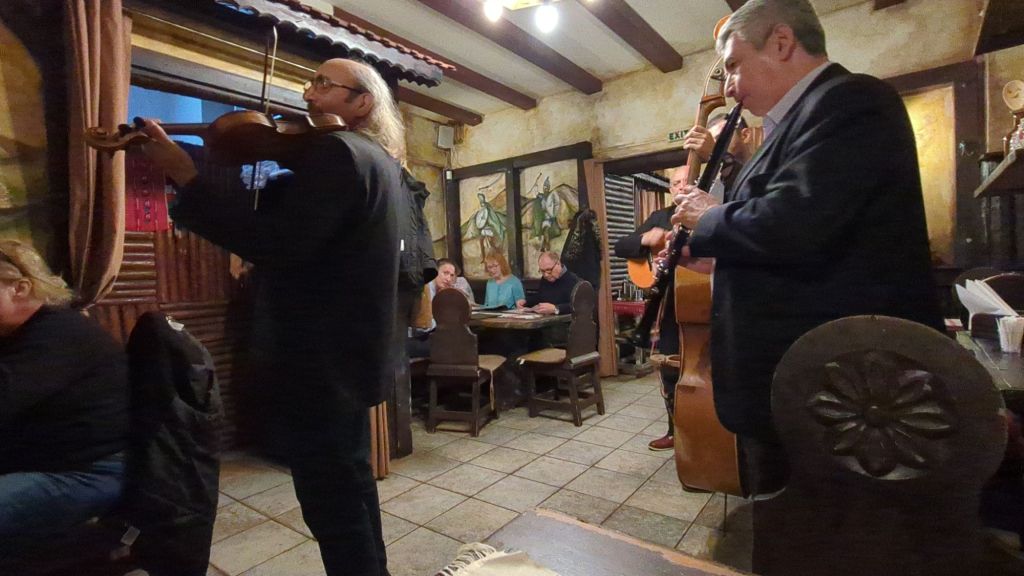
Today’s Romanian miscellanea:
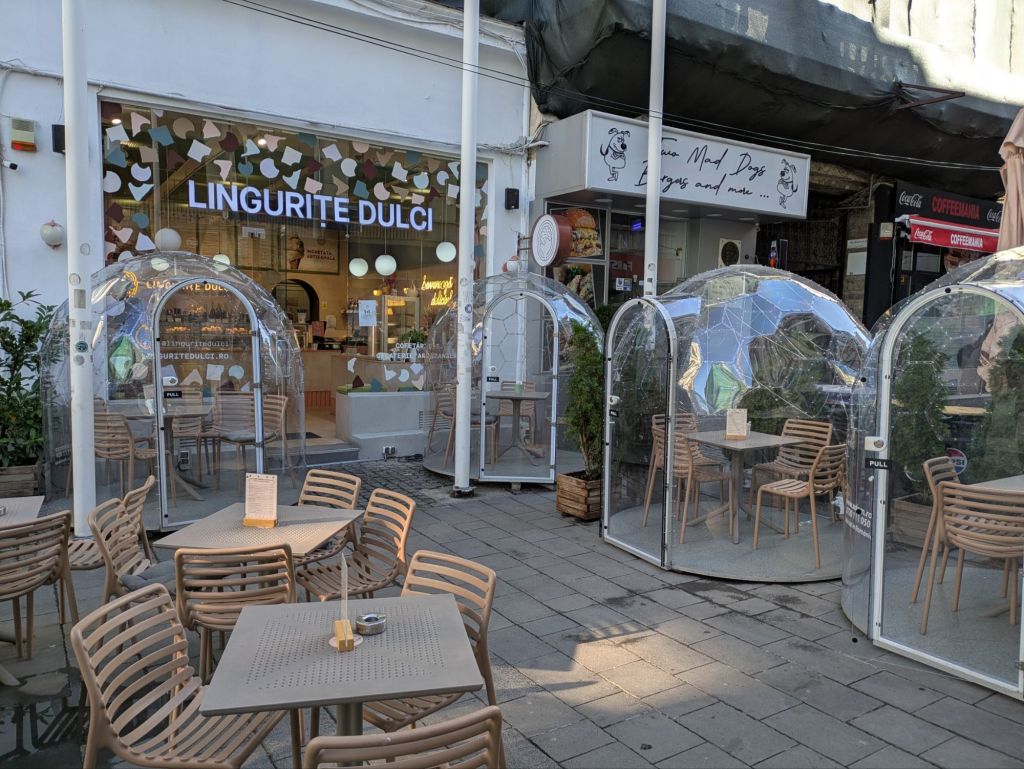
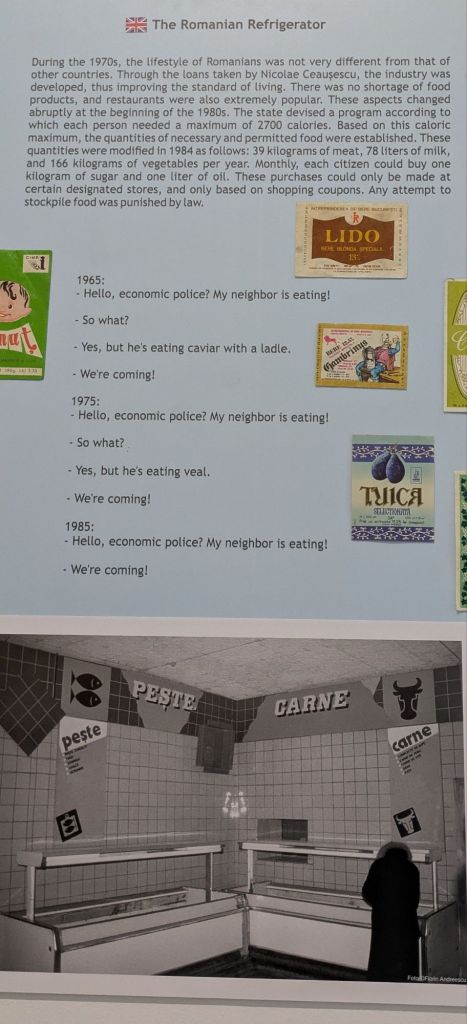
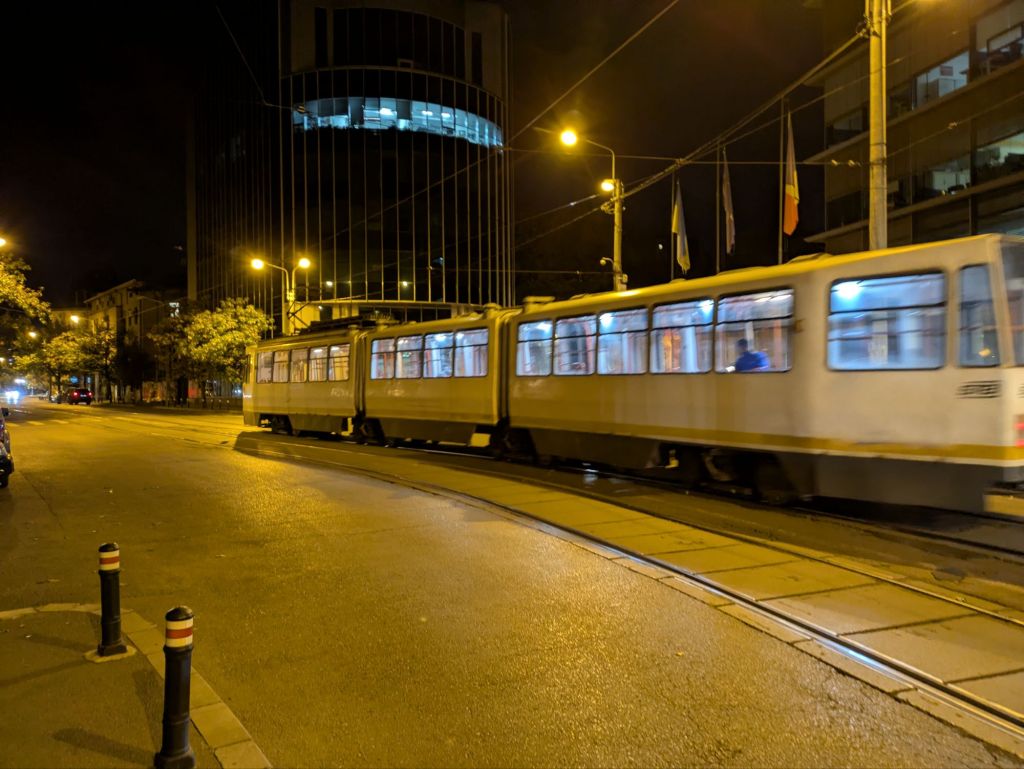
Back in 2015 when visiting Copenhagen for a patent conference, I watched a documentary during a film festival there. The documentary was titled “Chuck Norris vs Communism“, and it relates the story of Irina Margareta Nistor, the woman who secretly dubbed thousands of smuggled movies and TV shows into the Romanian language during the Ceaușescu era. I recommend watching it because it’s an engaging summary demonstrating how desperately average Romanians wanted to get access to forbidden foreign media, and how tolerant they were for having just one woman’s voice for the over-dubbing for every character in every show!
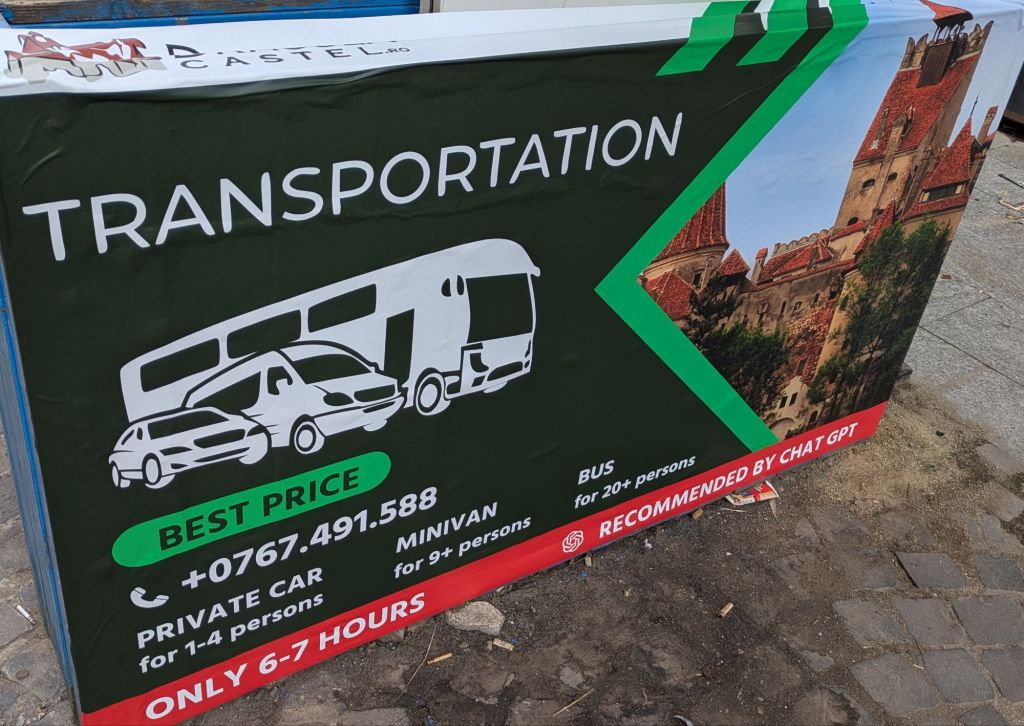
One final sidenote: During my stay in the city I needed to cancel a day trip tour I had booked earlier to visit the curvy highway because I learned that the tours were not currently going all the way up due to wintery weather. Plus, I had a ton of work to finish, so I figured I should cancel the tour and concentrate on work assignments that day instead. On my reservation confirmation was a Romanian phone number to call to cancel, and the info indicated that the line was available 24 hours per day! That was surprising for a small local tour operator. But when I called the phone number, I was greeted by an AI chatbot. And boy, was it functional! The “guy” asked me what I wanted to do, and “he” understood my request to cancel and asked for my reservation number. He understood that, confirmed that I wanted to cancel, and then summarized that the cancellation was complete and when I’d get my refund. It worked great! And the AI chatbot interaction was certainly much smoother than trying to deal with a real person from some unknown country with a heavy accent. I must admit that I was rather impressed. I suppose it’s our future, along with the demise of many call center jobs around the world. Double -edged sword? Coincidentally, a week after this, I listened to a 99% Invisible podcast episode about how call center workers intentionally cause customers grief. Humans tend to naturally want to help one another, but AI will do whatever it’s asked to do, including being cruel, confusing, obstinate, or whatever else will save a company money. Even more interesting times are a-coming. Buckle up.

 Major Meander
It’s always great to read your blog posts. I’ve recently learned about Albania’s paranoid Enver Hoxha and his tens of thousands of bunkers; Vlad the Impaler-the inspiration for Dracula; and now Romania’s brutal Ceaușescu. The only other people that I know that can talk knowledgeably in this arena are probably Richard and Sabine! Thanks for expanding my world, Scott. Joe
And you! I appreciate folks whose eyes don’t glaze over for these types of subjects 😂