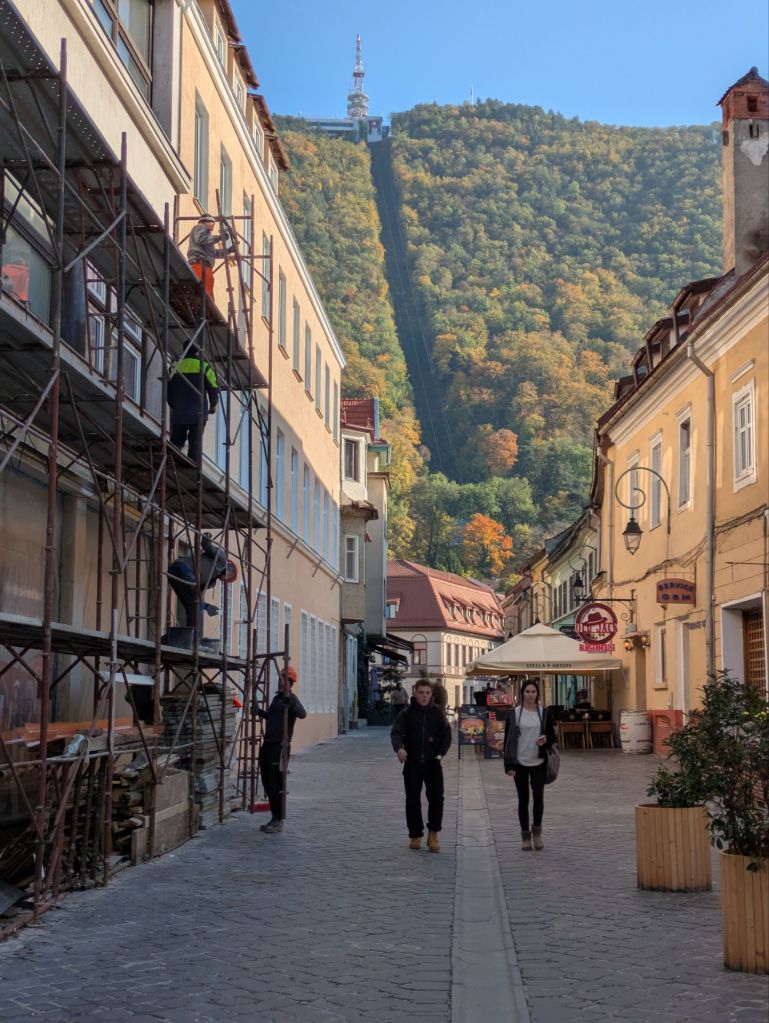
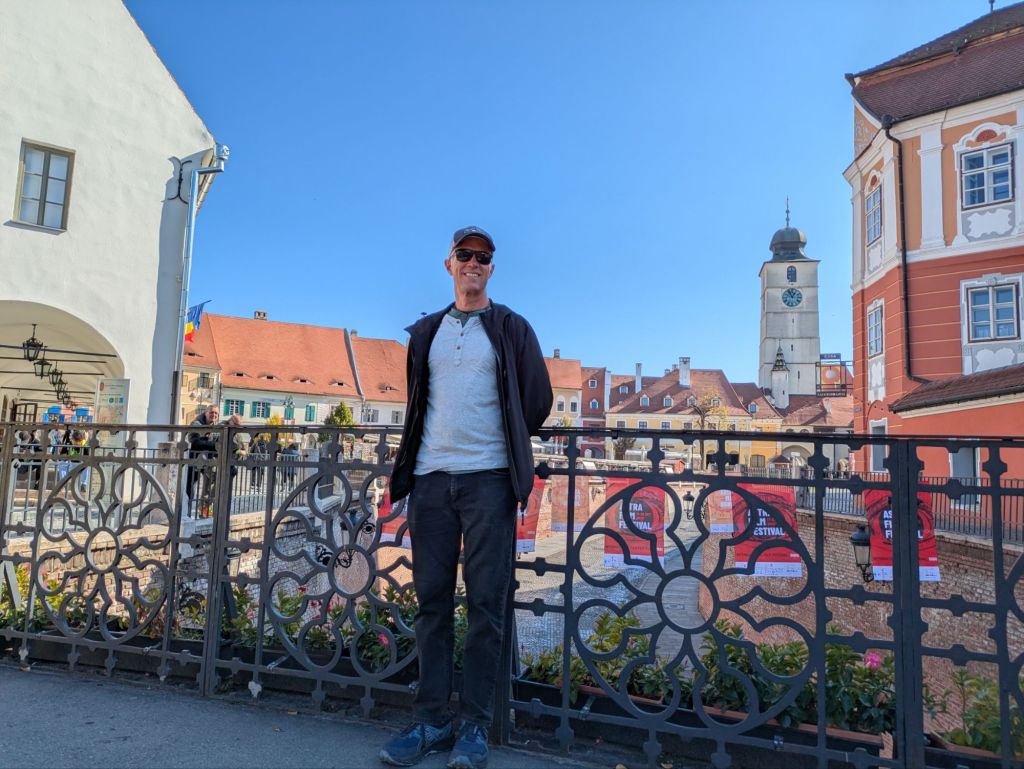
I was surprised to learn that the main tourist hotspot cities in Romania’s Transylvania are historically German: Brașov, Sighișoara, and Sibiu. The Transylvanian Saxons dominated the region after merchants and craftsmen from today’s Luxembourg, Belgium, and Germany were invited by the Hungarian leadership in the 1100s to establish towns and trade in the region and to protect the easternmost frontiers of the then kingdom of Hungary against invaders from the east, like the Tartars and Ottomans. Transylvania was in fact part of Hungary until the end of World War I! While there is much residual German influence, there are very few ethnic Germans left since most who were still in the region toward the end of World War II fled west as the Soviet Red Army advanced into Transylvania.
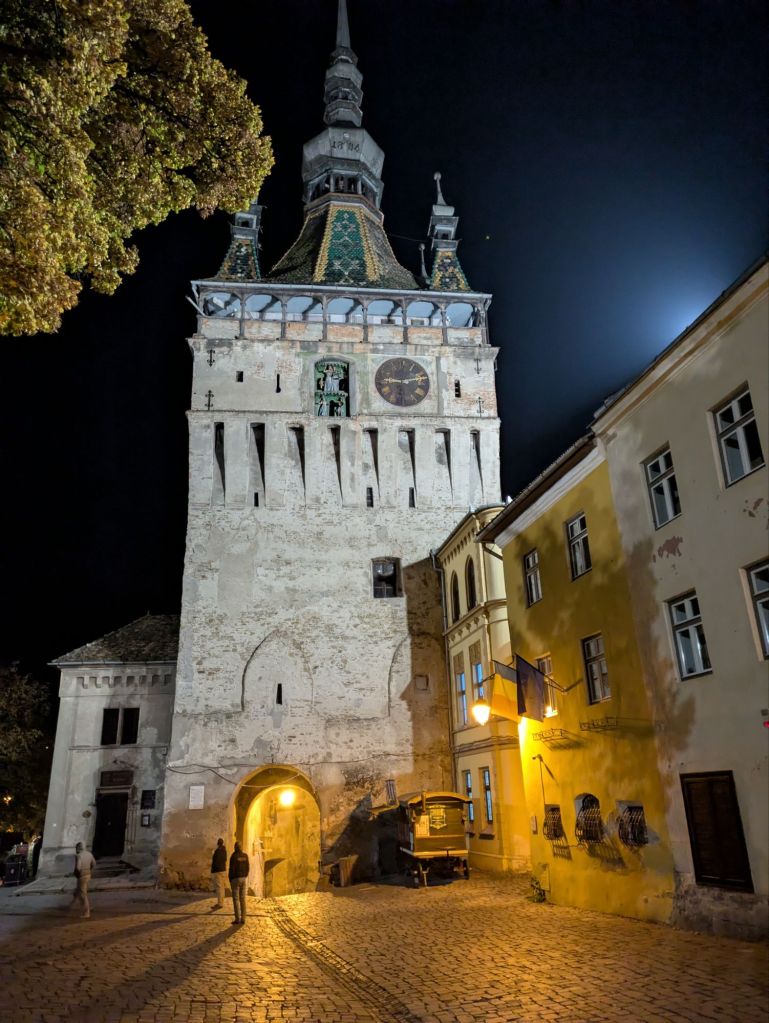
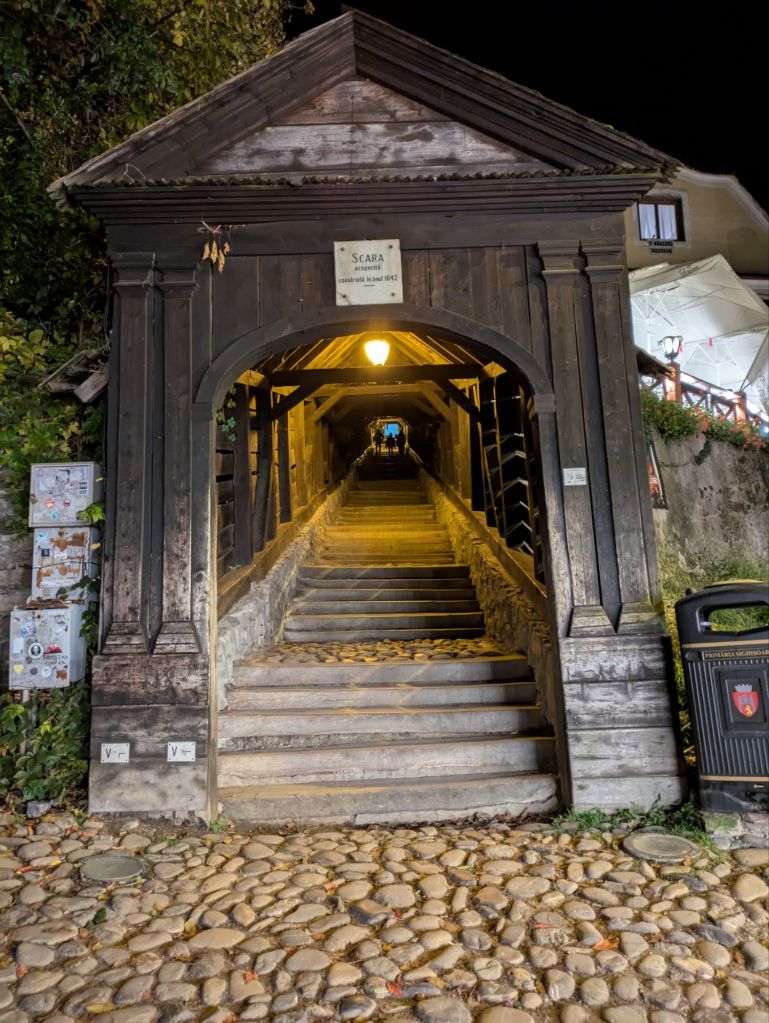
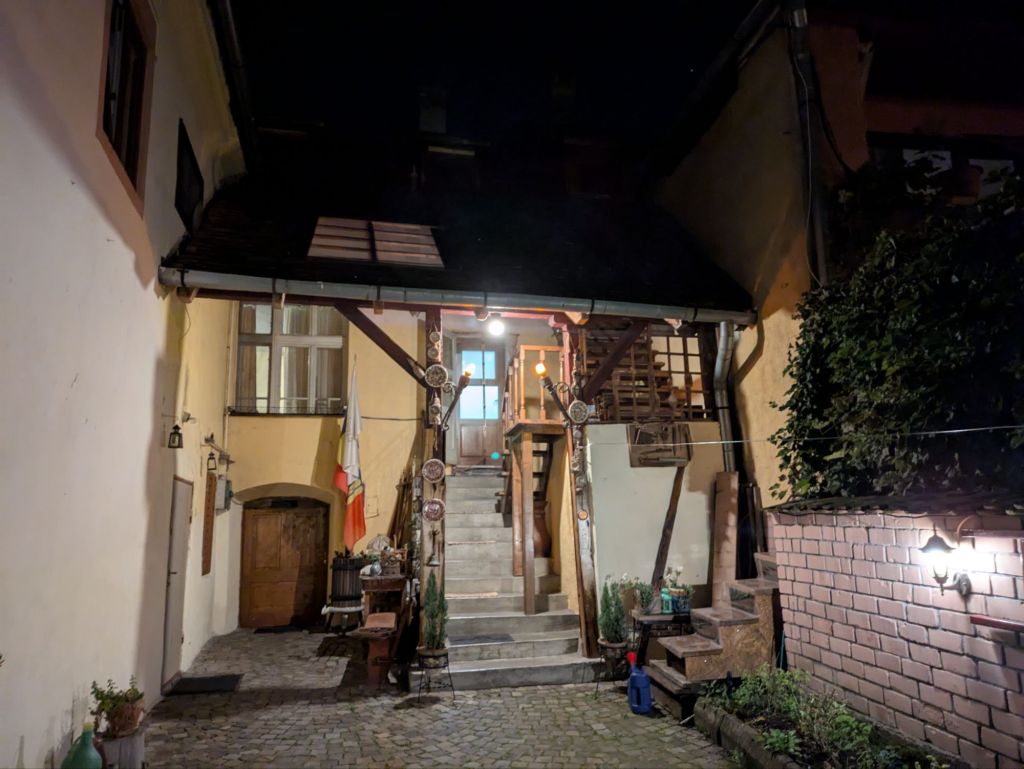
The old town centers in each of Brașov, Sighișoara, and Sibiu are captivating and definitely worth a visit. They are all set up well to handle the tourists, and the locals are genuinely hospitable. My favorite is definitely Sighișoara, where we in the two-day tour group overnighted. It’s the best-preserved of the three cities, and the residual medieval ambiance transports visitors back in time. I found it particularly engaging to wander the mostly-empty streets in the dark that night. Totally my groove. The fact that the Europeans on my tour also found all the sights enthralling just goes to show how so many of us humans love the stories of the past and the beauty of the associated architectural leftovers, along with the ambiance and residual ghosts.
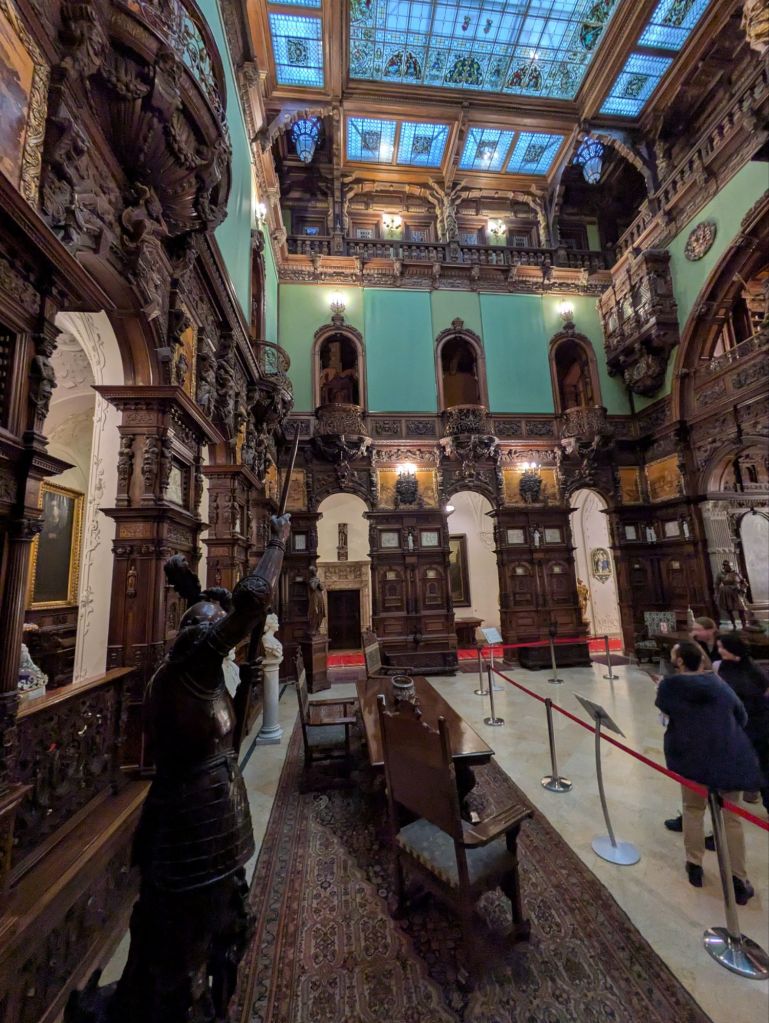
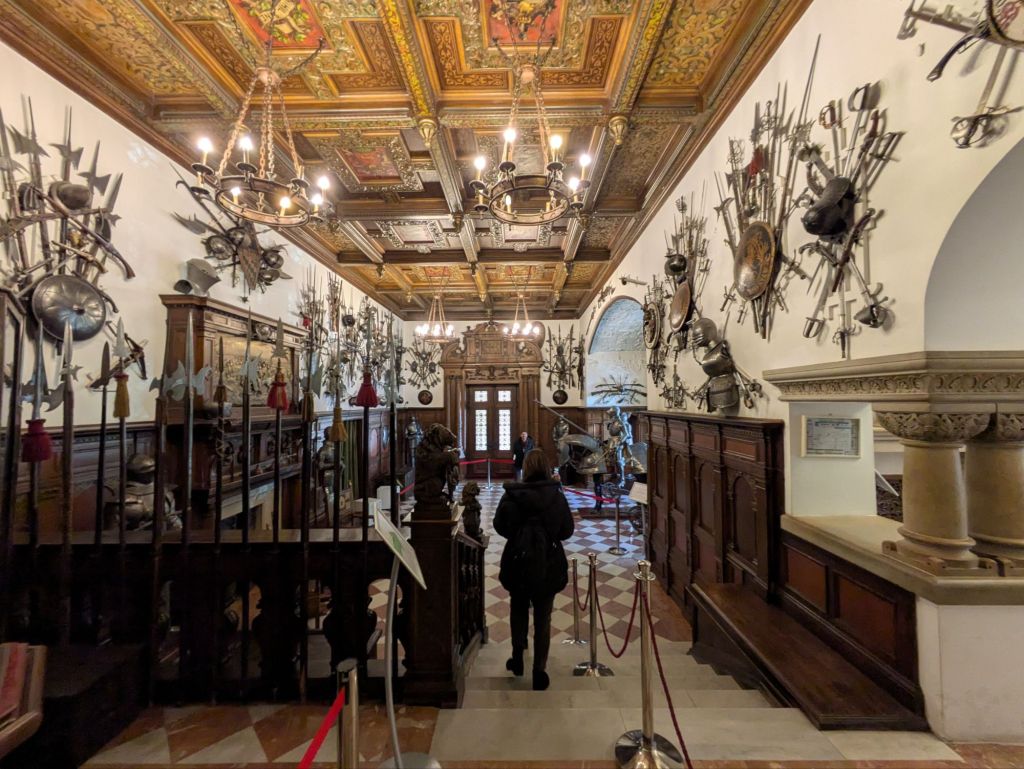
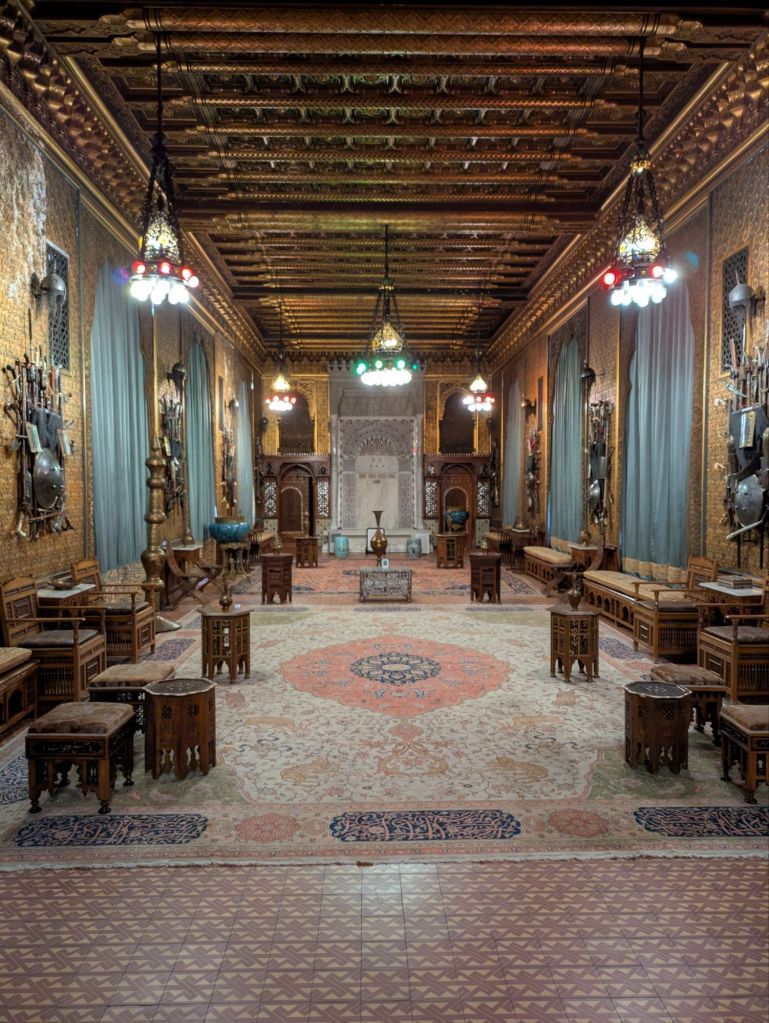
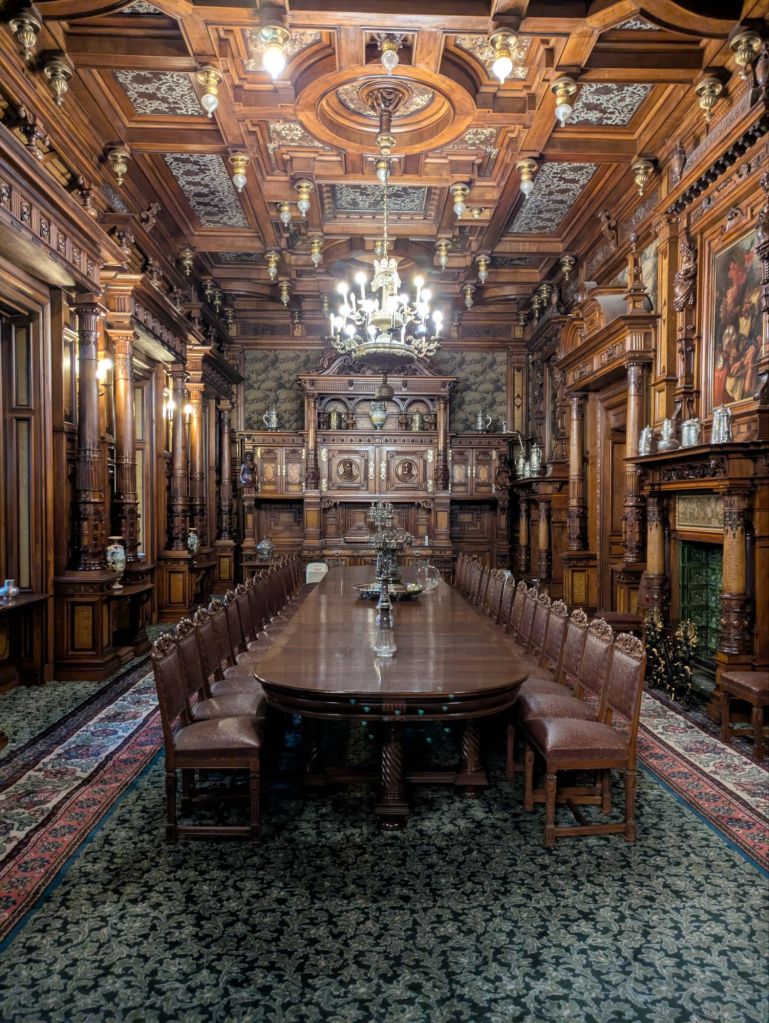
Additional attractions we visited on our two-day journey were Peleș Castle and Bran Castle. Peleș Castle (not actually in Transylvania) was built much more recently, completed in 1914, for King Carol I, and it even had central heating, central vacuum, and electricity. It’s incredibly ornate and beautiful, and it’s one of the few castles I’ve visited in recent years for which I found a visit inside to be worthwhile. Bran Castle is much, much older, dating from the 1300s as a true medieval defensive fortress, and now is an extremely touristy destination full of Dracula and vampire kitsch.
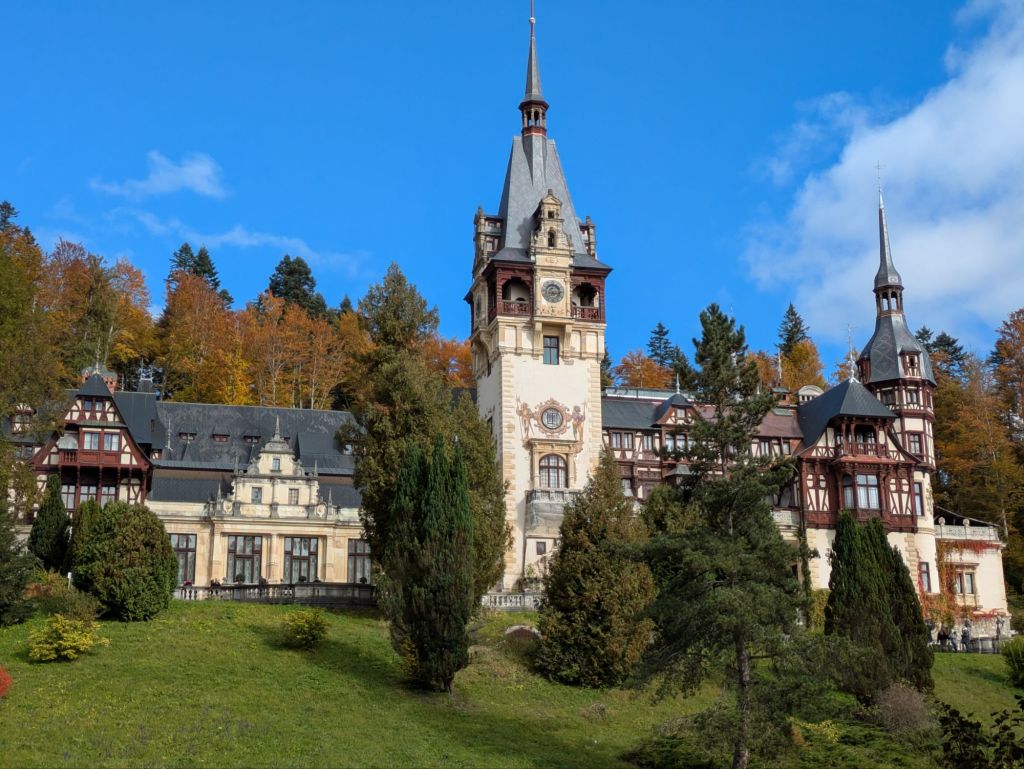
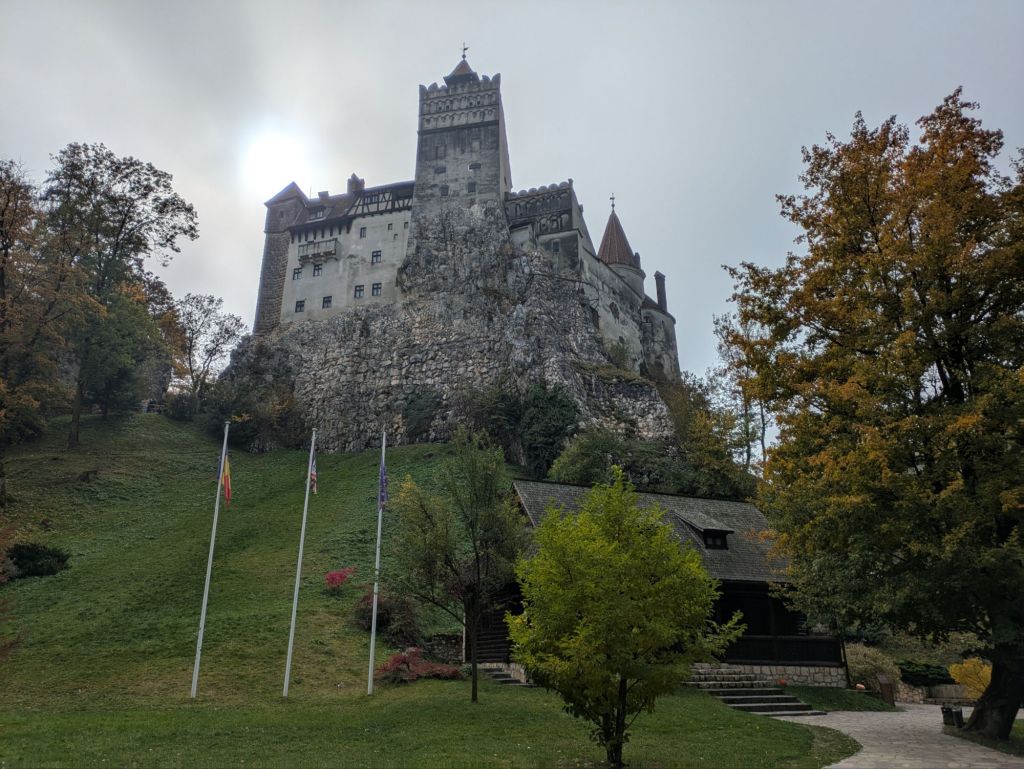
Regarding the Dracula connection to Bran Castle, Rick Steves summarizes the history and situation better than I can:
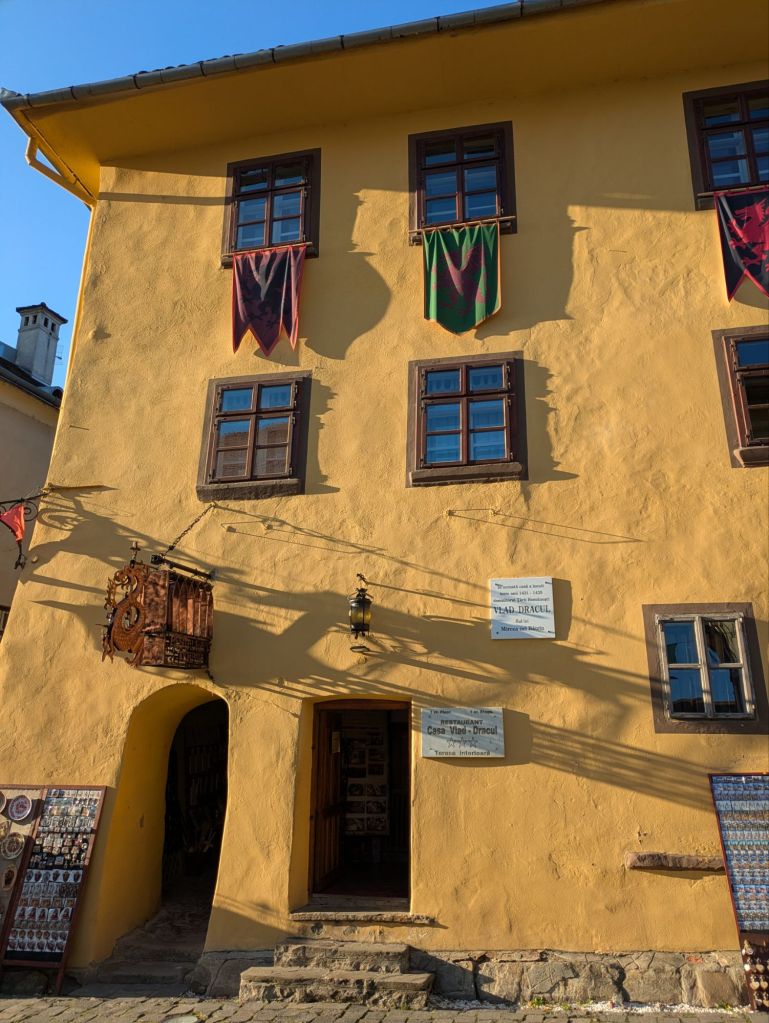
Vlad III (1431–1477) was a 15th-century prince of Wallachia who was taken captive by his Ottoman rivals. Some say he rotted in a prison, while others believe he apprenticed at the sultan’s court in Constantinople. Either way, after six years the authorities believed him “rehabilitated” and returned him to his homeland—with the expectation that he would serve as their obedient puppet ruler of Wallachia. Instead, Vlad quickly turned on his former captors, and joined the Hungarian fight to push back the Ottoman advance into Europe. According to later (and likely exaggerated) accounts, Vlad’s methods for dealing with his enemies were brutal: Slowly and sadistically, he’d drive stakes into the bodies of his victims as they screamed in agony. Then he’d display their mutilated corpses along busy roads as a warning to would-be foes. Vlad dispatched tens of thousands of victims this way, earning him a vivid nickname: Vlad Țepeș—“the Impaler.” He was also known by another name: Dracula, stemming from his father’s membership in the chivalric “Order of the Dragon” (Dracul in Romanian). […] By the late 1800s, the English novelist Bram Stoker (1847-1912)—like many before and after him—found his imagination captivated by the sadism of Vlad the Impaler. Stoker was also inspired by completely separate Transylvanian folk tales of the undead. Stoker merged the two storylines and, in 1897, published the Victorian Gothic novel Dracula. Stoker never traveled to Romania to research his book; the vampire called Dracula, and his evocative Transylvanian settings, all came purely from Stoker’s imagination. All of this means that—from a sightseer’s perspective—there are no actual sights in Romania relating to “Dracula,” and only tenuous ties to Vlad the Impaler. Vlad may have lived for a brief time in Sighișoara. But it’s likely that he never even set foot in the most famous “Dracula” sight, Bran Castle (at most, he spent a night or two there). Of course, the locals will never set you straight…all that Dracula lore is just too lucrative. (Rick Steves Eastern Europe)
Apparently Vlad III actually spent very little time in Transylvania, and our walking tour guide in Bucharest told us that Vlad the Impaler helped create Bucharest, building a fortress there to help hold back the Turks. I’ll later be writing about Bucharest, which is a large, hectic, and gritty city, contrasting greatly with the Romanian countryside.
Speaking of countryside, I was pleased to have had so much time in the tour van riding through Romanian villages and farmlands when traveling between the various highlight destinations mentioned above. Before coming to Romania I had an impression that people in the Romanian countryside are monetarily very poor and agrarian, and I suppose they are for the most part. But at least the villages we drove through looked well kept, and the people we encountered often smiled and waved at us. In general these and the other Romanians I’ve seen or met have been calm, open, and pretty talkative and friendly. We did often come across horses driving filled carriages, like with hay, typically driven by a grizzled old man.
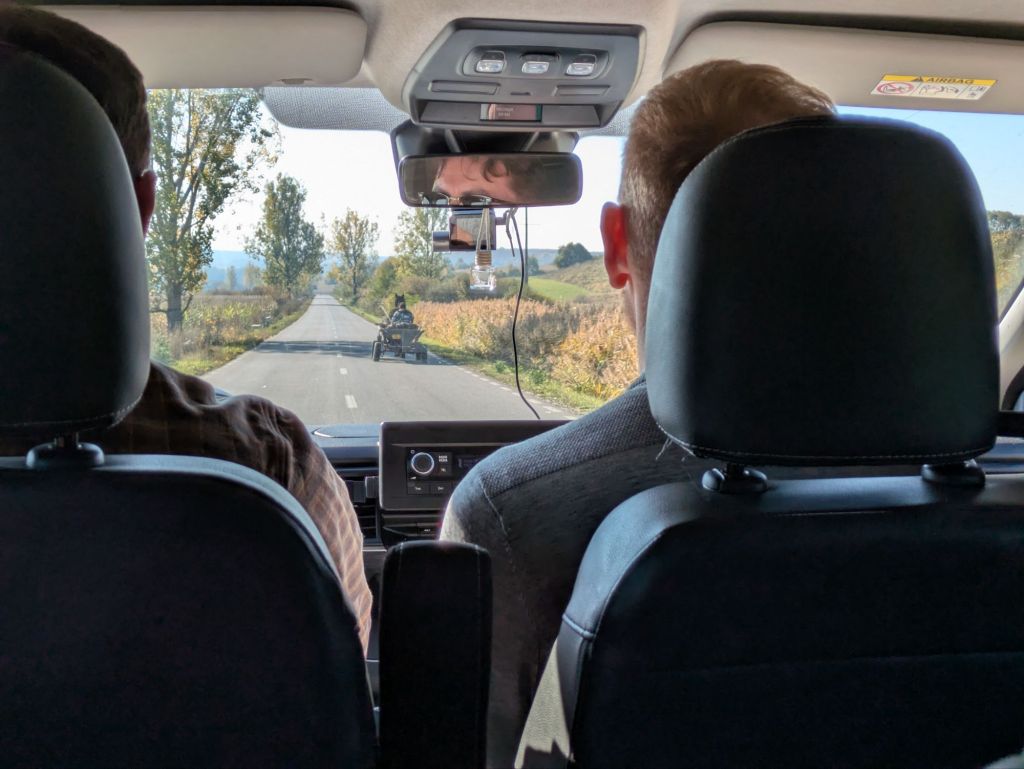
Our tour van driver drove with speed, intensity, and too much daring for my taste, and he would put the pedal to the metal to pass these farmers and their horses. I’ve been surprised at how car-focused the country is, especially in Bucharest. The traffic in and around all the cities is usually pretty awful. There are way more vehicles than most of the roads can handle, and much of the time in the van was spent crawling through traffic jams, even in the smaller towns along the way. Only the countryside was freer-flowing.
We drove through the Carpathian mountain range a couple of times during the journeys around Transylvania, and much of the mountains reminded me a bit of western North Carolina’s mountains, and given the time of year, the fall leaf colors were varied and bright. I’m not surprised that the Jude Law movie Cold Mountain was filmed in the Romanian mountains, despite the story being based in NC. From Wikipedia: “The film was one of an increasing number of Hollywood productions made in Eastern Europe as a result of lower costs in the region, and because, in this instance, Transylvania had lower infrastructure, such as power cables and paved roads, and was thus less marked by modern life than the Appalachians.”
Though we didn’t visit any, the region has leftover fortified churches. Romania is at a crossroads with so many different cultures who have passed through or tried to move in, so even the churches had to protect themselves from attack. From Wikipedia:
Transylvania has one of the highest concentrations of fortified churches that survive from the 13th to 16th centuries. Of the original 300, more than 150 well preserved fortified churches are surviving until today, displaying a great variety of architectural styles. Seven from among them, representing various types, have been selected by the World Heritage Committee and listed as a World Heritage Site. (https://en.wikipedia.org/wiki/Villages_with_fortified_churches_in_Transylvania)
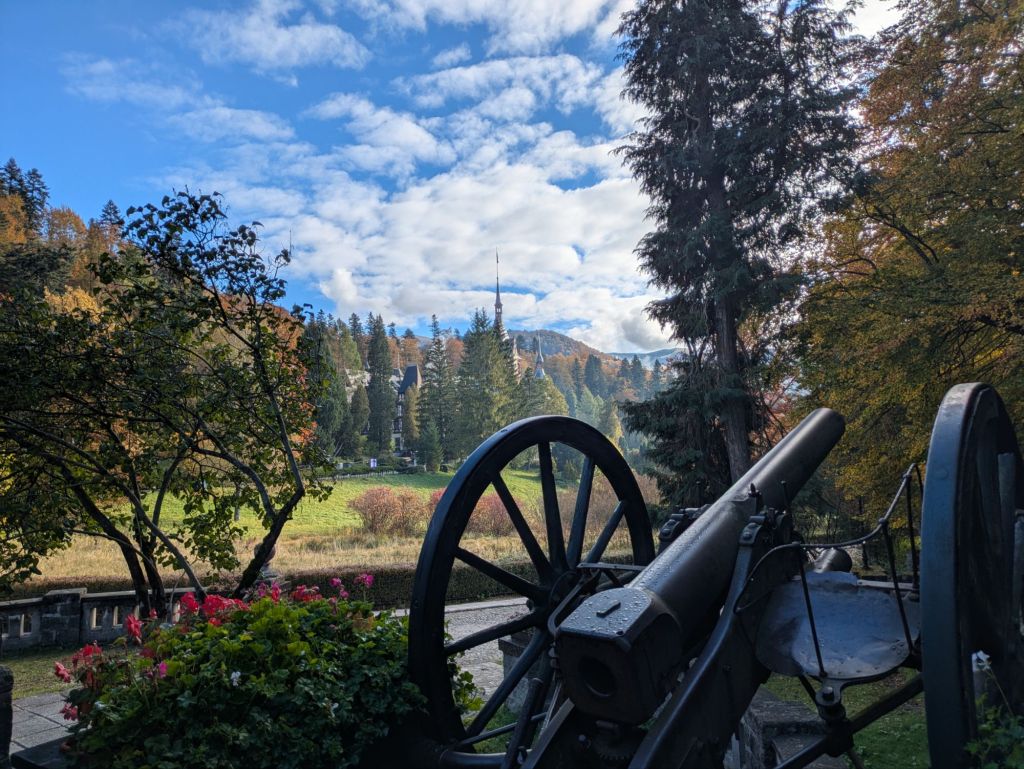
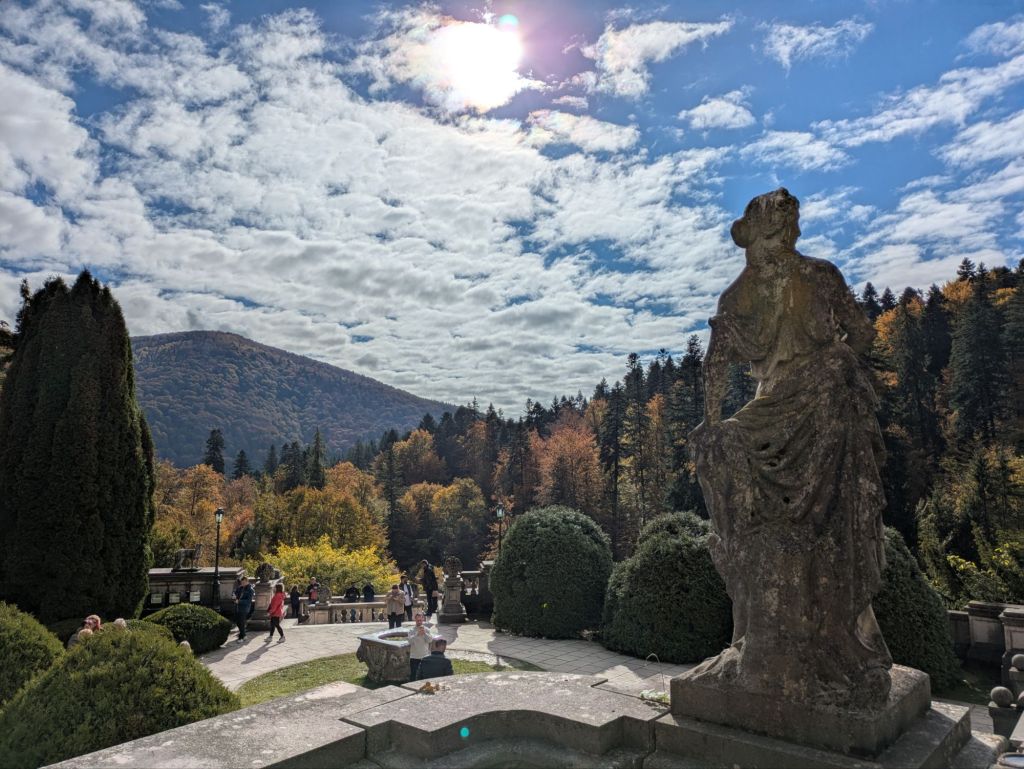
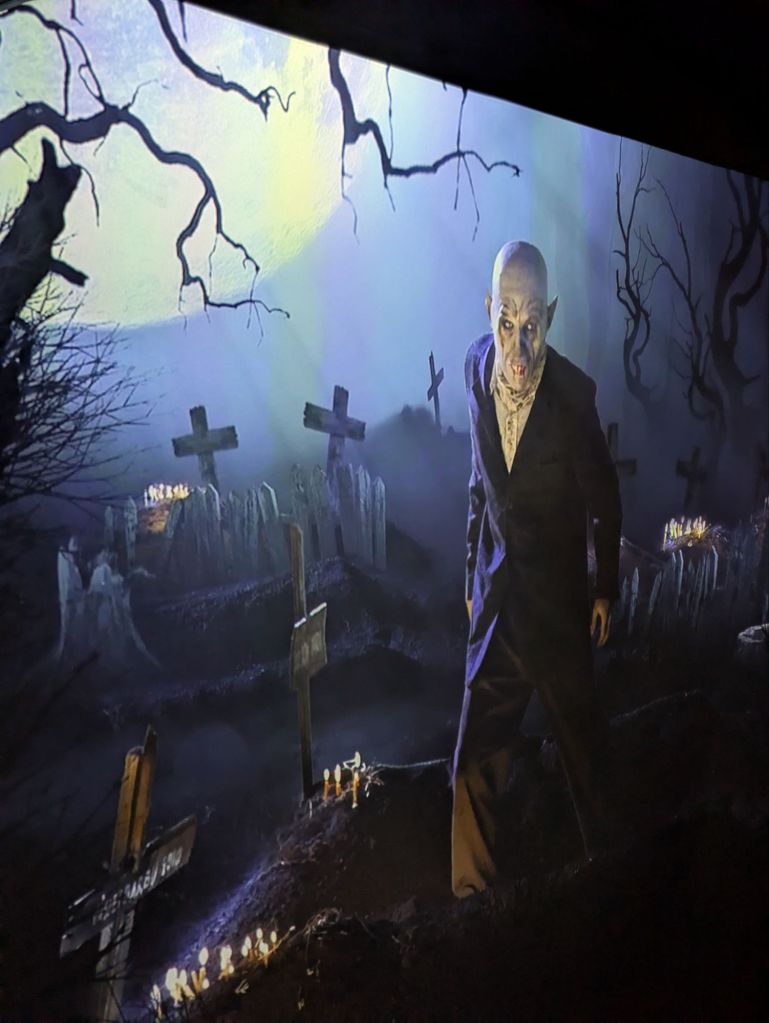
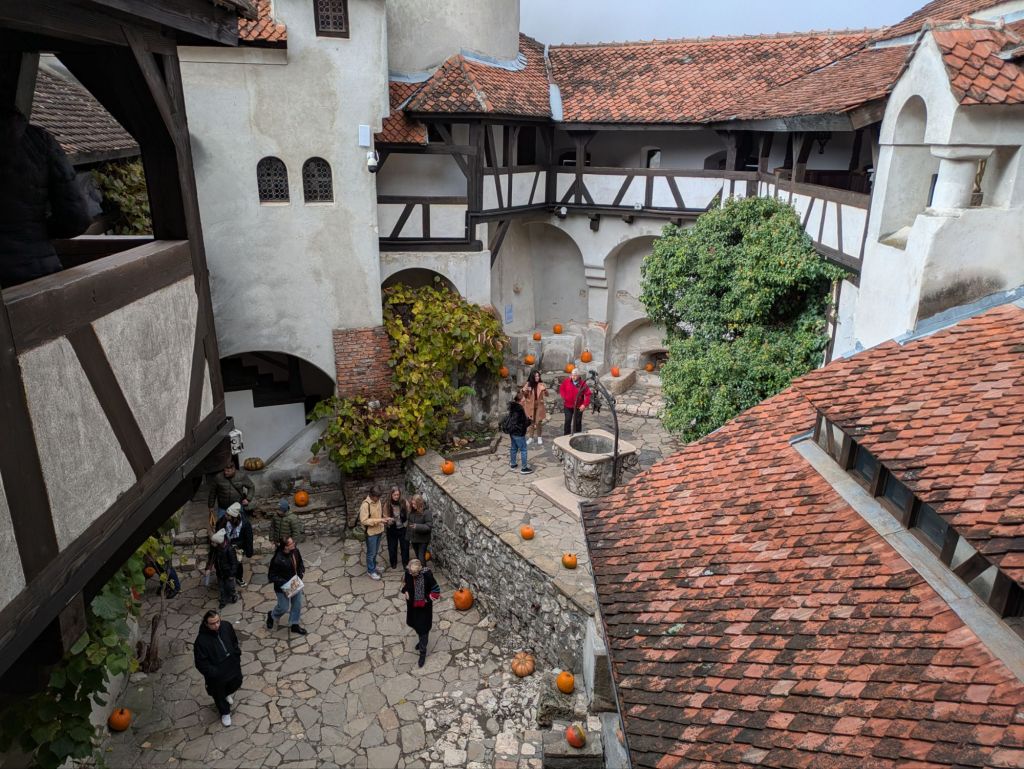
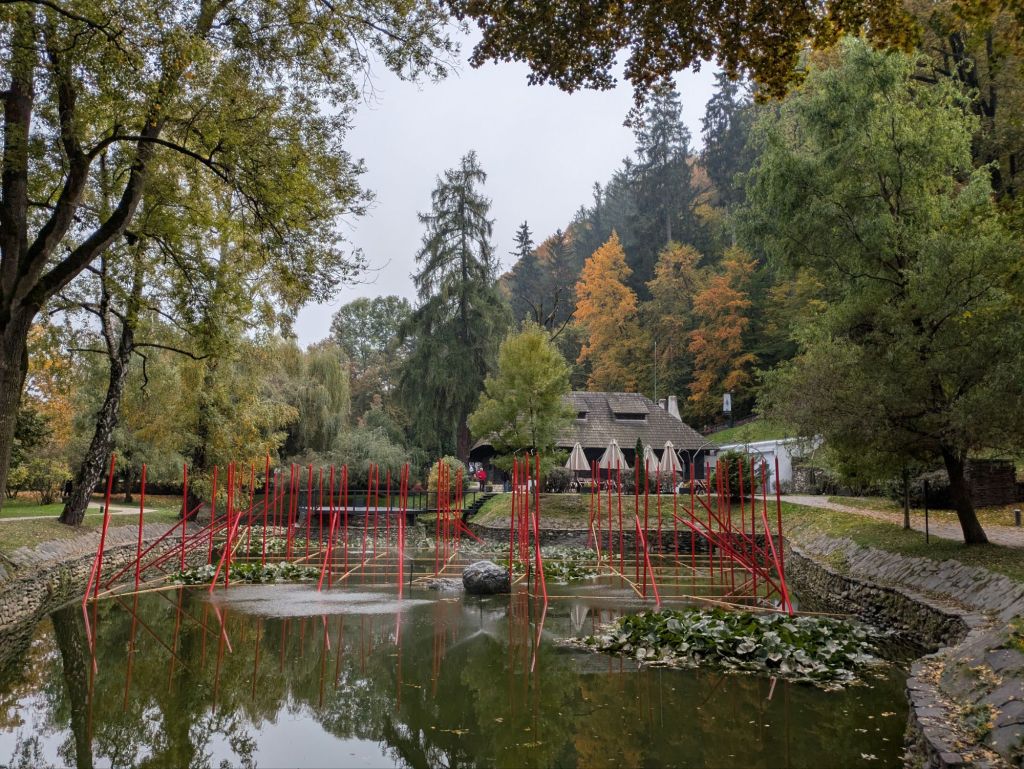
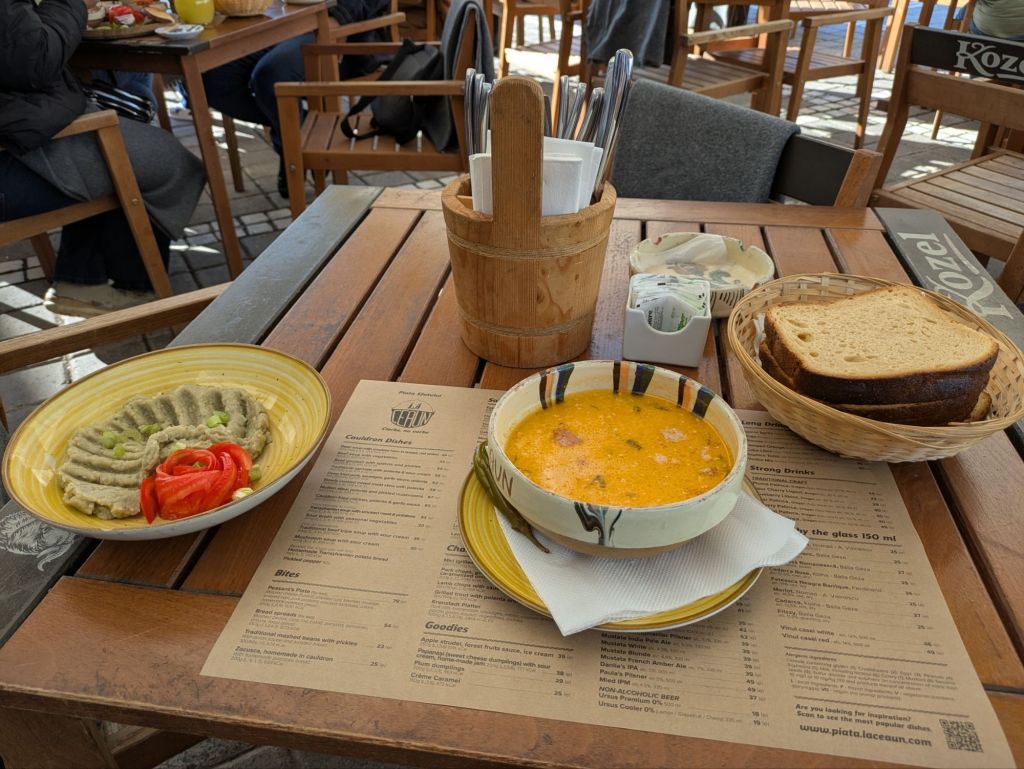
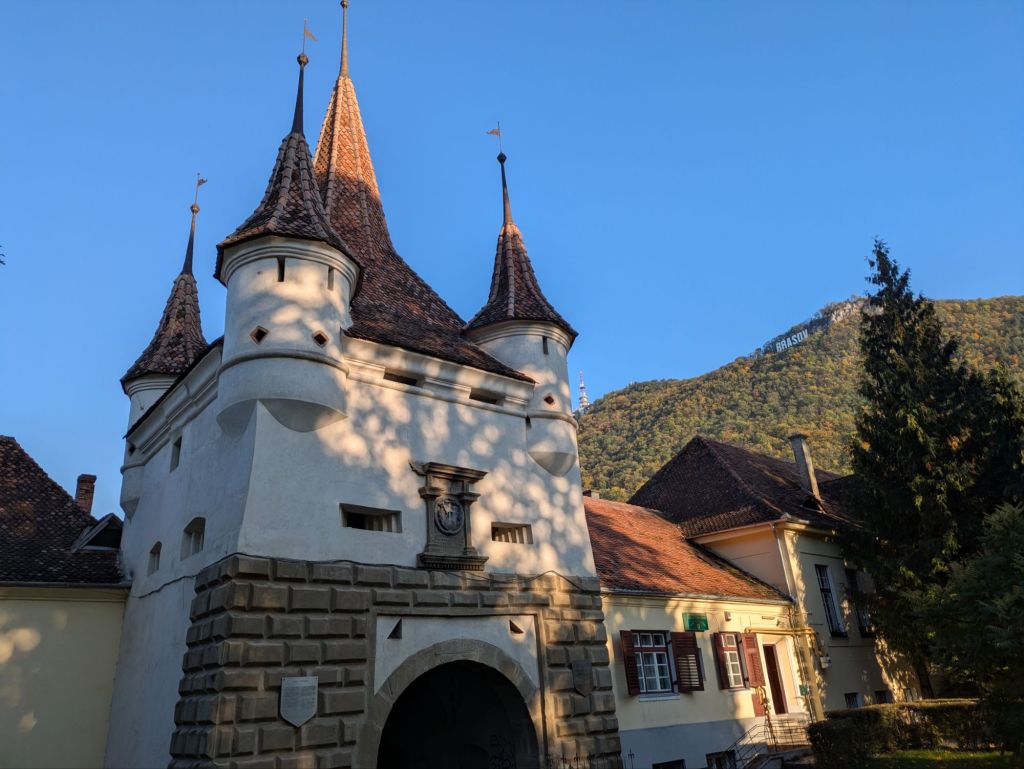
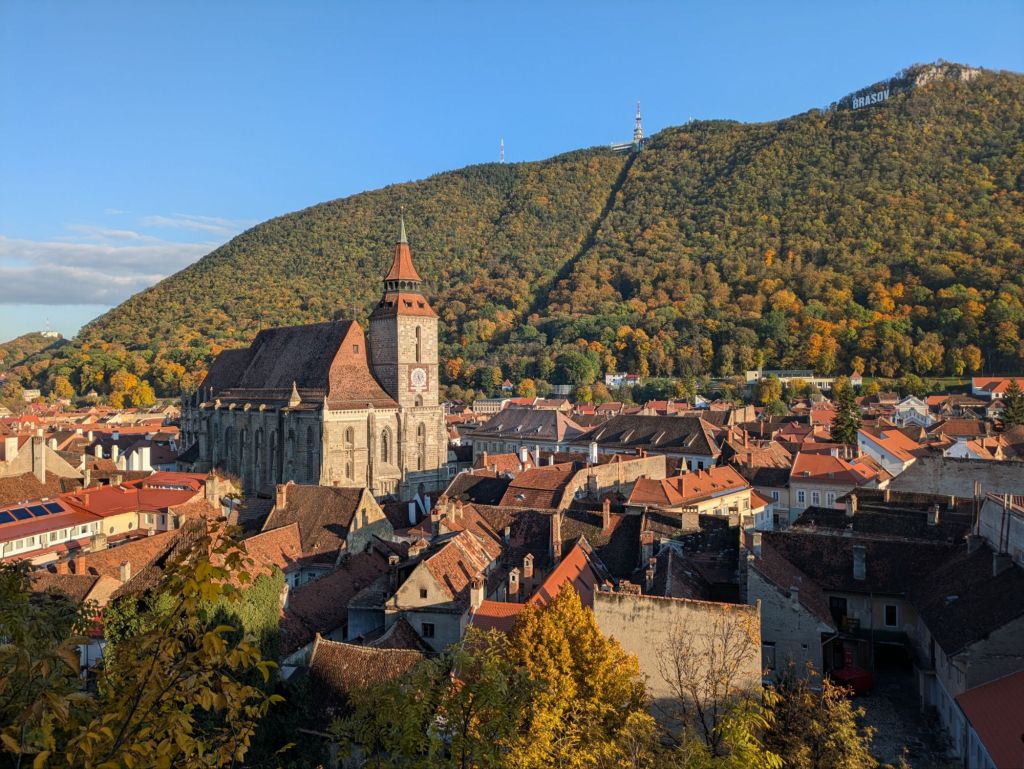
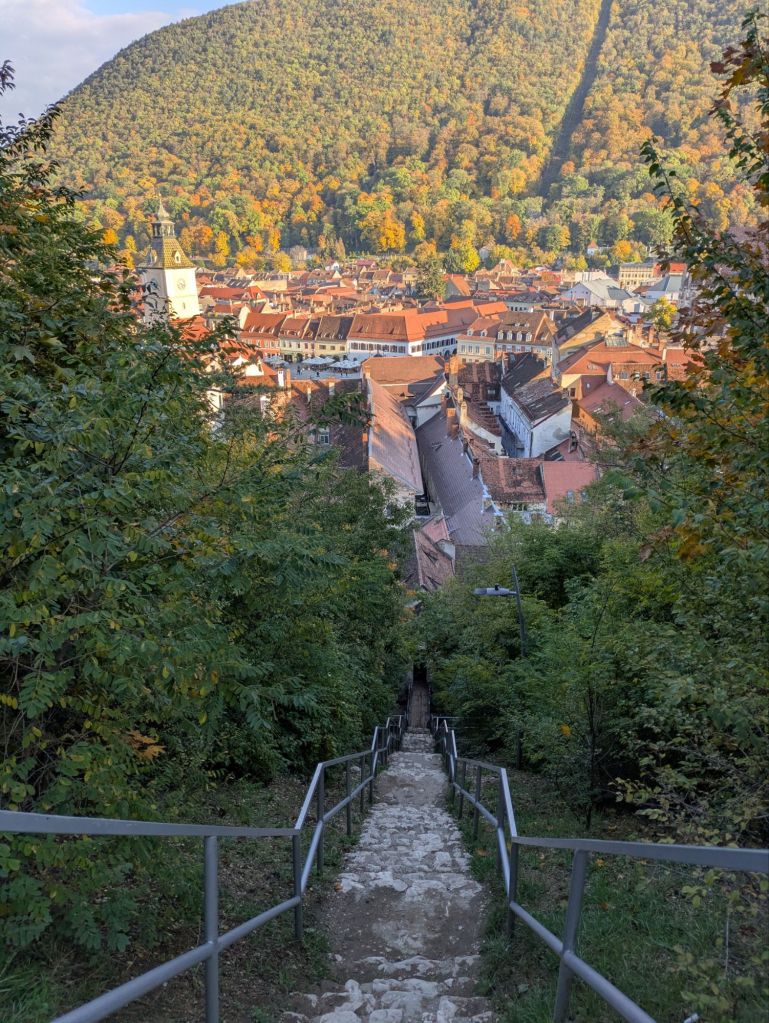
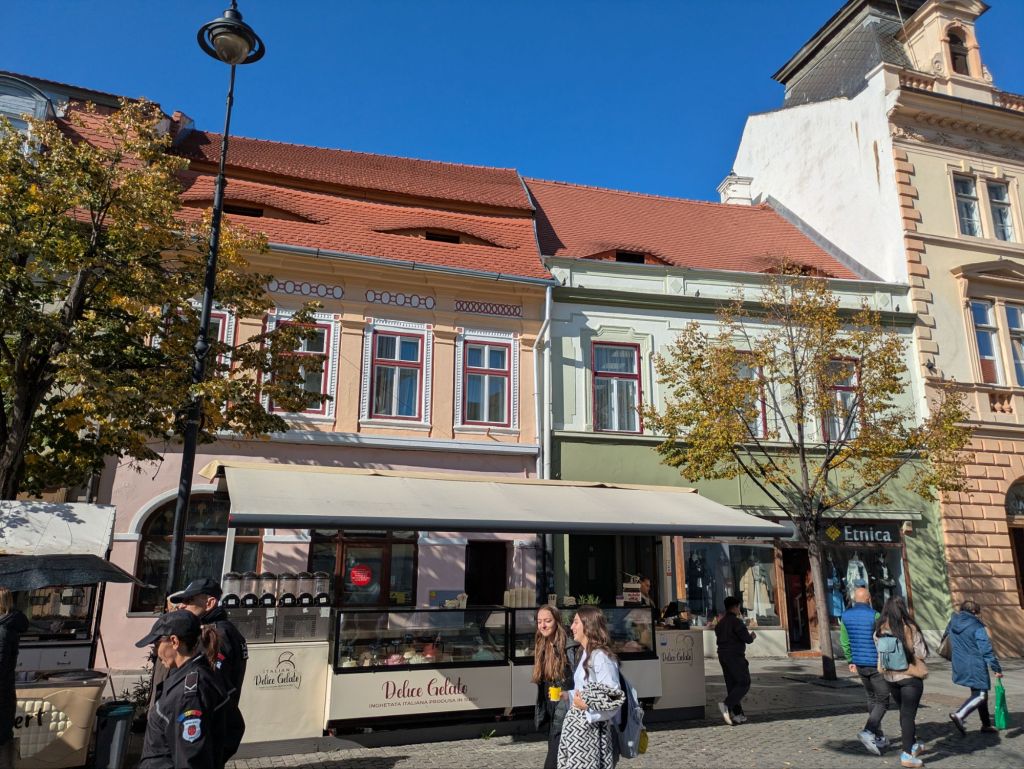
Enjoy these photos from the region!:
Today’s dad jokes:
Why did Dracula have trouble sleeping at night?
Because he forgot to ask for his cappuccino to be de-coffin-ated!
And why do all his friends eventually abandon him?
Because he’s such a pain in the neck!
Today’s language insight:
Long, long ago the Romans sent occupiers to keep the locals in this region in check. These occupiers’ Latin language stuck around all these years (as did the Roman name), despite being surrounded by Slavs and Hungarians. Coincidentally, after a Bucharest walking tour, I later that day ran into our tour guide at lunchtime at a Greek restaurant. I asked him to sit with me, and I got to ask all my many linguistic and history questions, which was mutually agreeable to us, haha. He told me that Romanian maintains the case/declension system inherited from Latin, though the other Romance languages have since dropped theirs. Further, he said that Romanian is actually more Latin-like than even Italian, though I found that quite difficult to believe. Here’s what ChatGPT had to say about that: “Romanian is grammatically the closest to Latin,while Italian is lexically (vocabulary-wise) and phonologically (sound-wise) the closest.”
One can see many similarities to other Latin languages like Spanish, and French, though there are many Slavic and Hungarian, and even Greek, contributions sprinkled in. For similarity to Italian, for example, “good evening” is “bună seara”. But “yes” is “da”, like in neighboring Serbia and Bulgaria. The formal term for “thank you” is interesting, and I haven’t looked up its etymology: “mulţumesc”. But the informal term sounds familiar: it’s “mersi”.
Today’s music video:
It’s an annual tradition — Broken Peach’s Halloween medley and original costumes! Halloween is an appropriate time to visit the fabled lands of Dracula, I suppose. For 2025 the feature is Enter Sandman:

 Major Meander
It’s Oct 30, great timing for me to be reading about the origin of Dracula and Vlad the Impaler! Great fall colors there, too. Thanks for the post! Joe
Happy Halloween 👻🎃