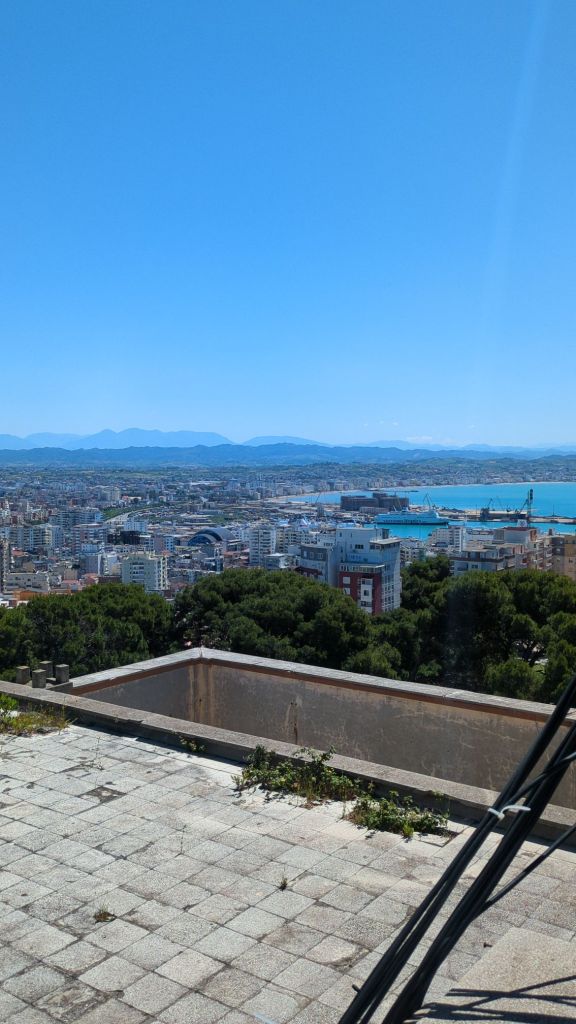
The most unique (and somewhat frightening) place I’ve explored in Albania so far was King Zog’s former villa in Durrës. It was worth visiting Durrës for this attraction alone, despite it not even being on my original list of places to see while there. The archaeological museum in Durrës was closed for renovations (as was the National Historical Museum in Tirana), but I did get to visit the old Roman amphitheater, which was only rediscovered in 1966. But the villa until fairly recently was closed to the public, and for good reason given its state of disrepair. Sometimes Google Maps is the best way to determine the current state of a destination, and in this case I only found out about the villa’s existence through its entry on Google Maps anyway. Reviews indicated that it seemed a bit risky, and that there was a ticket seller at the villa gate, but that it didn’t seem really legit. My kind of place!
I have found that urban exploration (urbex) feels exhilarating and is always interesting. Readers may recall an earlier post from Croatia where there’s a military tunnel system in a mountainside overlooking the sea where one can explore down in its depths for free, BYOF (bring your own flashlight). The Albanian villa is also open for exploration, but with some legitimacy, albeit without perceptible safety considerations. It’s 300 lek or 3 euros to enter, and one pays a scruffy gent who appears like he’s been sleeping by the entry gate for at least a few weeks. He even gives you an official ticket in return! But I tell you, it doesn’t feel like one should be entering this building. I did so anyway, because I figured that they wouldn’t let us go in if it was overly unsafe, right? 😜
I have a bit of a history of urban exploration, getting into a habit when 18 years old (without a fully-developed brain) of climbing the sides of buildings at night. A friend of mine and I climbed up most buildings on the NC State campus and in various cities and towns in the Carolinas. Drainpipes, window sills, balconies, and anything else that offered handholds provided access. Sometimes we’d even jump from one structure to another, grabbing onto something on the other side, such as a ladder or a rooftop. It’s remarkable how strong one can become when necessary to save oneself or another from falling multiple stories down. These of course aren’t things I’d consider doing nowadays, and I’m not proud, but I do remember well the adrenaline rush experienced back then. Fortunately I never fell, and neither did my friend. I did have my limits though, like when I turned down the idea of scaling the fence at the Myrtle Beach pavilion at night to climb the loop of a roller coaster. My friend did it alone and barefoot, and he didn’t get caught. I wonder what he’s up to nowadays.
As president of Albania, Ahmed Zogu proclaimed himself to be king of the Albanians in 1928, but in 1939 Italy invaded Albania at the beginning of World War II, and King Zog was forced into exile. Enver Hoxha’s communist regime never allowed Zog to return to the country. The villa in Durrës served as Zog’s summer residence. One gets a sense of its former grandeur, but alas, as I said, the villa is currently slowly but surely wearing down.

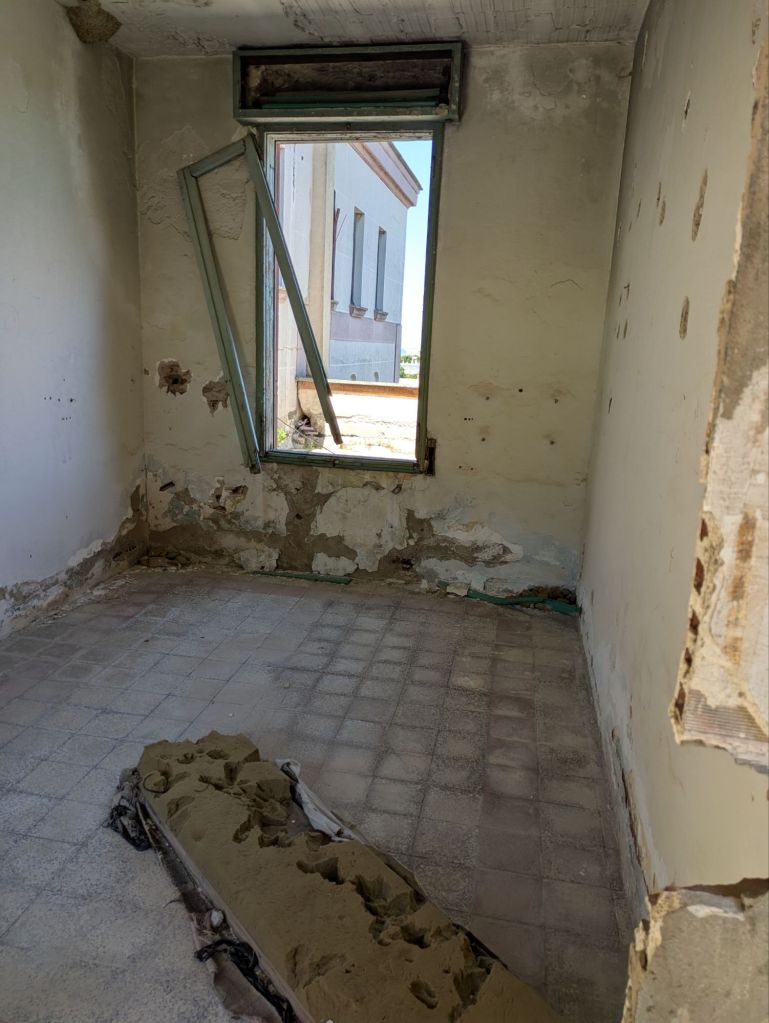
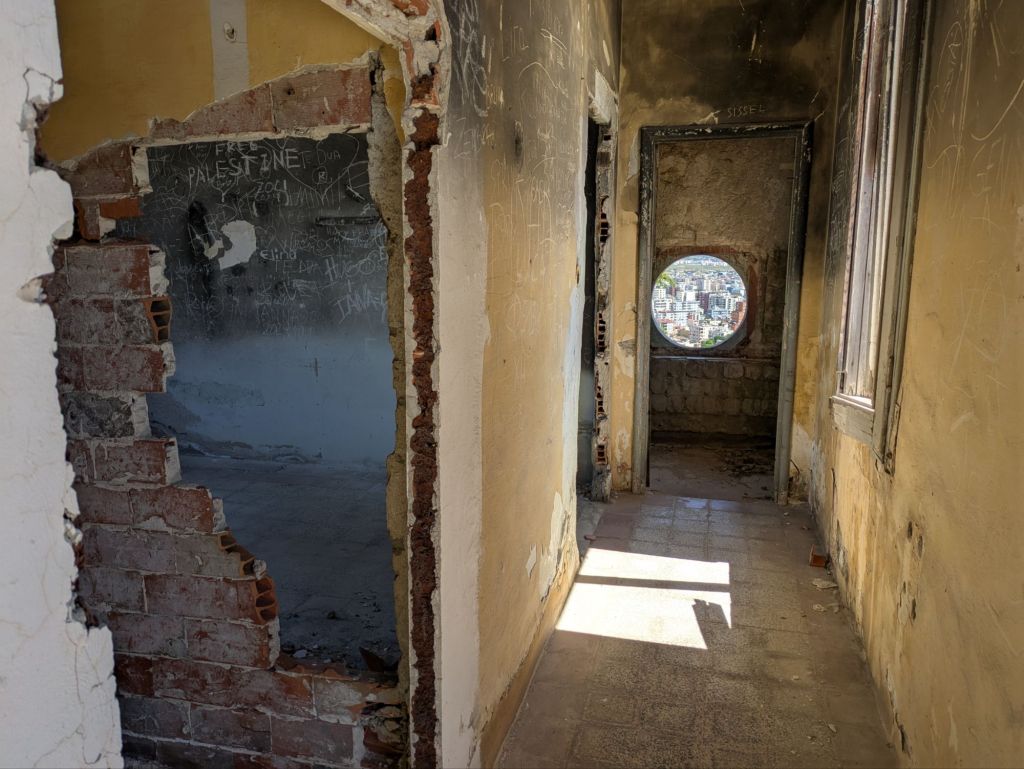
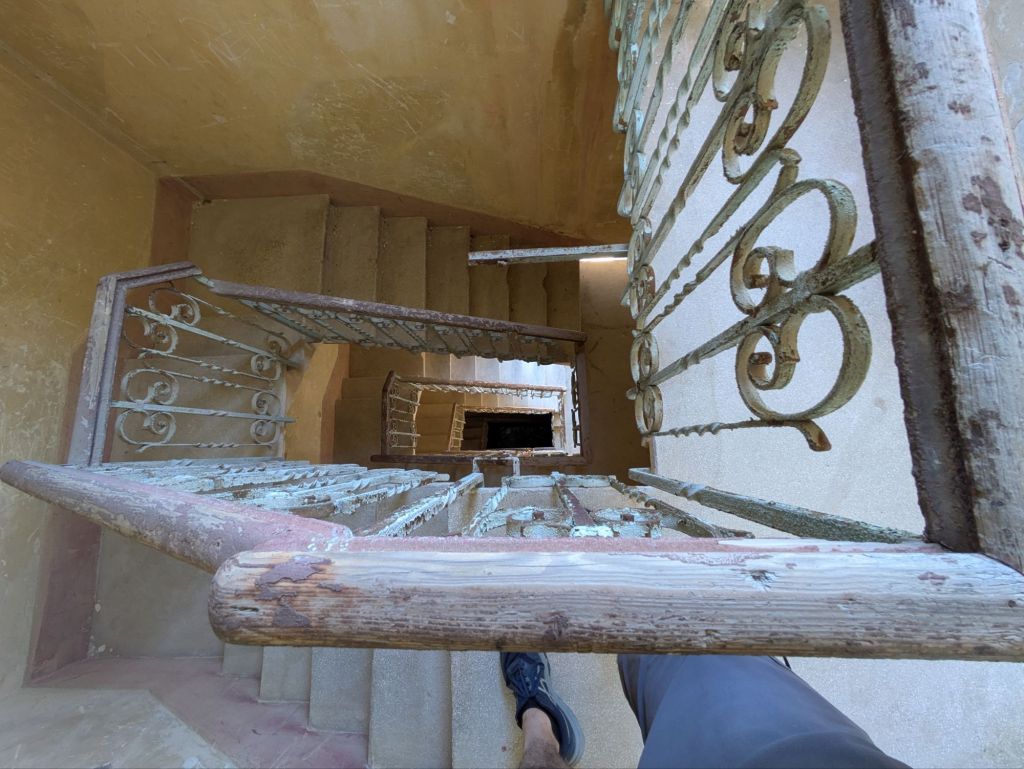
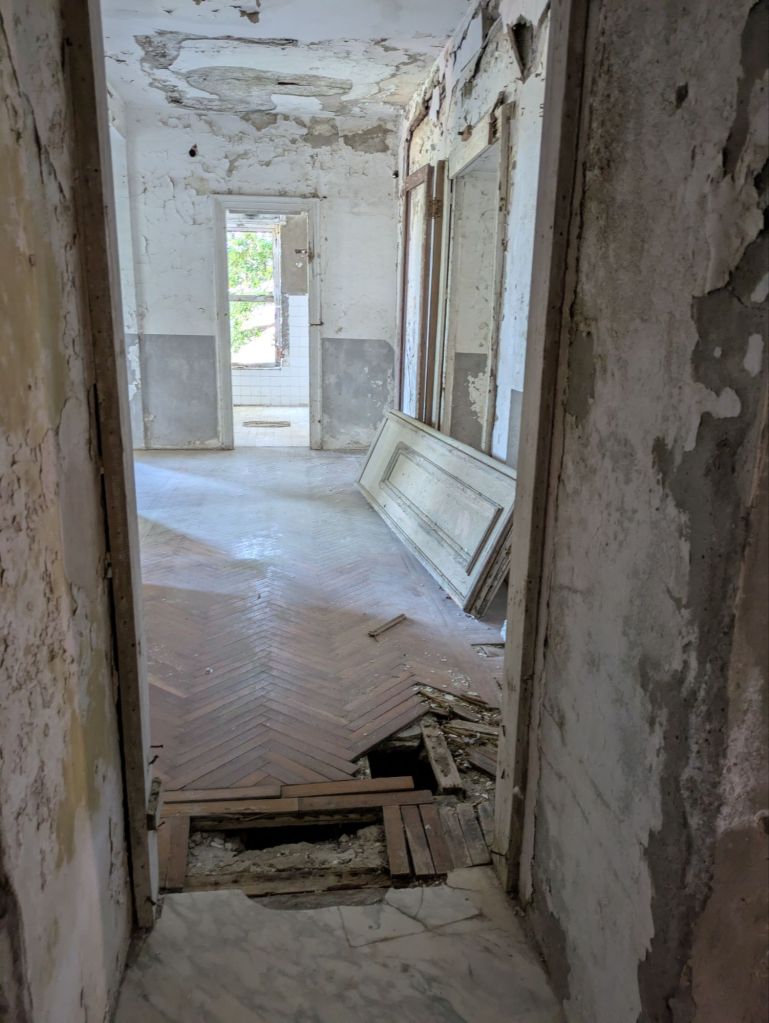
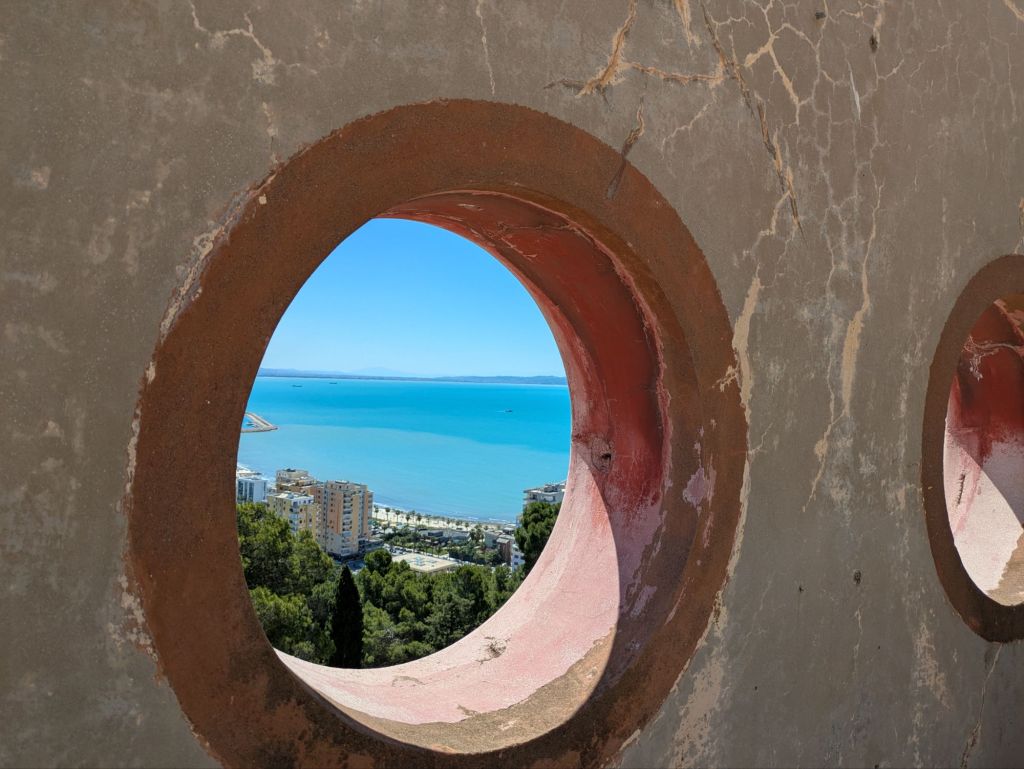

My personal walkthrough video of some of the exploration of the villa:
As I left the villa, a tour guide was bringing a tourist couple up the steps of the villa. The lady asked the guide if it was actually safe to walk around inside, and he pointed to me and said that I was exiting alive, proving that it must not be overly dangerous, haha.
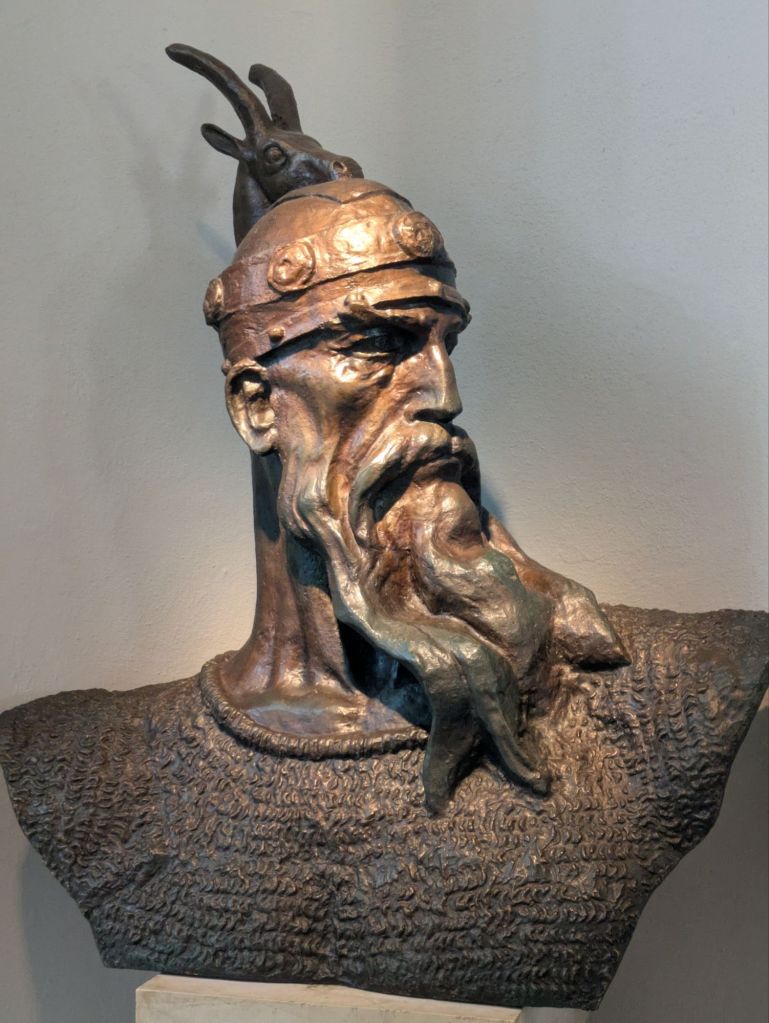
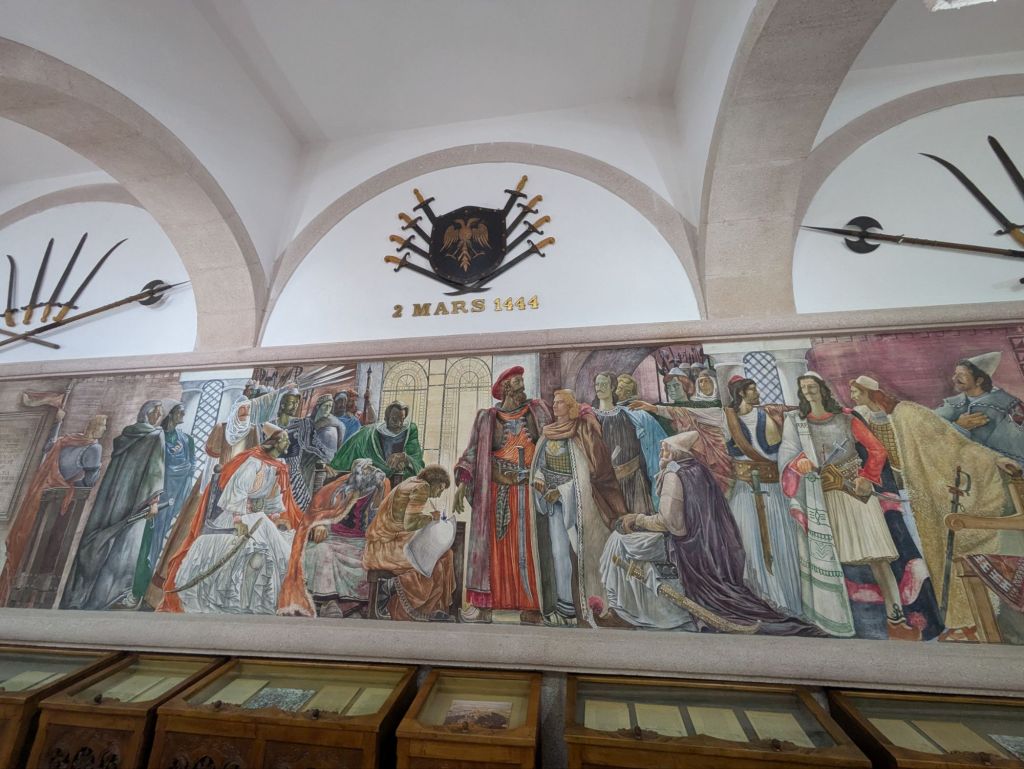
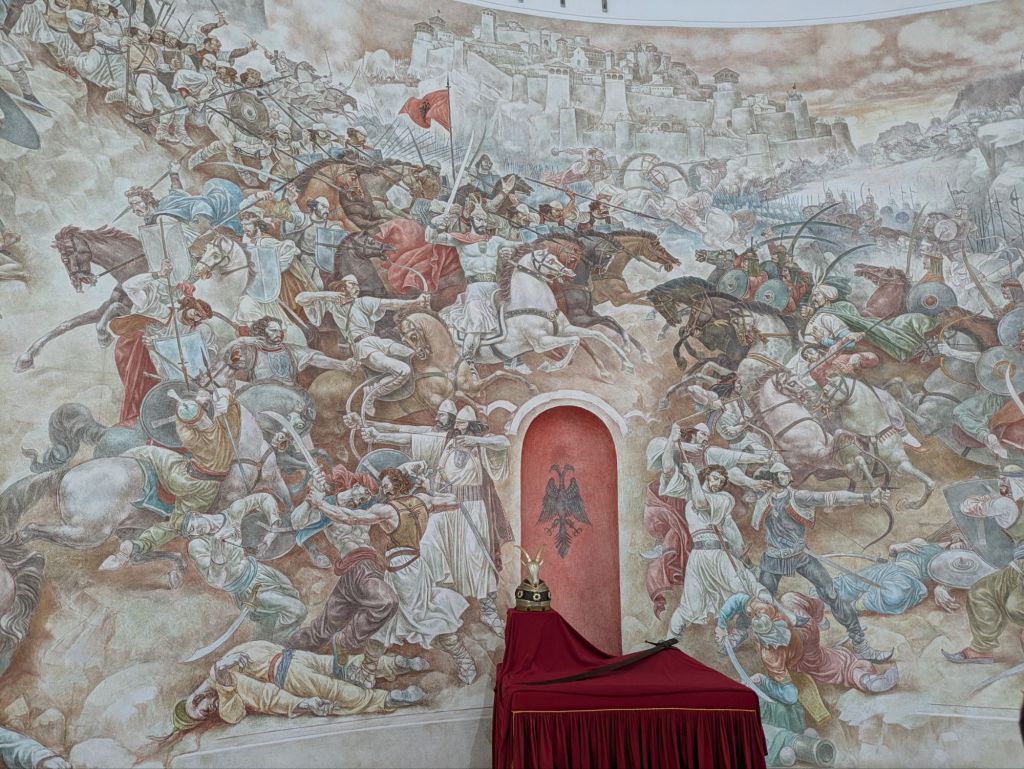
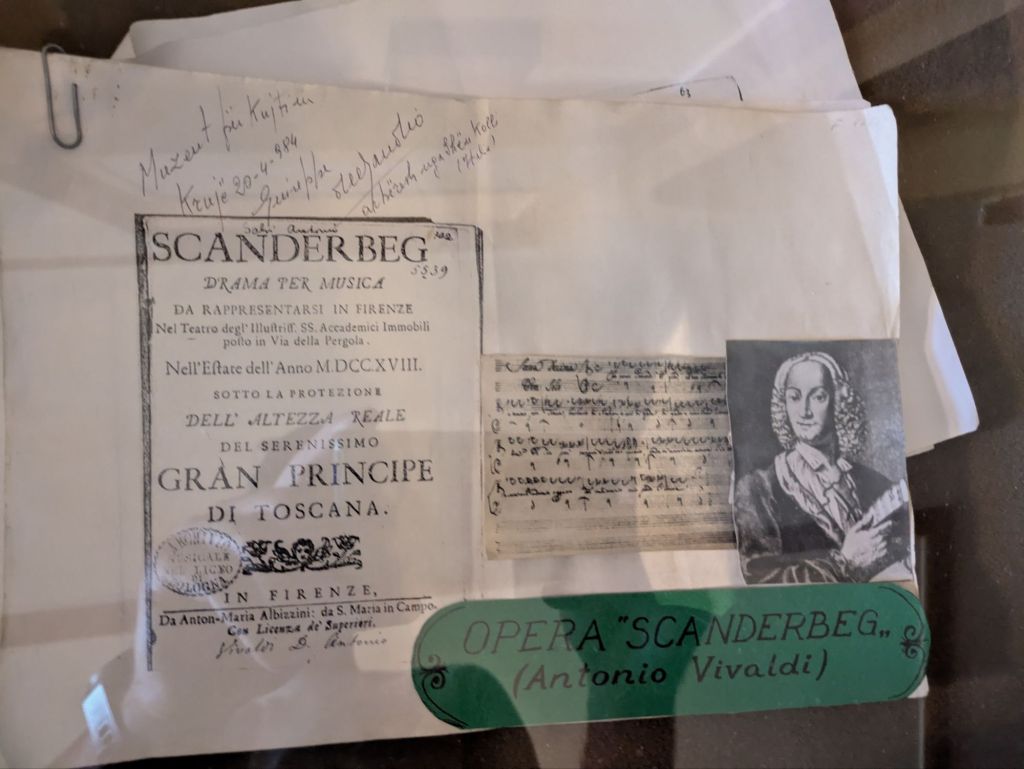
While King Zog doesn’t get much respect, Albania’s national hero is most definitely an Albanian military commander called Skanderbeg, who very successfully greatly delayed Ottoman expansion in the Balkans through numerous victories on the battlefield, and is thought to have fought long enough to prevent the further incursion of the Ottomans into the rest of Europe. “He is honored in modern Albania and is commemorated with many monuments and cultural works. Skanderbeg’s military skills presented a major obstacle to Ottoman expansion, and many in Western Europe considered him to be a model of Christian resistance against the Ottomans.” (Wikipedia) One can find full statues and busts of Skanderbeg across Albania, and there are monuments to him all over Europe and even the world. I’m embarrassed to admit that I don’t recall having heard of him before this trip to Albania, but he’s clearly an important historical figure for Christian Europe.
One of the day trips I took had a stop in Kruja, where there’s a museum with much Skanderbeg insight, and the castle there was thrice successfully defended by Skanderbeg and other Albanians against Ottomans in the mid 1400s.
Here’s an example call to prayer heard in Kruja while walking with the tour group:
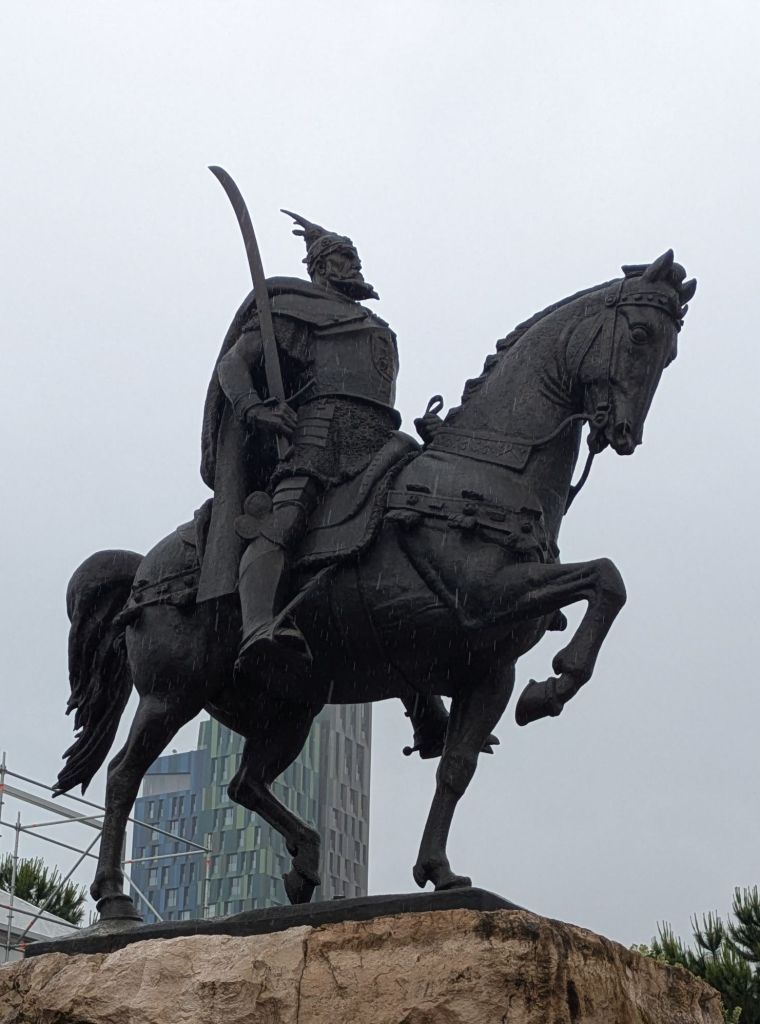
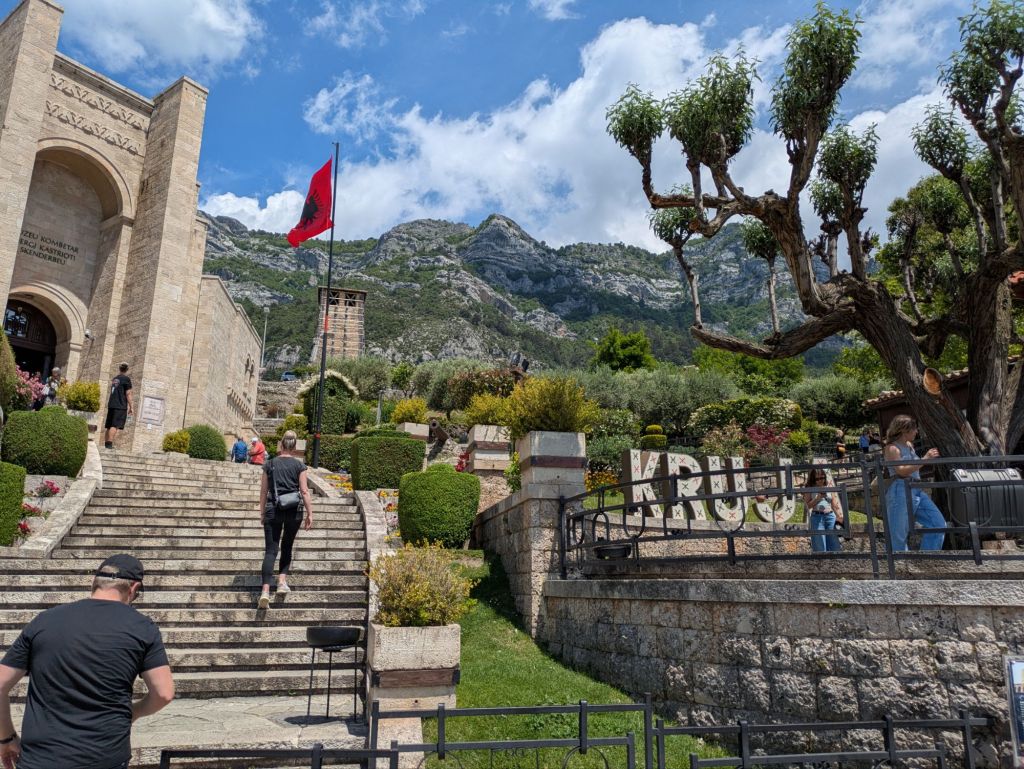
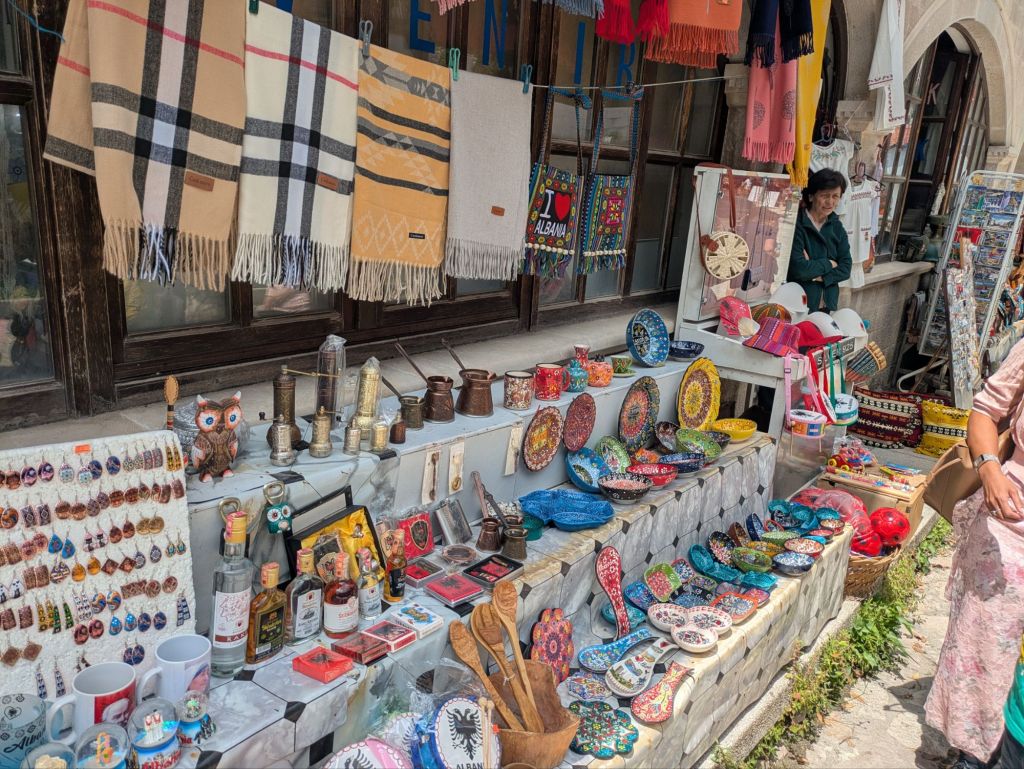
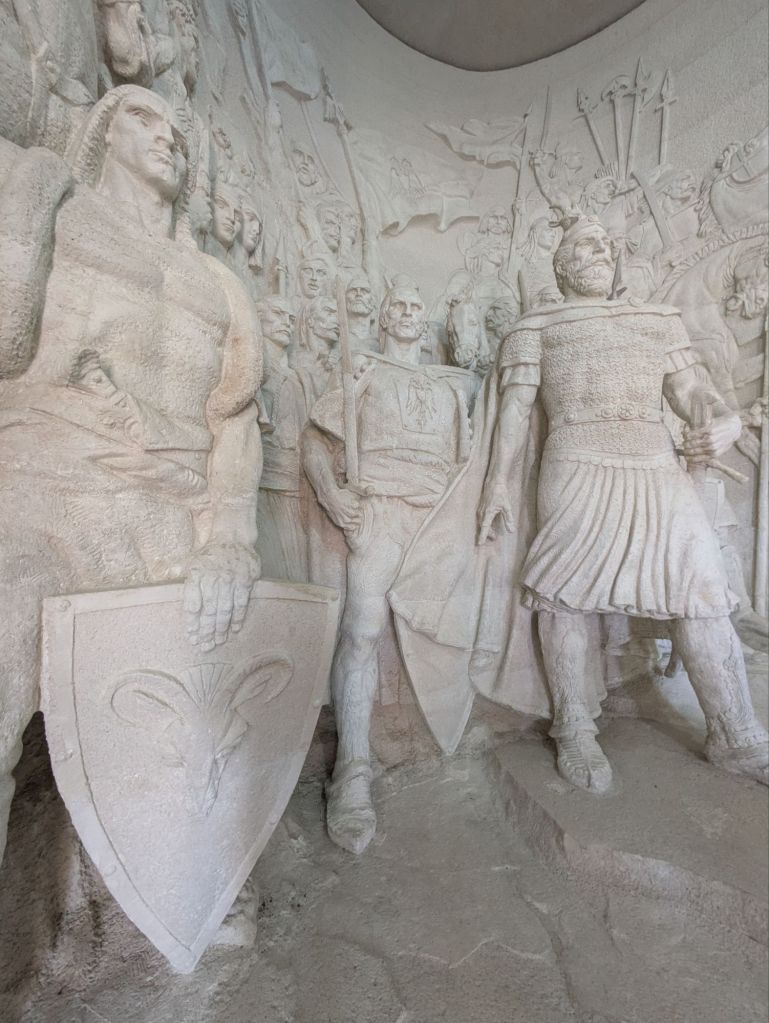
Albanian tidbits:
– If I visit Albania again, I plan to join a multi-day group hike. One need not camp, but when you hire a group guide, your luggage will be transported to each overnight lodging along the way. The Bradt Guide to Albania urges against hiking alone. “If you sprain your ankle or run into other problems, the nearest help could well be several hours’ walk away. Remote mountain areas do not usually have mobile phone coverage. You should never set off on a hike alone. Great caution is also needed when approaching sheepdogs in the mountains; they are trained to attack anything which they think might be a threat to the livestock they are protecting… Hikers are unlikely to be robbed, but it is not completely unheard of; if you are attacked, your assailant is almost certain to be armed with a gun.“
– In Albania, the normal way to indicate “yes” is by shaking the head horizontally side-to-side. Raising the chin is an indication of “no”. But Albanians are also aware that these gestures are opposite of what most people do elsewhere, so they may reverse for tourists’ sake, potentially actually causing more confusion. One needs to rely on context, on their words, or by asking to confirm sentiment.
– Sia’s song Cheap Thrills (featuring Sean Paul) is apparently quite a popular song in Albania, because I’ve heard it multiple times during my visit so far, in at least three different places.
– Bananas are also very popular and loved in Albania. I’ve heard that they weren’t available during the isolationist communist decades, but that when the country opened up to the world, Albanians discovered that they absolutely love bananas. While I was waiting on a bus to depart for an inter-city route, a vendor came into the bus carrying a big box of bananas to sell to passengers. And while Albanians don’t seem to eat breakfast at cafes, I saw a group of friends at a cafe break out a bag of bananas, and each unpeeled and ate a banana while taking a break from sipping espresso and smoking a cigarette. While writing this I saw a banana delivery van go by!
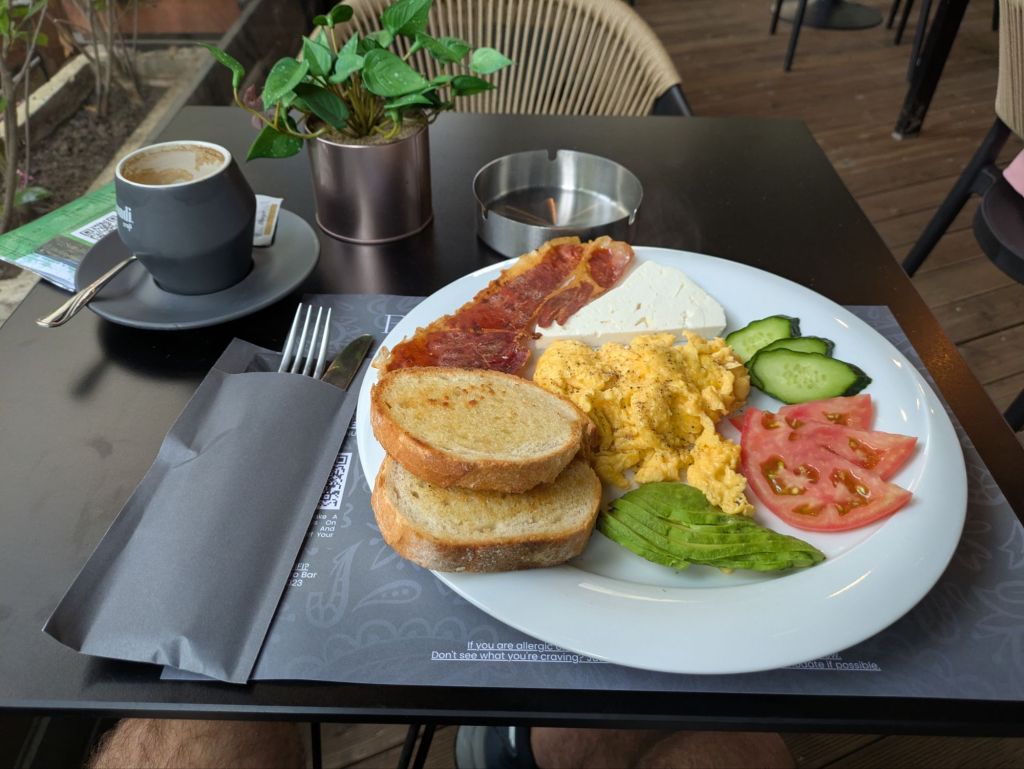
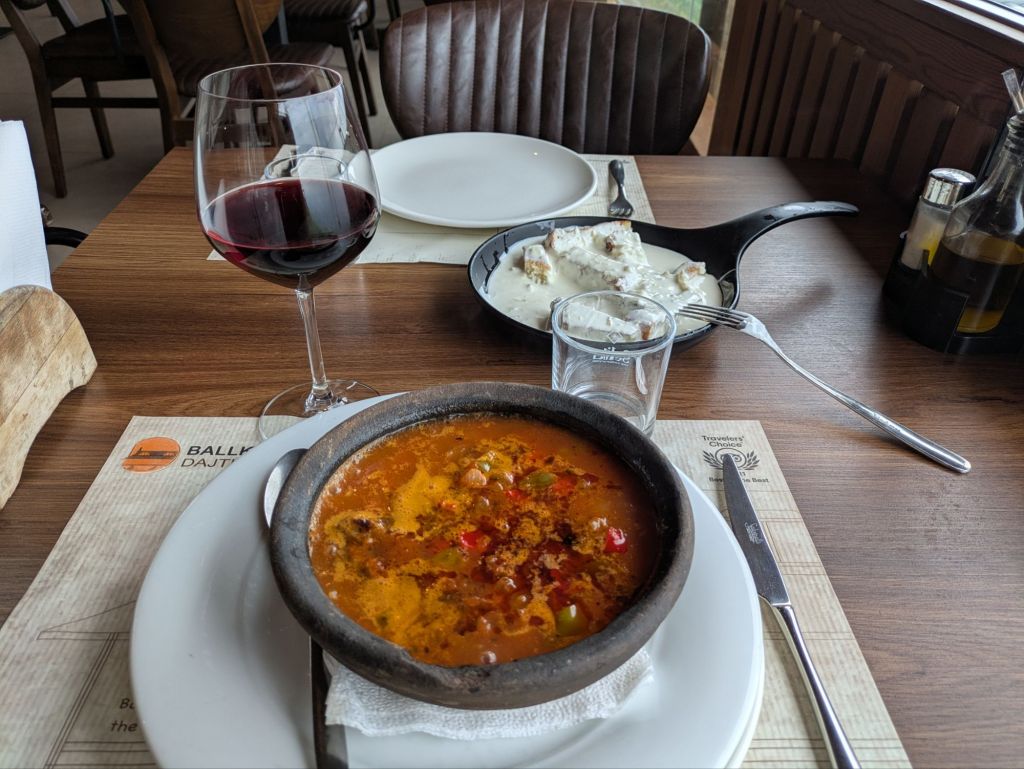
– Overall I’ve enjoyed the food in Albania. It’s quite meat-focused, though salads are available as well. As elsewhere in the Balkans, burek (cheesy, greasy dough with various fillings offered) is popular, though I don’t like it. As mentioned in a previous post, Italian food is widespread. There are many options that seem Greek in origin, such as cucumber yogurt sauce. The red wine is tasty, and there are various bread and cornbread offerings.
Today’s failed DadGPT jokes:
I’ve lately been leaning on ChatGPT to formulate dad jokes for me. While it can create or just rehash some good ones, it sometimes fails in awkward ways. Perhaps I am just missing the humor, but here are some recent weird artificial intelligence suggestions. They’re humorous only through being so unfunny.
1. I asked my Albanian friend if he wanted to go to the beach.
He said, “I’ll Tirana way!”
2. I tried learning Albanian, but I couldn’t stop laughing.
Every time I said “mirëdita,” it sounded like I was greeting a spicy taco!
3. Why don’t you ever play hide and seek in Albania?
Because good luck hiding when the views in the Albanian Alps give you away!
Say what?!
Here are some much better examples, albeit not related to Albania:
A. I tried to organize a hide and seek contest…
But good players are hard to find.
B. I asked the librarian if the library had books on paranoia.
She whispered, “They’re right behind you.”
Today’s Albanian video:
Tirana at nighttime, as seen from my apartment’s bathroom window:
Today’s Epictetus:
Other people’s views and troubles can be contagious. Don’t sabotage yourself by unwittingly adopting negative, unproductive attitudes through your associations with others.

 Major Meander
I’d love to see a photo of the sketchy guy selling tickets! And who knew Albania had a super hero.
Alas, I didn’t get a photo of the ticket seller. Regarding super hero, yes, Skanderbeg seems pretty bad-ass!
I wonder if Skanderbeg is a common last name there. or if it’s evolved and/or used in any other contexts, or brands?
From Wikipedia: “The Ottoman Turks gave him the name اسکندر بگ (İskender bey or İskender beğ), meaning “Lord Alexander”, or “Leader Alexander”.Skënderbeu and Skënderbej are the Albanian versions, with Skander being the Albanian form of “Alexander”. Latinized in Barleti’s version as Scanderbegi and translated into English as Skanderbeg or Scanderbeg, the combined appellative is assumed to have been a comparison of Skanderbeg’s military skill to that of Alexander the Great. This name was itself used by Skanderbeg even after his re-conversion to Christianity and was later held by his descendants in Italy who became known as the Castriota-Scanderbeg. Skanderbeg always signed himself in Latin: Dominus Albaniae (“Lord of Albania”), and claimed no other titles but that in surviving documents.”