Albanian Bunkers:
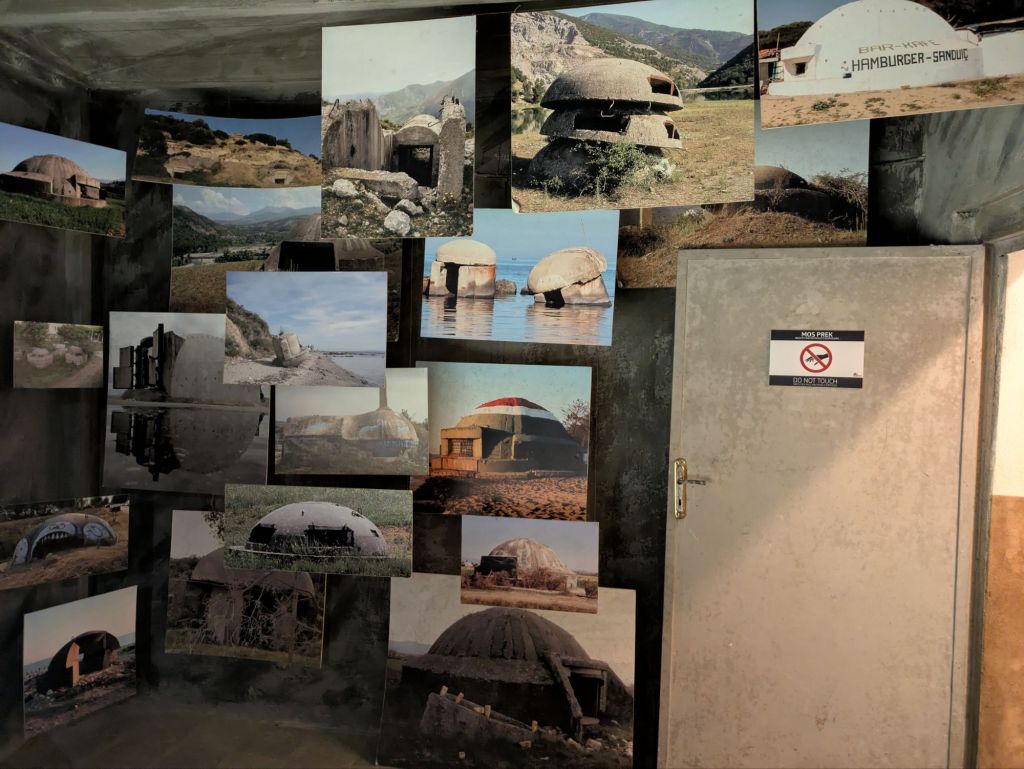
Paranoid former Albanian leader Hoxha, whom you learned about in the previous post, ordered the construction of 750,000 defensive bunkers to be scattered across the country, particularly in the low-lying areas, of which over 170,000 were built by the time of his death. “Starting in 1967 and continuing until 1986, the Albanian government carried out a policy of “bunkerisation” that saw the construction of hundreds of thousands of bunkers across the country. They were built in every possible location, ranging from “beaches and mountains, in vineyards and pastures, in villages and towns, even on the manicured lawns of Albania’s best hotel”. Hoxha envisaged Albania fighting a two-front war against an attack mounted by Yugoslavia, NATO or the Warsaw Pact, involving a simultaneous incursion by up to eleven enemy airborne divisions. As he put it, “If we slackened our vigilance even for a moment or toned down our struggle against our enemies in the least, they would strike immediately like the snake that bites you and injects its poison before you are aware of it.” (Wikipedia)
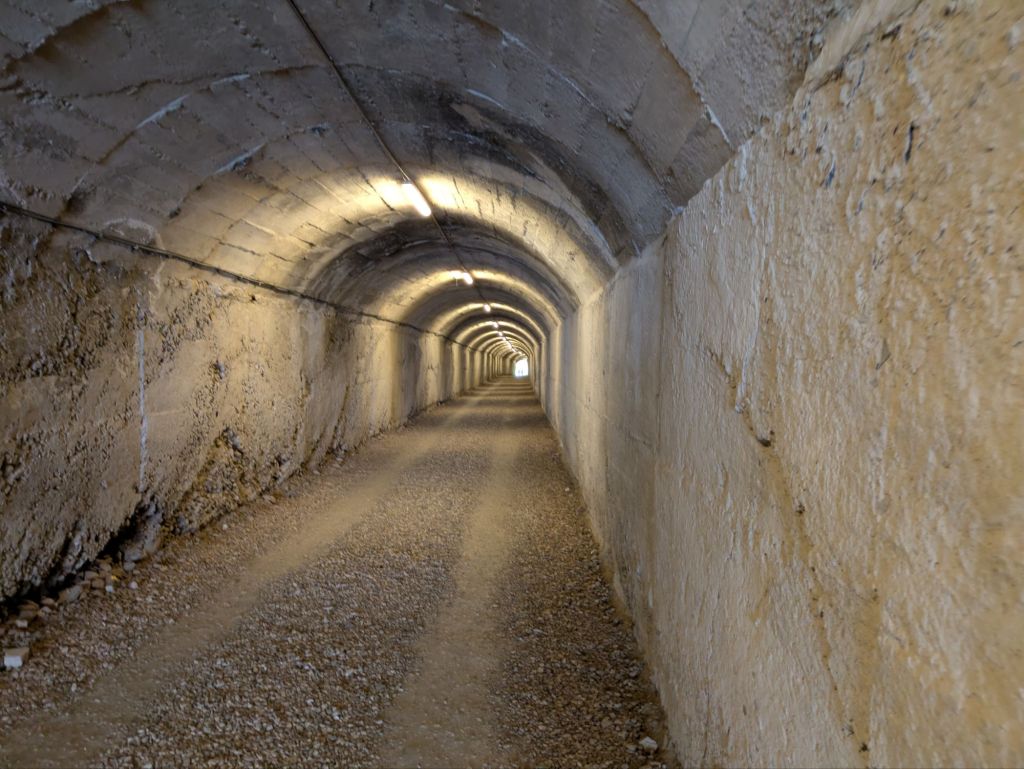
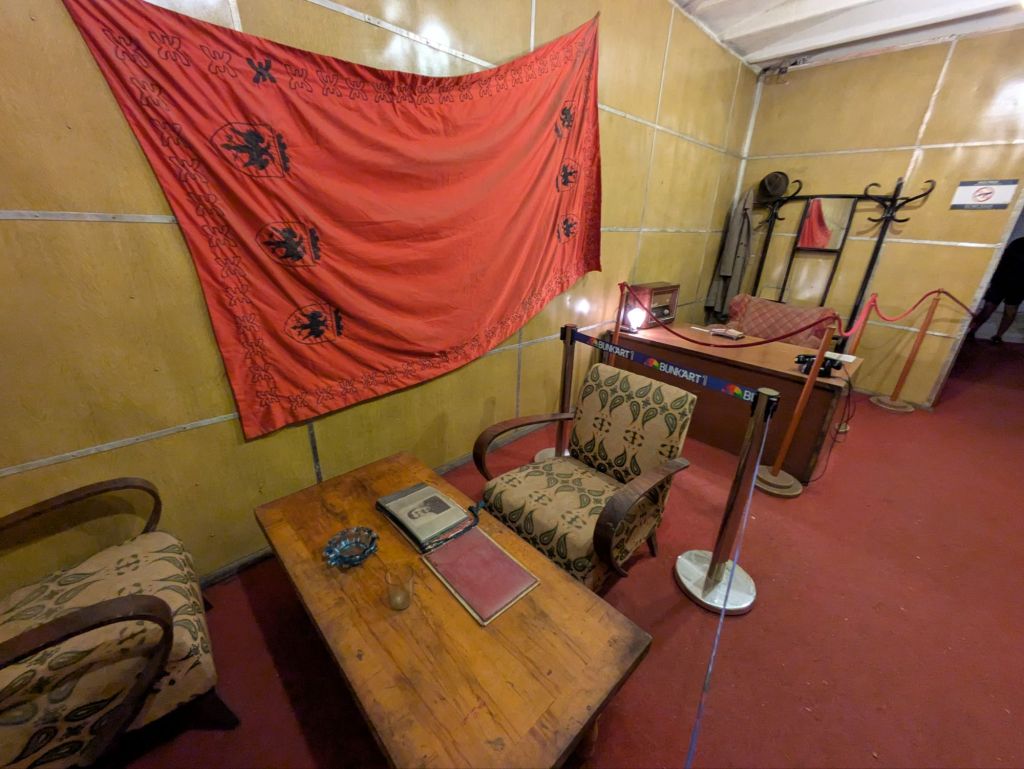
They really are everywhere. I have spotted them in various locations, like in fields, in parks, on beaches, all over. They’re now usually in disrepair, but in modern times many have been repurposed, such as for homes, animal shelters, pizza ovens, solar heaters, beehives, beach huts, flower planters, youth hostels, kiosks, and sexual tryst destinations. The bunkers are usually small, set up in sets of four so that each could be protected by gunners in another nearby. But there are also much larger ones, including with lengthy underground tunnels, again making Albania comparable to North Korea, with its extensive tunnel systems. In Tirana there are two underground systems, each called Bunk’Art, which have been converted into museums for visitors. I visited Bunk’Art 1, which has five levels and was built as a nuclear shelter. I spent almost two hours in there with its seemingly countless rooms, but even missed two entire wings. The bunkers are difficult and expensive to remove, so they tend to hang around. Unfortunately they’ve killed more people than they saved. Up to 100 people per year died during construction, and “In 2008 alone, at least five holiday-makers drowned when they were caught in whirlpools created by water currents around bunkers that had subsided into the sea.” (Wikipedia) The high costs of construction further weakened the already struggling economy, and soon after Hoxha’s death, the program was halted.

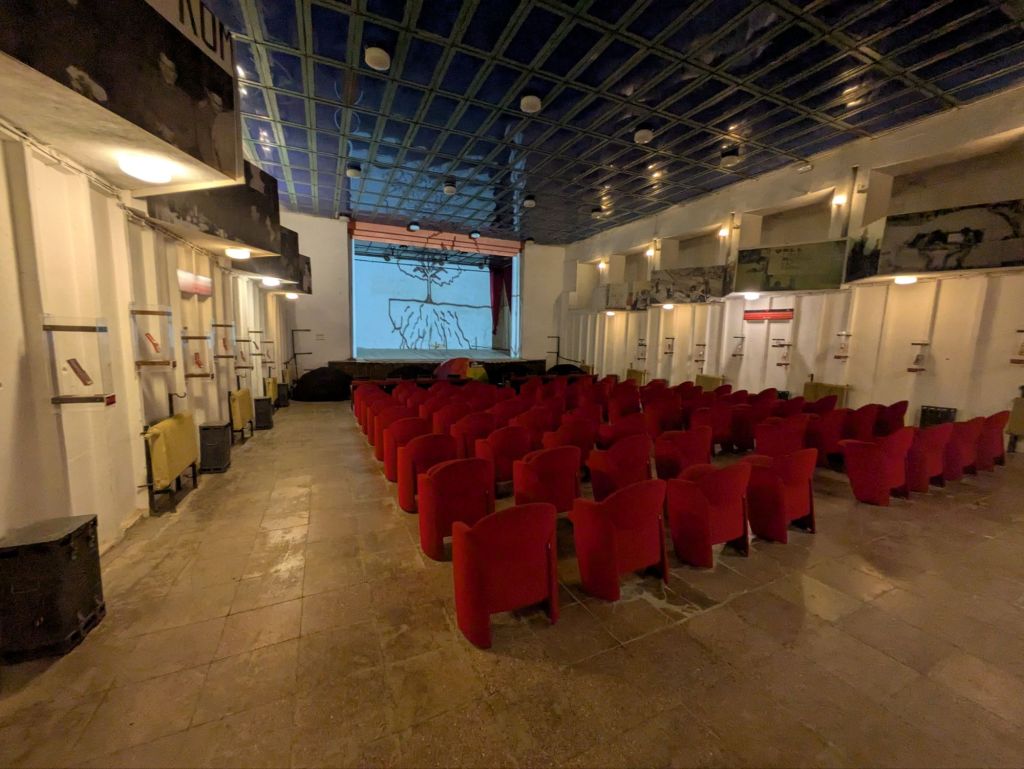
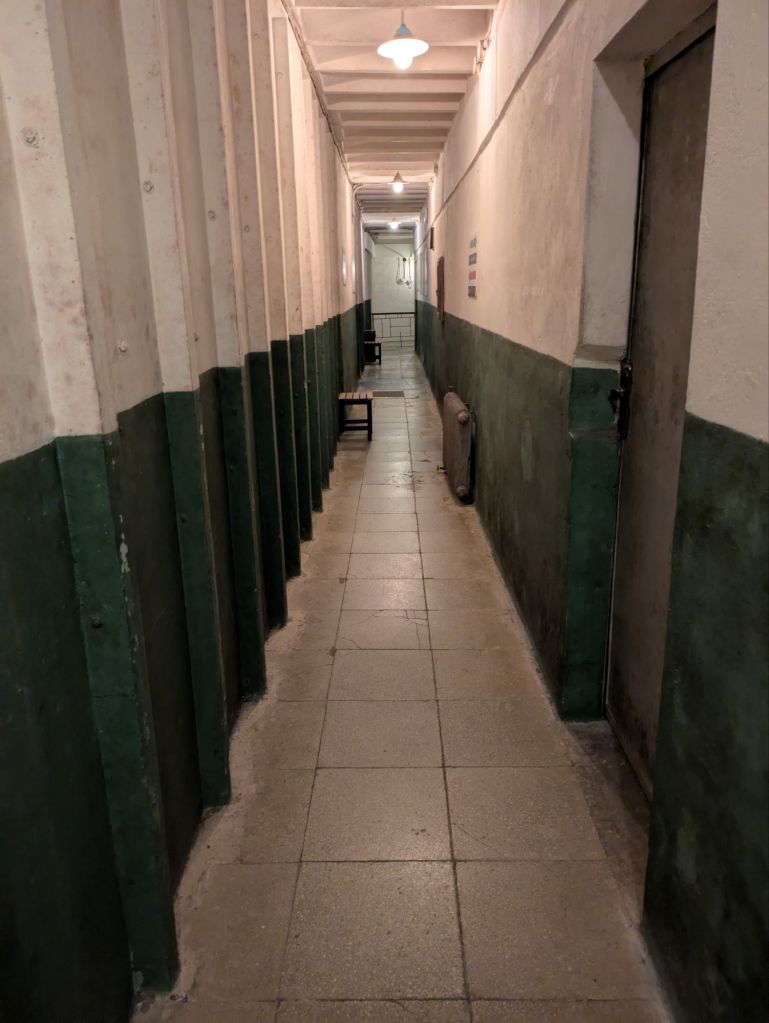
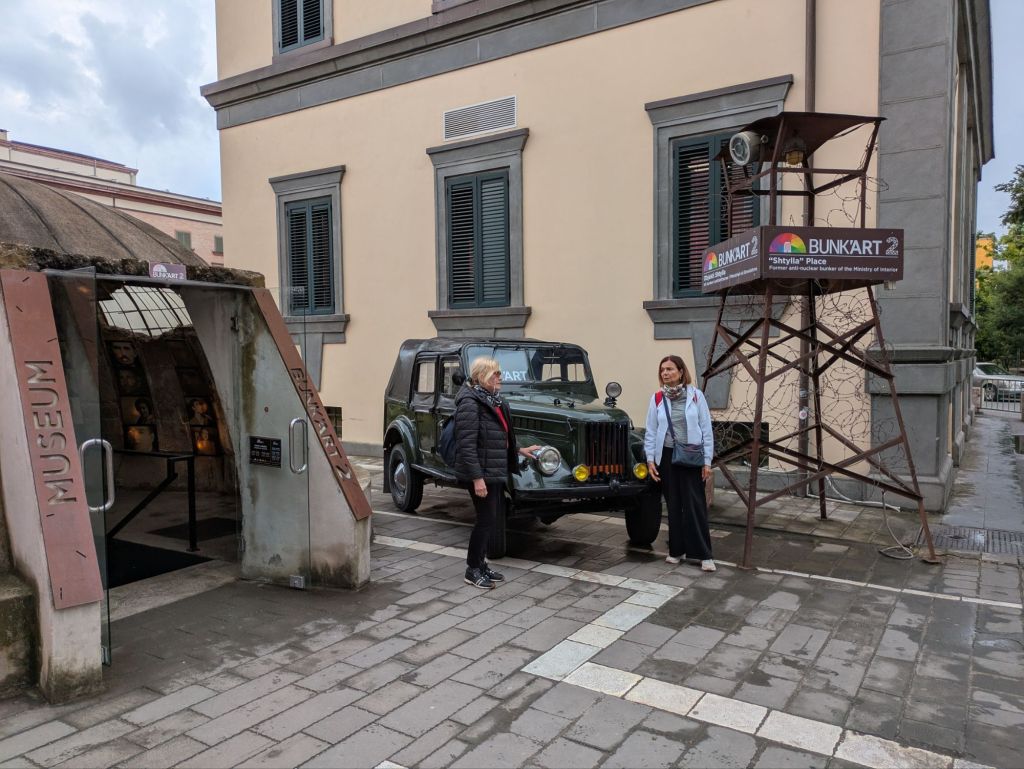
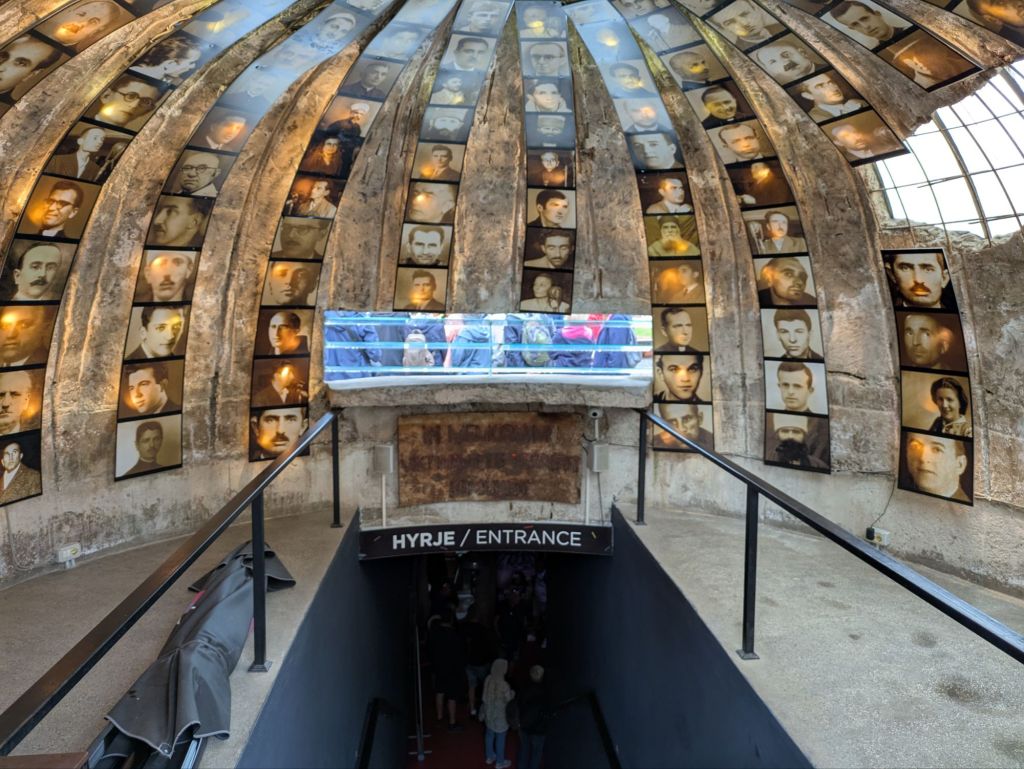

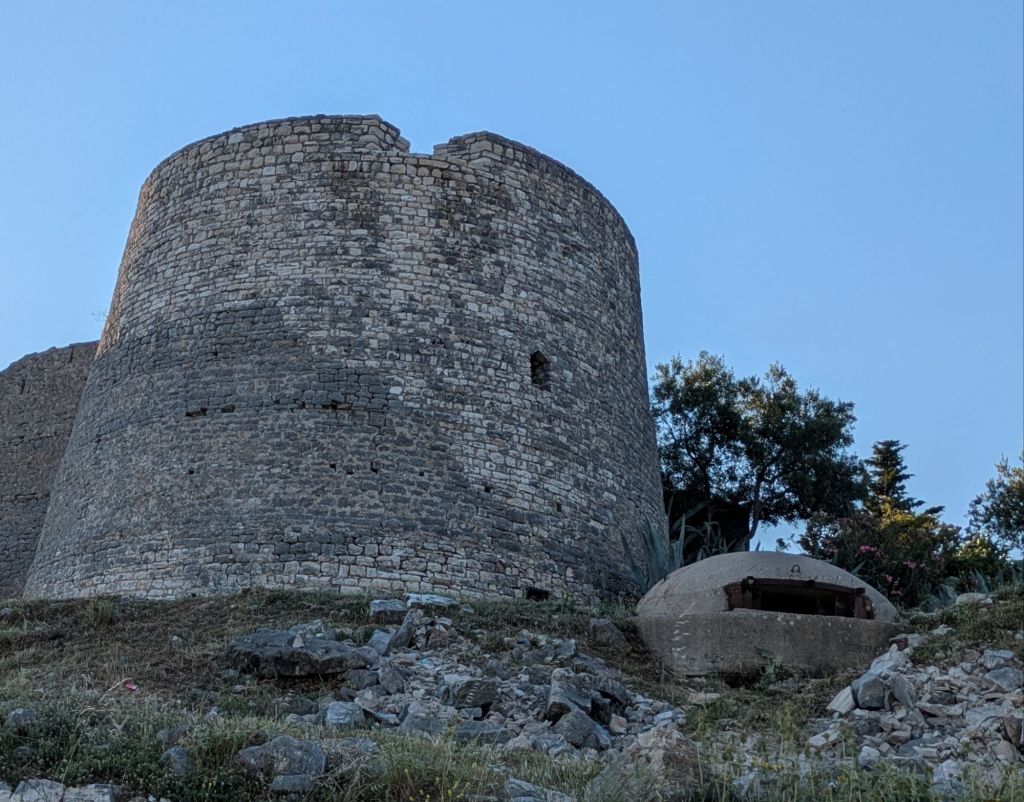
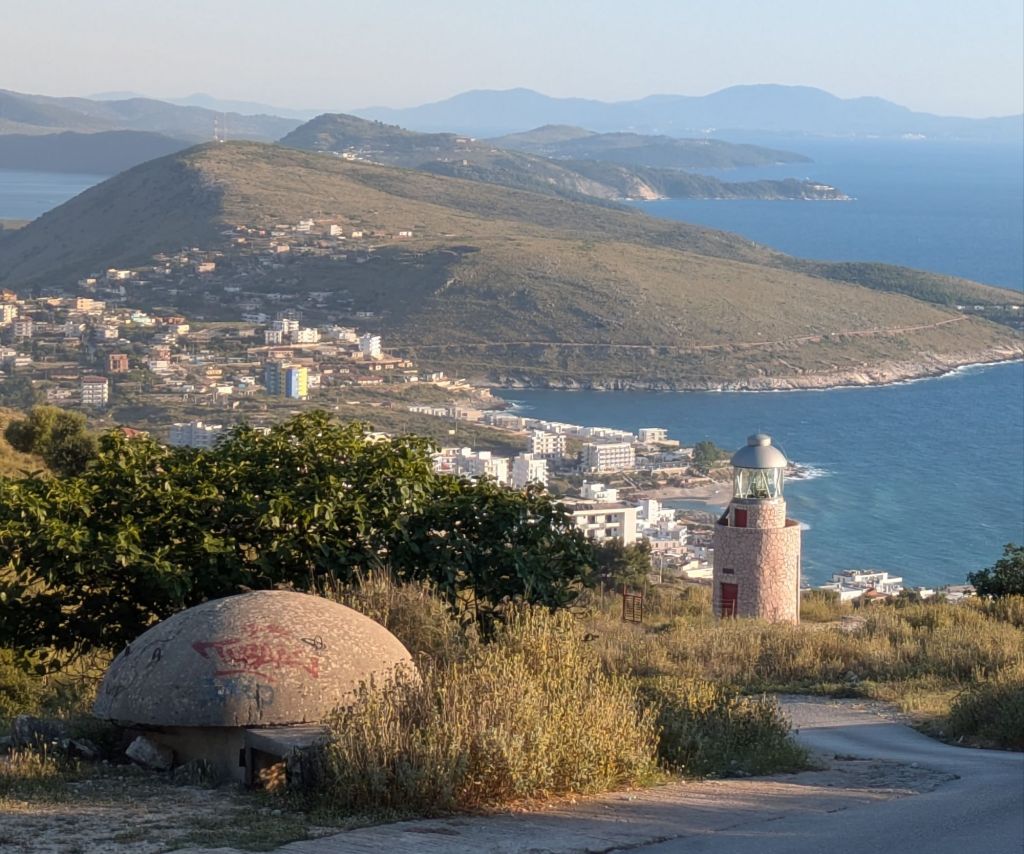
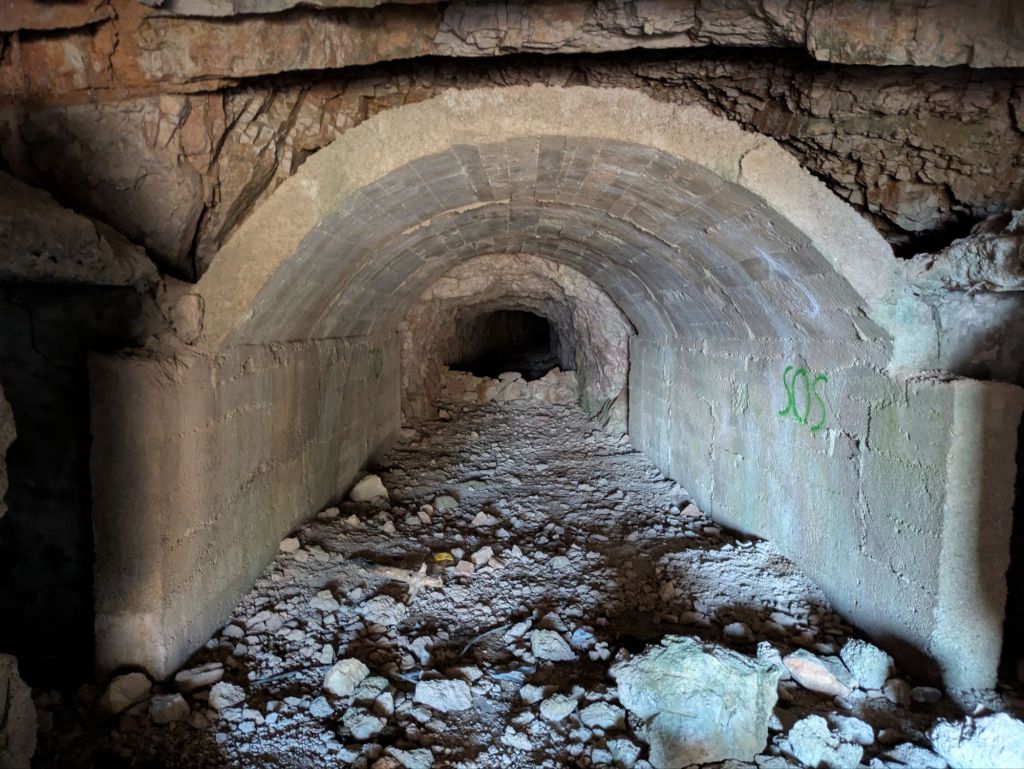
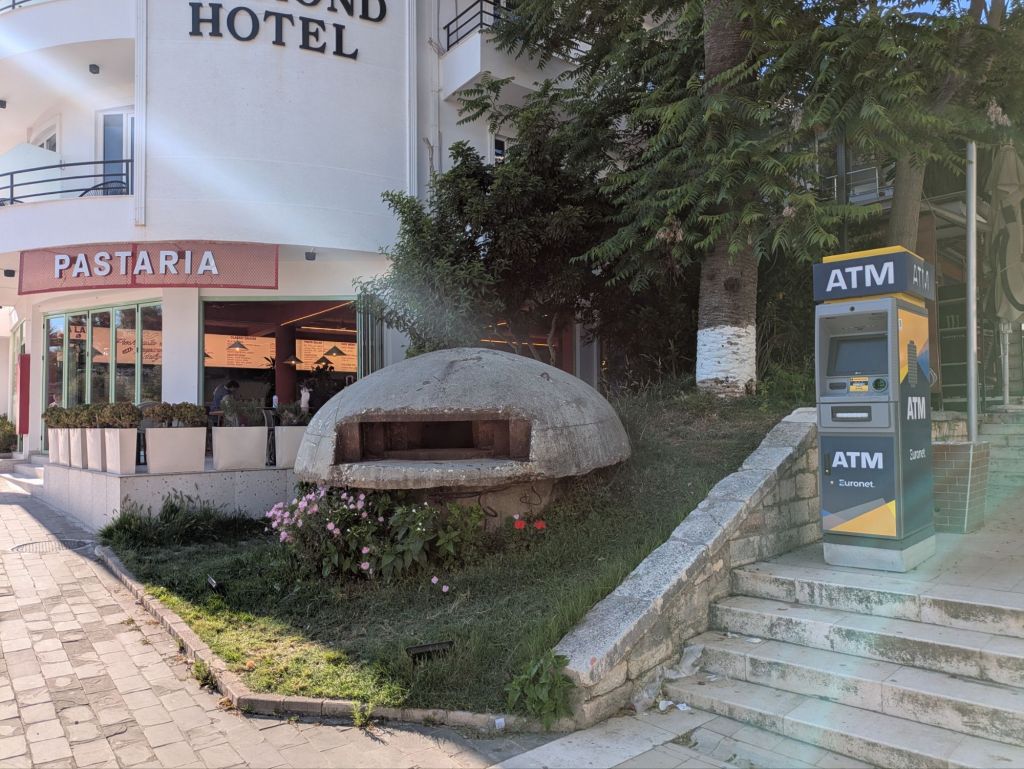
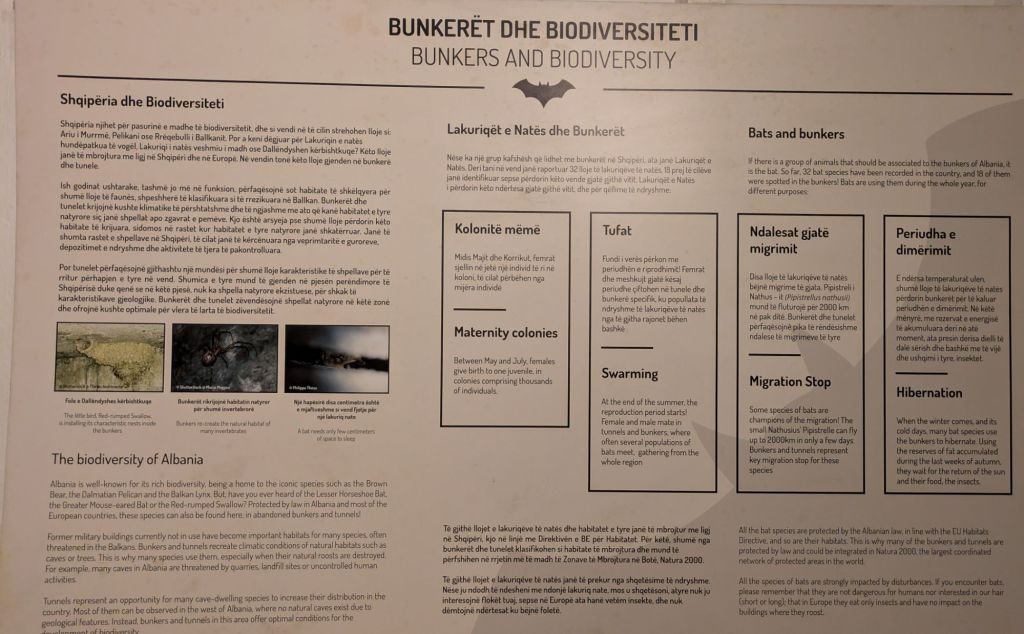
Albania has many bats and many different species of bats. One silver (and guano) lining with the bunkers is that they often provide bat refuges.
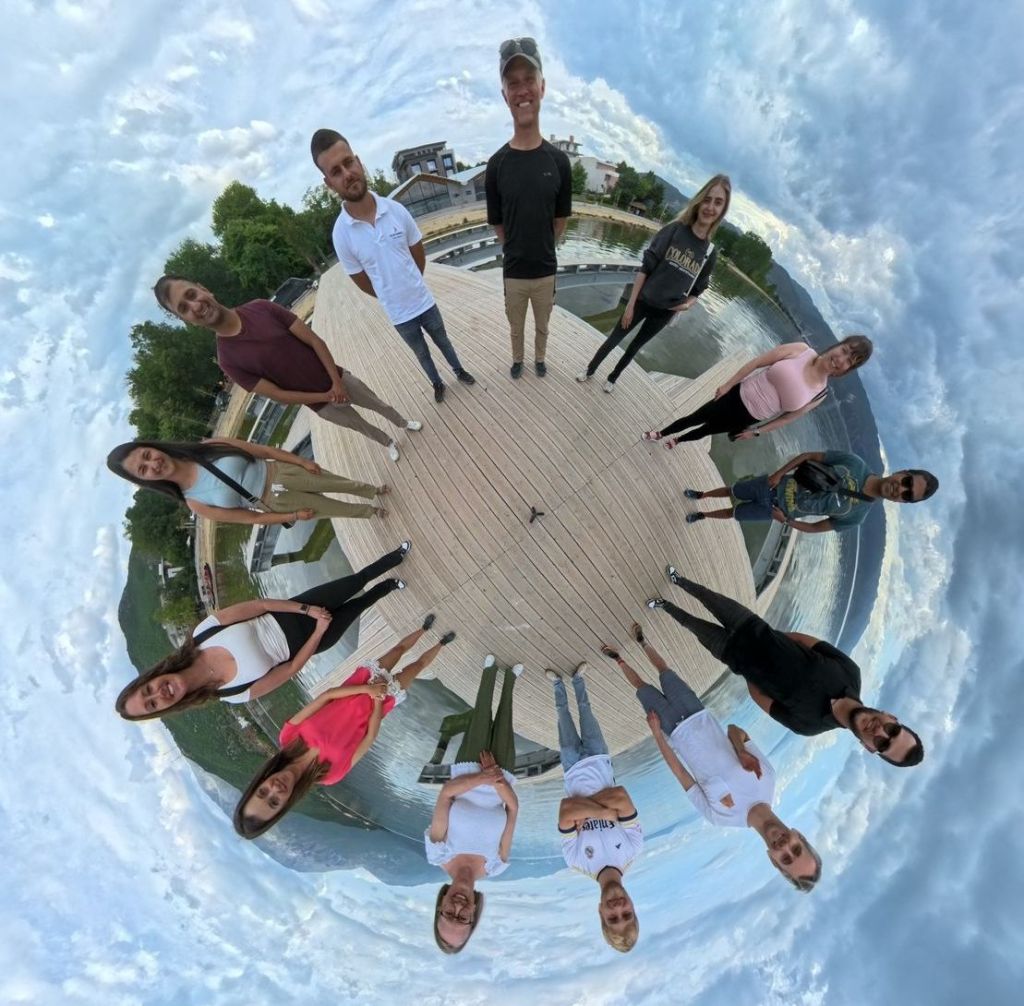
North Macedonian Lake:
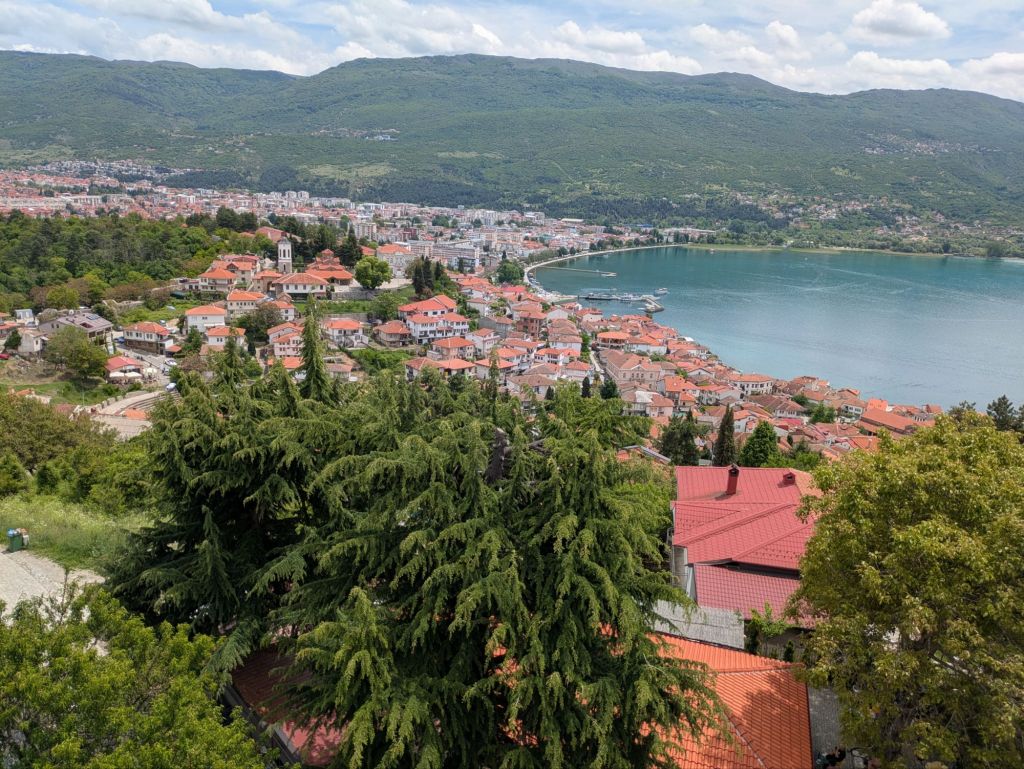
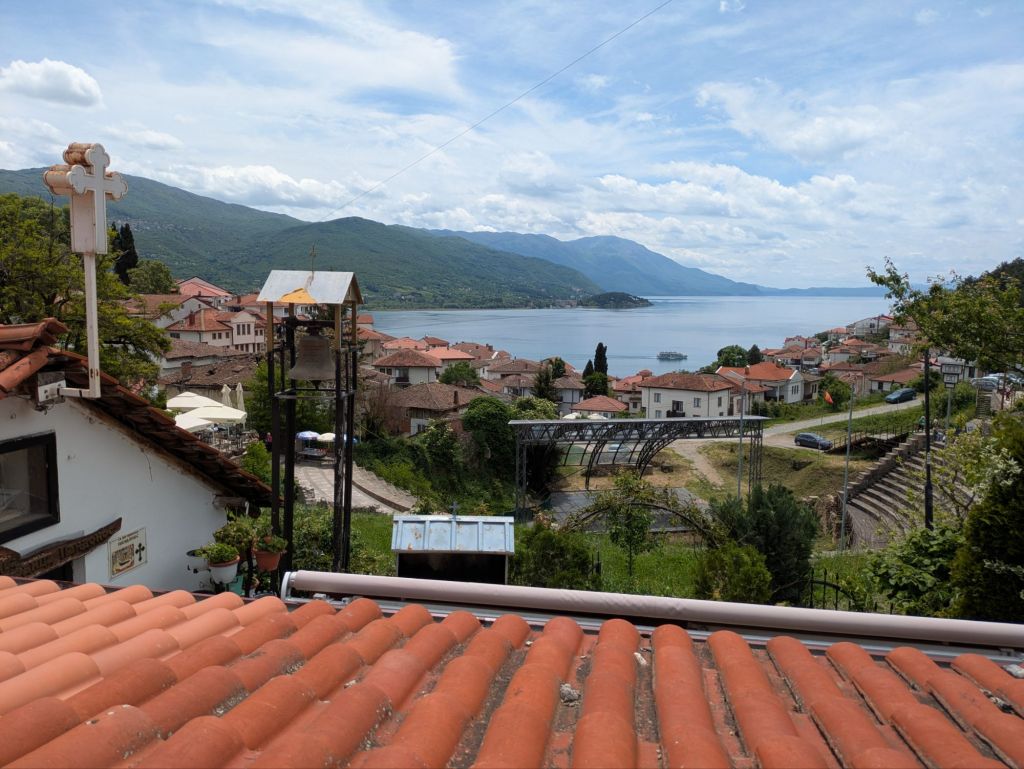
My favorite destination so far on this Albanian trip was to North Macedonia! I really enjoy taking group tours nowadays. I didn’t feel up for renting a car in Albania given that I’m solo traveling – it’s tricky to see things, drive, and navigate in a new place with a different language and crazy drivers. No thanks! I’m taking multiple group day trips on this visit, and they provide affordable options to see interesting places, with the curation left to others. There are tradeoffs of course, but overall I like it a lot. I can relax in the bus, I learn from the guide, someone else figures out the cool places to go, I don’t have to drive, and probably best of all I meet really interesting fellow travelers. This day trip to Lake Ohrid in North Macedonia was no exception. I mostly hung out with four Brits (a brother and sister, and then a mother and son), and I had lunch during the tour with them, along with a long dinner back in Tirana afterwards. I don’t think I’ve ever heard so many interesting stories in one day before. Frankly that was even more engaging than the tour itself! Things like meeting the royal family, working in construction in Antarctica, being an extra in movies, being issued an old Nazi rifle in Svalbard to protect against polar bears, having two children from a sperm bank donation, dealing with the repercussions of Brexit, and much more. People can live fascinating and very different lives. But they did seem to enjoy my bear charge story, so hopefully I added something to the mix, haha. Further, there was one other American on the tour, and through chatting I found out that she was originally from Swannanoa (just outside of Asheville)! Small world.
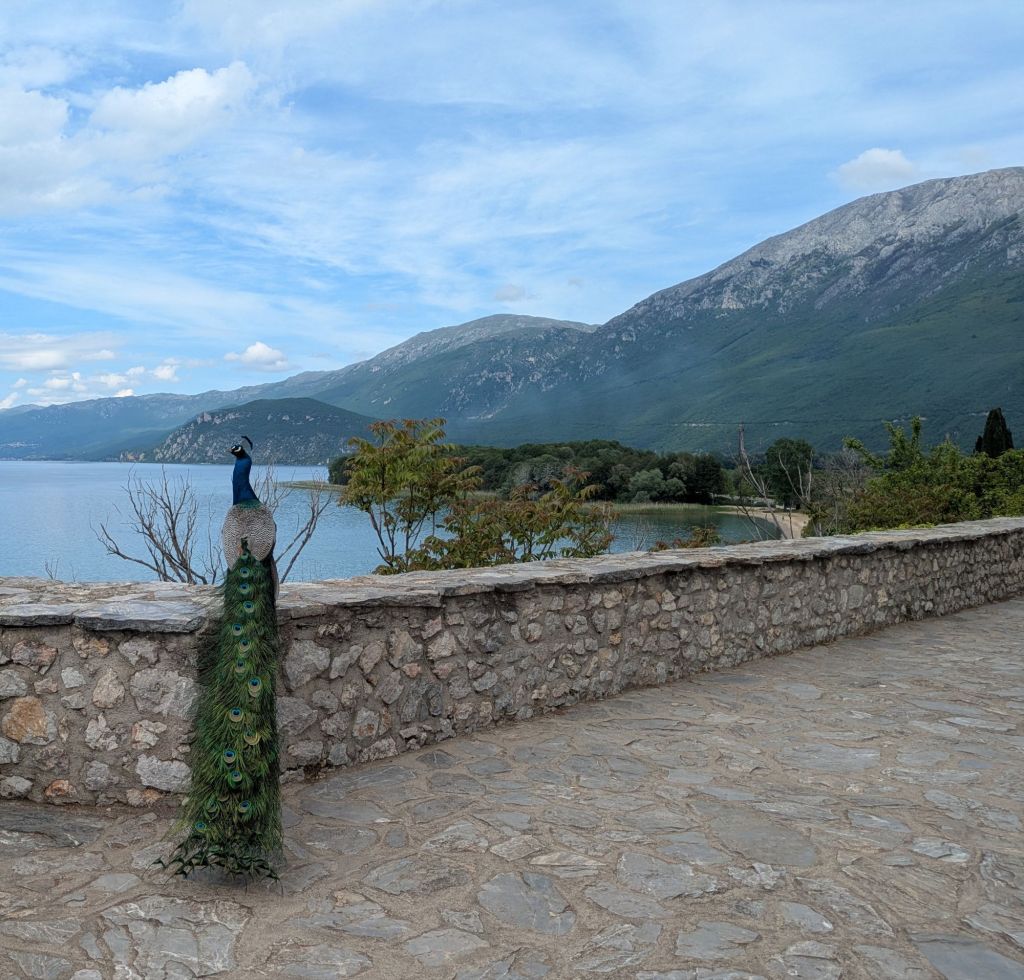
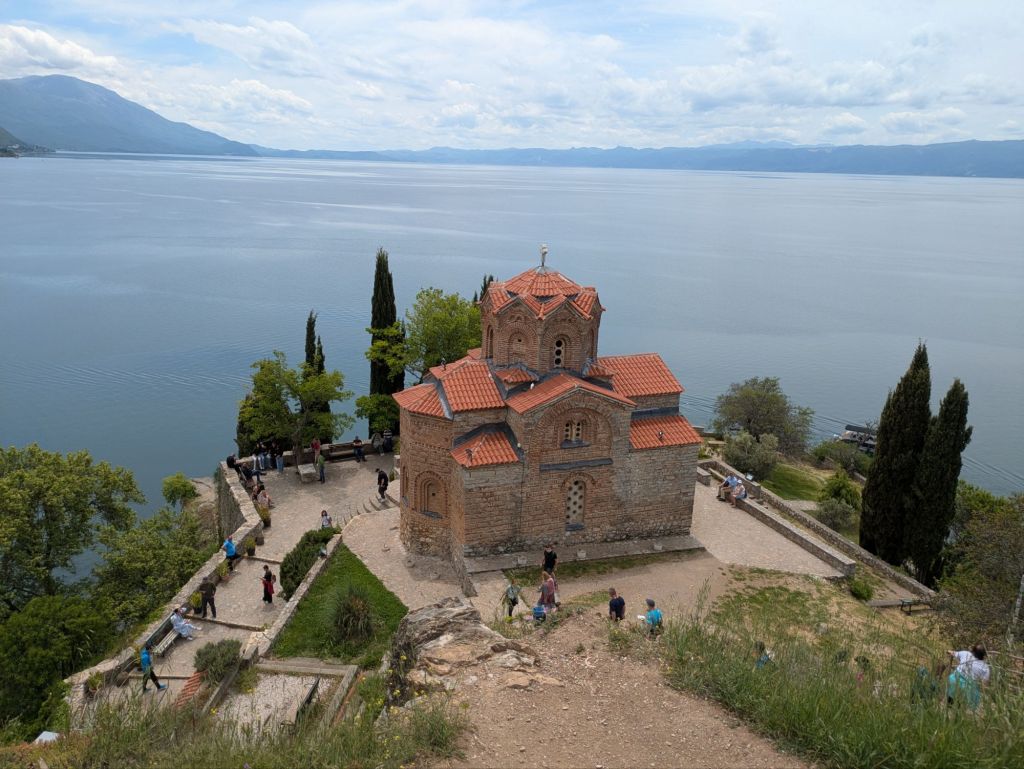
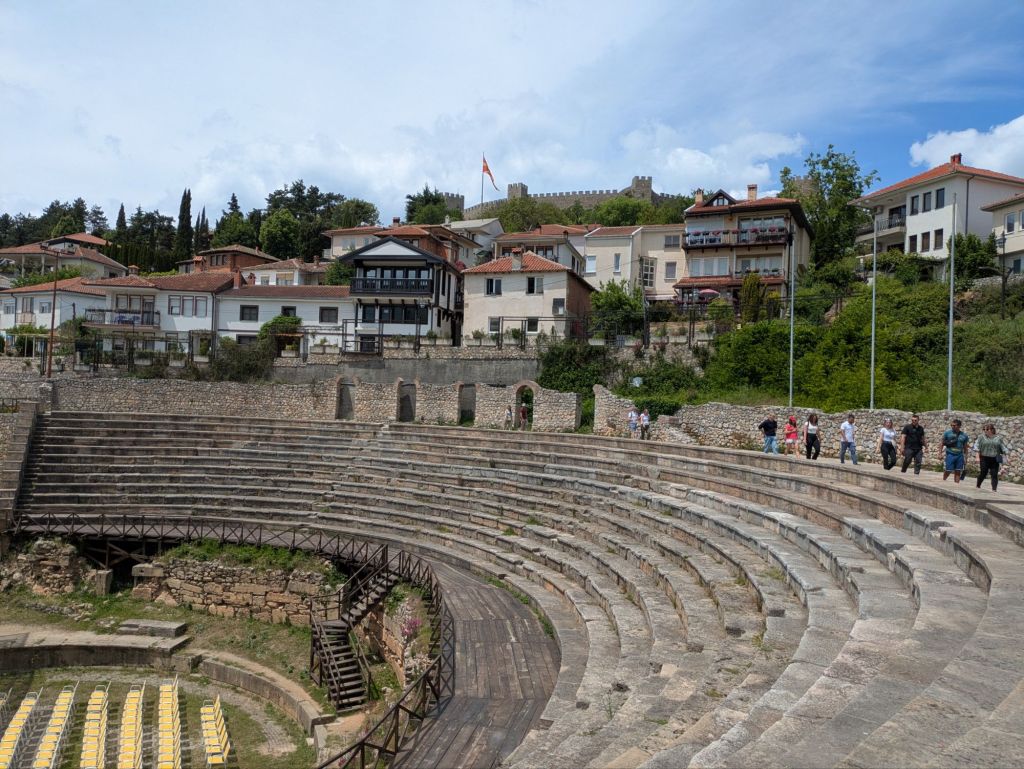
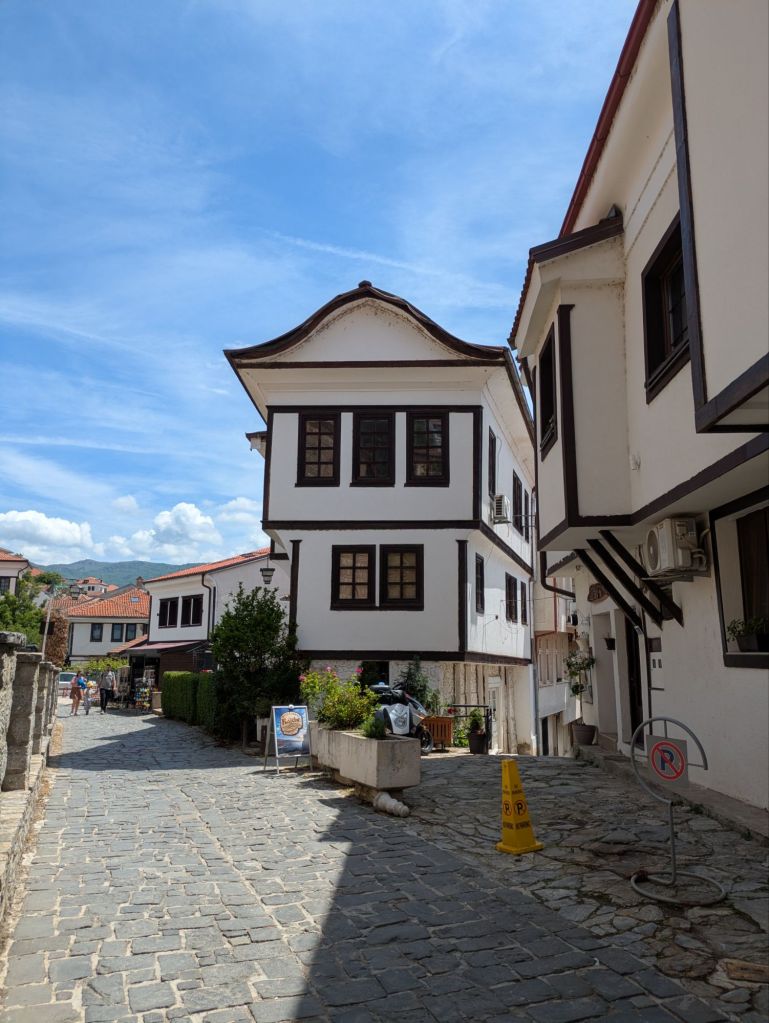
Anyway, Lake Ohrid and the region around it are stunningly beautiful, and it’s Europe’s oldest lake, believed to be 4-5 million years old. It’s not river-fed, but spring-fed, and it’s super-clear and clean. The city of Ohrid has an old Roman amphitheater and other artifacts of its long and dynamic history. It was a joy to get to visit. I REALLY liked it there and would enjoy visiting again one day, though it’s probably prohibitively time-consuming to get to from outside the region.
Albanian tidbits:
– While there are Burger Kings and KFCs, there are currently no McDonald’s or Starbucks in the country.
– That said, Chinese BYD cars are fairly popular, especially as taxis.
– One might envision that Albanians have a relatively short life expectancy given their long poverty and tendency to smoke and drink. And yet, Albania’s average life expectancy of 79 years beats North Carolina’s by three full years. Something to ponder.
– Locals don’t tend to wear shorts, even in hotter weather.
– Locals at cafes seem to only drink coffee and bottled water (and smoke). But often at the same cafes, tourists from other countries are eating a full breakfast with their coffee (and maybe a smoke also). I presume this has to do with affordability.
– Albanians in restaurants, cafes, and grocery stores immediately speak to me in English. I can’t recall any of them saying something to me in Albanian! I know I stand out here given my hair color, height, clothing, and probably other aspects unknown to me. Though I did once have a guy tap me on the shoulder while I was waiting to cross a street, and he asked “Italiano? American?” So I suppose the one thing they know for sure is that I’m not Albanian.
– There’s a great restaurant in Tirana I keep returning to for breakfast. I learned on the second visit that it was opened and is owned by a former Texan who moved to Tirana 2.5 years ago. I chatted with him a bit to learn more. I’ve overheard him speaking with multiple other guests whom he seemed to know, with these guests also having North American accents. I wonder how many expats from the US and Canada are currently living in Tirana. There are probably some good business opportunities there.
Today’s DadGPT jokes:
I told my suitcase that we wouldn’t be traveling this year… Now I’m dealing with the emotional baggage.
Why don’t Albanian bunkers ever gossip?
Because what happens underground stays underground.
I tried telling a joke inside Bunk’Art.
It bombed, but I guess that was the point.
Did you hear Enver Hoxha opened a gym?
Yeah, it was great for exercising total control.
Today’s Albanian history video:
This video was just published this week. It gives a nice summary of Enver Hoxha’s time in power, with a modern (aka frenetic) presentation style.
Today’s music video:
While not Albanian, there is a Bosnian group who are quite popular in the Balkans region. They are prolific, and YouTube keeps recommending more of their videos for me. Here’s one fun and insightful example:
Today’s Epictetus:
I should have started the Epictetus series with this one!
If you want to improve, be content to be thought foolish and stupid.

 Major Meander
I remember you telling me about the bunkers. Over 170,000, and he put 2% of their annual budget into them. Sheesh! I watched the Fourth World Country Video. Lots of info. You’re learning so much, and meeting people wherever you go. Thanks for the insights! Joe
Thanks for the feedback, Joe. Hoxha became more and more paranoid as he grew older and ruled longer. Today I bought a book titled “Enver Hoxha’s Long Shadow – Travels in Albania”. It is written by a British guy who was able to travel around Albania in 1987, and then he returned in 2017 to photograph many of the same places to show how much they had evolved during the intervening three decades. He interviews people along the way, young and old, to get their perspectives on how things were then and now.