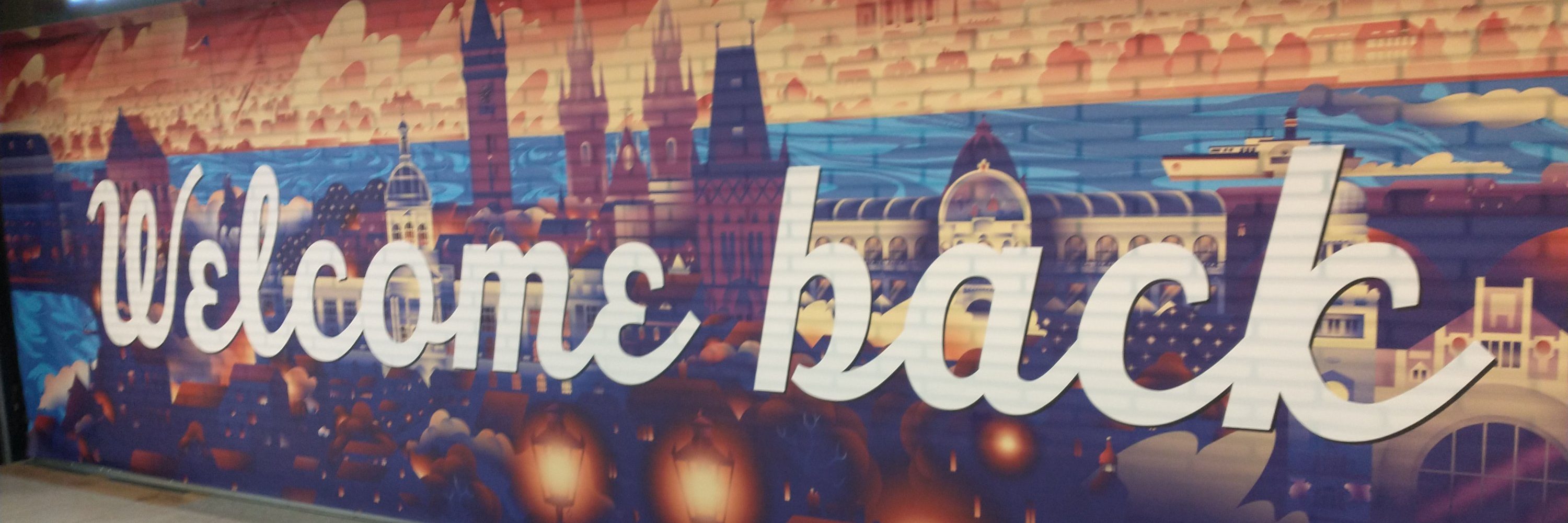
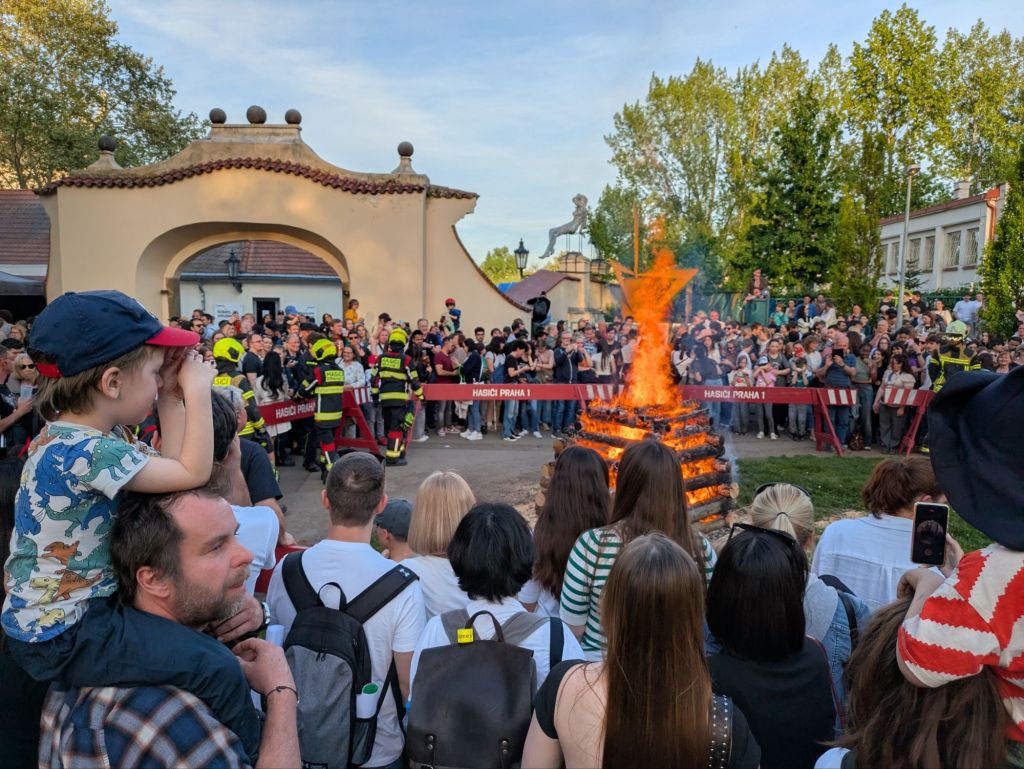
Above is a bonfire, not a dumpster fire, though sometimes my brain feels like a dumpster fire during the course. But I’m definitely on the home stretch now. I’ve been vacillating between considering signing up for the next course, and then wishing it could all please just be over with. My leaning often changes daily, or even within a day. On one hand, the several hours per day of fast-paced learning and critique is stressful and exhausting. But on the other hand, it feels so much more comfortable now to visit the post office or go to the doctor or eat at a restaurant in Prague, and that comfort is due to the wealth of learning over the past month. It’s difficult to even imagine how clueless I once was. Yes, I still make mistakes, and in fact I think I’ve always made at least one mistake in even the smallest transactions done in Czech. Sometimes only later do I realize what I’ve said incorrectly. But I get people to smile or even laugh with these mistakes. Speaking of mistakes, we have our big test next week, so let’s see how many mistakes I make on that! I’m realizing as I write this that I don’t know whether we’ll actually get grades, or if how well we do actually matters. I can’t imagine that they would force anyone from this class to start all over again from day 1. We’re way beyond that now. And we were already told that we’re not learning enough in these 30 class days to reach the most basic first level of language knowledge certification anyway. Therefore the test is most likely just for one’s own reference.
So, let’s now dive into some fun Czech language insights not covered here in previous posts.
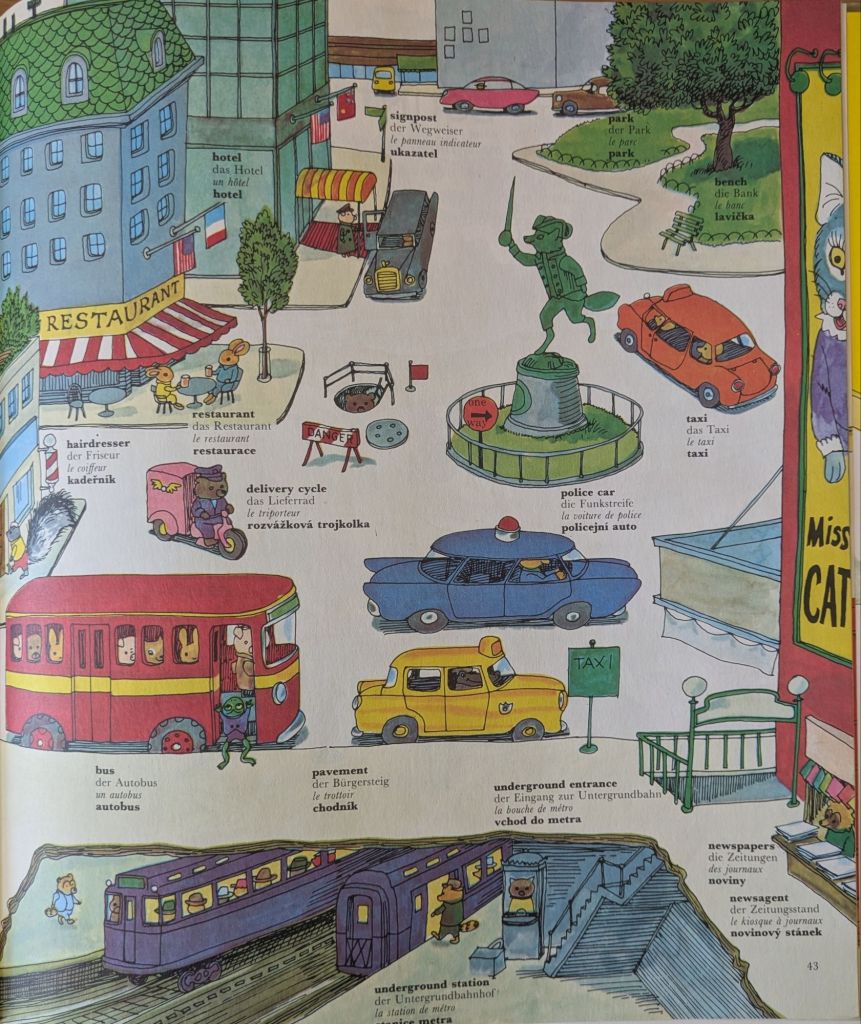
As in most European languages, there are two different forms of singular “you” and associated verb conjugations in Czech (“ty” is informal, and “vy” is formal (or plural)). English used to have an informal “you,” which was “thou.” We tend to think of “thou” as actually sounding more formal than “you,” but that’s just because it’s archaic (and because it’s used a lot in the King James version of the Bible). Spanish has this distinction with “tú” and “usted,” and Swedish has it with “du” and “ni” (which is also the plural “you”), though I don’t believe that “ni” is used much at all in the singular anymore. There are even more different levels of formality and associated wording differences in some other languages. Anyway, in Czech it’s apparently usual to start off with the formal “vy” form when first meeting people. You don’t want to be overly informal and casual with a stranger (though I sense that this is changing), but you don’t want to be improperly formal with a friend either. I’ve read that it can be difficult to figure out when a relationship has progressed to a point where it’s acceptable to switch over from the formal to the informal, and one unfamiliar with the practice shouldn’t use the informal address until the other person initiates it. This initiation has its own formality, with a question posed about the possibility of transition: “Můžeme se tykat?” Basically, “Can we use the ‘ty’ form?” That transition is a big occasion, normally experienced with a sense of relief by both parties, and perhaps even some celebration. The author of the “Culture Shock Czech Republic” book, who’s American, recounts how he used “vy” with his Czech wife’s parents and grandparents before he and his wife got married. At the wedding itself, each elder Czech family member in turn announced that the author could thenceforth use the informal “ty”, paired with toasts.
As you’ve noticed by now, many Czech letters include diacritics above them, like the consonants č, ď, ň, ř, š, ť, and ž, along with long forms of vowels like á, é, í, ó, ú, ů, and ý. Those marks over vowels aren’t accent marks, as Czech emphasis is on the first syllable, but instead indicate that the vowel should be pronounced about 1.75 times longer than the short form. It was originally usually difficult for me to hear the difference, but I’ve gotten better. I practice on the subway, listening to announced station names, trying to determine which vowels are long. It got me wondering what the longest Czech word is where all the letters have diacritics above them. Perhaps it’s this word with all six letters having diacritics?: “žďáříš” (“Are you hungry?”)
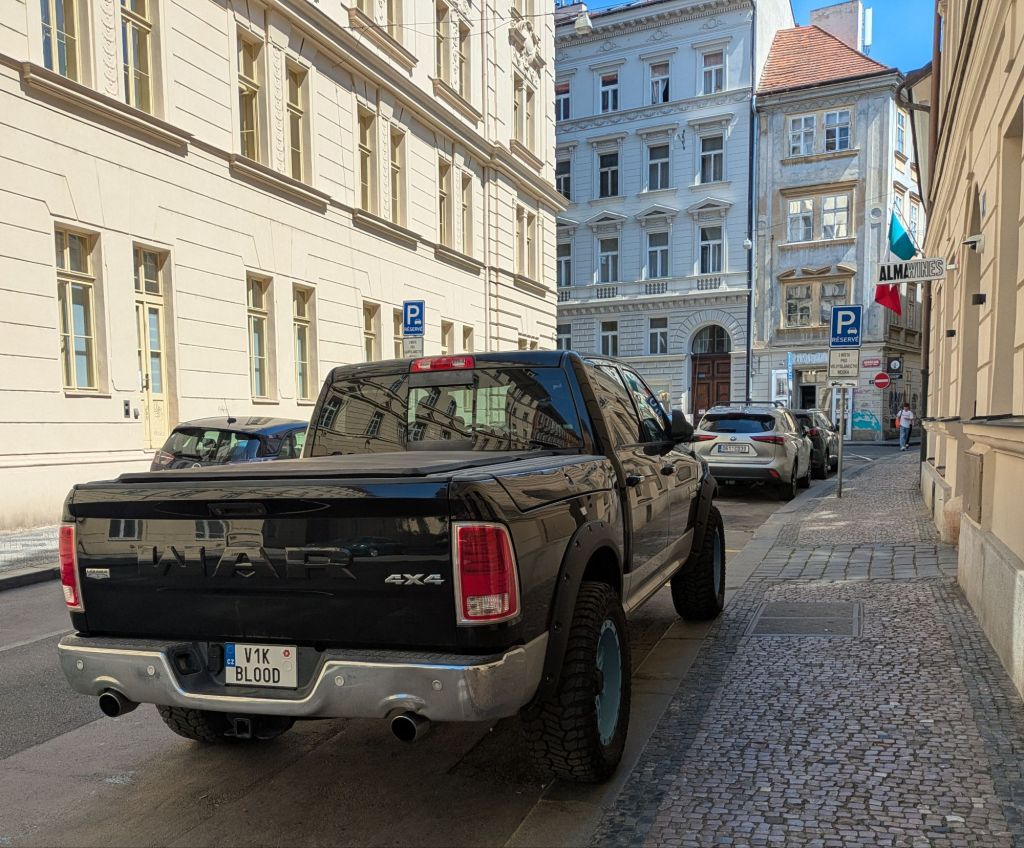
You know that I like sharing Czech words without vowels. Here’s another: “vlk” – it means “wolf”. On a related note, there are so few big personal trucks in Prague that it’s noteworthy when one is encountered around the city. There’s this one big pickup that parks near the building where I take the course, and because it’s an American truck it has to have a special license plate to fit the plate mount area. European license plates are shorter but wider than American plates. The plate on this particular truck is also personalized, which is also relatively rare around here, but whoever this guy is (I’m presuming it’s a guy) who owns it, he’s gone all out. The plate says “V1K BLOOD”. Now maybe that isn’t meant to be “vlk” (wolf), but perhaps? Funny too that he somehow took the “RAM” letters and reversed the positions of the R and M, and then turned the M upside-down to make “WAR”. What’s that good for? You can also see that the truck is so wide that the wheels need to be parked partially on the sidewalk.
I’ve earlier mentioned that Czech has seven cases/declensions. I thought a good practical example is to show you forms of the name of the city of Prague, comparing with English, just for fun. It’s maddening. Only on Friday this week did we start to learn the plural forms for the cases that we already know (nominative, accusative, and locative). So I must admit that I didn’t know how to properly make even just nouns as subjects into plural form until this week. Numbers themselves as adjectives also change depending on the gender of the noun that they count. She taught us the three forms (masculine, feminine, and neuter) of the numbers one, two, three, and four, but then said that we wouldn’t learn the various forms of the other numbers in this course. These numbers use the genitive case, which is taught in the textbook in lesson 20 (we’re on lesson seven!). So while I know the generic forms of numbers, such as for prices and order numbers, I will complete this course without being able to tell you how to say something like “five cats”. Something one might learn on day 2 in a Spanish course. Using Google Translate, it looks like maybe the number doesn’t actually change after four, but the plural form of the noun itself does change, which is just as confusing! So one cat is a “kočka,” two to four cats are “kočky”, while five or more cats are “koček”. As they say in Spanish, “Dios mío!” Honestly, this all makes Spanish and Swedish seem so much simpler, that I’m not sure why I never became fluent in either! No excuse, haha!
So here are just some of the forms of the name Prague in Czech (noun forms are capitalized, but adjective forms aren’t):
– Prague: Praha
– I like Prague: Mám rád Prahu
– She’s from Prague: Ona je z Prahy
– He lives in Prague: On bydlí v Praze
– Prague Castle is large: Pražský hrad je velký
– Prague beer is tasty: Pražské pivo je chutné
– Prague culture is well-known: Pražská kultura je dobře známá
– Is that of Prague origin?: Je to pražského původu?
– Take the Prague metro: Jeďte pražským metrem
Every city name has a comparable multitude of variants. Czechia’s second city, Brno, has Brně, Brna, brněnské, etc. The name changes aren’t random – there are rules. So one need not memorize city name variants, just the case handling based on the letters of the name. So even city names from other languages would similarly change: Chicago, for example, would have Chicaga, Chicagu, chicagské, etc.
One particularly challenging class exercise we’ve done a couple of times is to split into teams of two where one team member is the reader, and the other is the writer. The writer stays in the classroom while the reader runs into the hall and reviews a printed story taped to the wall. The reader memorizes as much as they can, runs back into the room, and verbally relays what they recall, which the writer records on paper. Once the entire first story is written down, the team members switch roles, and the new reader runs into the hallway for the next printed story. Each team competes with the other teams. It’s a definite challenge to remember even just one sentence in its entirety in a new language. Then one must communicate sufficiently for the other newbie to understand and then properly write everything down. It’s a very effective way to practice reading, vocabulary, pronunciation, spelling, and the whole gamut. It’s pretty fun with this gamification.
Today’s Prague insight:
Who would have guessed that Czechia has one of the most populous Vietnamese diasporas in the world? There are estimated to be about 70,000 Vietnamese people living in the country, with the largest population living in Prague. They’re the third-largest ethnic minority in the country, after Slovaks and Ukrainians.
“The Vietnamese communist government was told to pay the western communist countries for their help in the Vietnam War. In lieu of money, they sent their citizens there as indentured workers for subsistence wages. Following the collapse of communism in Czechoslovakia, a significant number have moved towards establishing their own businesses and integrating more broadly into society…” (https://en.m.wikipedia.org/wiki/Vietnamese_people_in_the_Czech_Republic)
There is a very unique “city within the city” called Sapa (or Little Hanoi) in southern Prague which is an 86-acre (35 hectares) mega-complex of Vietnamese-run businesses, including dozens of “restaurants, food stands, specialized grocery stores, a warehouse club called Tamda Foods, warehouses, tutoring and childcare services, places for meetings, social events, and a Buddhist temple.” (https://en.m.wikipedia.org/wiki/Sapa_(Prague)) It’s a former poultry farm that’s been converted into this shopping destination, with around seven thousand people working there. It’s a place like no other I’ve seen before. Sofia, her boyfriend, and I traveled down there for a visit. Wandering around you feel like you’ve somehow been teleported all the way to Asia. It was hard to decide where to eat, and challenging even to figure out how to order. The language barrier was even trickier than usual with Czech being the second language here (after Vietnamese).
The following is a good documentary highlighting lives of second-generation Vietnamese in Prague:
Today’s relaxing tram ride:
I recorded this from the back of a tram traveling through two of my favorite Prague neighborhoods. This is the area that Colleen and I have spent several months in, beginning in 2021. I love it here, and I came here again this round, though I had to stay farther out for affordability. 2021 and 2022 were excellent times price-wise for apartments — one of the plus sides during Covid. Costs have definitely risen since then. Anyway, you’ll see tram stops with meaning to Colleen and me. Jana Masaryka is the name of the first stop, and that’s the stop Colleen and I almost always stay near when we’re in Prague, in the Vinohrady neighborhood. The final stop, where I ended the video, is Vršovické Náměstí in the Vršovice neighborhood, where I have an apartment during the language course.
Today’s Prague photos:
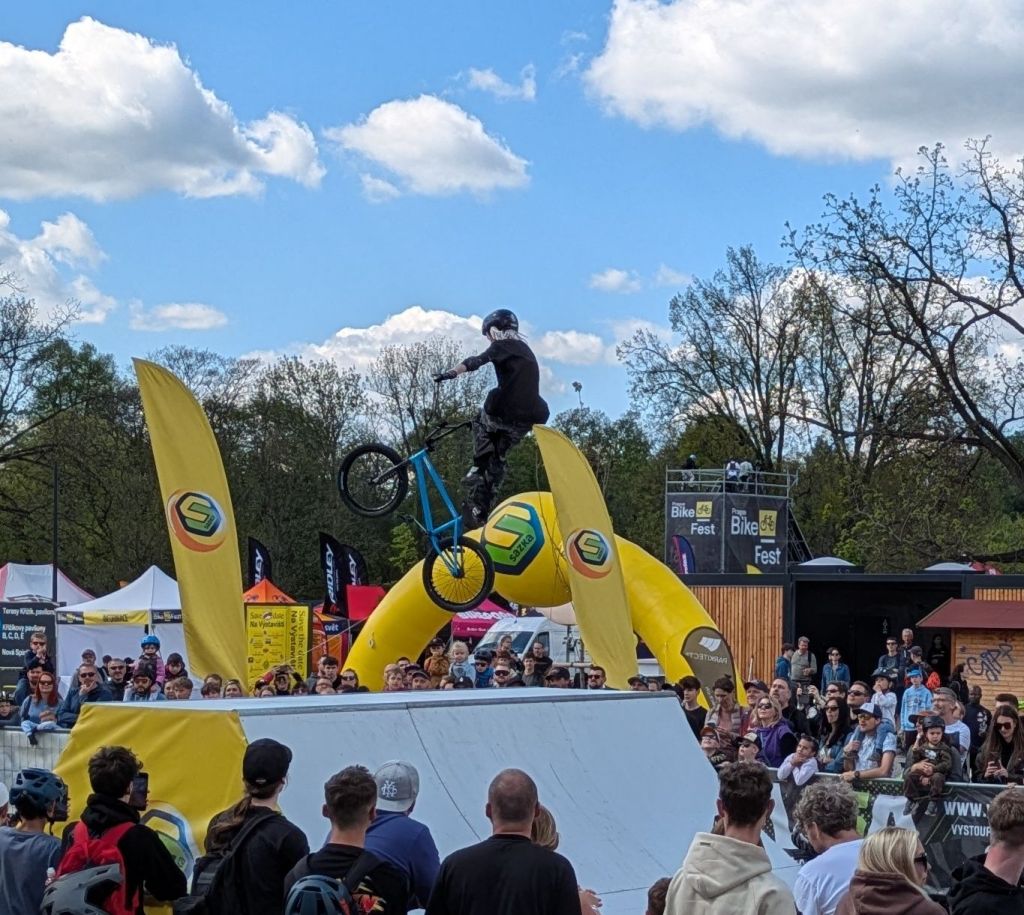
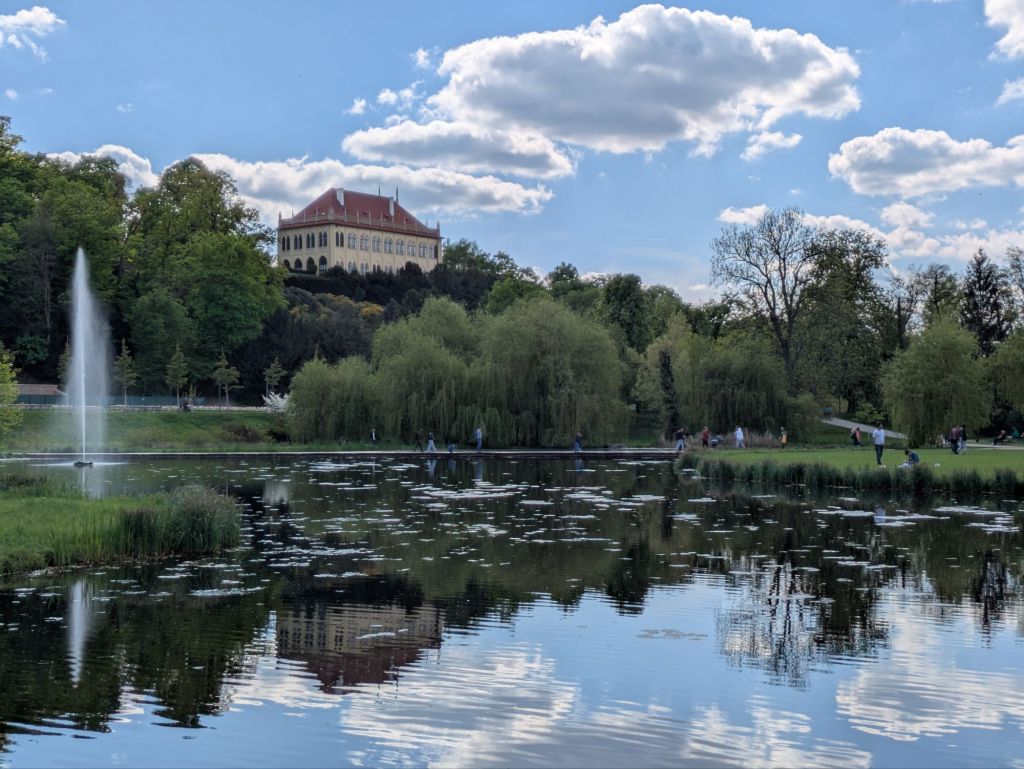
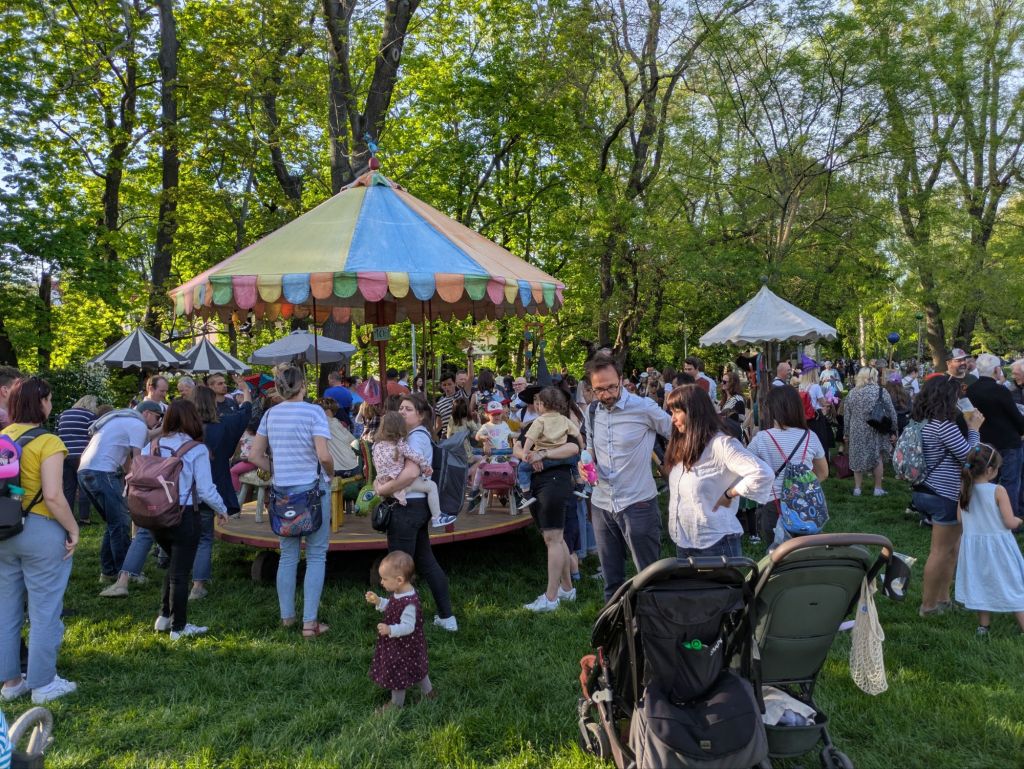
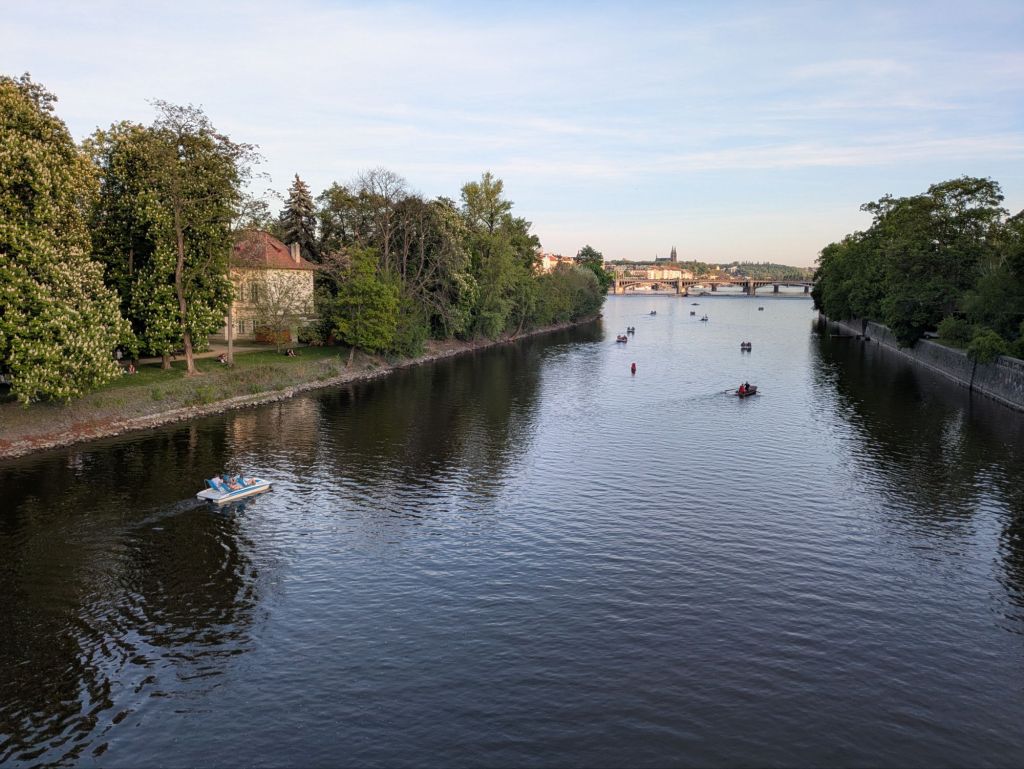
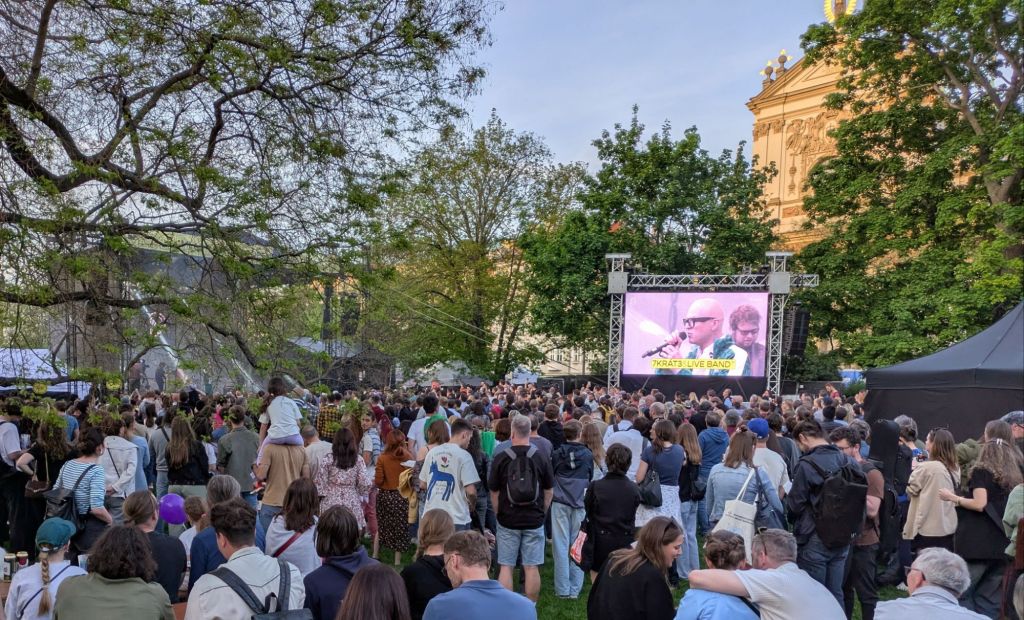
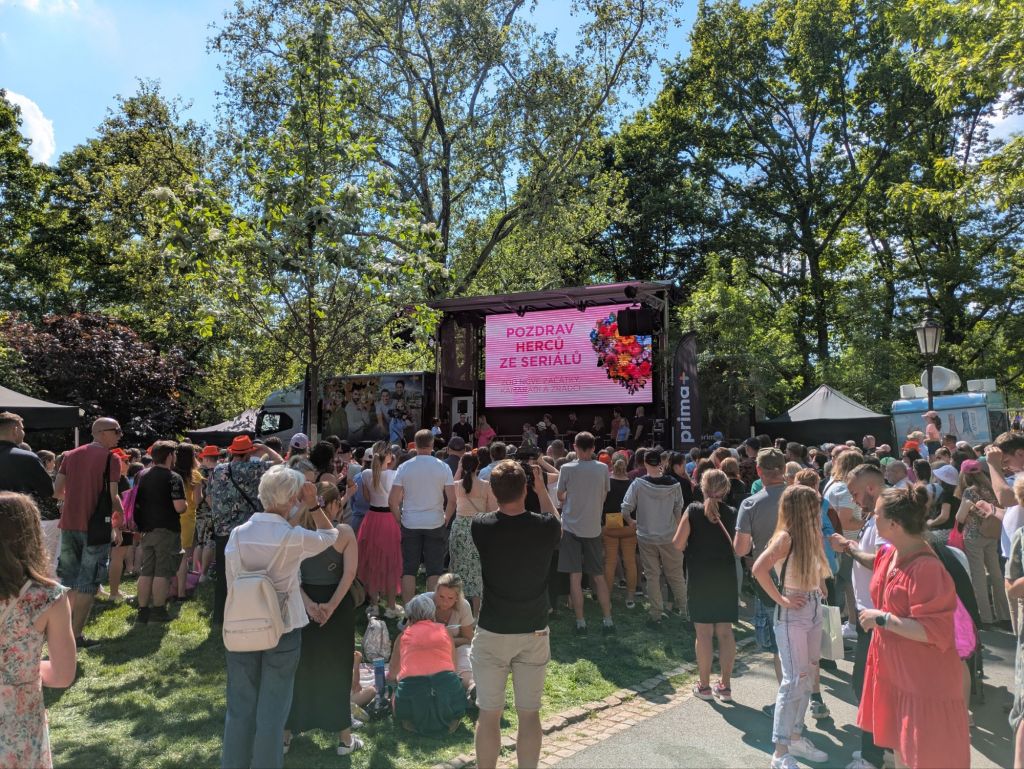
There are always many different events around Prague every weekend, at least this time of year. It’s fun just wandering around to various parks (of which there are so many) and experiencing the gatherings. There are food festivals and concerts, of course, but I also ran into a big bicycle extravaganza — it was a ticketed event, and I didn’t pay to get in, but even from the outside it was possible to watch some of the competitions such as BMX bike ramp jumping and stunts. Plus, May 1 is a public holiday in Czechia (labor day), and the city was packed with fun celebratory get-togethers. The night before is called “Witches’ Night” or “Walpugis”, which officially fetes the springtime. Bonfires are lit to ward off evil spirits, and little kids and adults alike dress up in witch costumes. Here are some sample photos:
Today’s geeky dad joke:
I used to be in a band called “1023MB”. Unfortunately we never made it to a gig.
Today’s Japanese video:
The Japanese are next level with their pranks!
Today’s Epictetus:
We have two ears and one mouth so that we can listen twice as much as we speak.

 Major Meander
The fact that the word Prague can change so much – and even be lowercase – baffles me. Some of these spellings look familiar. You are learning so much! The number differences too? I remember our May 1 in Greece years ago when we wondered why the museums were closed (when we didn’t realize it was Europe’s Labor Day). And the Vietnamese population there is such an interesting story. I always tell people that they run all the Potraviny markets, which are like a 7-11, but with fresh produce, fully stocked liquor selection, and sometimes the larger ones offer housewares and even clothing! As a matter of fact, I bought bath towels and kitchen supplies for Sofia at one of these last summer. Keep going, keep growing! It’s all so impressive. 🩷
Lots to learn, indeed. And the Vietnamese population also runs many Asian restaurants, which I have definitely enjoyed these past years. By the way, I’ve gone to Boong three times on this visit, and Hanta has never been there!
Scott…..reading your posts is like picking up an encyclopedia (remember those). I learn so much on a crazy random smorgasbord of topics – the Vietman sent their citizens to Prague as payment to communist countries for their support?!?! – the THOU form in English is equivalent to the Spanish usted(seems plausible)! – the Japanese are epic pranksters?! Grateful for the opportunity to drink from the cup. Joe
Thanks! I’m pleased that you find it interesting. I certainly love to learn about topics like these. You’re also full of these types of tidbits, so I’d read your blog when you create it!!
Oh yeah, and English “thou” was more like Spanish tú, informal. https://en.m.wikipedia.org/wiki/Thou
It even had its own conjugation!
Right, I read that in your original post, but got carried away. So interesting (to me)!