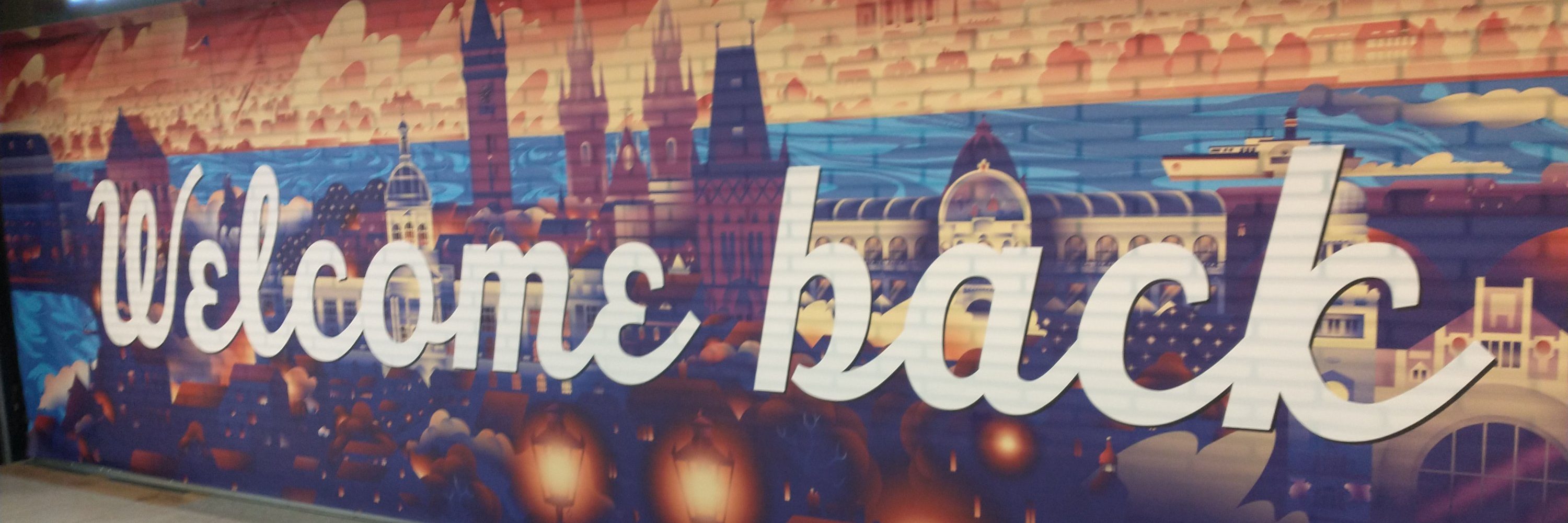
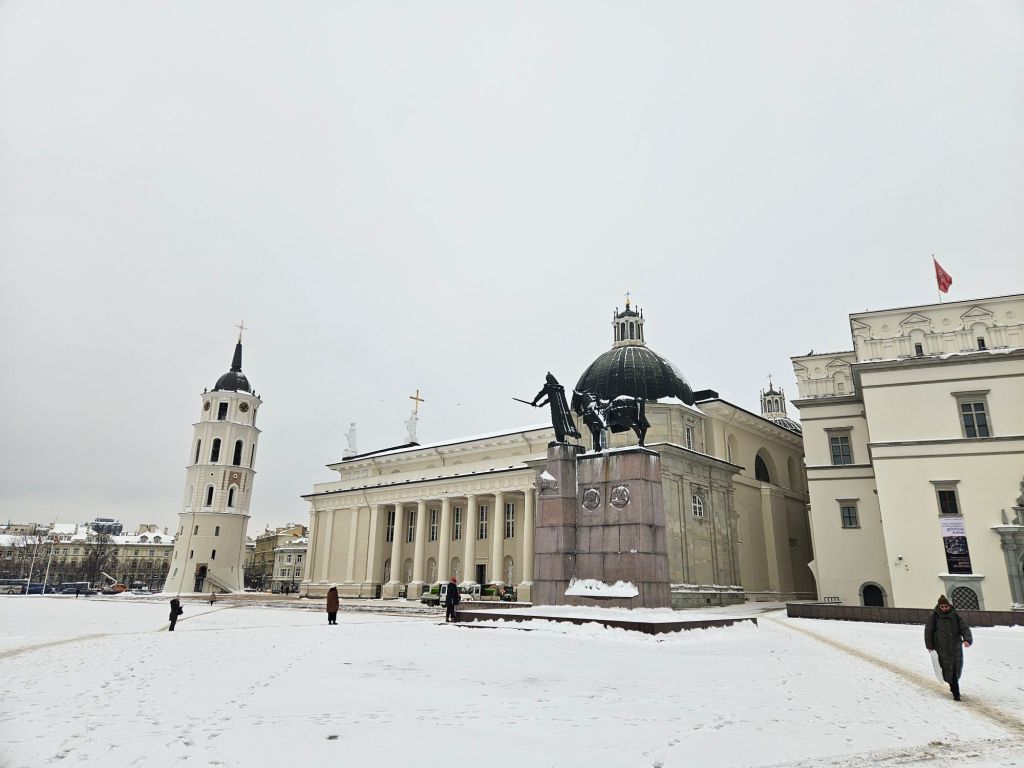
Ironically, while Lithuania has been the most frustrating, especially in terms of walking, at the same time it’s also been my favorite Baltic state! It’s the one I definitely wish to return to (in the summer), and it’s where I have the most I want to share stories about but have the least time because of all the things going on. As I write, I’ve been in the country for just five nights, but it feels like I’ve been here for a few weeks, somehow. I needn’t dwell on the frustrations, so I’ll focus on some fun stuff here.
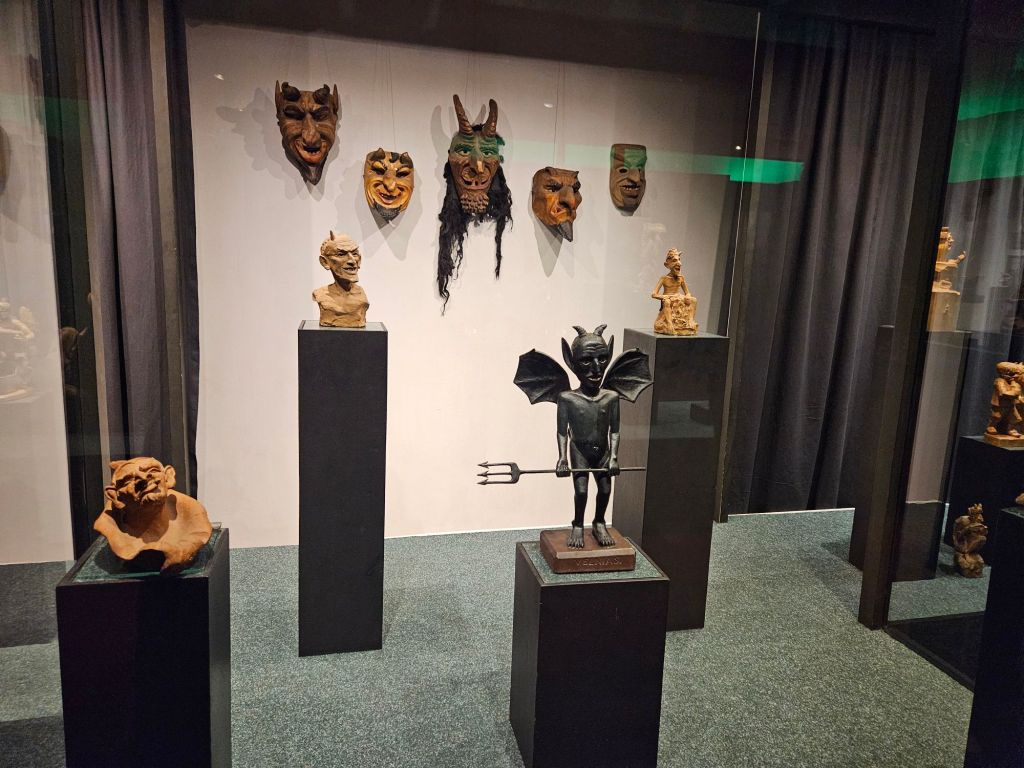
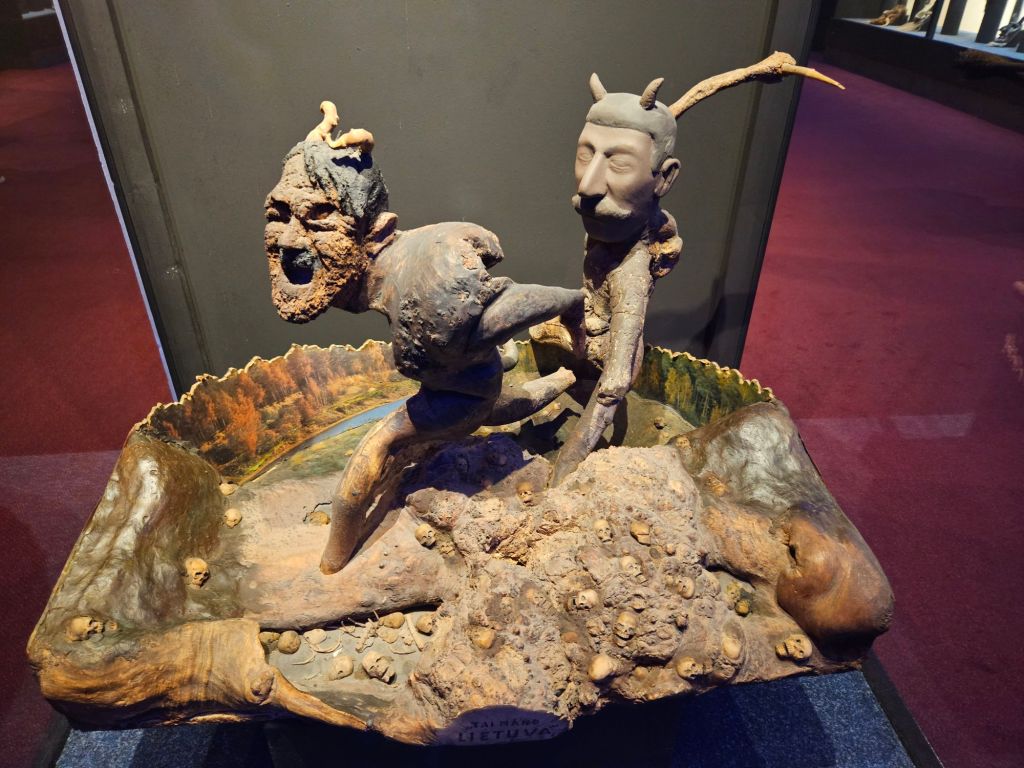
It’s just such a cool place, with a similar recent history to Latvia and Estonia, but with a richer and deeper past. So many things make this country unique, like that it was the last place in Europe to become Christian – they call it being “baptized” as a country, as they were the last pagan holdouts on the continent. The paganism had caused so much frustration elsewhere that a crusade was even launched against the Grand Duchy of Lithuania! The duchy finally converted to Christianity in 1386. But perhaps as a legacy, I read that there are over 1,000 words for “devil” in Lithuanian, and there’s even a devil museum in second city Kaunas (which of course I visited).

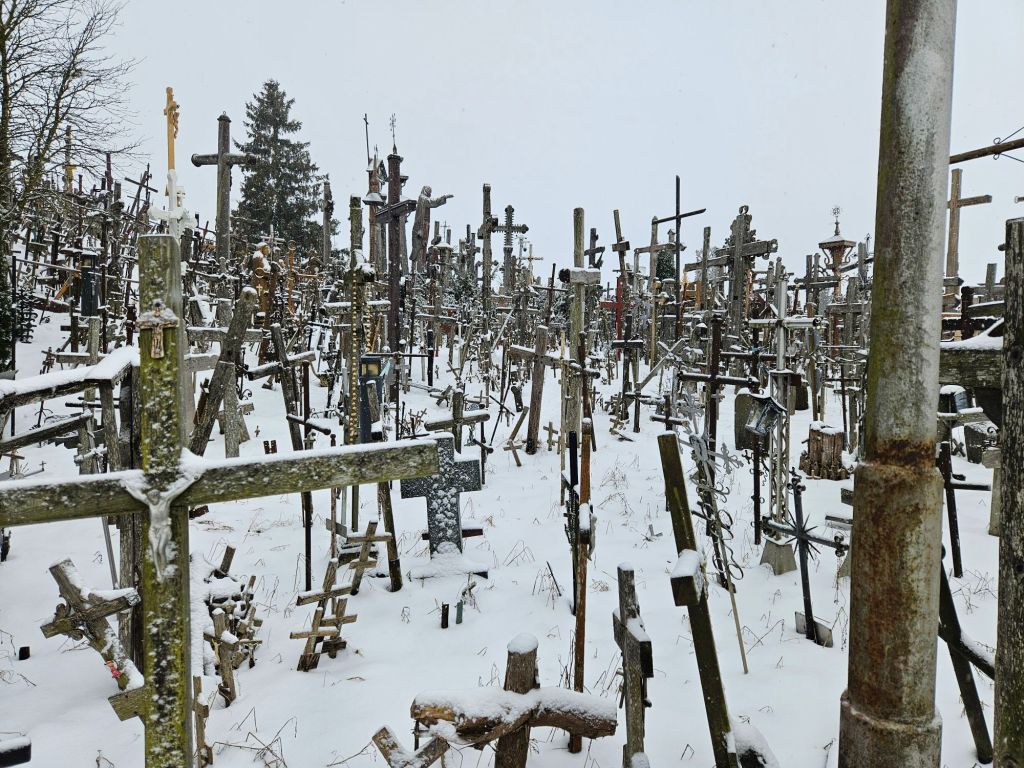
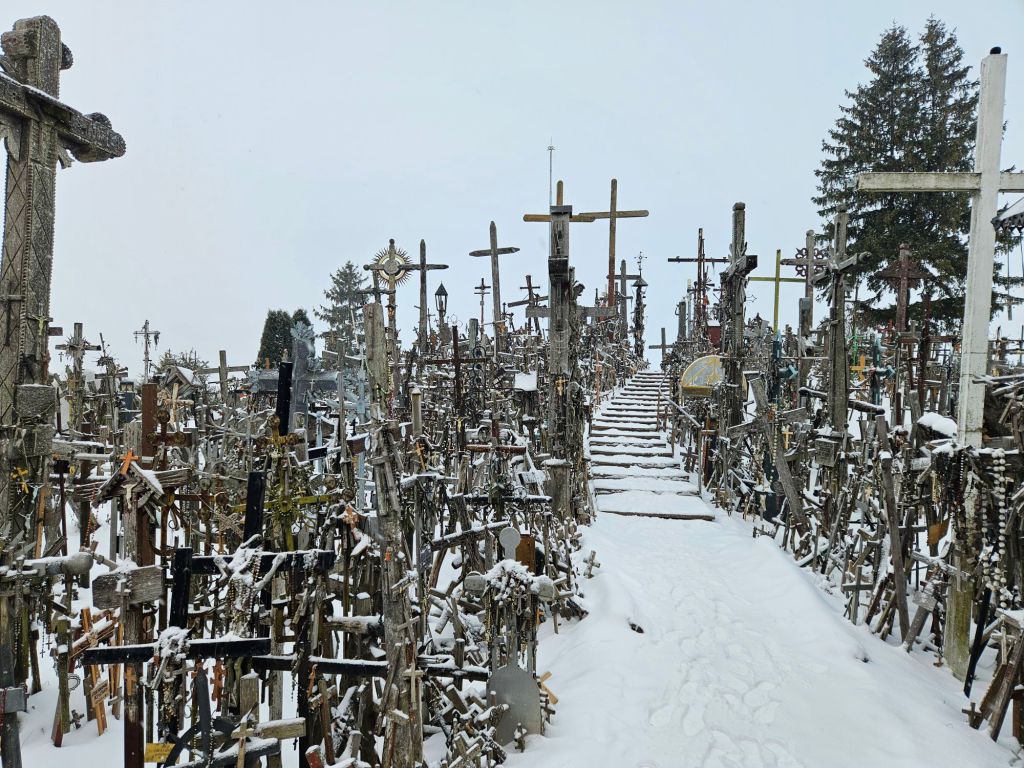
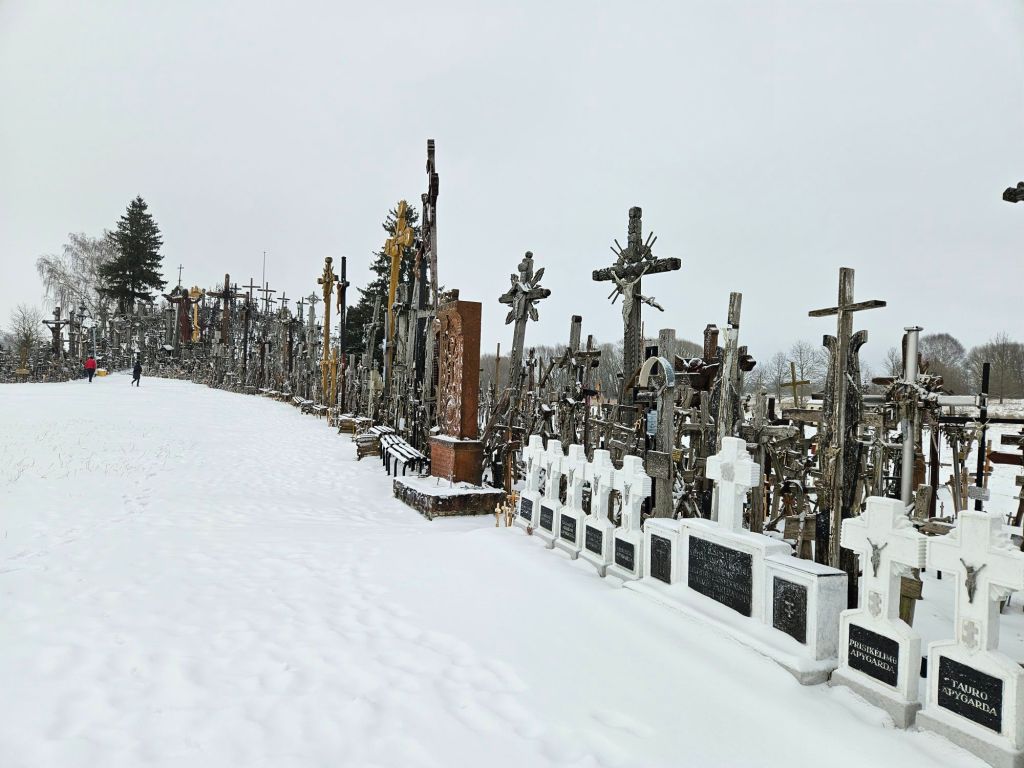
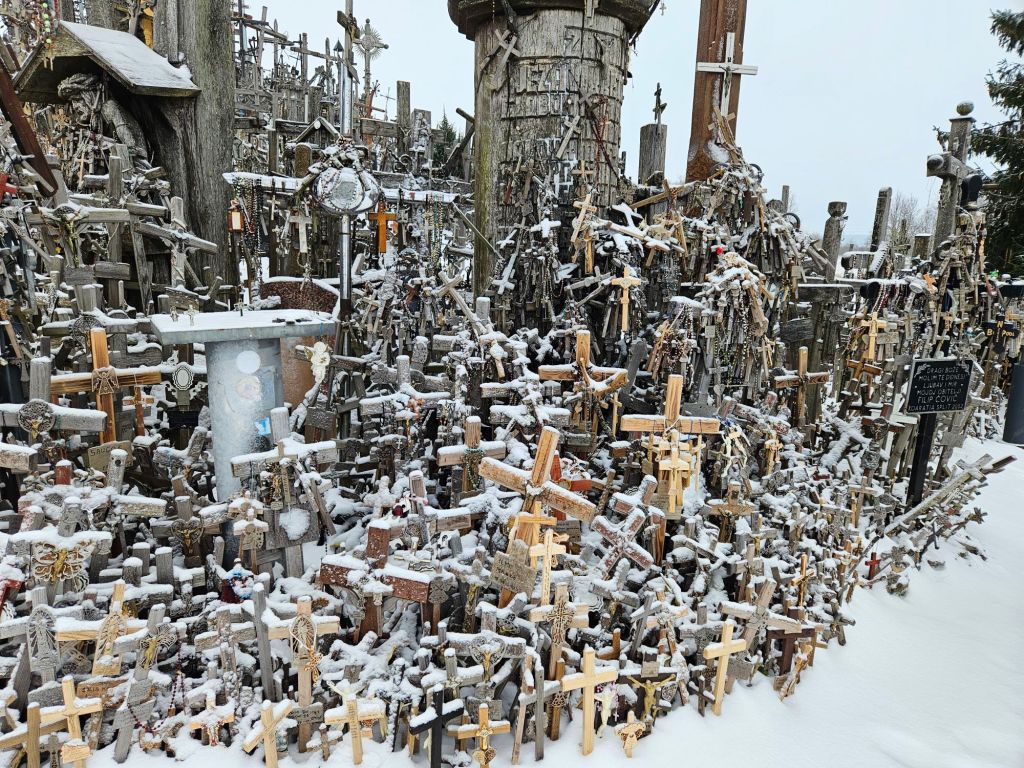
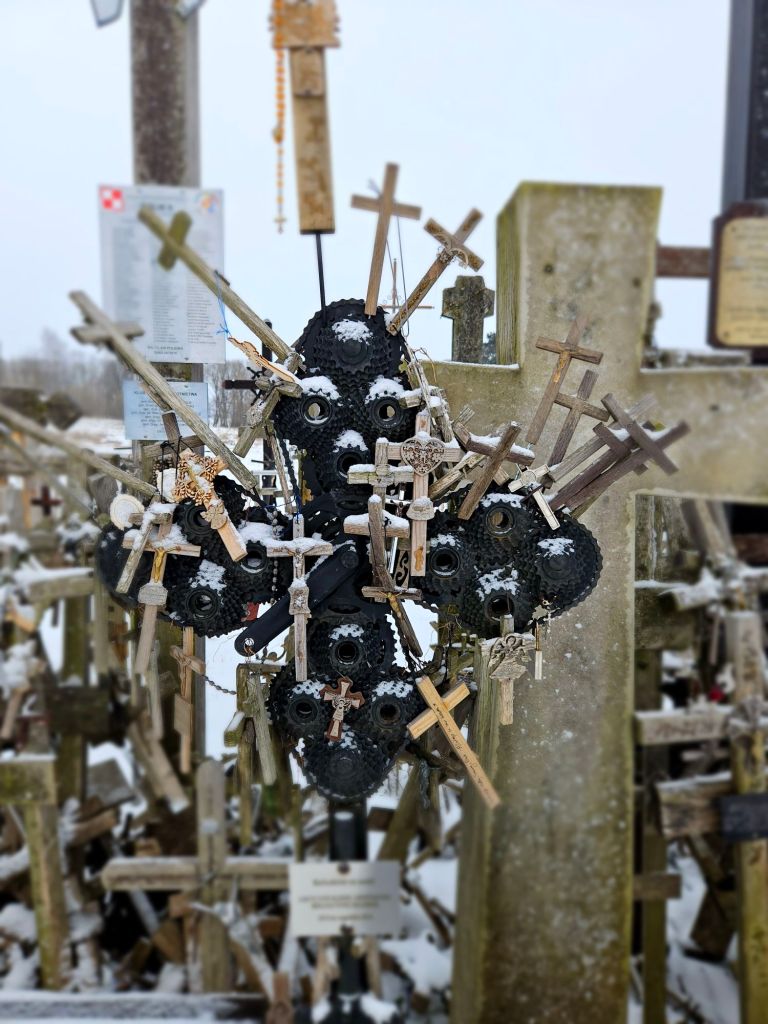
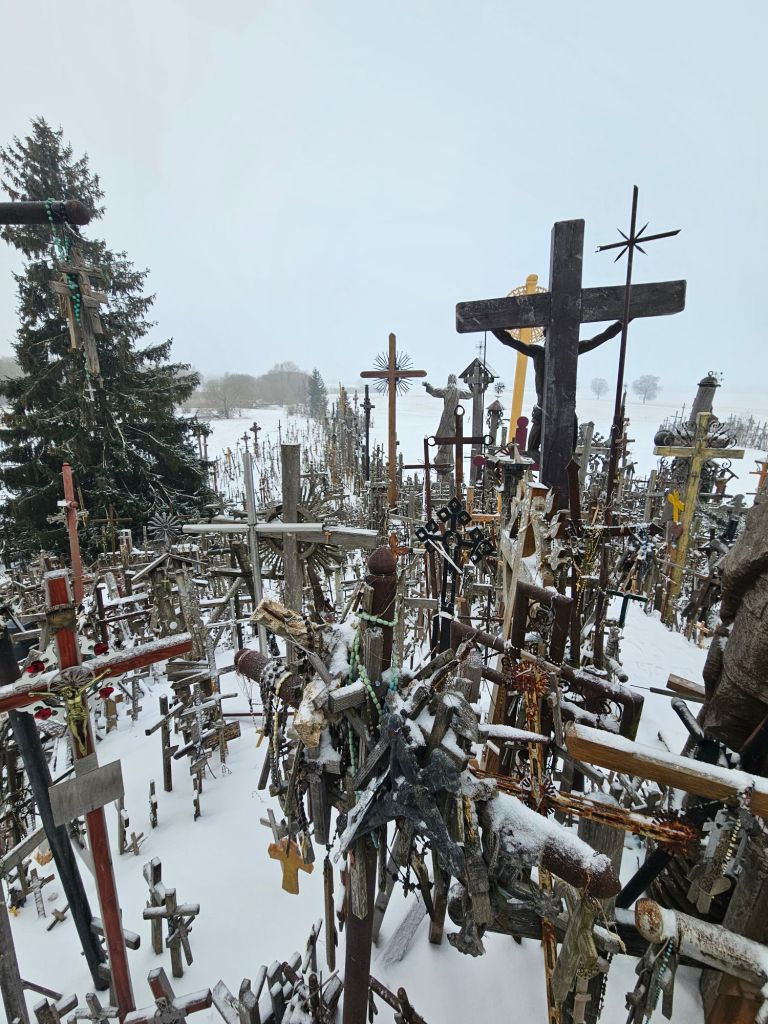
But nowadays, Lithuania is more residually religious than its Baltic neighbors, and Lithuania is predominantly Catholic (because of the Polish), while Latvia is mostly Lutheran (because of the Germans), and Estonia is majority non-religious (because of the Russians??). Though strangely, I heard REM’s hit song “Losing My Religion” three separate days in different locations in Lithuania, so maybe that’s a sign of things to come? Vilnius is chock-full of churches, and Lithuania is also home to the world-famous Hill of Crosses in a rural region in the northern part of the country. It’s a small hill adorned with hundreds of thousands of crosses of various sizes and designs. This is one of the more haunting places I’ve ever visited — it’s a forest of crosses with “undergrowth” and “vines” of crosses spreading in every direction. Photos don’t do it justice, but here are some anyway (select a photo to enlarge it):


Or, what about the fact that the Lithuanian Soviet Socialist Republic (SSR) was the first to declare independence from the USSR? Or that it was once the largest country in Europe? Or that the Lithuanian language has retained more sounds and grammar rules from Proto-Indo-European (the origin of most European languages today) than any other derivative, with perhaps more in common with Sanskrit than with English? Lingual side note: the common Lithuanian term for “thank you” is “ačiū”, which sounds very much like “achoo” in English, similar to a sneeze. So that’s an easy one to remember.
In more recent times, the Lithuanian basketball team has been a force to be reckoned with, winning multiple Olympic bronze medals, despite as a country having a population of under 3 million people! And speaking of religion from earlier, one tour guide told me that basketball is a religion in this country, though I believe you can enjoy basketball and still remain Catholic at the same time. It was also noteworthy how many very tall people I encountered around the country, and it was quite common to walk by couples where both were taller than I am, including the woman. I even found the Lithuanian “House of Basketball” museum on a visit to Kaunas. In addition, the HBO hit series Chernobyl and season 4 of Netflix’s Stranger Things were both filmed in the capital, Vilnius. I could go on and on — it’s just quite an engaging and story-rich place.

I hadn’t realized in advance how many sights there would be to see, how many events to attend, how much fascinating history to learn about, or how much tasty food to sample (like cold beetroot soup, potato dumplings, buckthorn tea, potato pancakes, and acorn coffee — trust me, the food and drink are truly delicious). In fact, I was earlier considering giving myself less than a week in Lithuania in favor of more time in Poland and/or Czechia, but as I investigated a bit, I quickly realized that a week might not be enough! And it’s not, not even just for Vilnius alone. This is a country I hope to return to in order to enjoy the sandy beaches and dunes, the extensive forests, the cold war nuclear bunker museum, the Soviet statue relics park, and much more. Renting a car in late summer or early autumn, and driving around the country, sounds like a splendid plan. I’d even want to return to Vilnius again to see what it’s like without all the snow, slush, and generally bad weather and short days!
Plus, by and large, the people have been friendly, and all the folks that are around 40 or younger speak good English, which is helpful. While seemingly reserved people, they also seem more open and friendly than many in other formerly communist countries.
That said, my friendly and smiley tour guide for Soviet history (it was supposed to be a group tour, but I was the only one on it, haha) explained to me that it’s not surprising if people don’t seem particularly open, friendly, or even happy given all the baggage that they inevitably carry from leftover troubles or traumas from Soviet times. For example, she said that just in her family, one of her great-grandfathers opposed the Soviet collective takeover of his farm, and as punishment was sentenced to deportation to a gulag in Siberia. He died there in the gulag before his sentence was up. That man’s brother had been a priest before the Soviet takeover, so he too was sent to a gulag where he died. Another family member, a female, was a school teacher, and one day she took the kids to a church to pray. She was later brought into the KGB offices in Vilnius where she was tortured regularly for eight months to give up names of others who might have done something anti-Soviet. Eventually she too was banished to a gulag on the opposite side of Russia, closer to Japan. She unfortunately also passed away, in her case just one month before the end of her sentence, after having suffered 10 years there by that point. When my tour guide’s great-grandfather was banished, the family left behind felt that they needed to distance themselves from any association with him due to potential “tainting,” and so they changed their surname. But eventually, another problem associated with communism was the changeover after Lithuania became a democracy, because people could claim back property they used to own that had been taken by the USSR, but the family had changed their last name, so it was challenging to get back the farm property the great-grandfather had previously owned. These are just some of the personal stories that the tour guide relayed, with every Lithuanian having similar tales, and these make many of life’s normal daily challenges seem trivial in comparison.
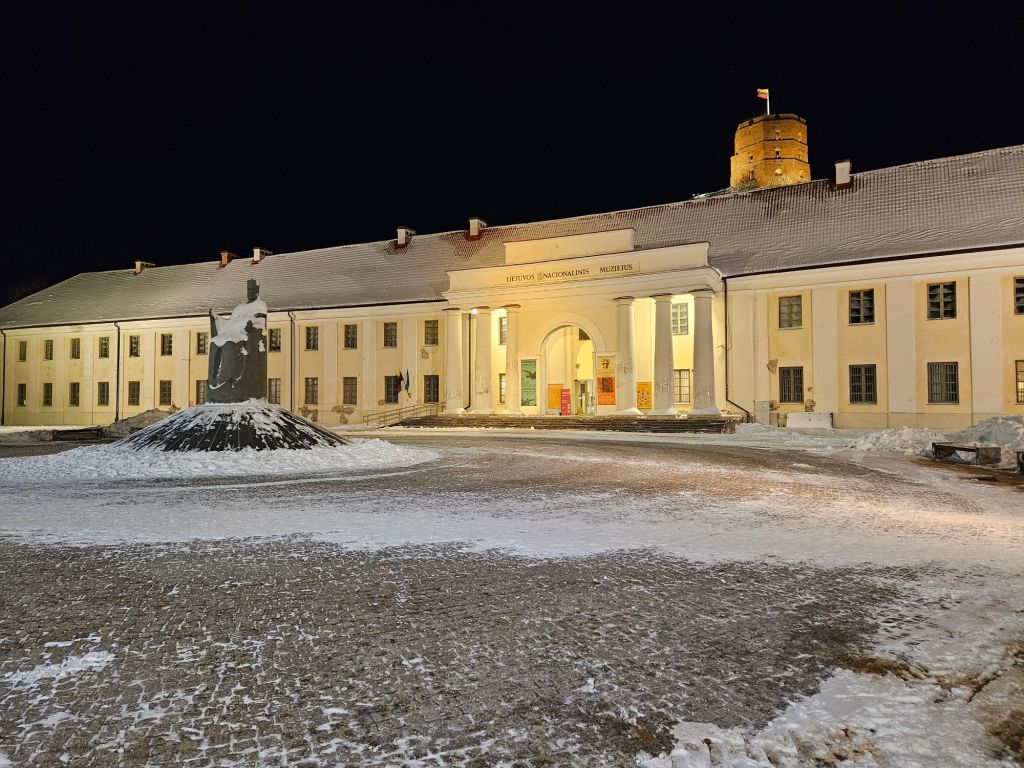
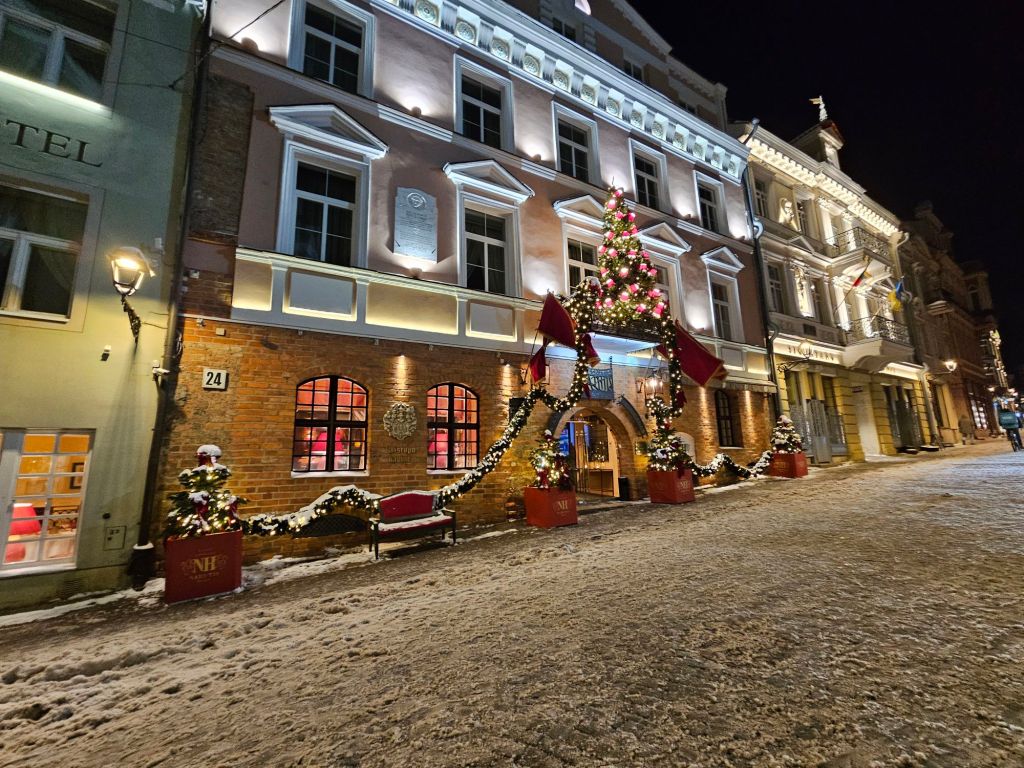
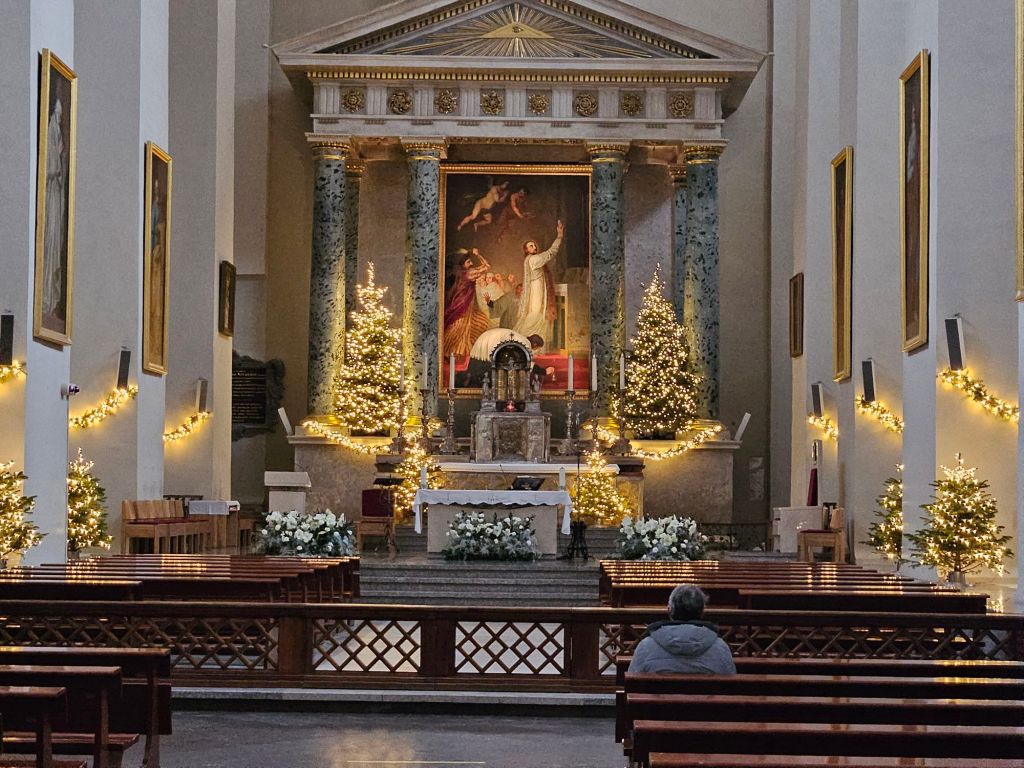
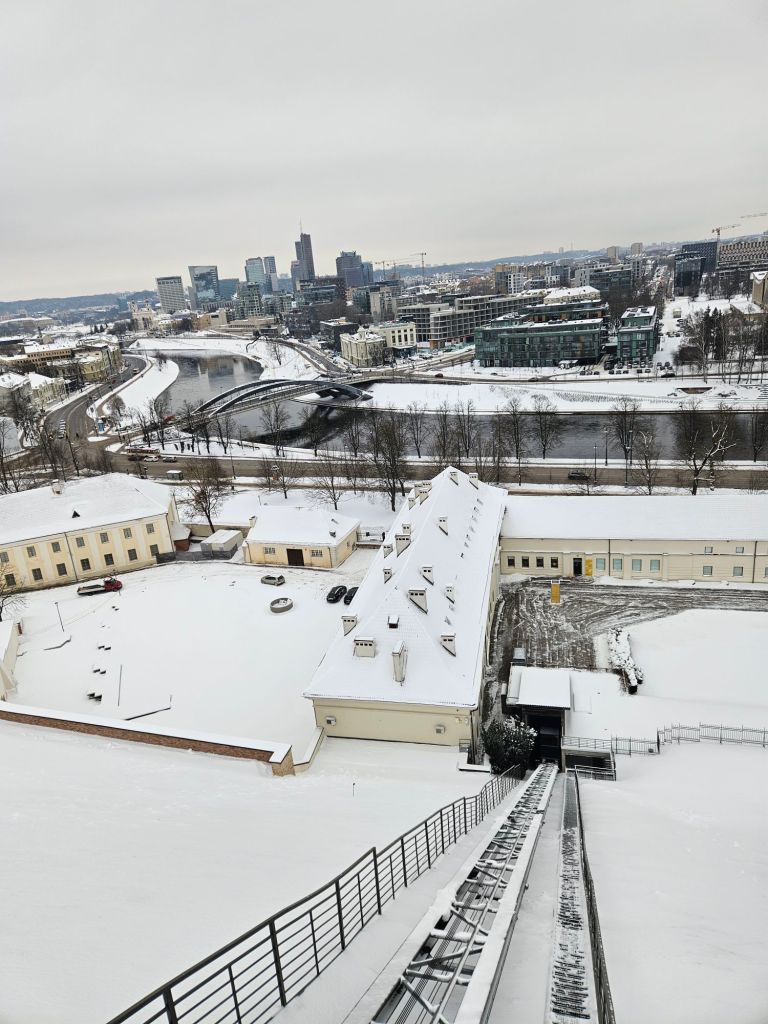
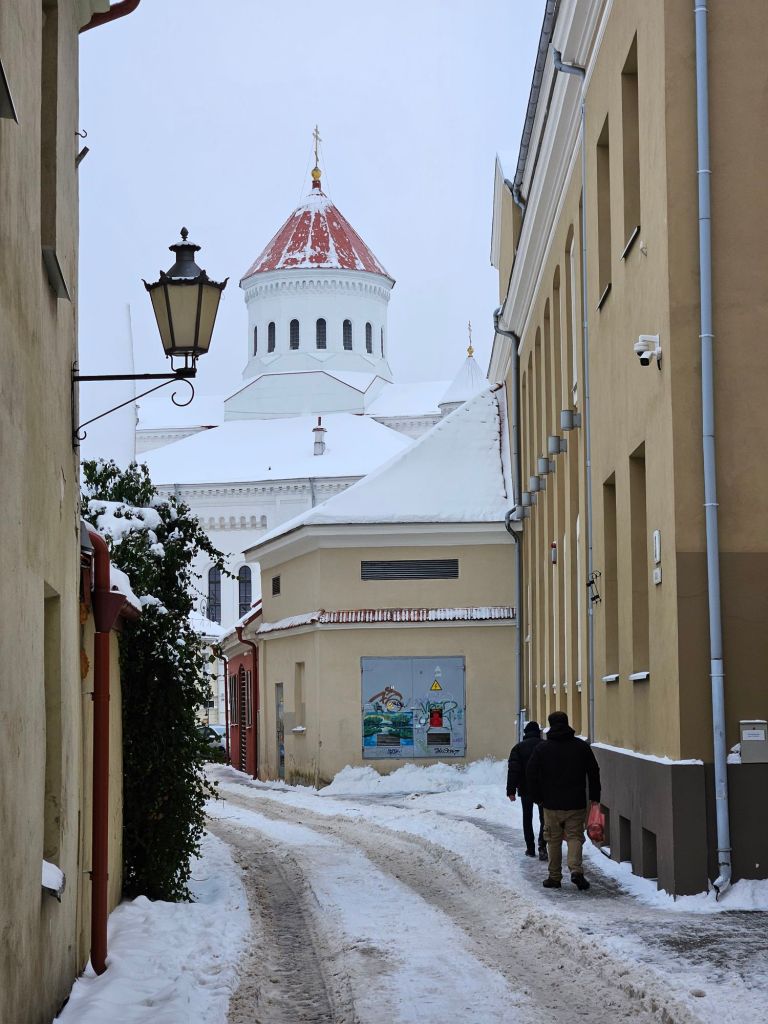
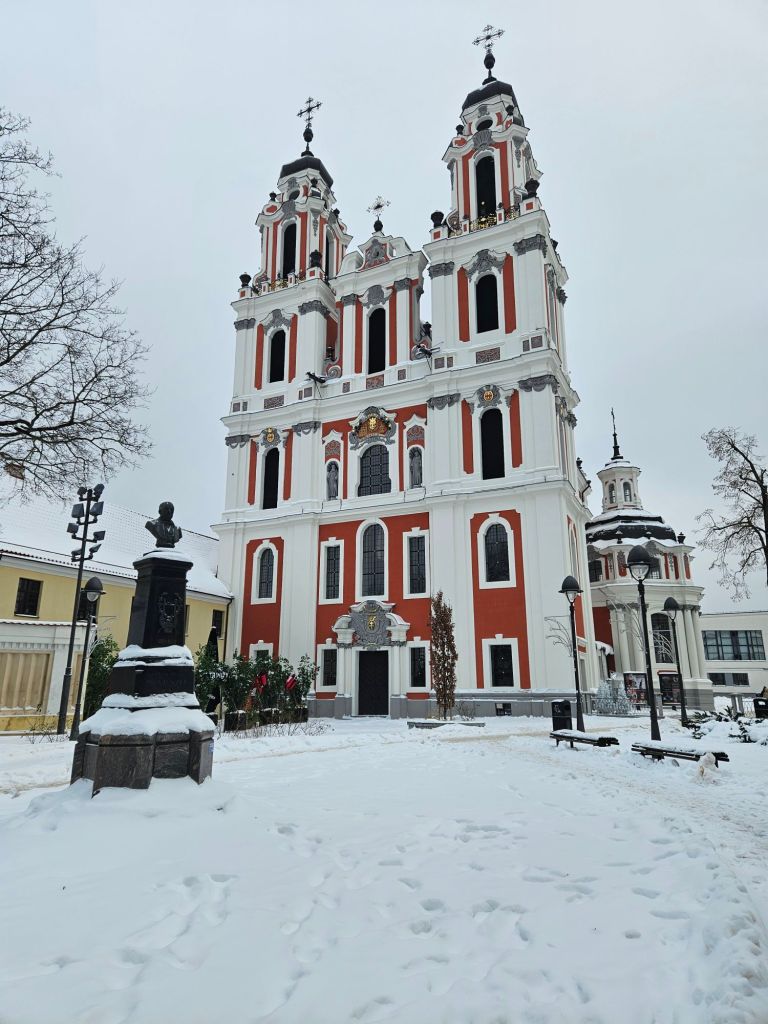
A collection of various photos around Vilnius and Kaunas:

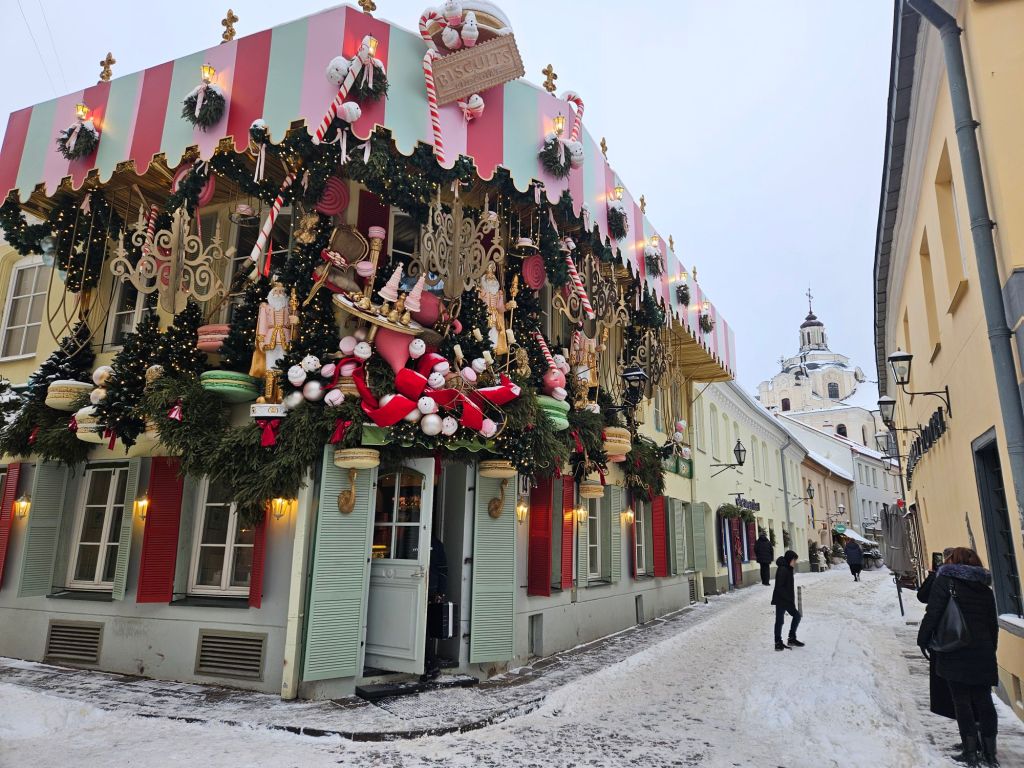
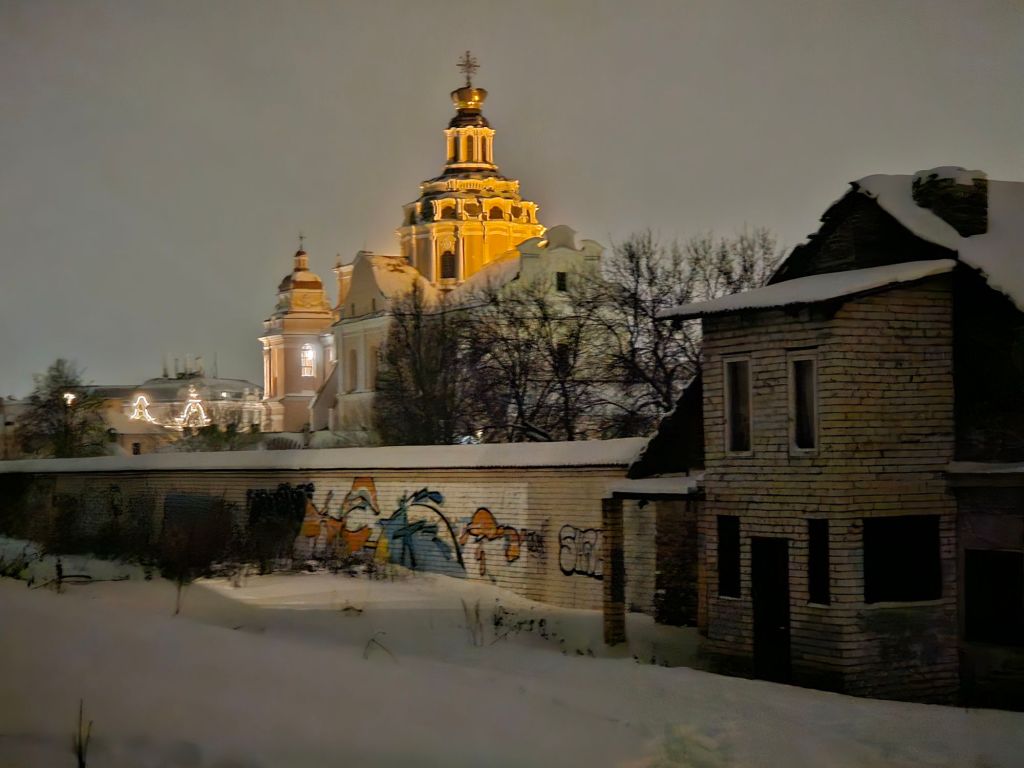
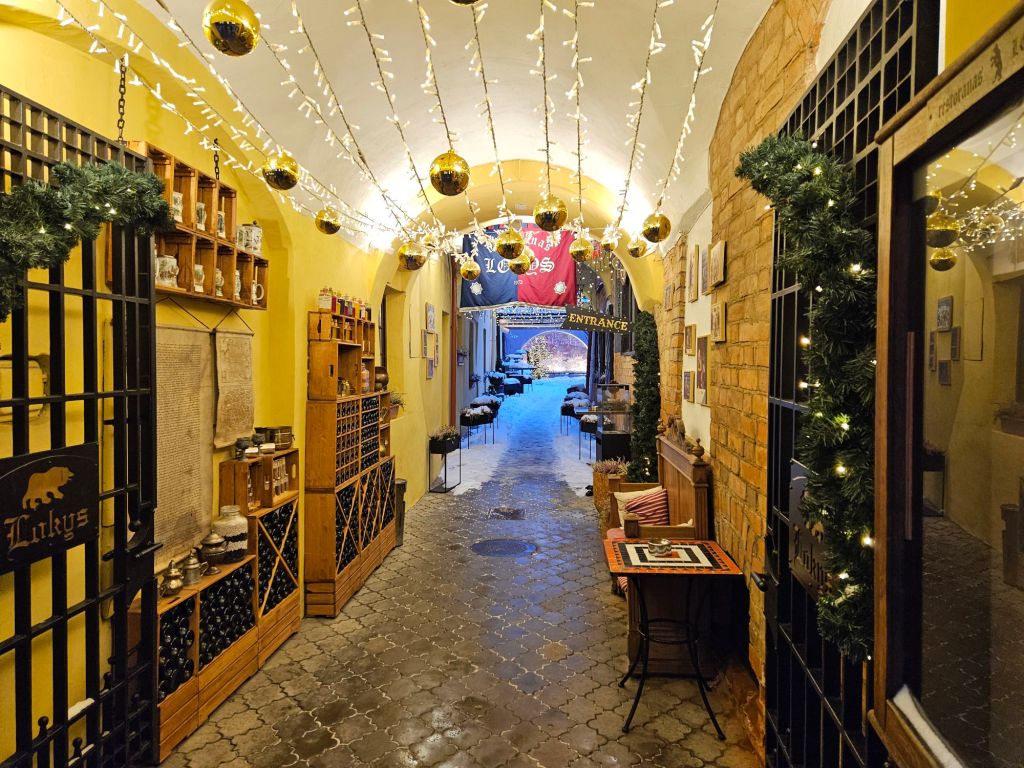
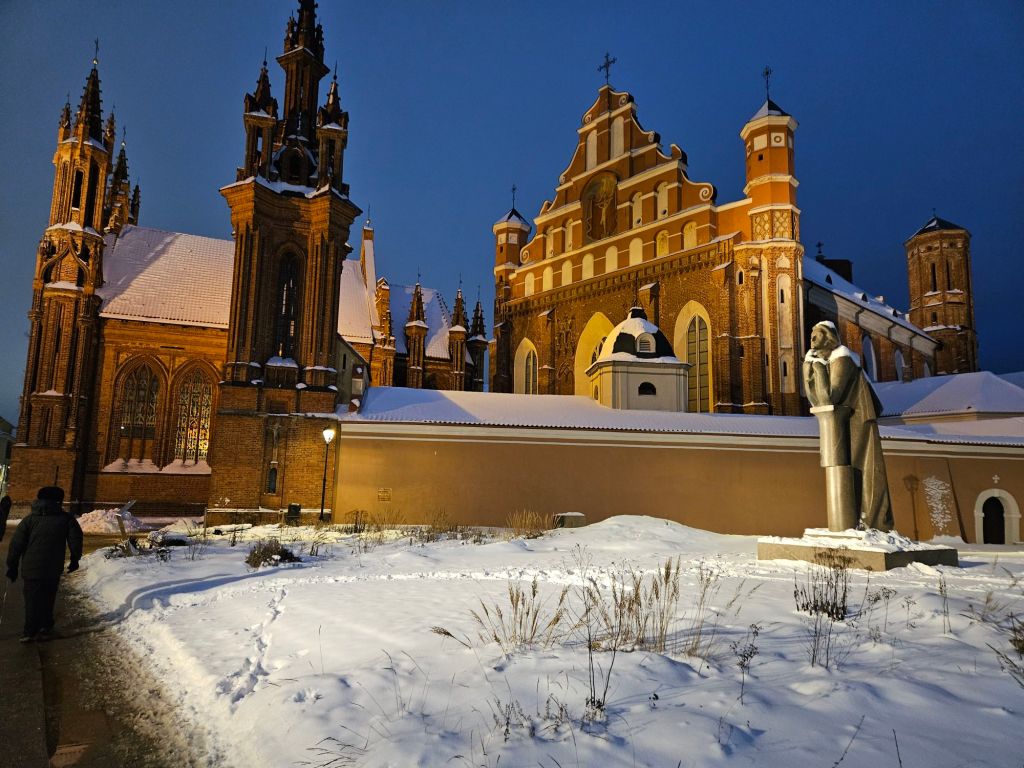
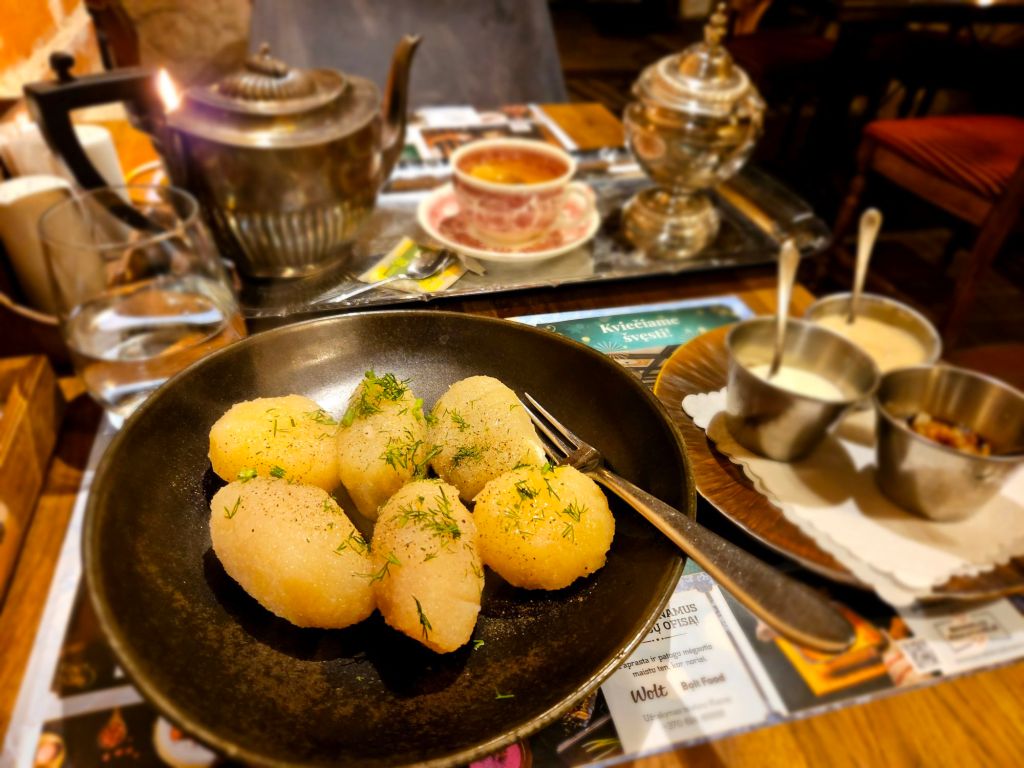
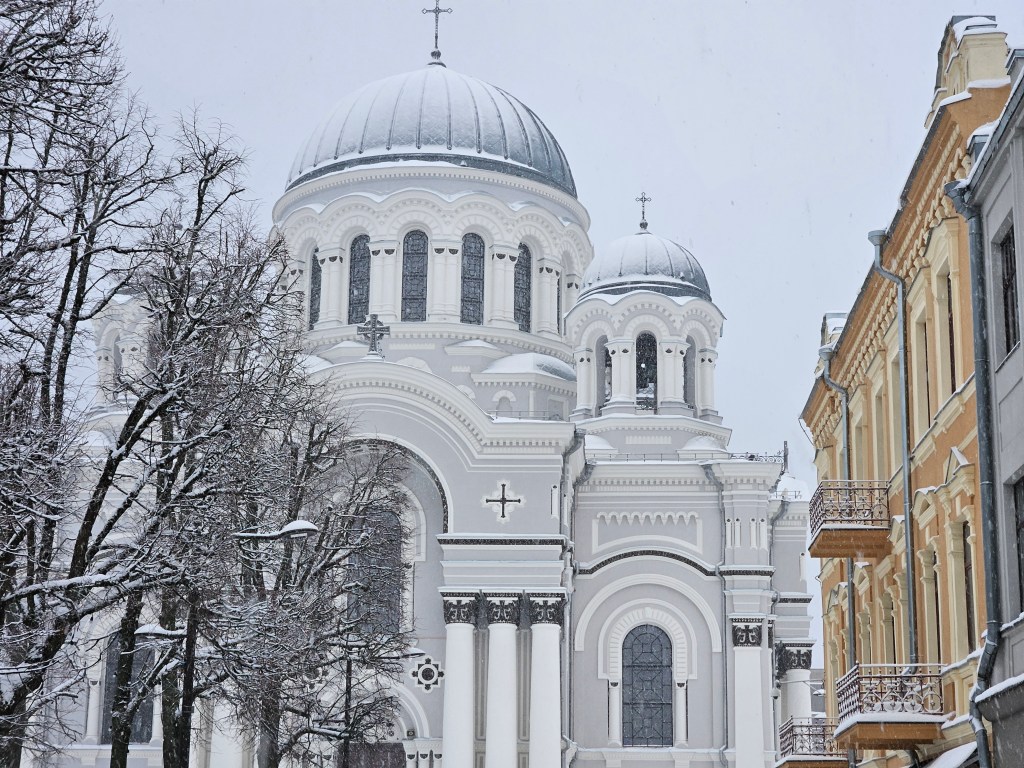

Side notes:
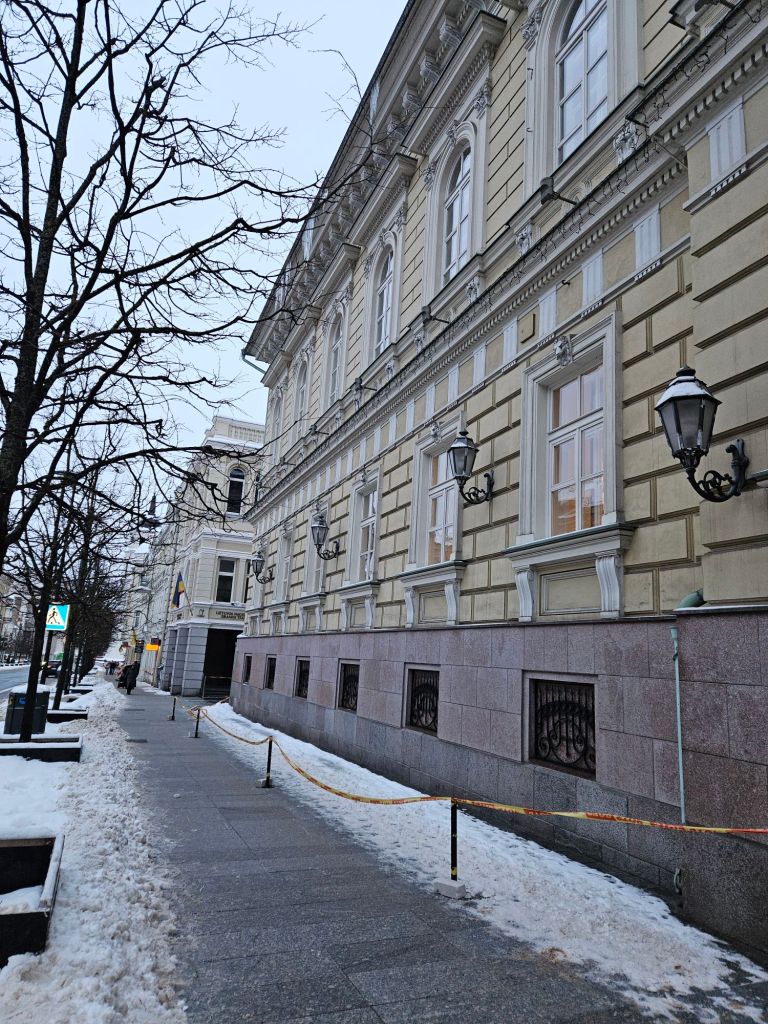
- It snowed quite a lot in recent days, but as I write it’s hovering just around and above freezing, so giant icicles have formed along roof edges of many buildings around Vilnius, and they’ve become large enough to actually be quite dangerous. When they inevitably fall, if they struck a person, they can be deadly. I read that dozens regularly die in Moscow alone each year from falling icicles. In Vilnius caution tape is put up along the edges of buildings on the sidewalk to keep people from getting too close and to warn them of the dangers.
- One tour guide I had in Vilnius for a general city tour said that he took it upon himself to learn Norwegian, and now he gives guided tours not only in English, but in Norwegian too! That’s impressive.
Today’s DadGPT joke: Why did the mammoth go to the “Eye Sage” instead of the optometrist?
Because in the Ice Age, he needed a visionary, not glasses!
ChatGPT, you’ve led me astray…
Today’s travel note: Sometimes people remark to me that it must be expensive to be traveling around Europe for weeks at a time. It’s certainly not free, and I am grateful to be able to treat myself in this way — it’s where I personally choose to splurge. But I also do keep an eye on costs, and it’s a bonus to travel in central and eastern Europe, where I have the most new European destinations to explore anyway — travel is just relatively less expensive here than in western Europe or in the US. I believe I’ve mentioned this before, but Colleen and I spent less total per month while traveling around Czechia and Croatia in 2021 than we did just living our normal lives in Asheville not doing as much. That includes all the flights, lodging, experiences, eating out, etc. Remarkable, eh? And on this current trip, it cost less than $11 for each bus ride between Baltic cities, and it was $250 for an apartment in Riga for a week, for example. And the buses and the lodging were all modern and quite nice! I wasn’t missing out on anything, and in fact the buses are quite advanced, with seat-back TVs offering recent blockbuster movies and popular TV shows in several languages.
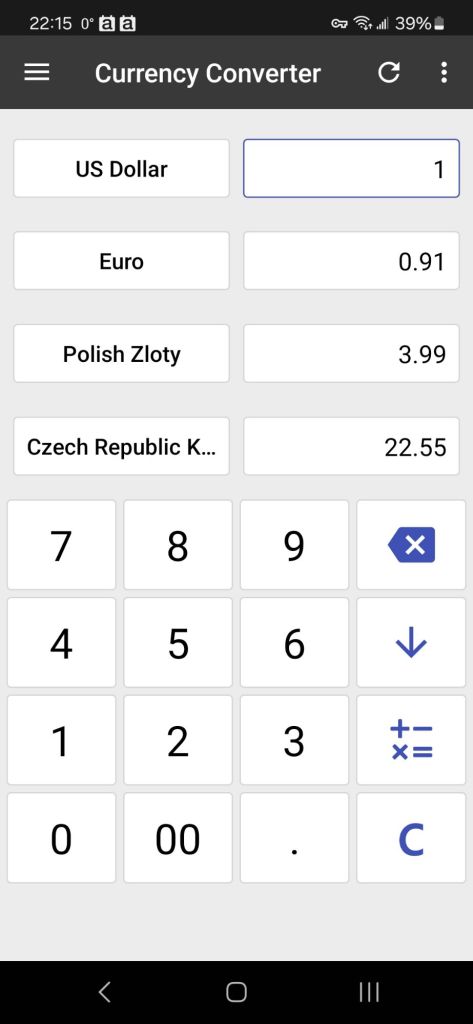
Today’s travel tip: For those of us living in the US, currency calculation is something that can be helpful while traveling to regions that don’t use the USD, though sometimes it’s better not to know, like in Iceland or Norway! When you want to know, it’s simple enough to look it up online, though I have found that an app is even quicker, and it can offer multiple currency conversions simultaneously, which is nice when traveling to multiple destinations with different currencies.

 Major Meander
Hill of crosses? Wow!
Saw a map the other day of Eastern Europe in the 16th century or thereabouts. Both Lithuania and Poland — which were sometimes united in a commonwealth — bordered the Black Sea. The old Yul Brunner – Tony Curtis movie Taras Bulba was about this period of time there. Yul was a Cossack rebel.
I’ll have to add Taras Bulba to my watch list!
Also a good place to purchase amber.
Very true, as all these countries have been. I’m currently in Gdansk, where there’s even an amber museum, along with a street filled with amber vendors who display their wares in glass cases along the sidewalks during the day.
After I posted the comment I saw your picture of an amber display in Latvia. I was surprised to hear the Latvians are mostly Lutheran; I had just assumed that they were Roman Catholic, like the Lithuanians. Could you discern any difference between the Latvian and Lithuanian languages?
By the way, the weather here has either been extra cold or extra warm, but raining. The drought is definitely over.
Assume you did not traverse Kaliningrad on your way to Poland 😉
A tour guide in Vilnius told me that Latvian and Lithuanian are similar, but not mutually intelligible like say, Norwegian and Swedish are.
Glad that Asheville is not in drought! I’ve been enjoying temps in the 40s in Gdansk. Sure beats below 0!
I would love to see Kaliningrad. The tour guide today in Gdansk told us that up to the Russian invasion of Ukraine, it was possible for people in this region to travel to Kaliningrad without much trouble, which he said he had done often. Apparently there’s an amber mine there, so it was cheaper to buy amber, haha. At one of the platforms in the Vilnius train station where the train between Belarus and Kaliningrad traverses, at least for a while there were graphic signs posted about atrocities committed in Ukraine so that traveling Russians could get a message they might not be seeing back home.