Estonia has completely embraced the information age, with so many things now possible online, including voting! The following summary is from a display at the local Museum of Occupations and Freedom: “Estonia is an e-state. We’re well aware of that, and we’ve been bending the ears of anyone willing to hear it for decades. We have m-parking, ID cards and I-voting. We have Skype, Bolt and a host of other start-ups that have put Estonia on the map. We were the first country to be cyber-attacked by another country. We managed to get the Tiger Leap project – a truly enormous undertaking – off the ground, and we teach programming to kids as early as in primary school. Over the past 20 or so years, technology has become Estonia’s calling card. The story of Estonia as a technological nation dates back much further than that, however. Intimations of our curiosity and our drive to lead the world in this field can be found as far back as note than half a century ago.”
Another famous tech company from the country is TransferWise, now called Wise. And the 2007 cyberattacks against Estonia originated from where? Apparently from Russia, of course. That was in response to the relocation of the “Bronze Soldier of Tallinn”, a Soviet-era (1947) grave marker originally named “Monument to the Liberators of Tallinn”. There are arguments as to how to interpret events of the war as symbolized by the monument, to say the least. I took the opportunity while in town to travel by tram to the cemetery to see the Bronze Soldier in its current location (I’m a real sucker for historical Soviet stuff from having reached adulthood before the Berlin Wall fell). No one else was there in the entire cemetery while I was, which rather surprised me given that this bronze statue has led to so much angst, and there were even two nights of riots in Tallinn over the relocation (“Bronze Night“). Both the riots and the cyber-attacks were international news at the time, and I recall hearing about these events back then.

On a lighter note, Estonia has also created something called “e-residency” which allows non-Estonians to access certain Estonian services like banking, company formation, and payment processing, such as for accessing the European market, especially from countries without such trusted, secure, and transparent services as Estonia’s. Of course there are taxes involved as well, which having e-residency allows you to handle online too, haha. It doesn’t relate to citizenship and doesn’t allow a holder on its own to physically reside in Estonia.
Speaking of tech, I checked into my Tallinn hotel at a kiosk. I entered my info, and it told me my room number and popped out a key card. Handy! There are four such kiosks, and I presume that this solution provides some cost savings in the longer term through minimized human labor costs. There is one office desk person from whom you can request assistance, but they aren’t situated anywhere close to the check-in kiosks — they’re actually in a back room, haha.
At the nearby movie cinema, one can buy tickets from a self-service kiosk, obtain and purchase concessions from self-service areas with prepped popcorn and self-checkout registers, and enter the controlled area through a QR code-reading automated gate system, all without ever interacting with a human! Not saying that’s better, but it’s just the way it is. Side note: All the Estonians with whom I have interacted on this trip were friendly, kind, and spoke English well. I didn’t expect them to know English so well, honestly, and they mostly seem to speak Russian well also. I’m impressed. So I didn’t actually feel like I needed to avoid human contact at the movie theater — it wasn’t saving any confusion over language differences.
At the cinema, speaking of language differences,blockbuster American hits tend to be offered in three different audio forms: English, Estonian, or Russian, often all shown in separate theaters at the same time! I watched a movie (Wonka, which I recommend), in English of course, but there were also subtitles, and they were in both Estonian and Russian.

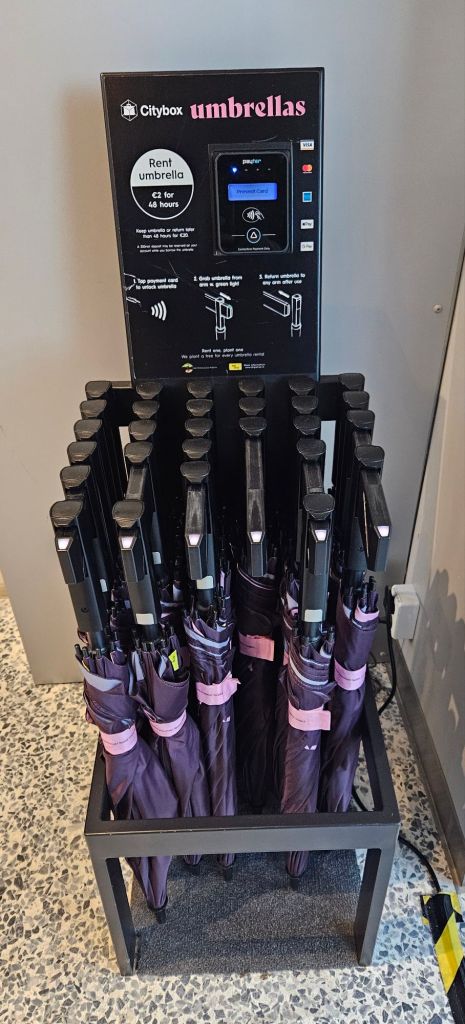
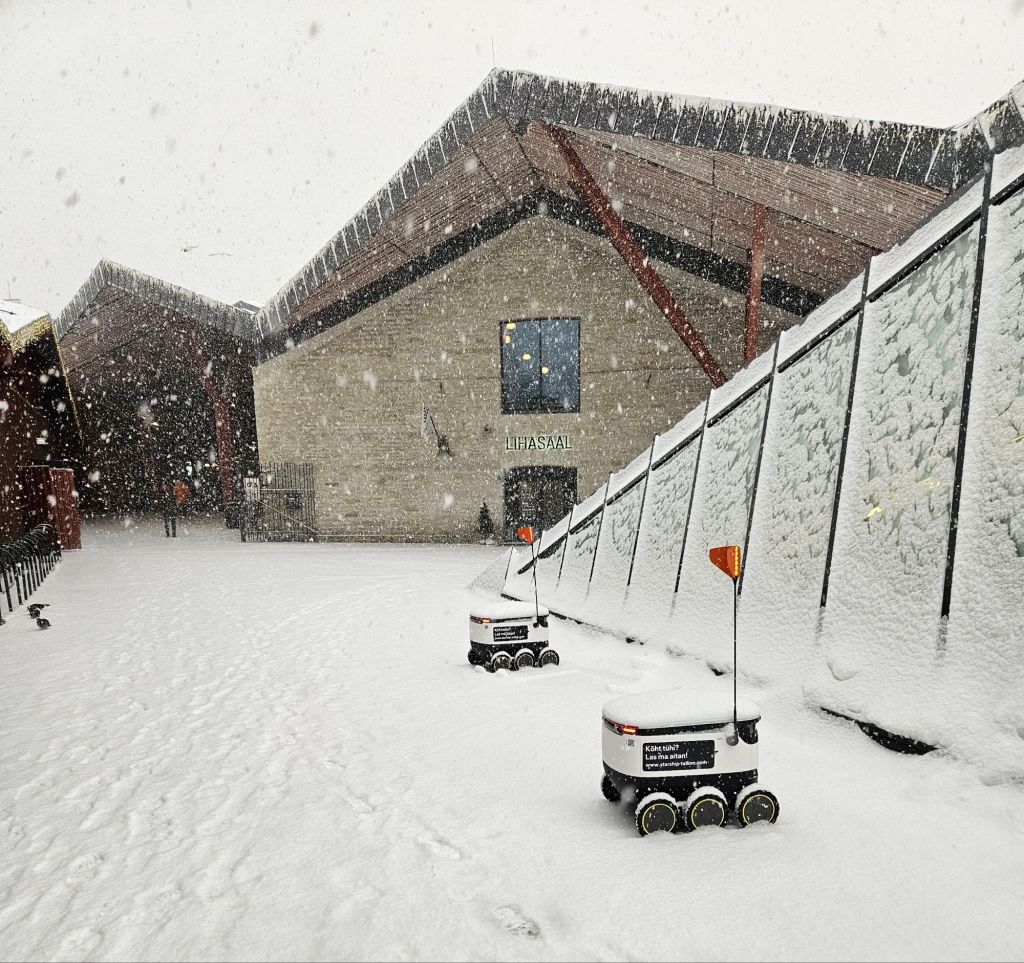
Here are a couple more tech examples:
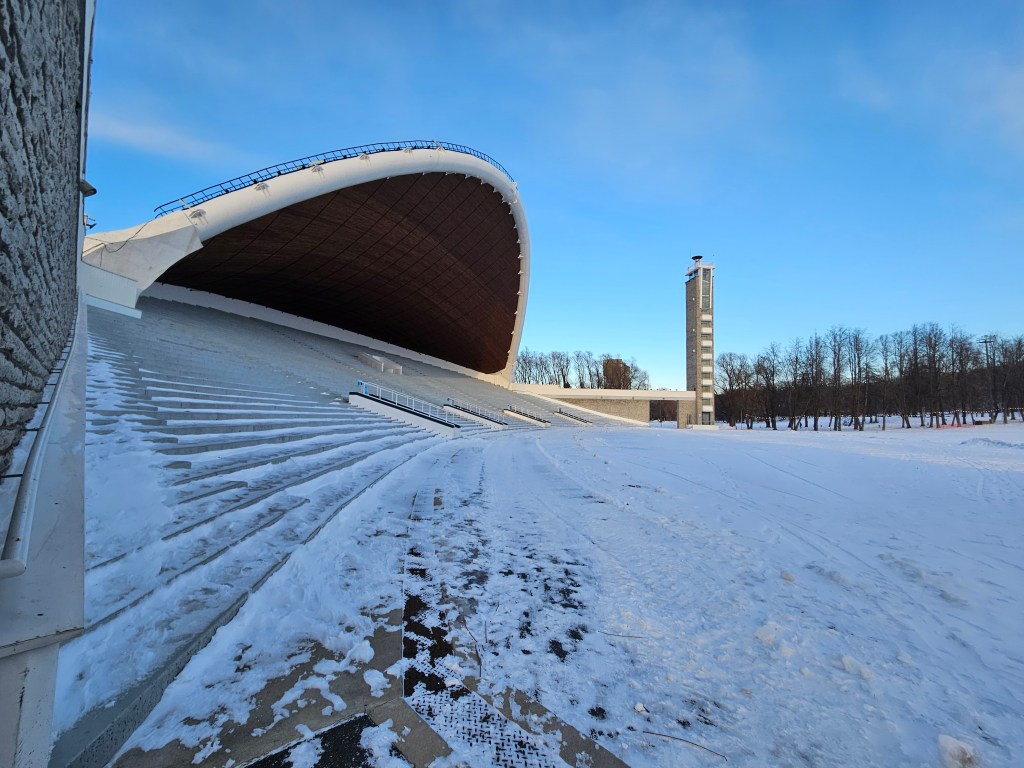
Beyond tech, Estonia has a long tradition of folk singing, even using it as a form of protest. They also have a long-running Estonian Song Festival since 1869, now held every five years at the Tallinn Song Festival Grounds, and it’s one of the very largest choral events in the world. According to Wikipedia, “The joint choir has comprised more than 30,000 singers performing to an audience of 80,000.”
The so-called Singing Revolution eventually led to the reestablishment of the Baltic states of Estonia, Latvia, and Lithuania as independent states, free from the USSR. In August 1989 as a form of further protest, about two million people formed a contiguous human chain called the Baltic Way across all three Baltic states!
I recognize that I’ve been doing a lot of bashing of the Russian leadership, but I want to be clear that the regular Russian people themselves suffer a lot because of their own government, and I feel bad for them. Harsh laws are in place to prosecute anyone in Russia who speaks out against the regime or its actions, and the media is tightly controlled with tons of convincing propaganda. And even enlightened people who leave the country often face prejudice and worse because many non-Russians improperly conflate regular citizens with their government officials. I wish everyone the best, and I’m heartened to see Russians having a good time with music like this fun folk tune:
I read in an art museum that there was an old joke in the Soviet Union about there being six paradoxes of socialism:
- There’s no unemployment, but no one works;
- no one works, but productivity goes up;
- productivity goes up, but stores are empty;
- stores are empty, but fridges are full;
- fridges are full, but no one is satisfied;
- no one is satisfied, but everyone votes yes.
Today’s DadGPT joke: I asked my friend about maintenance of his herb garden, and he said that while minteresting, it was also thyme-consuming!
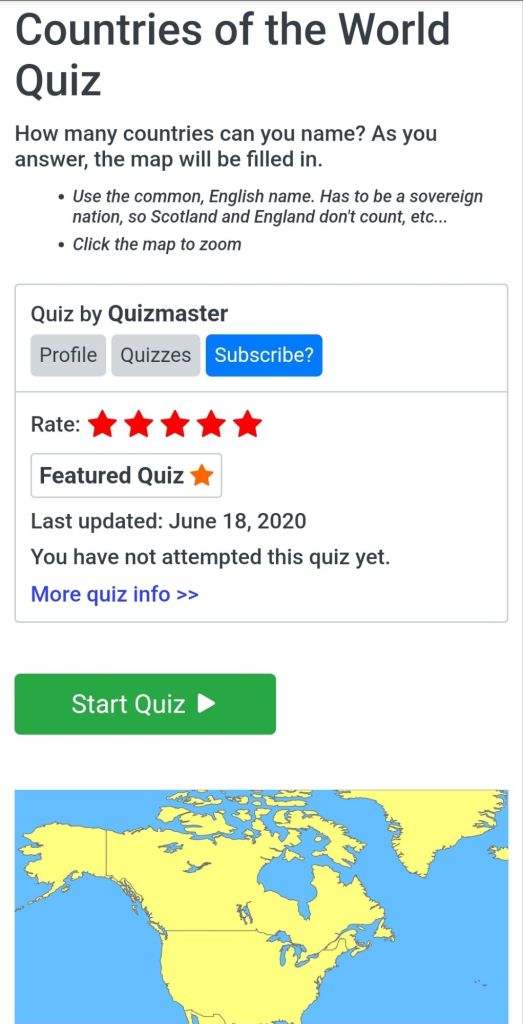
Today’s fun geography quizzes: If you love geography and testing your memory on, for example, the 50 US states or the countries in Europe, then this is a great set of geography quizzes for you!

 Major Meander