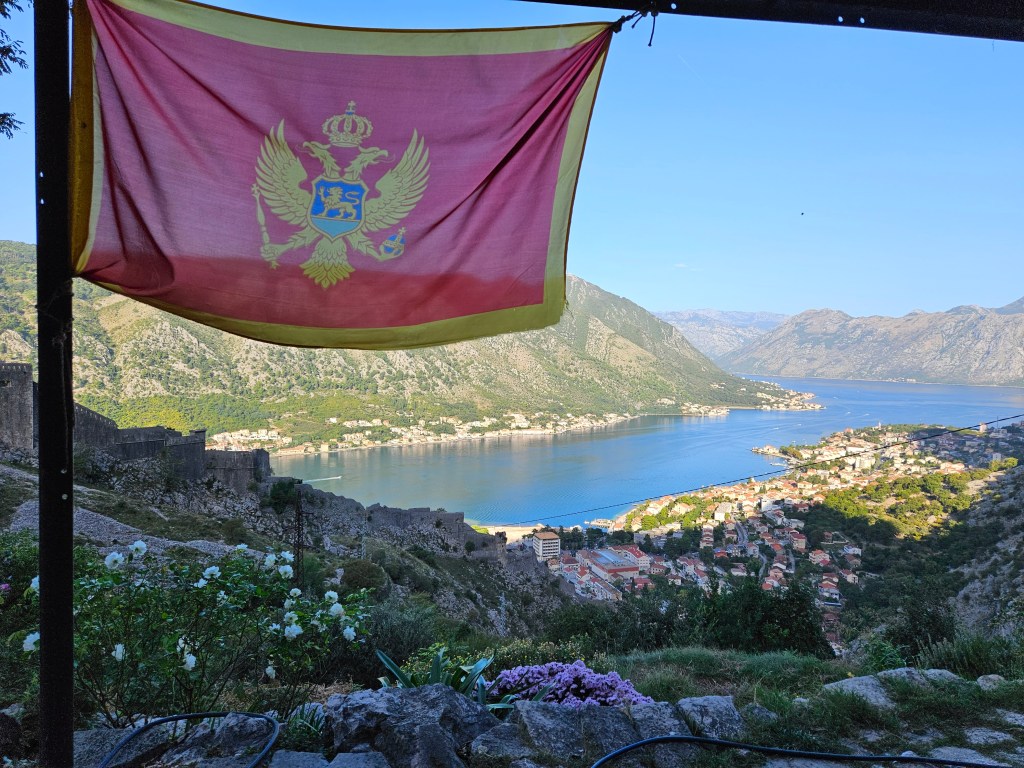
Equipped with a rental car on this latest trip to Croatia, I leveraged the opportunity to drive down to Montenegro. More specifically, I drove around the Bay of Kotor and explored the old town of Kotor and hiked up to the mountaintop overlooking the bay.
Montenegro is a small country, and it has only around 600,000 inhabitants. It is relatively rich for the region, and it was once part of Yugoslavia. In fact, Montenegro was aligned with Serbia against other breakaway republics until eventually Montenegro decided to also split from Serbia, becoming its own country only fairly recently, in 2006. It’s been in the process of joining the EU since 2012.
Montenegro, or Црна Гора (Crna Gora), “Black Mountain” (not the one outside Asheville), retains a large population of Serbs, Bosniaks, and Albanians in addition to Montenegrins, and it’s been a popular destination for wealthy Russians for many years. Many additional Russians have settled in Montenegro since the beginning of the war with Ukraine, as it has become “… a refuge for thousands of Russians fleeing sanctions, military conscription or political oppression.” (Reuters) Montenegro is no real friend to Russia though, and in fact they joined NATO despite Russian threats of reprisals, but Russians can still visit Montenegro without having to get a visa.
As with other former Yugoslav republics, it’s possible to use my Pimsleur-based funny-sounding Croatian to communicate, as Montenegrin is mutually intelligible, at least for the common phrases. I found the locals with whom I communicated to be warm and friendly, more so than many Croatians in tourist services.
Montenegro is a very mountainous place, and even along the bay, the mountains drop precipitously into the water, leaving little space for roads, which means that driving is a bit dicey around the bay, with narrow and curvy roads weaving through highly-trafficked and congested towns pretty much all the way around. I enjoyed Kotor a lot, and in fact it was by far my favorite new place on this four-week Balkans visit, but I didn’t like the driving. I want to visit more of the country in the future, but I’ll have to mentally prepare for the white-knuckle and vertiginous driving experiences.
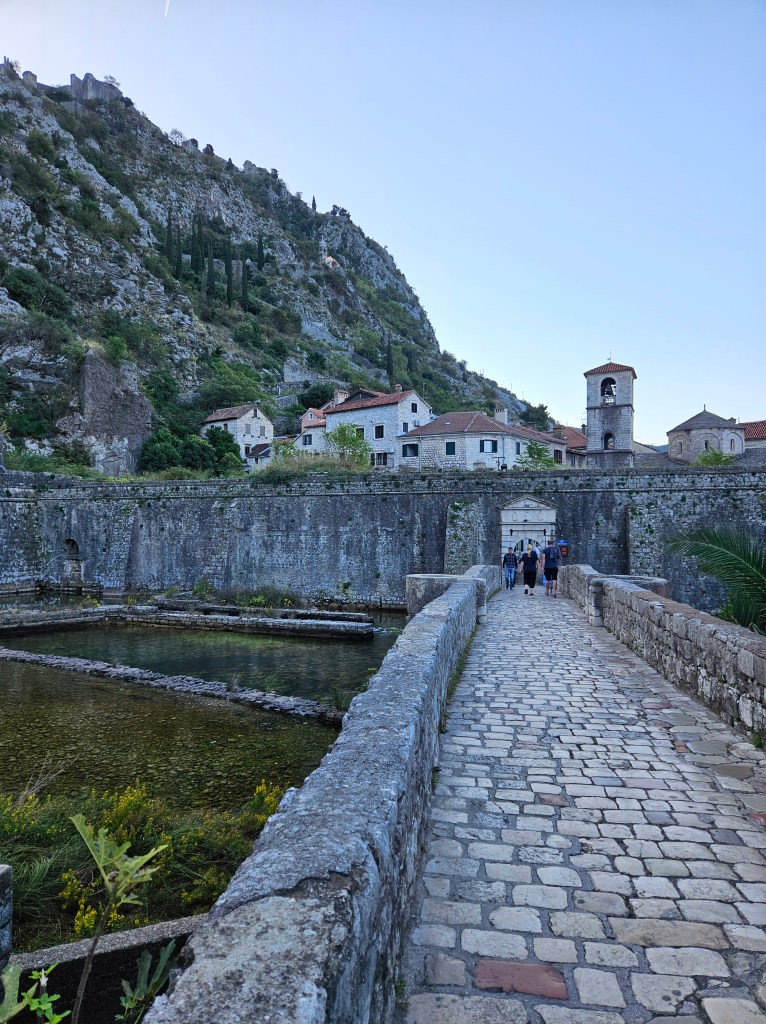
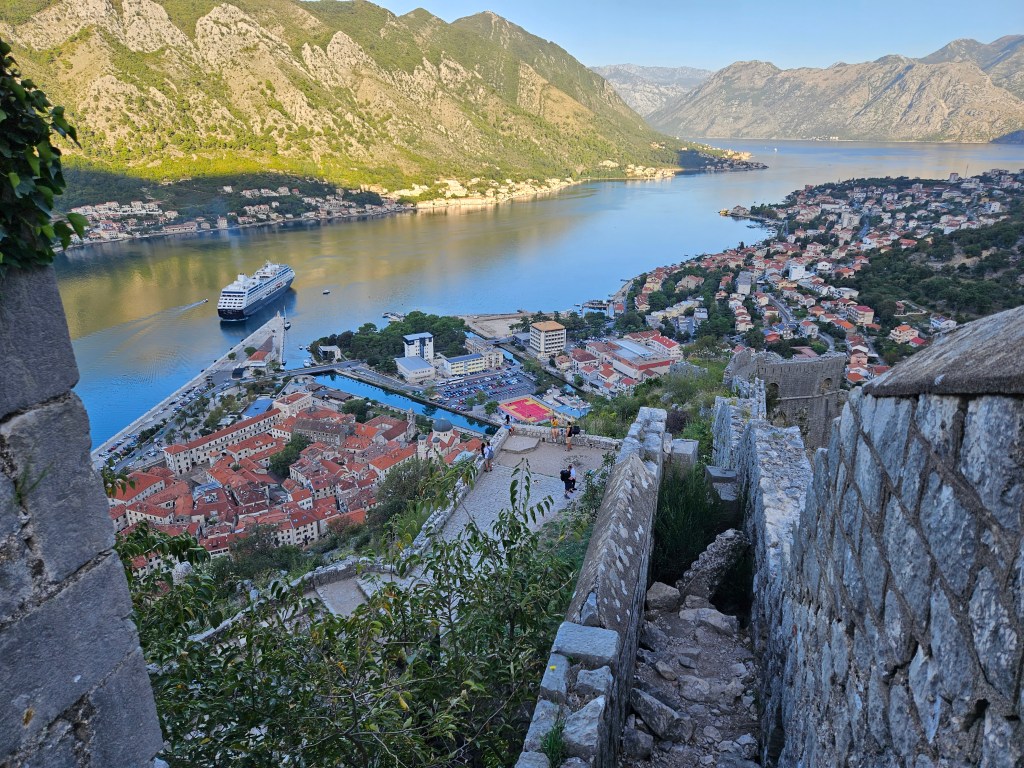
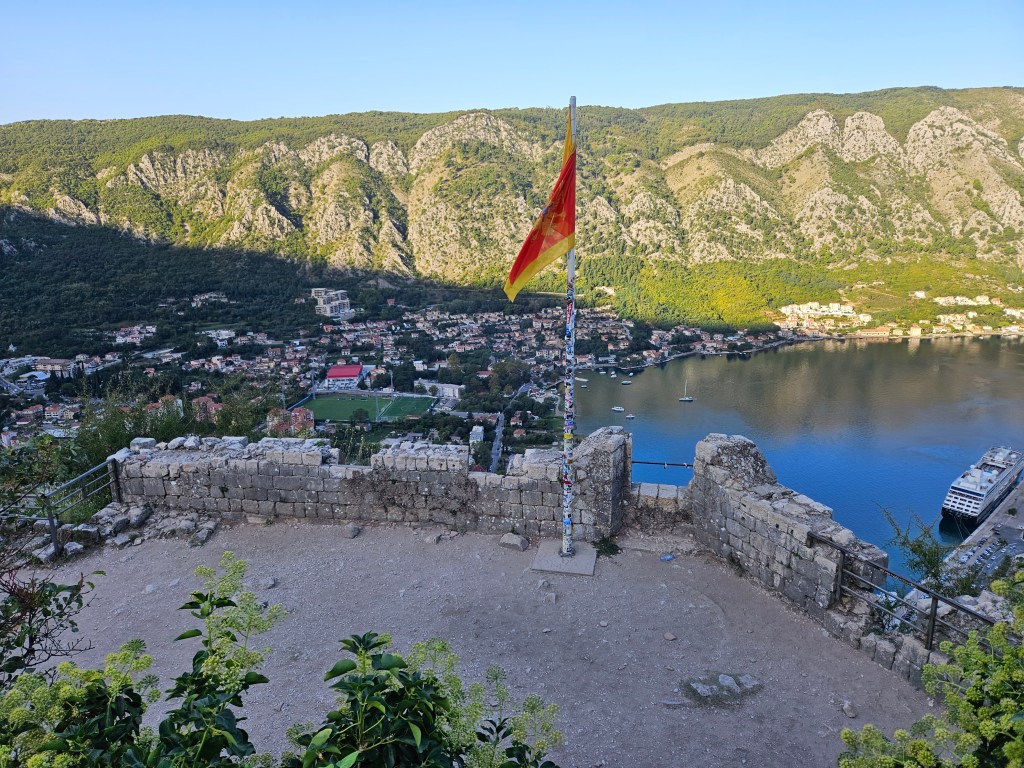
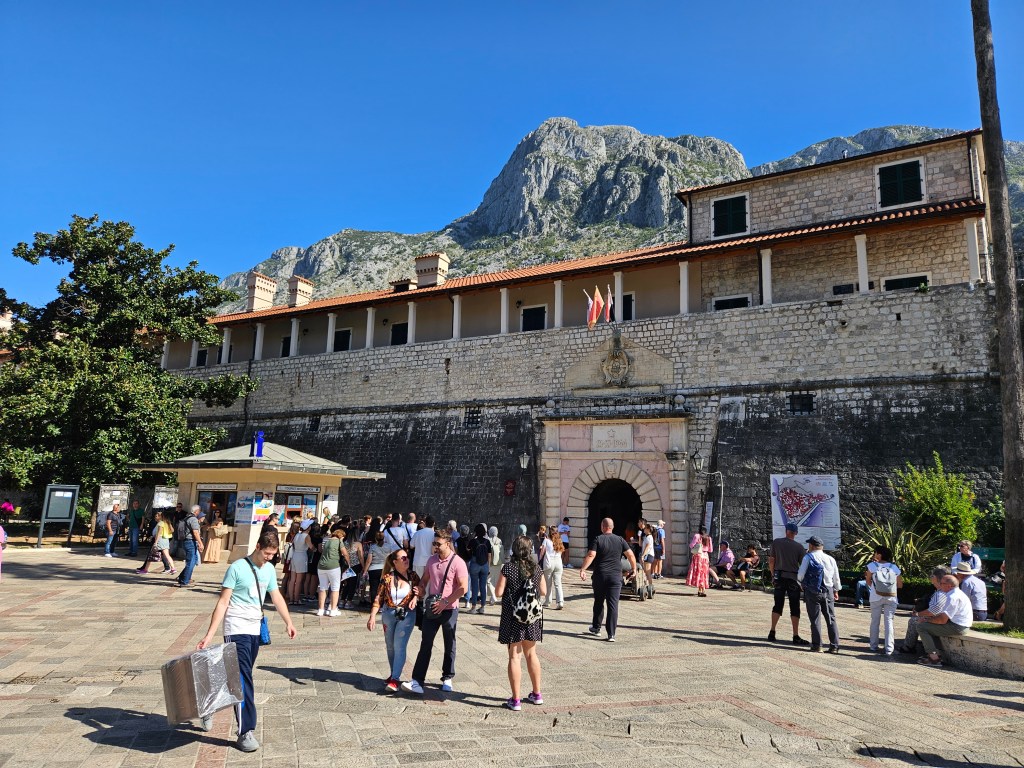
Kotor, the town itself, retains its old walls, and it has protective ramparts climbing up the mountain behind the town. It has also become a popular cruise stop, with its deep port and atmospheric and beautiful layout. There was only one cruise ship in port that day, and I intentionally arrived early to experience the town and the hiking before the ship’s 9am arrival. Americans by the droves were disgorged from the ship, but we were all fortunate that it wasn’t a huge ship and that there weren’t also two or three additional ships in port that day!
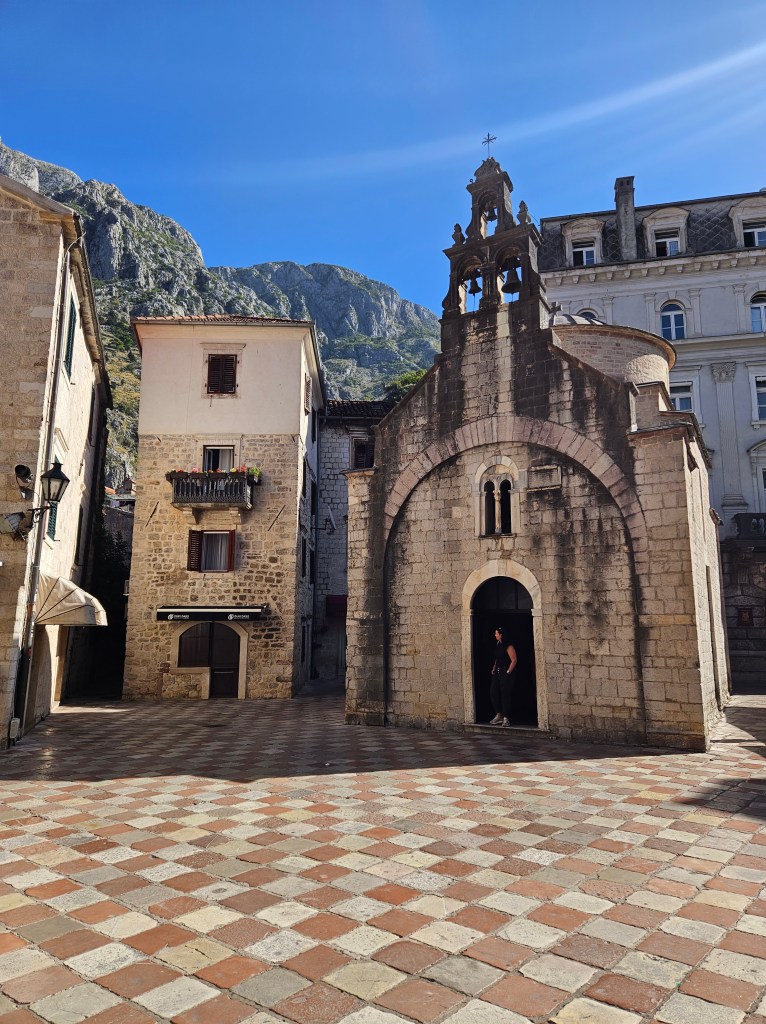
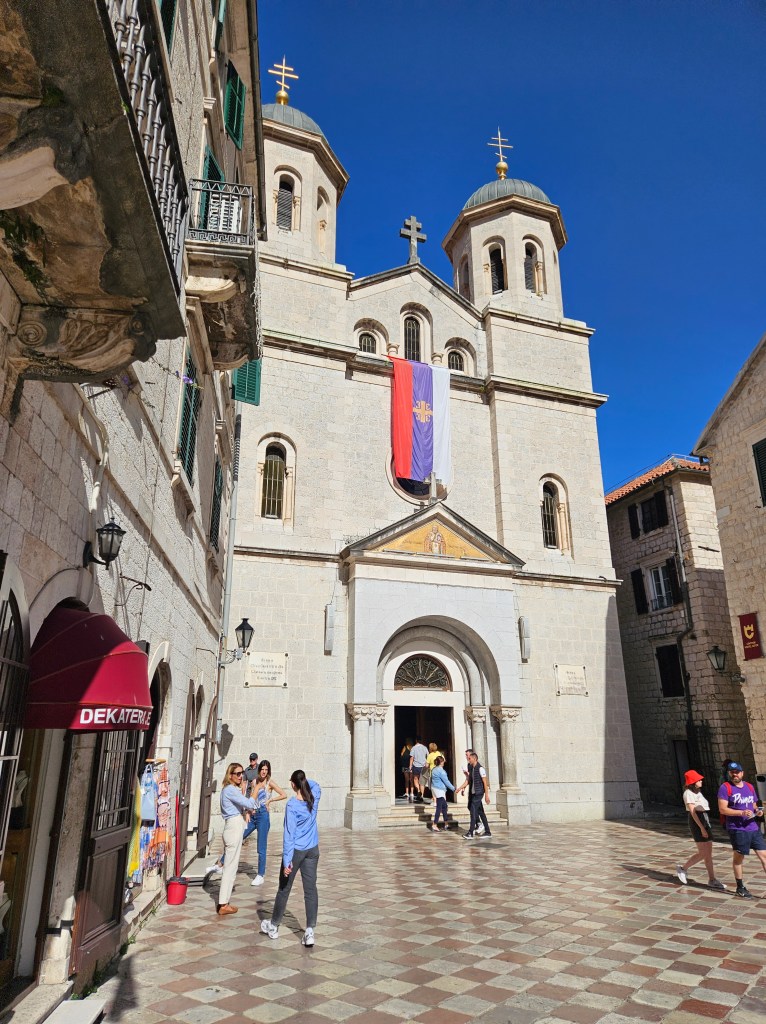
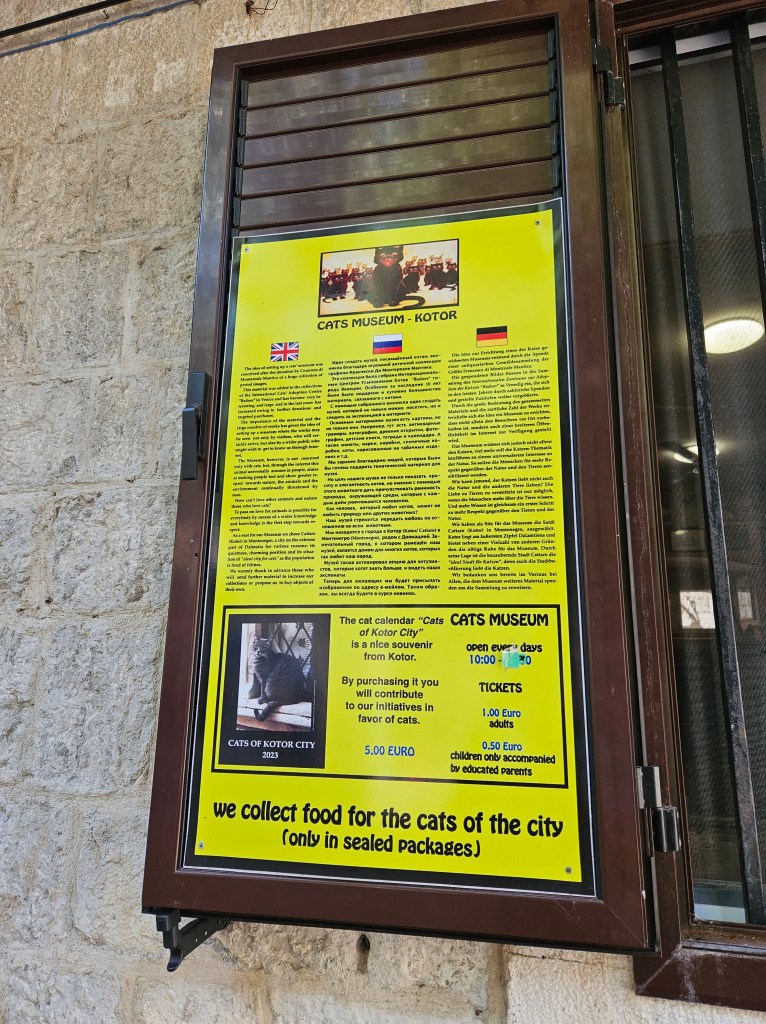
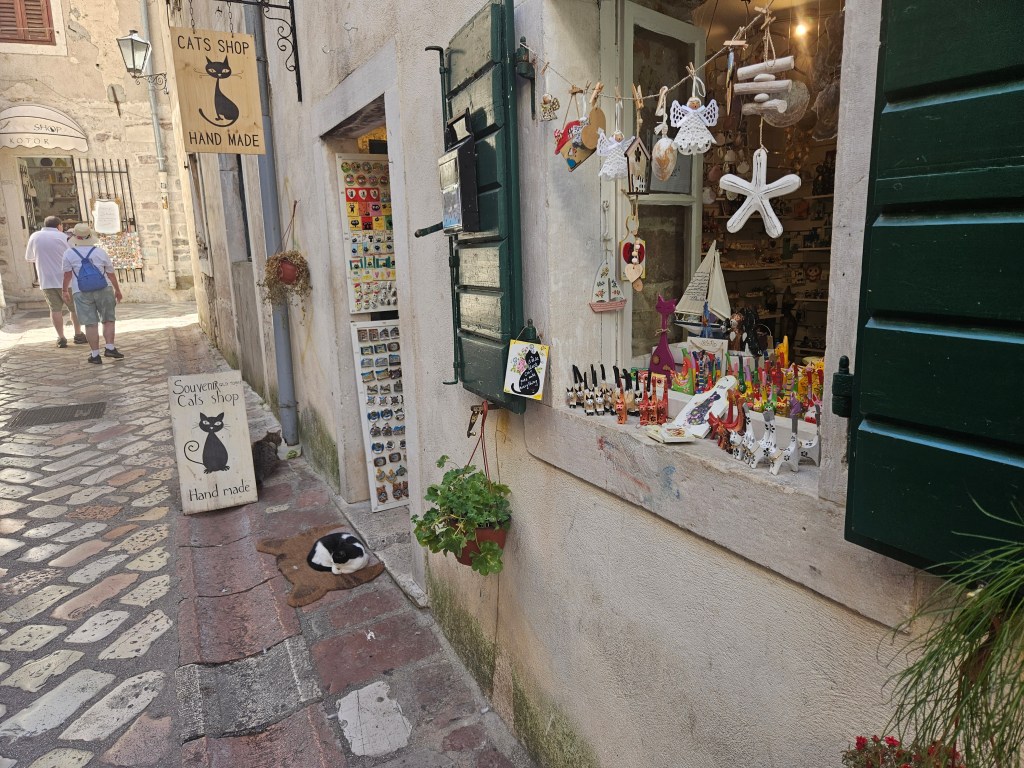
Kotor’s situation at the base of a mountain and at the water’s edge, along with its enveloping wall, makes this place very special and photogenic. It’s fun to wander the lanes and alleys through the old town, intentionally not following a map, just to see what you can find and where you end up. It’s a compact town with walls all around, so you can’t stray far. Speaking of strays, as is the case in many Balkan towns, there are numerous cats spread throughout. There’s even a cat museum, and most of the tourist souvenir shops and craft boutiques sell various feline-themed products.
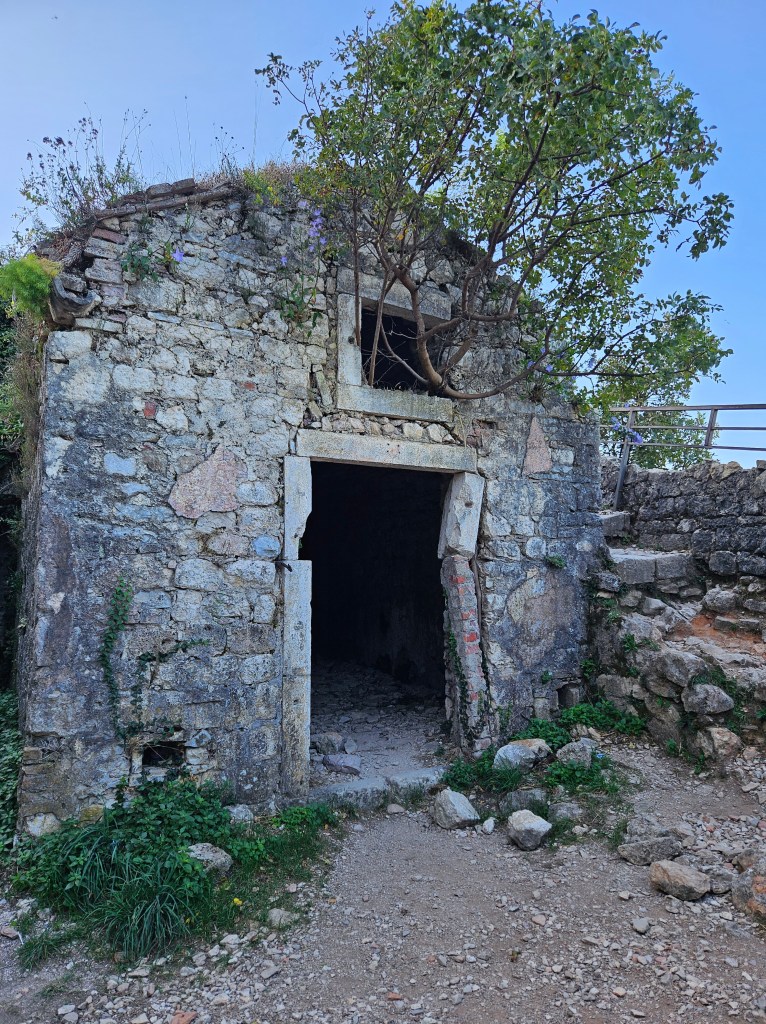
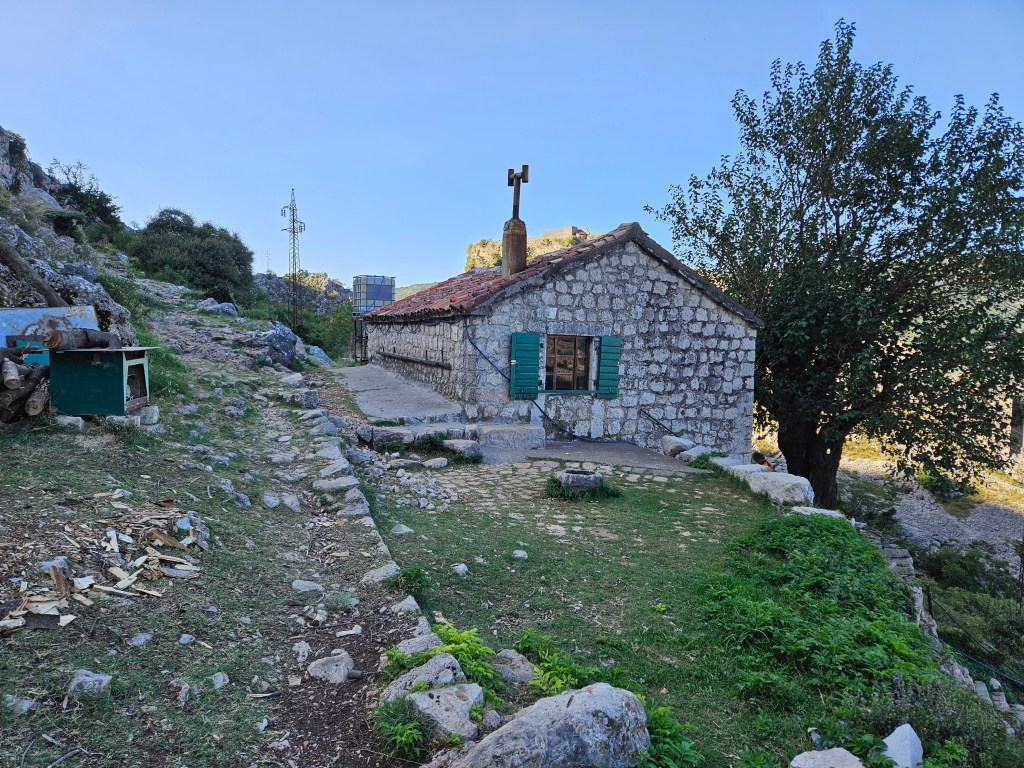
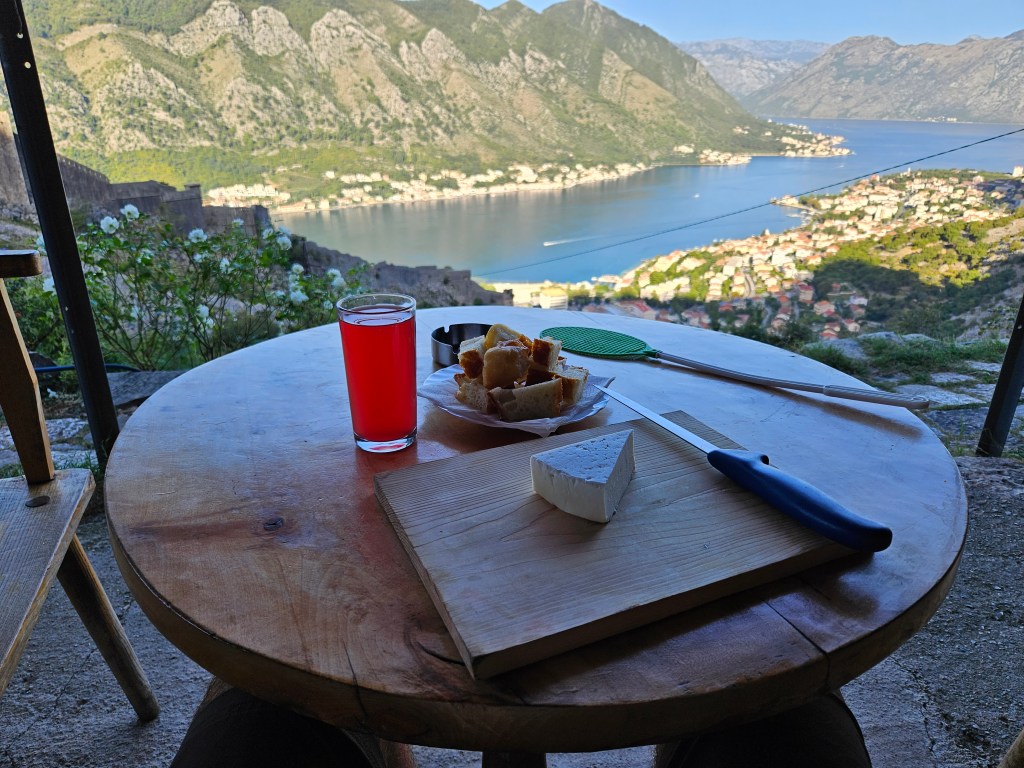
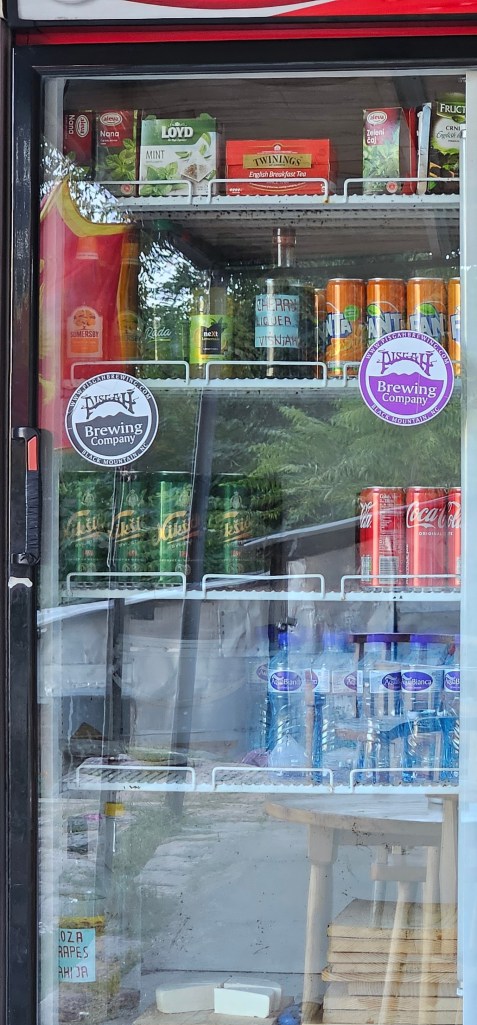
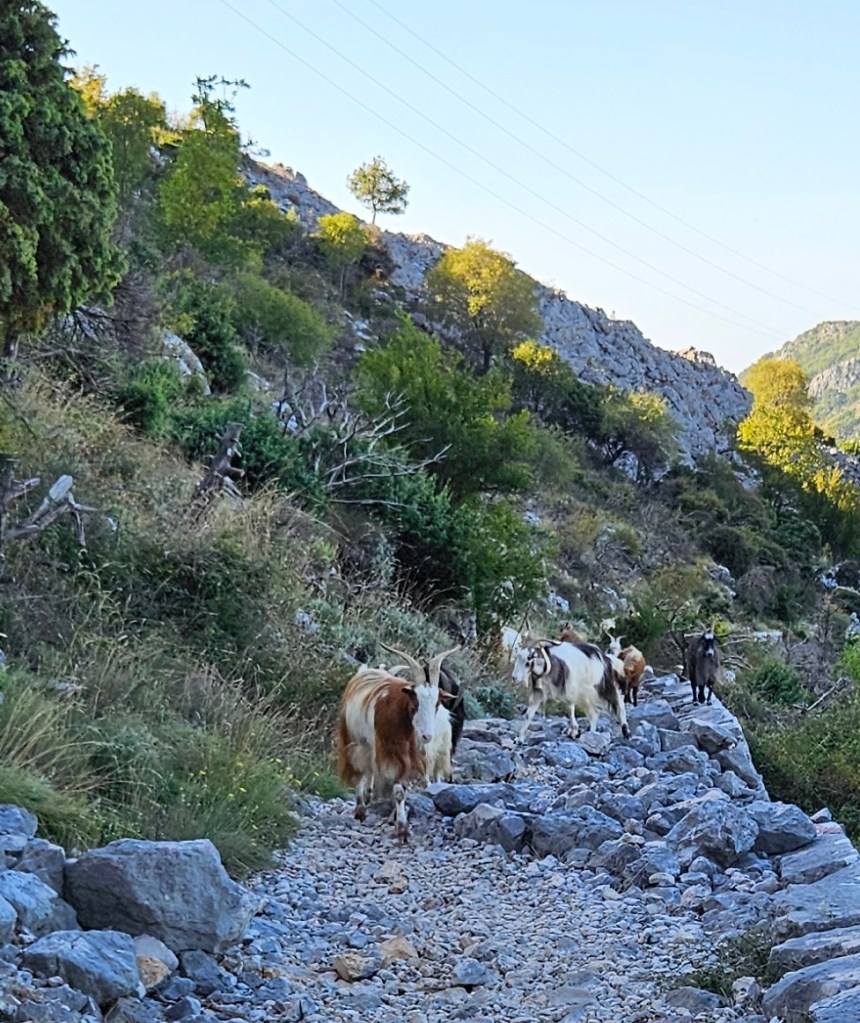
My favorite experience in Kotor was climbing the ramparts early in the morning to learn about the history and take in the magnificent views over the town, bay, and mountains beyond. I particularly enjoyed a mid-morning snack of homemade cheese, bread, and pomegranate juice in a trailside hut run by two older Montenegrin farming couples. They didn’t speak much English, though one guy knew the words “pomegranate juice”, and so we worked through that they were indeed open and would happily serve me. I was the only customer in that time, and the food and drink were delicious, with a wonderful overlook of the region down below. One of those very special moments one gets through travel. There were flyswatters on the tables, but the server seemed to indicate that these were actually for keeping the hungry cats away, not for swatting flies. He also seemed to imply that I could use the cheese knife to fight them off instead if needed, haha! The cats were fine, and none tried to steal my food or jump onto the table. There were no roads leading to this building, but there was a herd of goats I ran into nearby when hiking up a trail above the hut, and I presume these goats were the source of the milk for the cheese. Surprisingly, on the glass door for one of the refrigerators in the hut, there were two stickers adhered thereon — both were for Pisgah Brewing from Black Mountain, NC! Damn, small world, eh? There’s a story there…
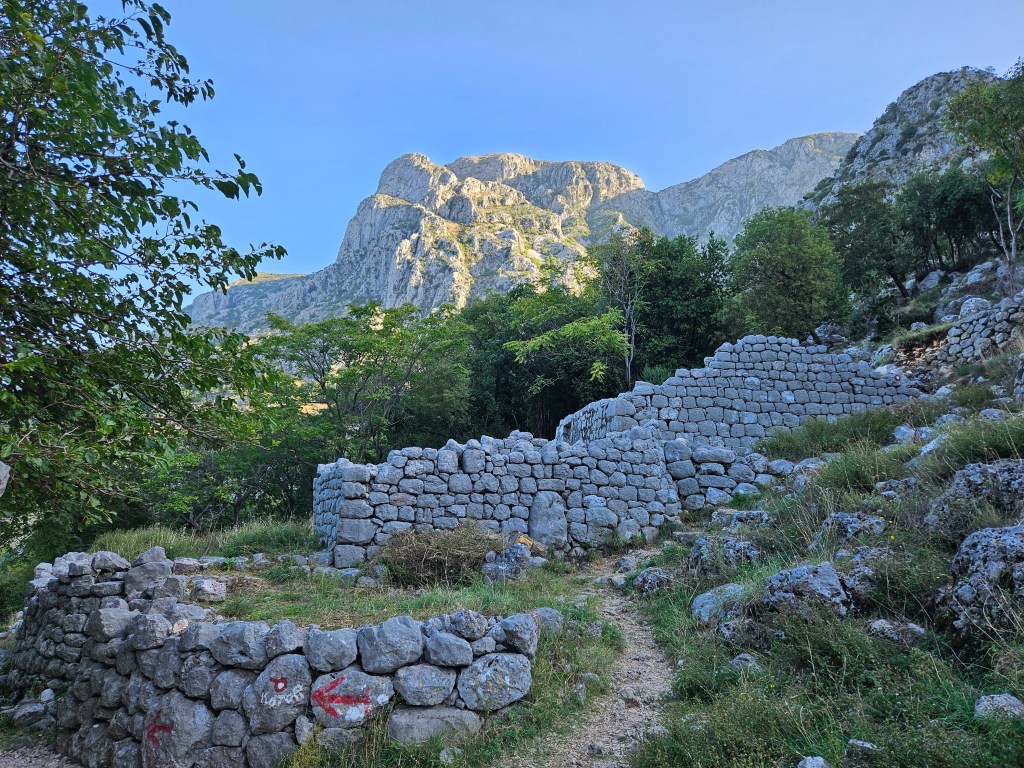
After the nourishment, I continued up the trail (now past the end of the ramparts) all the way to the top of the mountain. Hiking in this region is quite fun, but there are two common disadvantages compared to normal hiking in the Asheville area: one is that you’re normally fully exposed to the intense sunlight, and the other is that everything is super-rocky, which is tough on the body and often makes for a slippery situation, particularly when hiking downhill. The scree can be challenging, and I fell on a hike coming down in Omiš, Croatia. But luckily I maintained my footing on this Kotor hike. I had the mountaintop viewpoint to myself — the crowds thin out the higher one hikes, haha. Except for the goats, that is — they can hike way up. It was frankly intimidating to pass through their ranks when hiking up. Some of the goats were surprisingly large, and all had big horns, and could totally butt me down the mountain if they wanted. I even considered turning around when we met on the trail, but I really wanted to go up, so I tried to remain calm, and just chatted with them about what I was doing as they moved slightly out of my way.
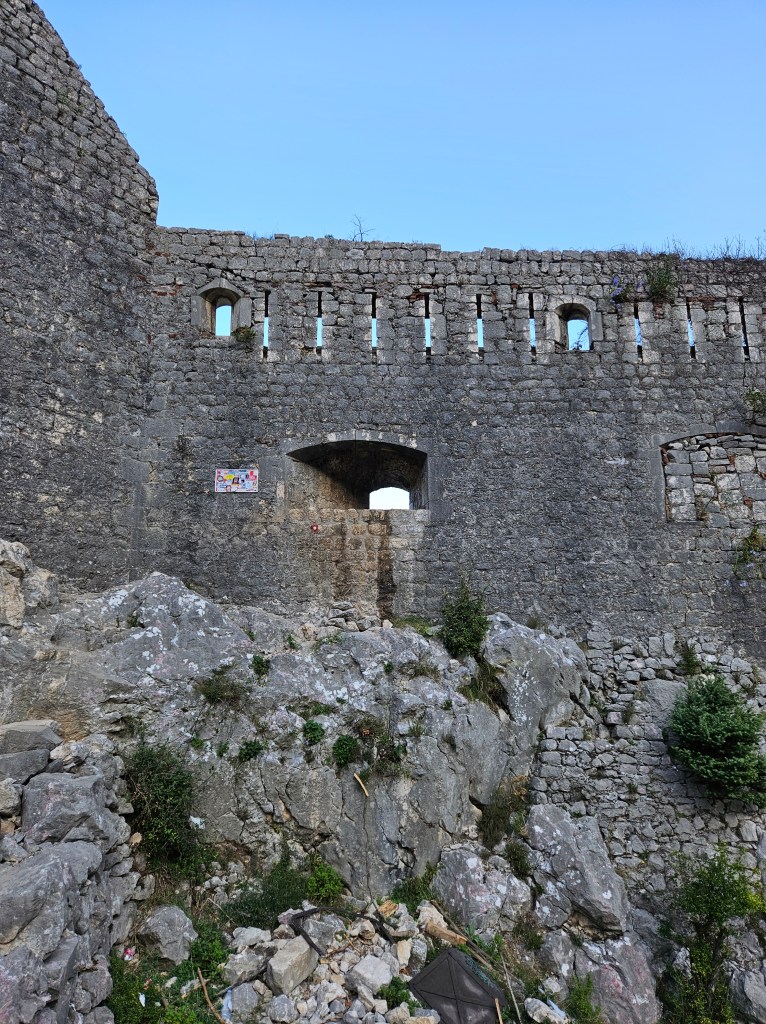
It costs 10 euros (Montenegro isn’t in the European monetary union, but they’ve chosen to use the euro) to access the ramparts, but there’s also a free hiking trail with the trailhead starting outside the gates. To get to the mountaintop, one needs to take that trail, but climbing the ramparts is really fun too. In advance I had read something about having to climb through a window to transition between the ramparts path and the mountain trail, but I didn’t really understand it. Using a trail map app on my phone, I could see that there was a connector trail that looked like it started from the ramparts route, part of the way up. Through exploration, I finally realized that the trail connector did indeed begin at an opening in the wall through which one could climb. But it was a several-foot drop from the wall to the ground below, so then I understood why some people online had recommended against trying to make the transition. I had to hang myself down from the window and then drop to the ground below to prevent from twisting an ankle or worse. But it was worth it because otherwise I would have had to go miles farther to return to the town, go out of the walls, and then find the trailhead for the mountain trail. Anyway, it all worked out and felt adventurous. I count myself fortunate to still be in sufficient shape for excursions like this one!

 Major Meander