
Somewhat confusingly, upper Egypt is farther south than lower Egypt, but that’s just because of our concept of north and south. Upper Egypt is higher up altitude-wise, and logically the Nile flows from upper elevations to lower ones all the way to the delta in northern Egypt out to the Mediterranean. After Luxor and Kom Ombo we headed south on the Nile all the way to the city of Aswan, the most beautiful place we saw along the Nile. In the Aswan region the desert often directly ends at the Nile, with little or no green between, and there are large sandy hills in the area.
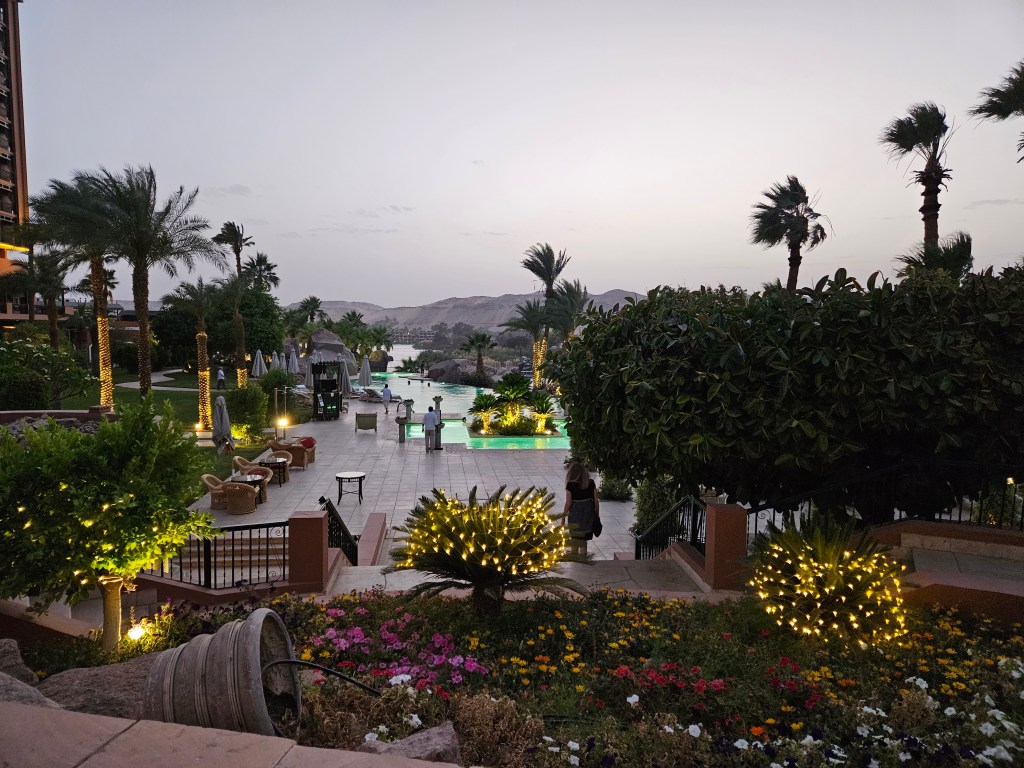
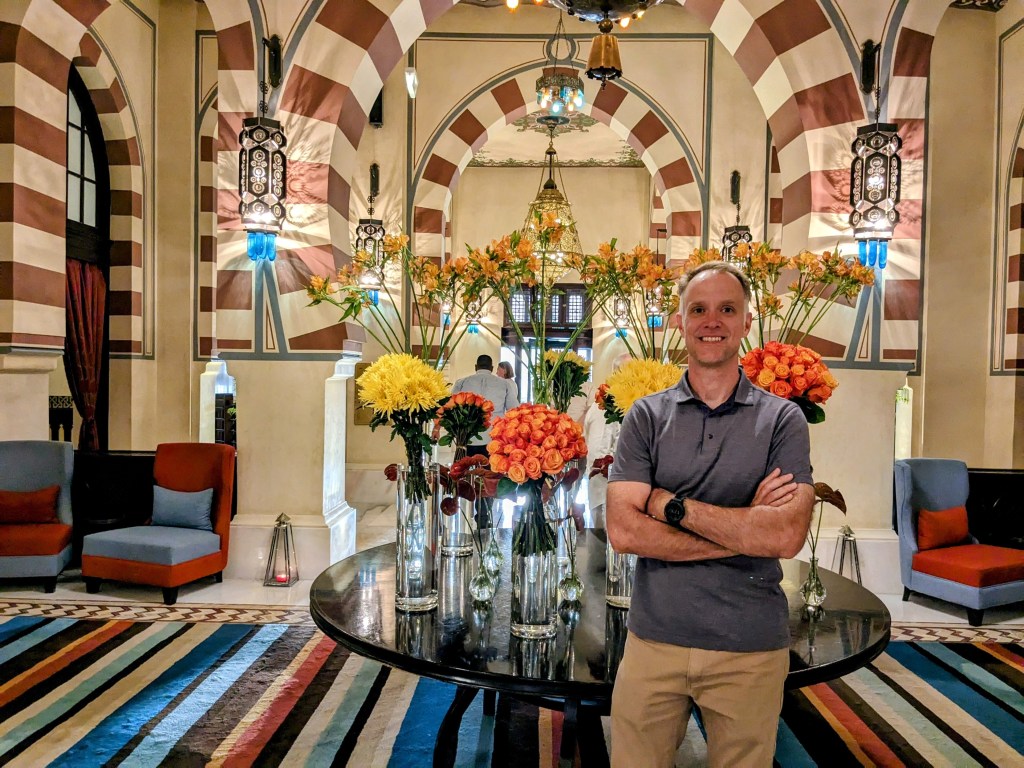
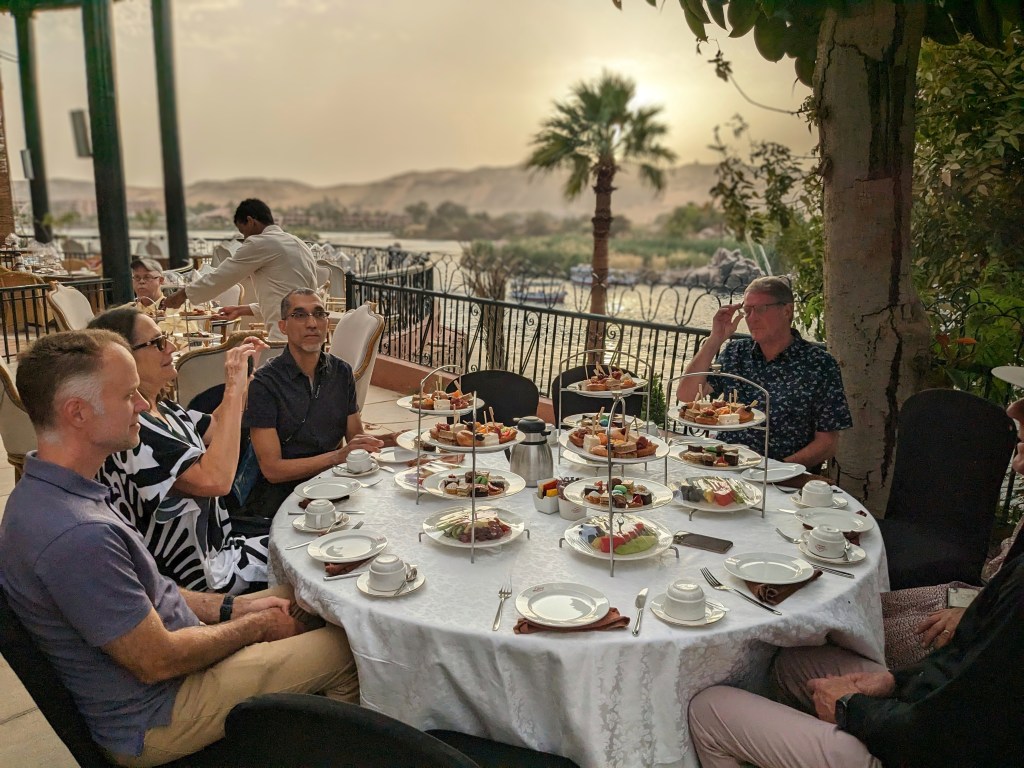
In Aswan we visited another Egyptian temple, took a felucca (Egyptian sailboat) ride, and had high tea at the Old Cataract Hotel, where Agatha Christie penned Death on the Nile. The hotel, its grounds, and its views are all breathtakingly beautiful. But despite all the years of high tea being served at the hotel, the experience was a bit of a cluster-fudge, especially for the Brits, who have a specific concept of what high tea should entail. It kicked off with a small sandstorm (that wasn’t the staff’s fault), which made it all the more memorable.
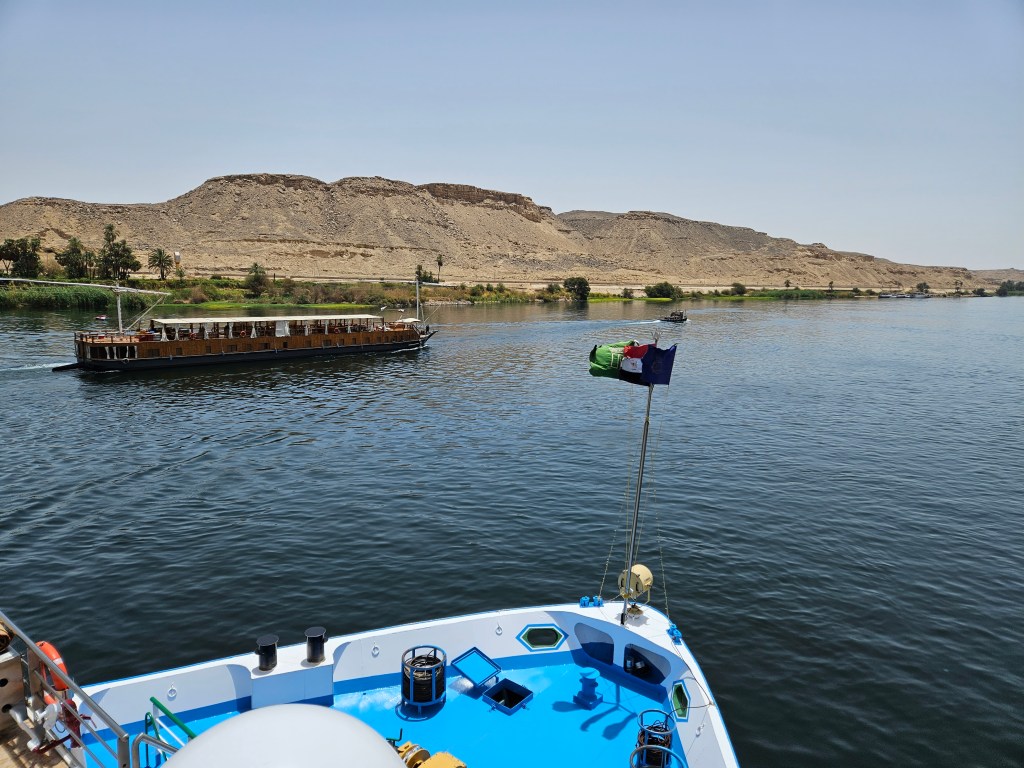
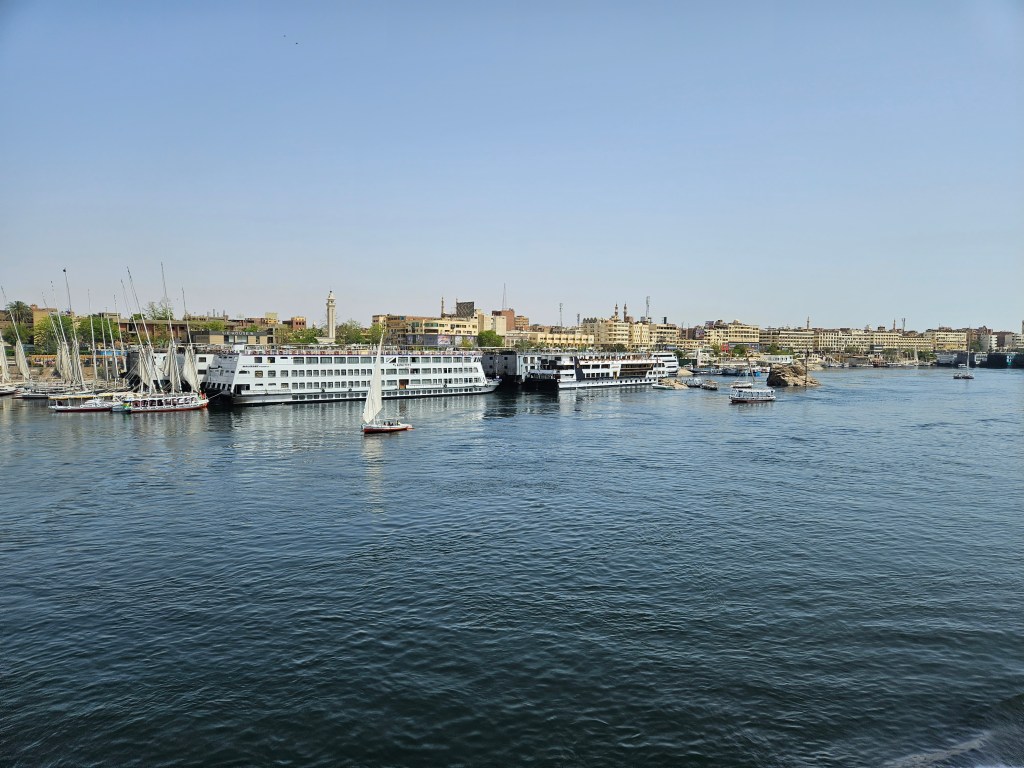

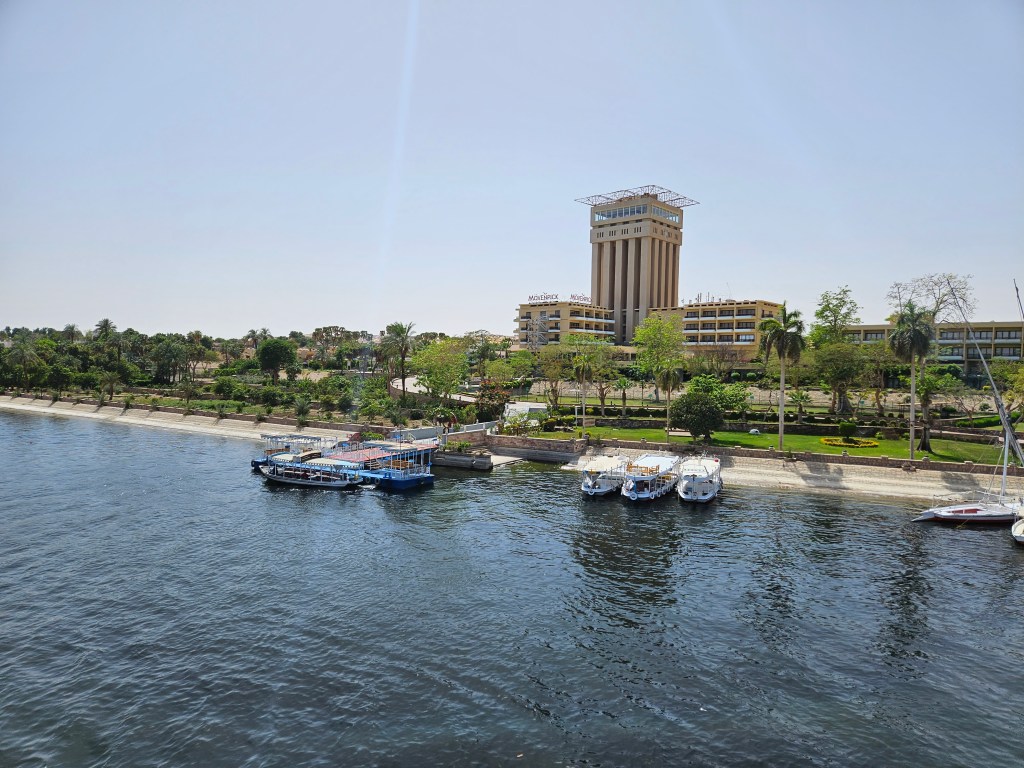
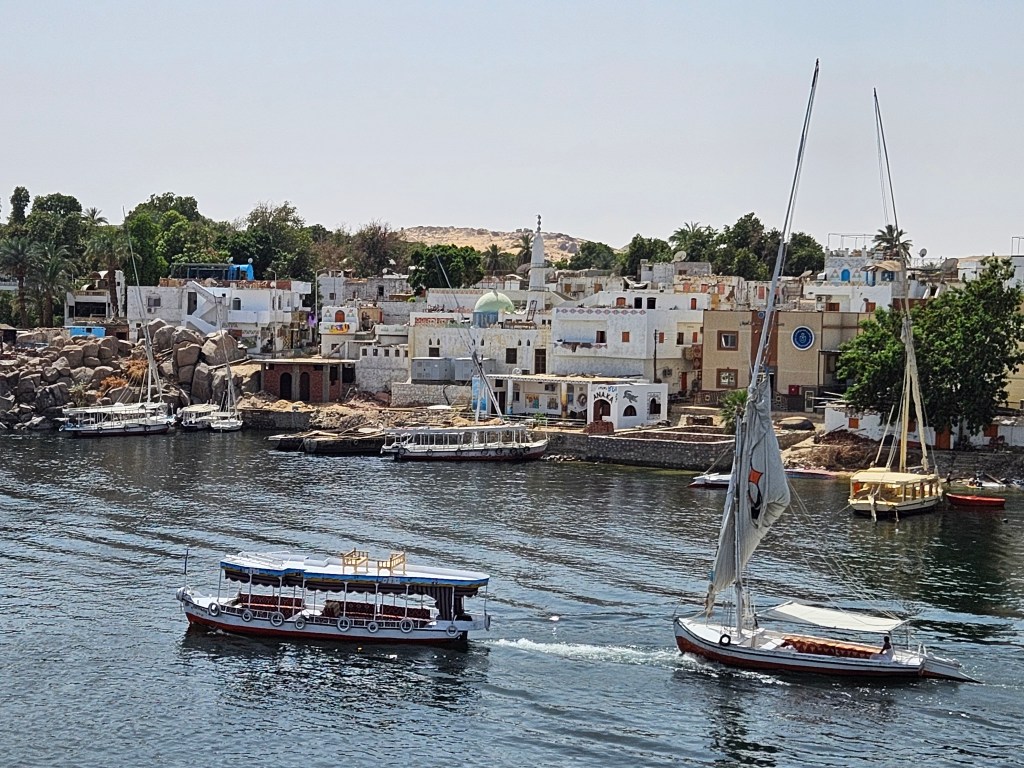
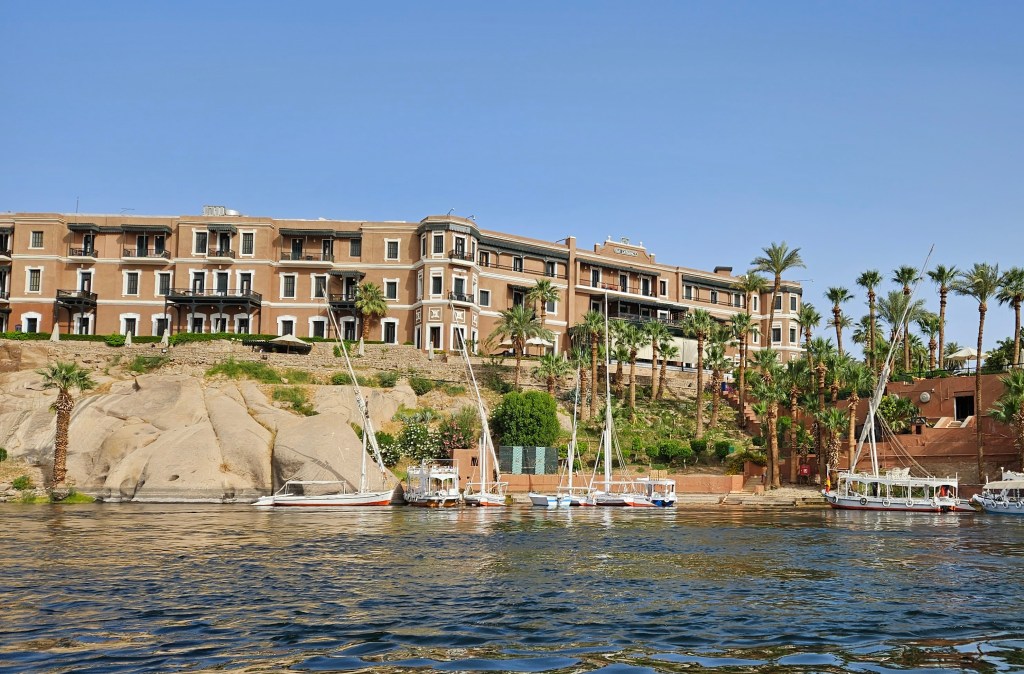
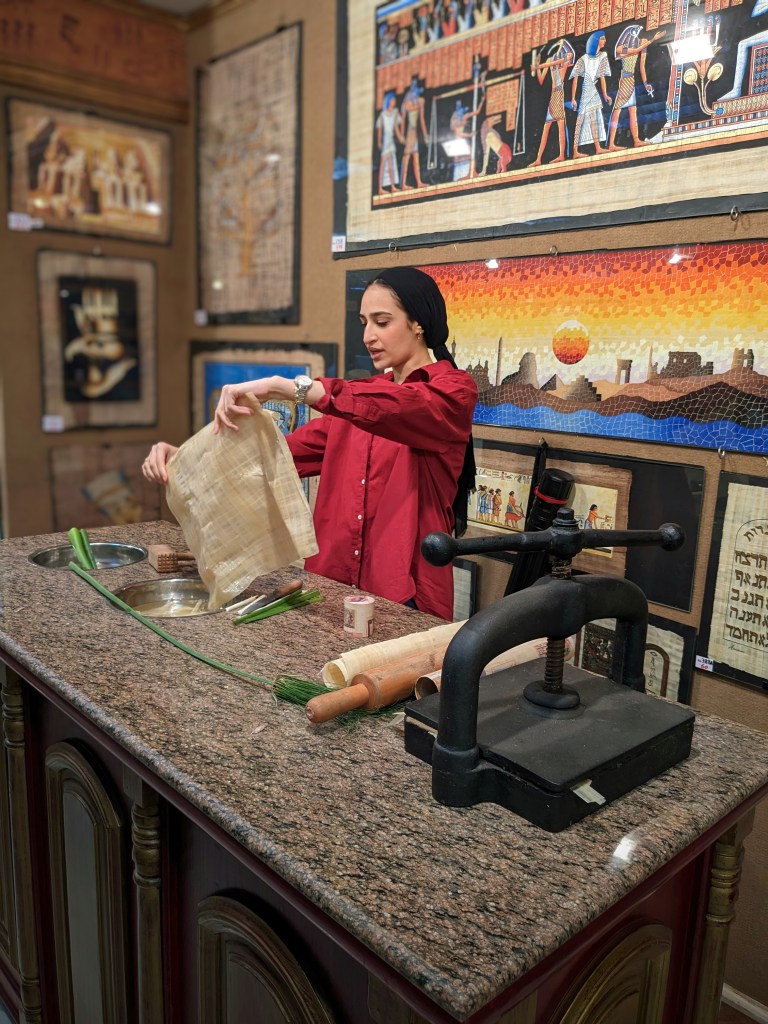

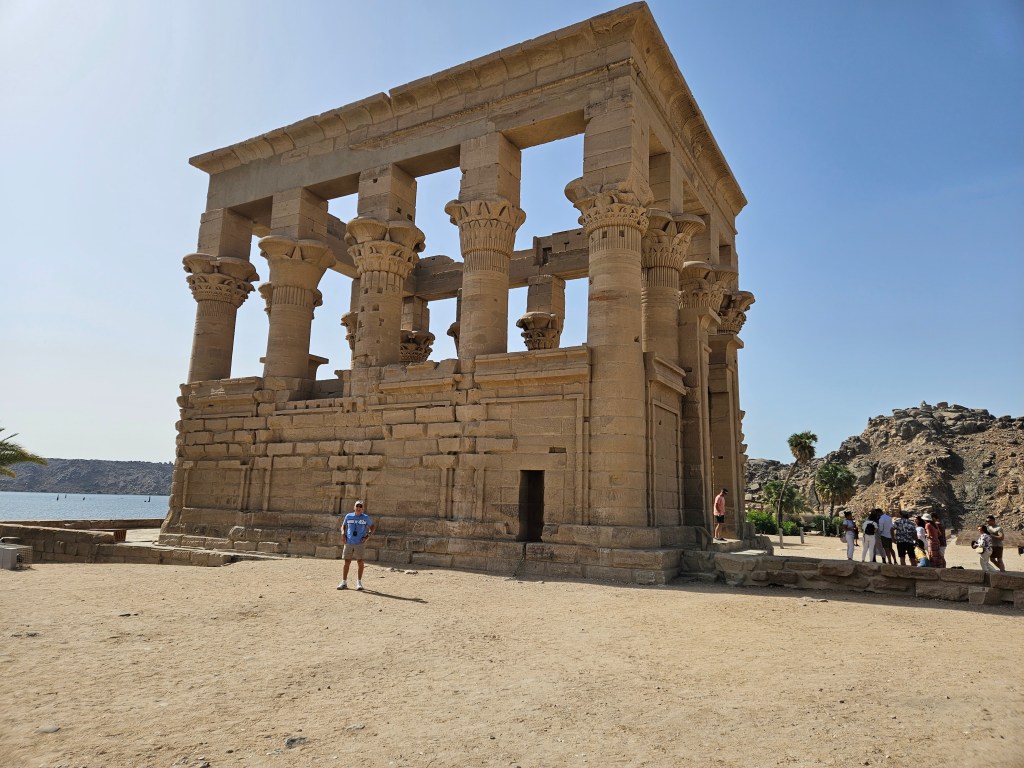
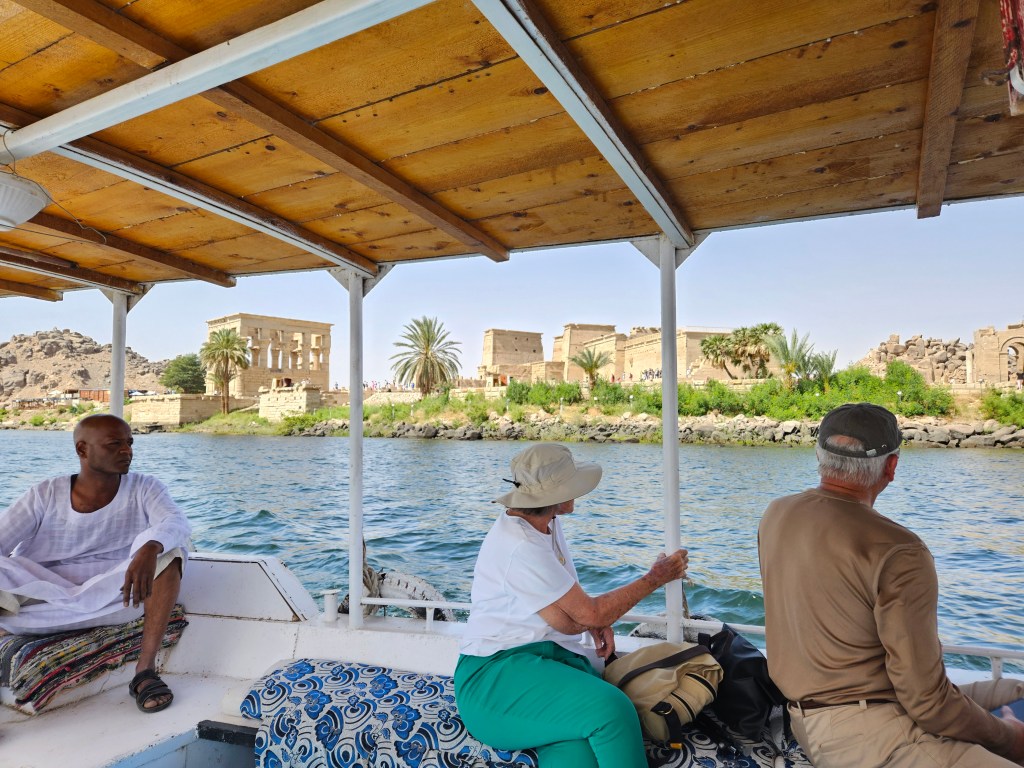
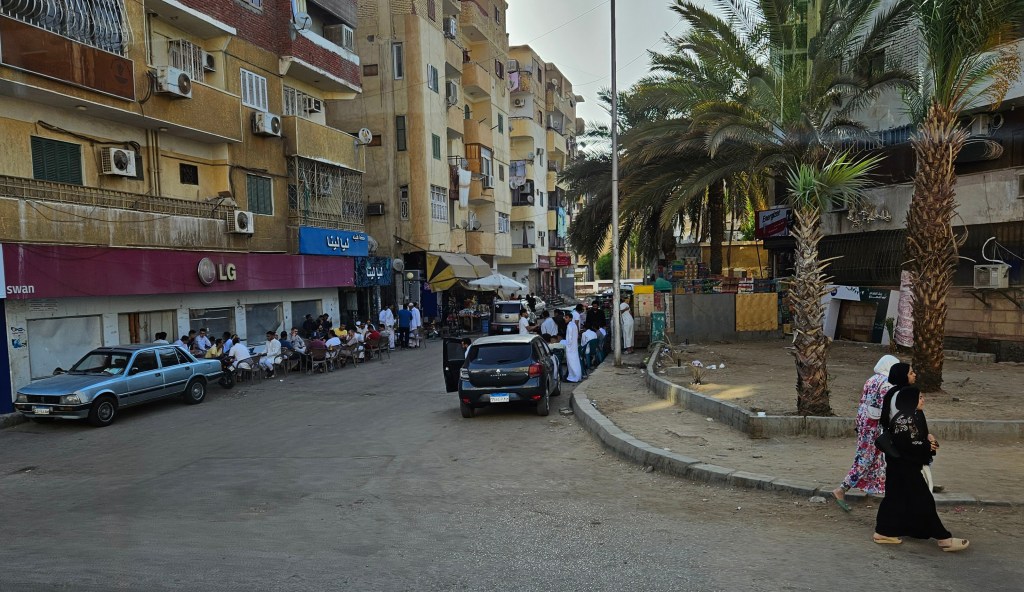
For such a wet-looking city along the river, Aswan is an incredibly dry place, sometimes with no recorded rainfall for several years at a time! Some traditional Nubian houses don’t even have roofs over some rooms (why bother?). By the way, we were told that Nubians are from a region basically between Aswan in Egypt and Khartoum in Sudan, and one certainly sees a lot of darker-skinned people in Aswan than in Luxor and northward. In any case, the reason that Aswan has so much water is that there are two dams built on the Nile just south of the city — one is the British-built Low Aswan dam from around 1900, and the second is the much larger High Aswan dam constructed with Soviet assistance and money, completed in 1970, forming Lake Nasser (named for the Egyptian president who kicked off the project). The Nile originates from the White Nile and Blue Nile, which are formed in African countries south of Egypt, where there is more rainfall. Damming the Nile not only provides electricity for Egypt, but it also prevents historical downstream flooding and drought.
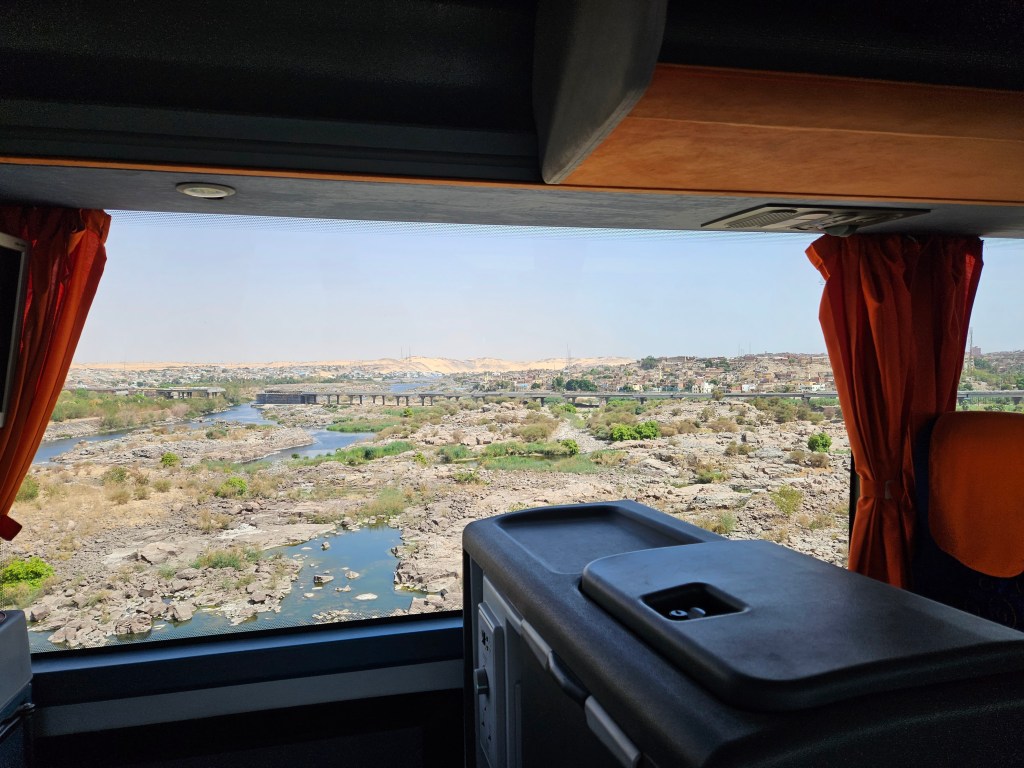
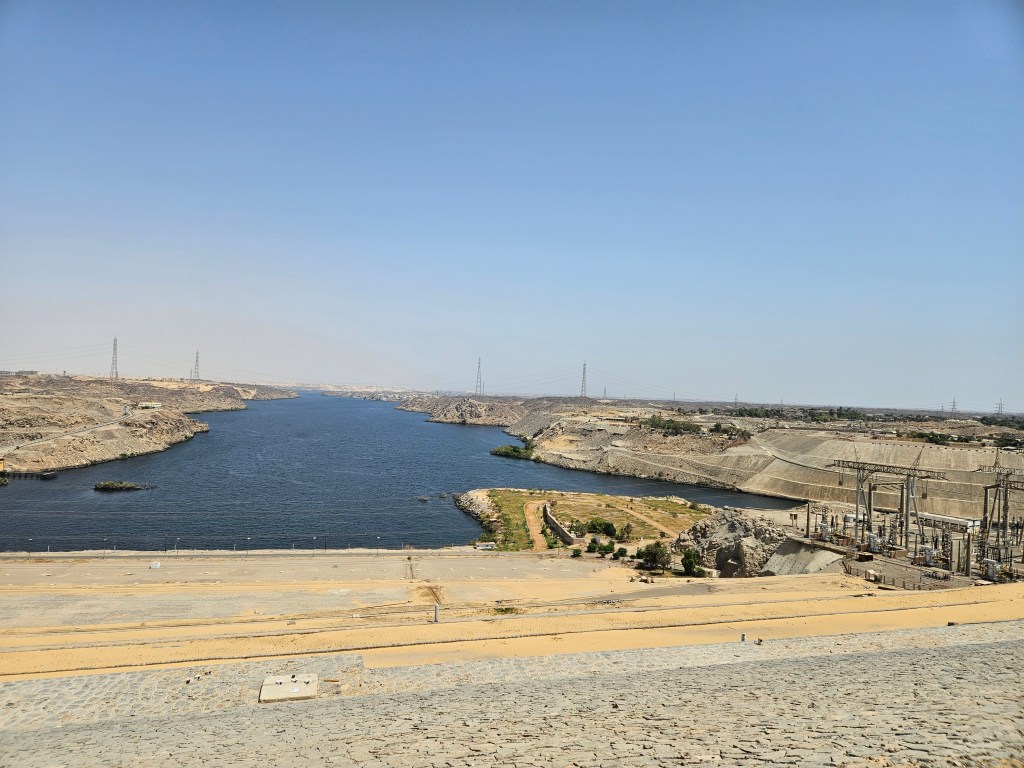
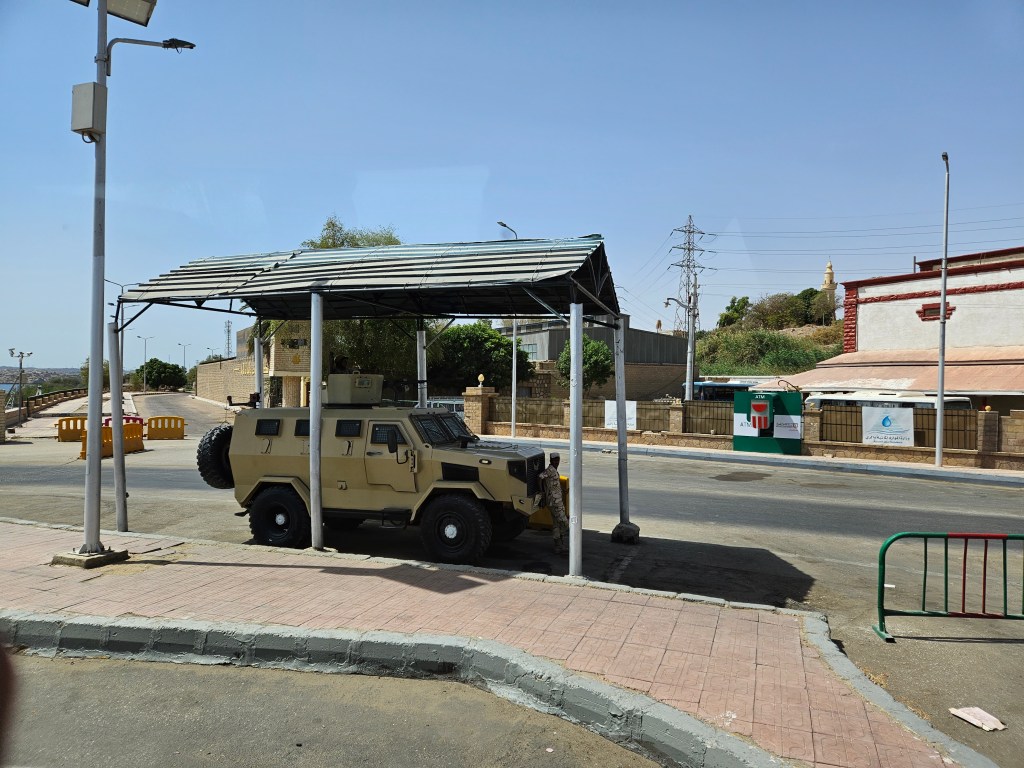
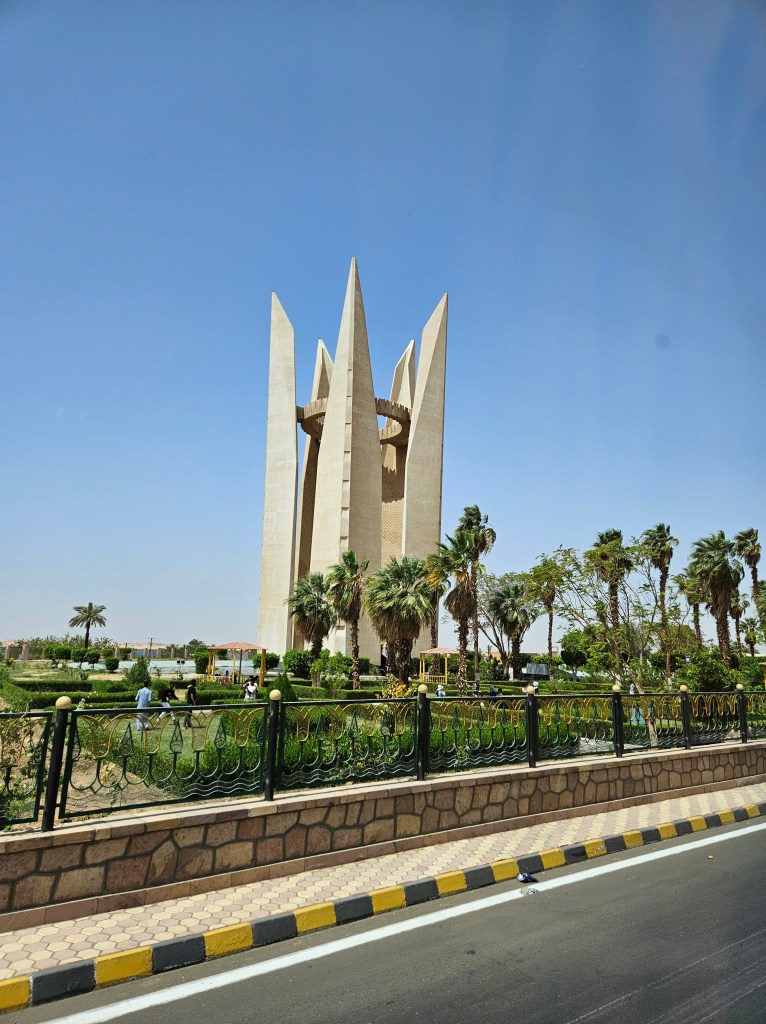
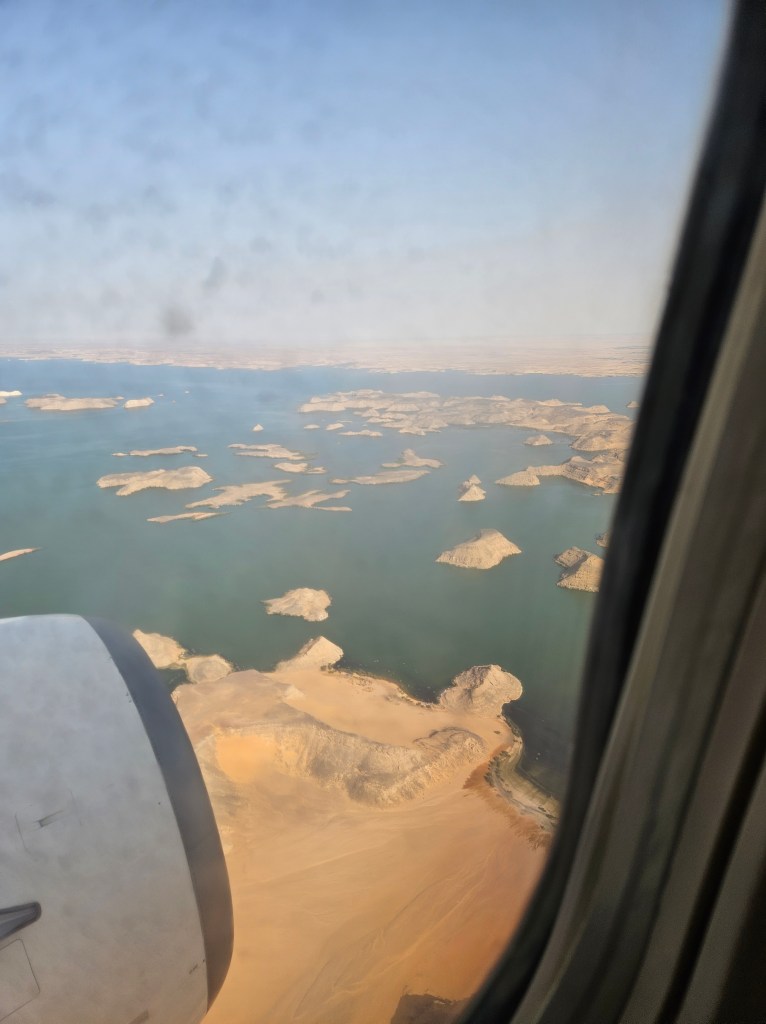
During our visit, there were increasing conflicts in Sudan, Egypt’s southern neighbor, and there are continued discussions about what to do about Ethiopia’s “Grand Ethiopian Renaissance Dam,” which Egypt sees as concerning given Egypt’s absolute reliance on sufficient water in the Nile for human existence. After all, only 4% of Egypt isn’t desert, and that’s almost exclusively along the Nile River.
Before the cruise, I naively thought I’d get to see Nile crocodiles and hippos, but hippos apparently no longer exist in Egypt, and the crocodiles only exist on Lake Nasser nowadays (we didn’t see any there). However, as shown in the previous post, we did get to see crocodile mummies in Kom Ombo. Our guide told us that Nile crocodiles are particularly fierce and merrily hunt and kill humans.
Another attraction in Aswan is an unfinished granite obelisk, commissioned by Hatshepsut 3500 years ago. Due to cracks that formed, the project was abandoned. The unfinished obelisk is 30% larger than any ancient Egyptian obelisk ever erected. If it had been finished, this obelisk would have been around 140 feet (42 meters) high and would have weighed over 1000 tons!

Today’s ultimate tidbit (TUT): Our guide often referred to various countries as thieves, having pilfered many precious artifacts from Egypt years ago. England and France deserved particular mention.
Mystery audio recordings: For the mystery audio recordings in the previous post, snippet #1 was a traditional Egyptian dance song played and danced to by a performance troupe on our ship, and snippet #2 was our guide telling us about the tombs at the Valley of the Kings.
For the new audio recording below, think about what it might be, and I’ll tell you in the next post (please don’t guess in the comments).

 Major Meander