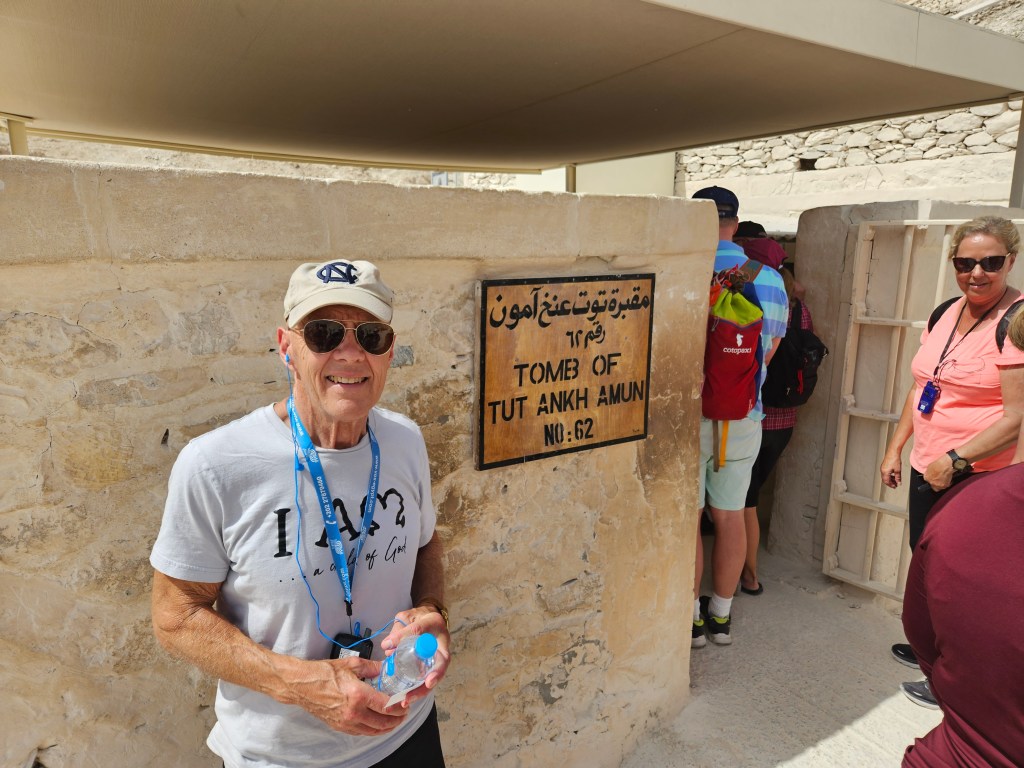
First, allow me to express my deep gratitude for having such a wonderful and unforgettable travel opportunity with my father! I don’t take it for granted. He’s an excellent travel partner, up for nearly anything, and having amazing travel stamina, almost always getting up in the morning before I do, ready for exploration and new experiences. Dad is fun to be around, and he and I have together explored some of my more adventurous travel destinations beyond just Egypt, such as Israel and Peru. So, shout out to Alan!!
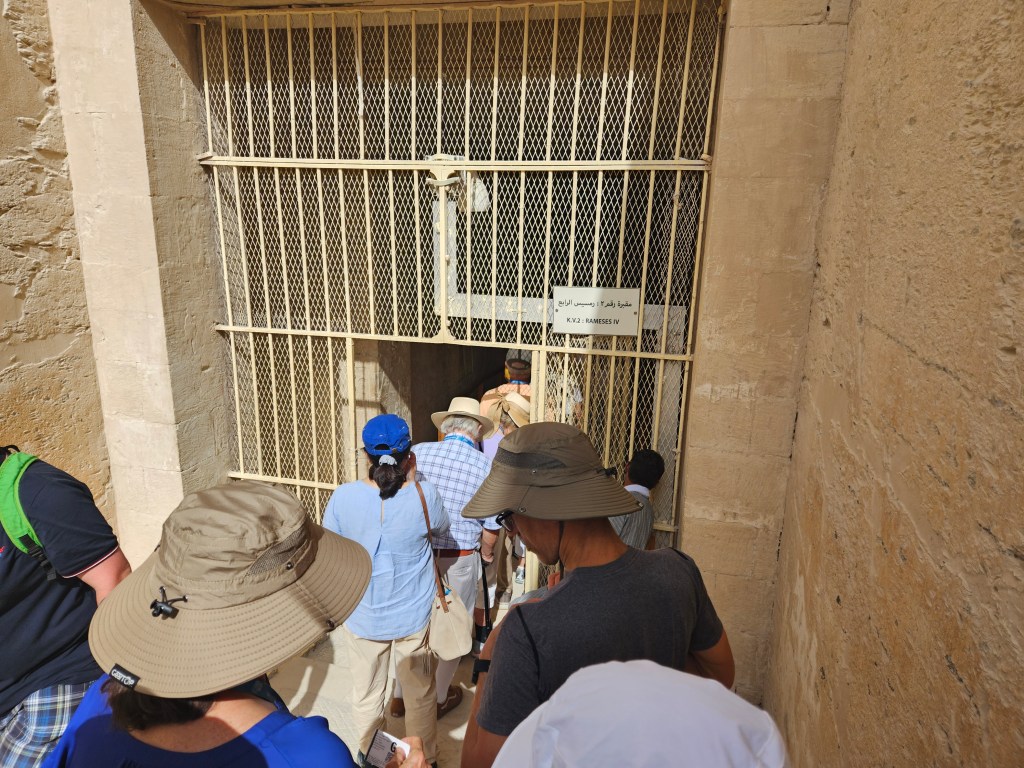
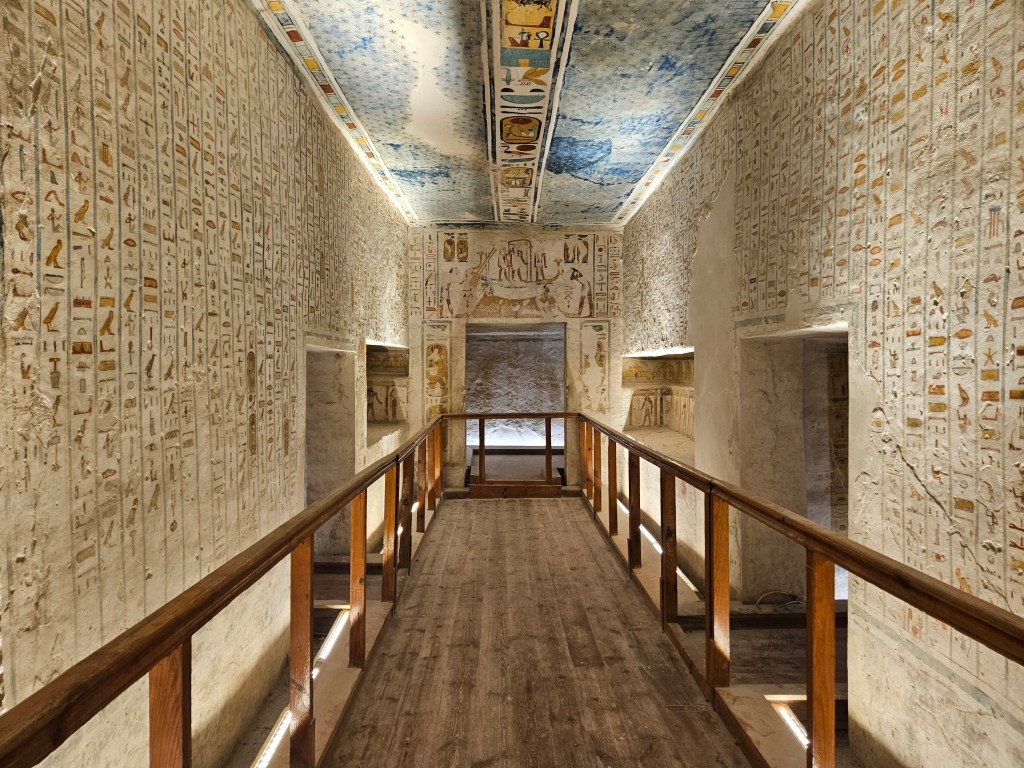
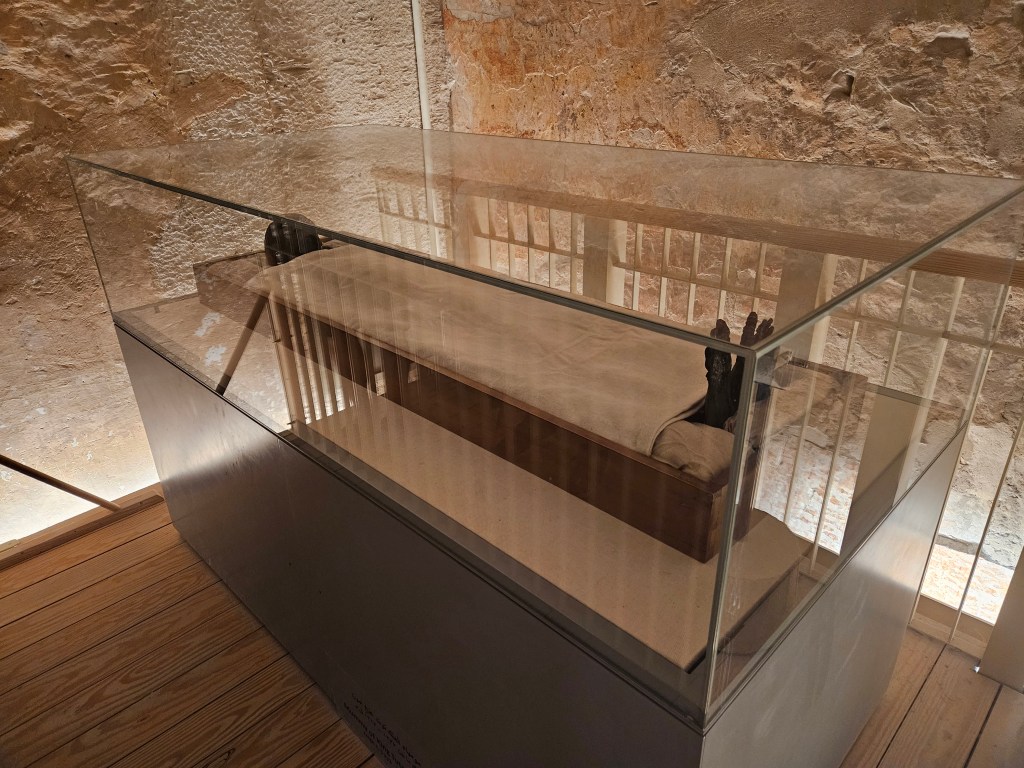
Now, for continued details on our Nile experiences… On the western side of the Nile, across from the temples in Luxor, is the Valley of the Kings where numerous pharaohs were buried in an attempt to avoid tomb robbers attracted by the ostentatious giant pyramids that earlier pharaohs used to erect farther north by Cairo. The eastern side of the Nile (where the sun rises) was where the living resided, while the dead resided on the western side (where the sun sets). The hidden tombs didn’t always prevent theft, but Tut’s tomb wasn’t rediscovered until 1922, and then became the most famous tomb find, especially given its trove of treasures. So far 65 tombs have been officially found in this desolate and blazingly-hot rocky valley, with Tut’s being the 62nd. Many of the tombs are open for visitation, and some are elaborately painted. Tut’s tomb is a bit of a let-down because it’s not as fancy as some others, though it did have so many items that were removed, thousands of which were sold to private vendors. That said, Tut himself still rests there, albeit in an exposed glass case. Presumably not what he had in mind.


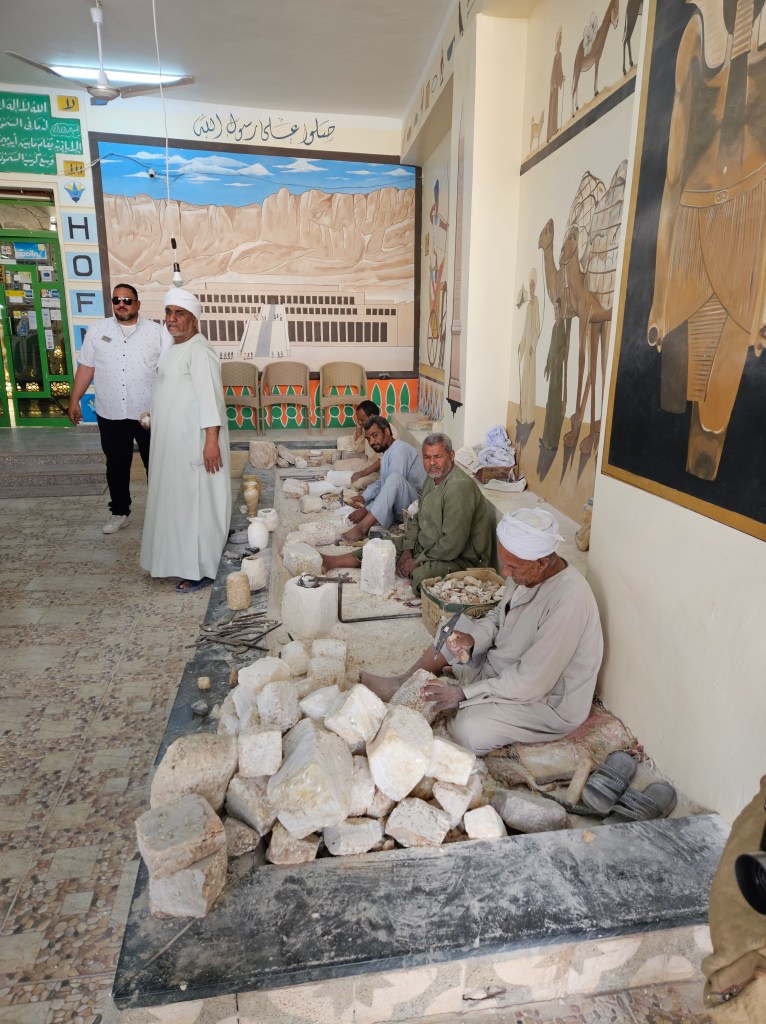
An aspect of all the touring that did become tiring was that the tour company kept bringing us to different shops, like one offering various carved stone items, another with papyrus artwork, a store selling Egyptian cotton products, and more. And somehow every temple complex has a true gauntlet of pushy vendors, sometimes with several dozen stalls. The more aggressive sellers step right into your path, and one guy even put a scarf onto my shoulder while I was passing by. I kept walking, told him I didn’t want it, and suggested that he remove it from my shoulder. He eventually did. I hadn’t wanted to dump it off, lest the clean white scarf get sullied in the dust on the ground.

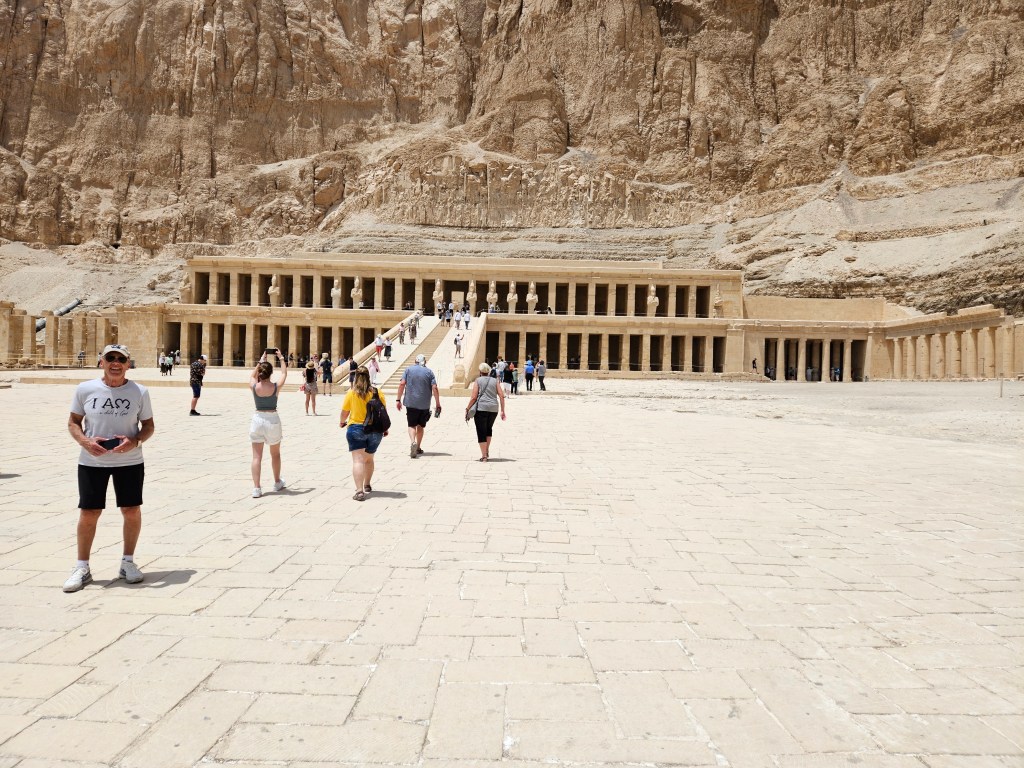
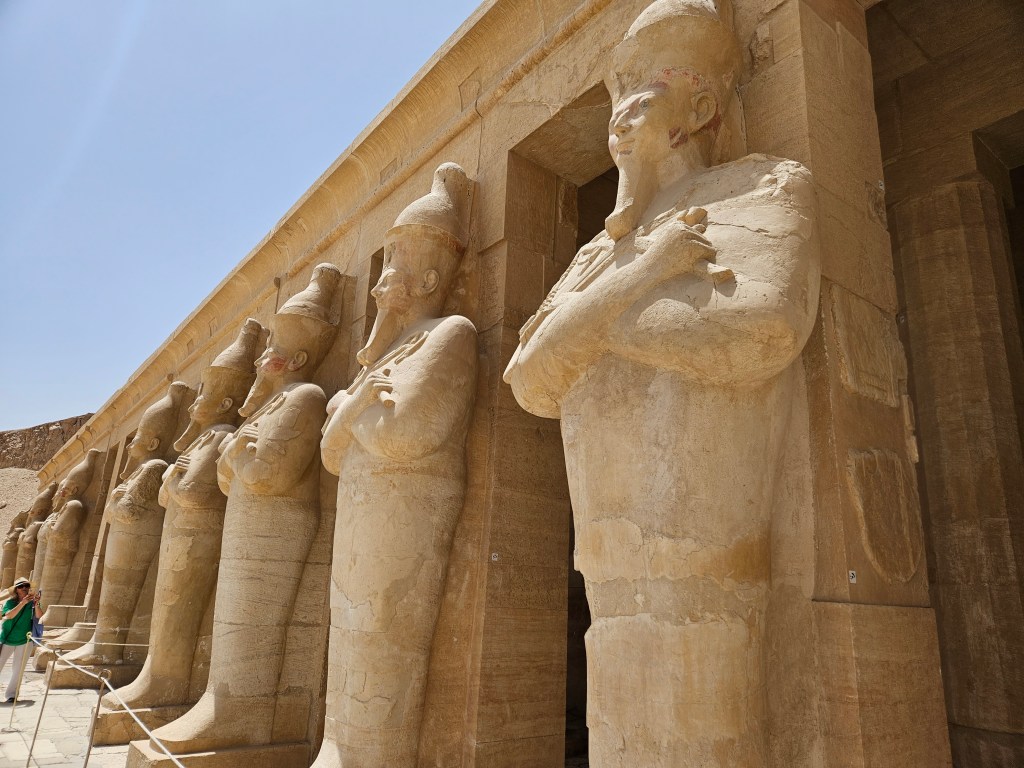
Another big attraction in the region of the Valley of the Kings is Hatshepsut’s Temple, which is stunning from the outside (though relatively underwhelming from the inside).
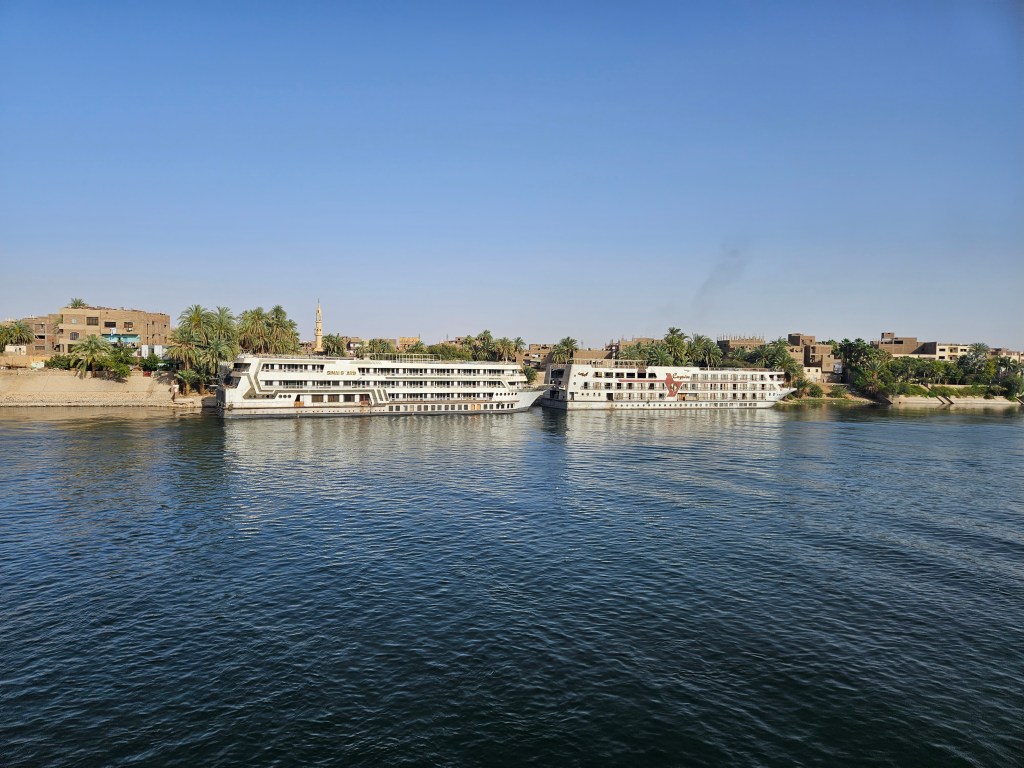
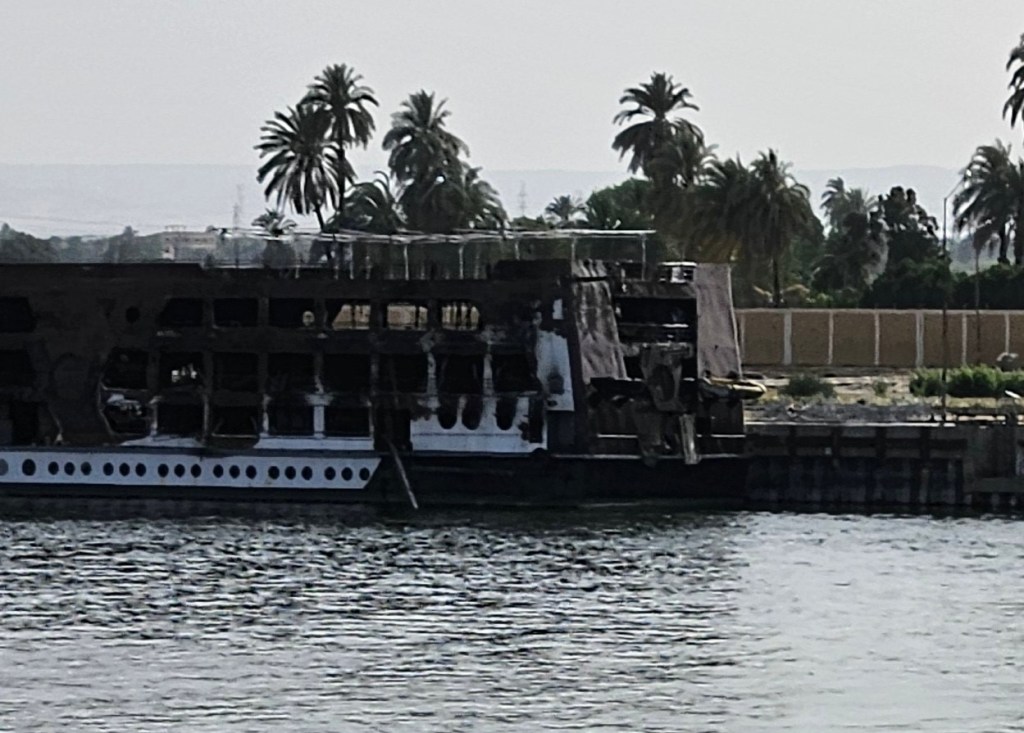
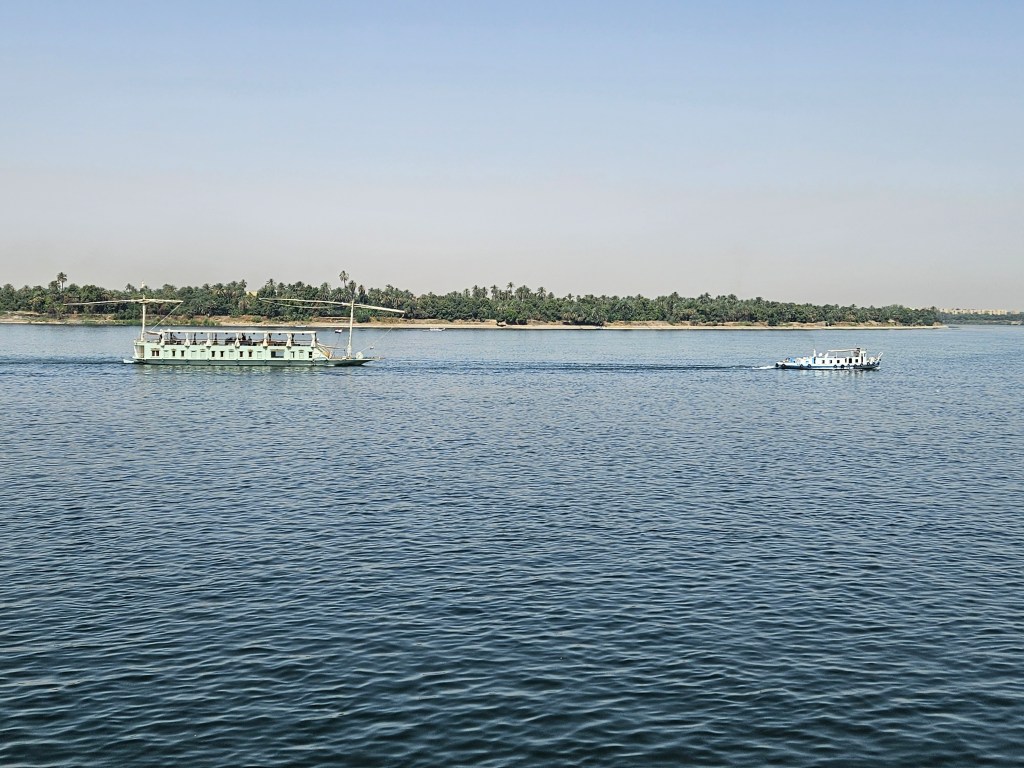
I overheard a tour guide tell a passenger on our ship that there are over 100 cruise ships regularly plying the Nile, and based on what we’ve heard, the various ship captains know each other well — it’s a fairly small and tight community. Interestingly, there are numerous “ghost ships” moored along the riverside in various places, with these ships appearing to be well past their prime. I’m not sure if they’re meant to be repaired, but some look to have been hanging out forlorn for several years, including one that clearly caught on fire at some point. Apparently, tourism in Egypt has been heavily depressed for many of the past 12 years, given the revolution that began in 2011 and wasn’t really resolved until 2018, followed not long thereafter by Covid. So it seems like there’s still some catching up to be done, though things are finally good again currently, therefore perhaps some of these ships will return to service again one day. Additionally, some of the Nile’s ships are sailboats, but our tour guide said that they can typically only use their sails to get sufficient speed to keep their schedule about 25% of the time, so during the other times they’re towed by a tug boat.

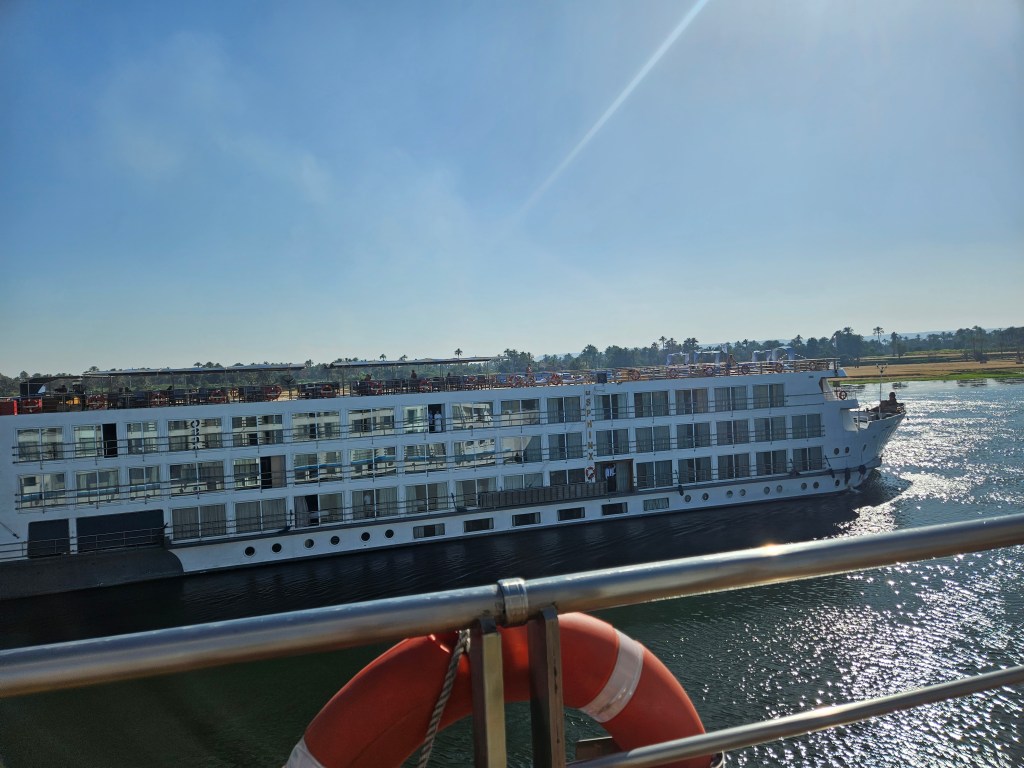
The depth of the Nile, along with the height and width of the locks between Luxor and Aswan, presumably determine the size and shape of the ships, because all the modern cruise ships chugging down the Nile are basically copies of one another. Each just barely fits through the locks, and these locks give vendors and opportunity for more sales. They come out in rowboats, with one oarsman, and one hawker. In one direction of travel, upon the opening of the lock gates for ship exit, the rowboat enters the lock with the ship and the hawker begins the hard sales pitch. He soon begins to toss plastic bags up to the top deck, with each bag containing an item for sale. He asks that someone open up the bag to take a look and then offers a price. Anyone interested (and there’s always someone) can begin their negotiation before completing the sale. As the ship exits the lock, the rowboat ties up to the side of the ship and is then carried alongside like they’re water skiing. All while the hawker is impressively balanced on a platform on the rowboat, continuing to pitch and pitch. It’s quite something to behold. One American guy I met was so impressed that he went down to his room and told his wife about it, and she said that they of course must buy something! So they slid open the door on their French balcony (which happened to be on the same side as the rowboat), and asked for a traditional man’s outfit (for the Egyptian party onboard that evening). The expert hawker adeptly tossed the bag with an outfit directly into the couple’s room. There’s a now-unused second lock which the cruise ship had to also pass through, where the rowboat guys tied up, and the hawker climbed up a ladder to solid ground, where he took payment and unwanted items back in the plastic bags. What a system! The videos below give you some sense of what this looked like. It seems rather dangerous, but these guys make it look easy. When in Egypt…
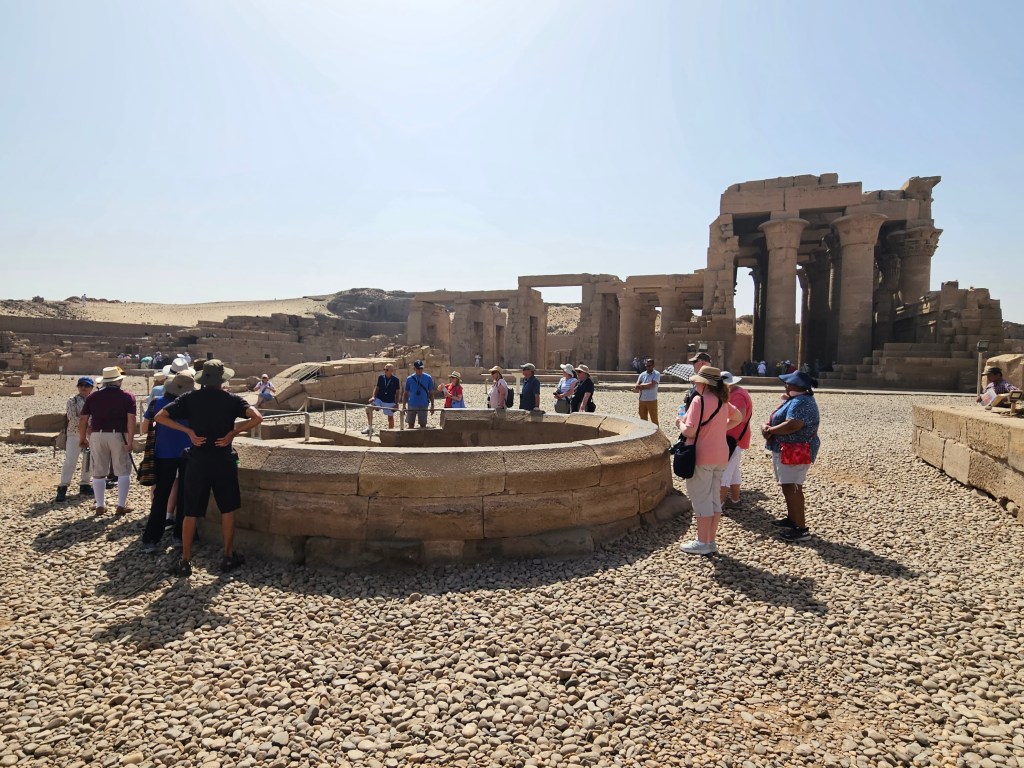
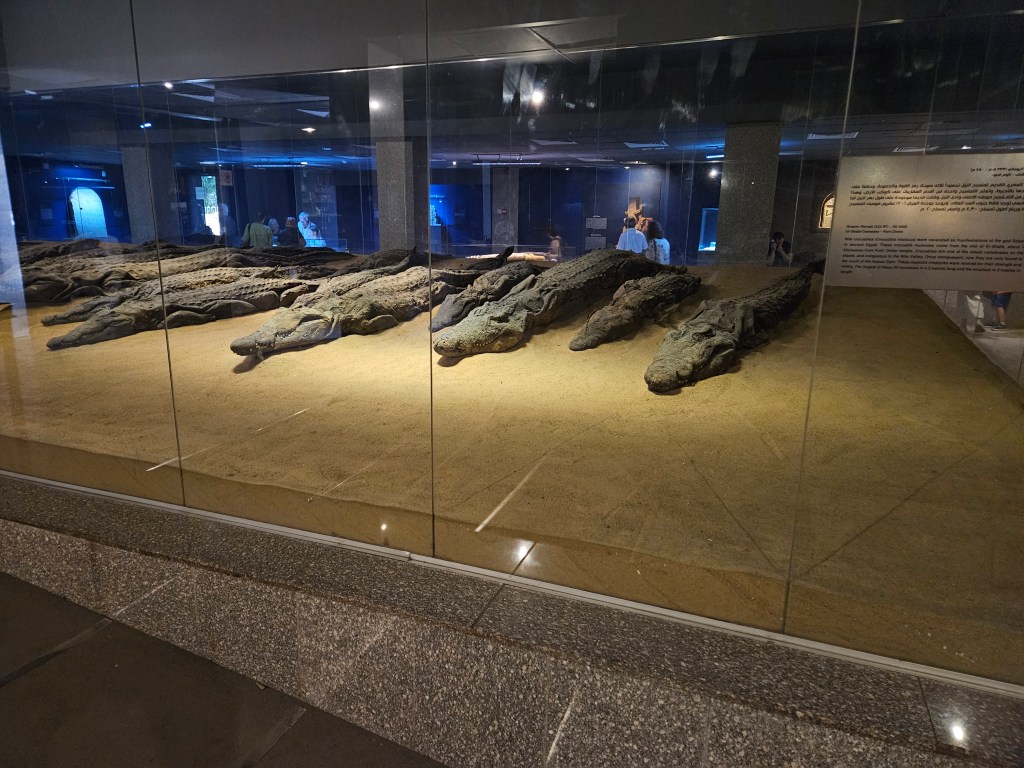
Given that we cruised south from Luxor to Aswan, and then back up again, we passed by places twice. We stopped at a town called Kom Ombo twice, where the first time we toured the Temple of Kom Ombo, where several of around three hundred crocodile mummies discovered in the vicinity are displayed in the next-door Crocodile Museum. And Kom Ombo was a main site for respect paid to Sobek, my favorite Egyptian god, just because he looks cool (he has a crocodile head), haha. On our first visit we experienced the most aggressive vendors we’d run into yet to that point, including a cute little boy who followed me from the ship wherever I went (before entering the paid entrance to the temple), always repeating his pitch in Spanish (no English) over and over: “Hola, amigo. Una [sic] euro!” I asked him some things in English and Spanish, but he just kept repeating the same spiel, never answering. I actually wasn’t able to tell what he was selling.
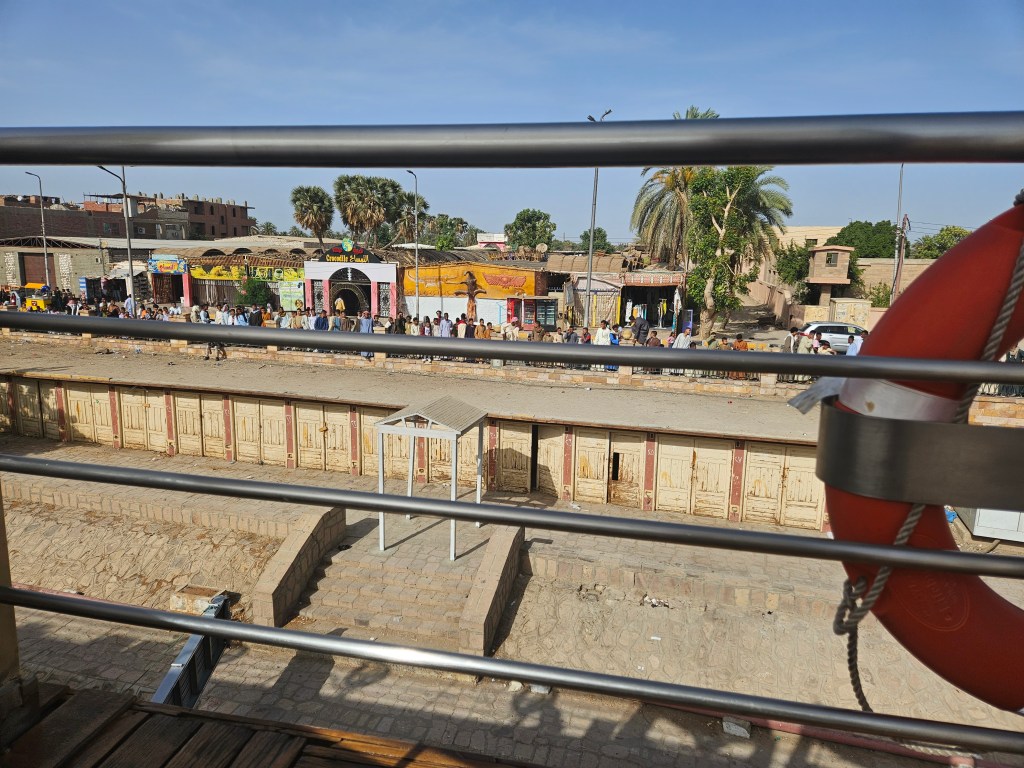
Some days later when returning back north toward Luxor, our ship moored to the riverbank in Kom Ombo, directly beside some community gathering center, where there were hundreds of people, mostly young and teen boys. The days after Ramadan ends are holidays, and so presumably folks were gathered for celebration. The boys were fascinated by us, eventually in an unsettling manner as dozens and dozens gathered to gawk at the bikini-clad western women standing by the ship’s pool. Every few minutes a man or two in plain clothes or in uniform would shout at the boys to get away from the fence line, some 30 meters from the ship. And sometimes, if the boys didn’t obey, the men would come over with a long stick, threatening to hit the boys. I saw no hitting, but every time the boys would disperse and run away, they would quickly return, just moments after any stick-wielding man had walked far enough away.
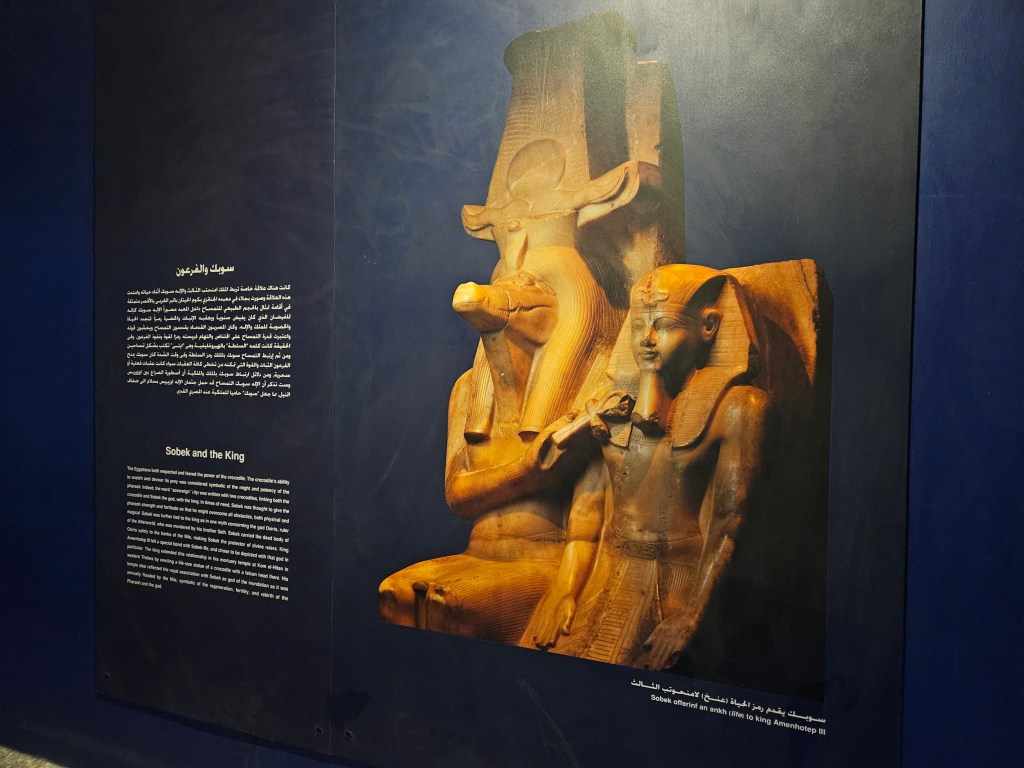
Today’s ultimate tidbit (TUT): I never succeeded in my hunt for a Sobek fridge magnet. I asked vendors if they had one, and most said no, while others said yes, and then proceeded to offer a magnet depicting another god, like Horus or Thoth. I thought they were trying to trick me, but later our guide explained that perhaps they just didn’t know! These vendors are certainly not trained Egyptologists.
Today’s mystery audio recordings: In the previous post, both audio snippets were captured from the ship’s top deck. In snippet #1 you can hear farm animals and kids yelling along the riverside. In snippet #2 you can hear multiple calls to prayer from nearby minarets on mosques in a small town.
For the new audio recordings below, think about what they might be, and I’ll tell you in the next post (please don’t guess in the comments).

 Major Meander
Nice shout-out to Dad: glad someone can keep pace with you. I wouldn’t be thrilled about the pushy vendors but man, the boat dude is impressive in his dedication to ABC. Sobek looks pretty metal.
Also, based on the pic, I believe Tut would have a challenging time buying shoes in Arequipa 😉
Good point!