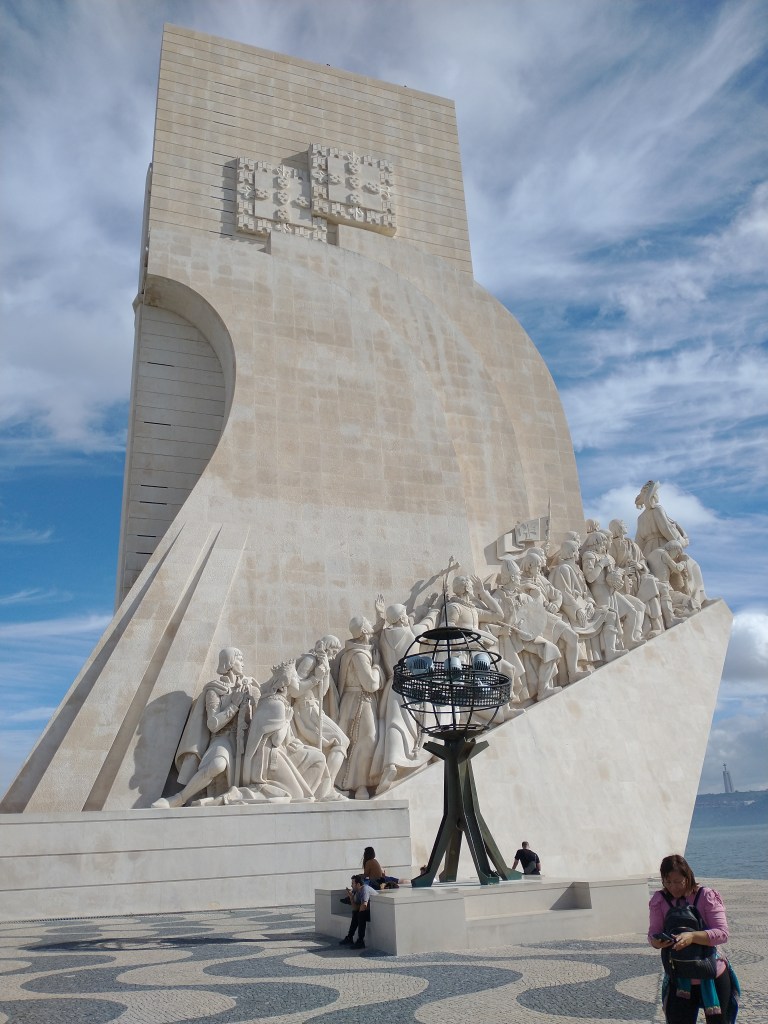
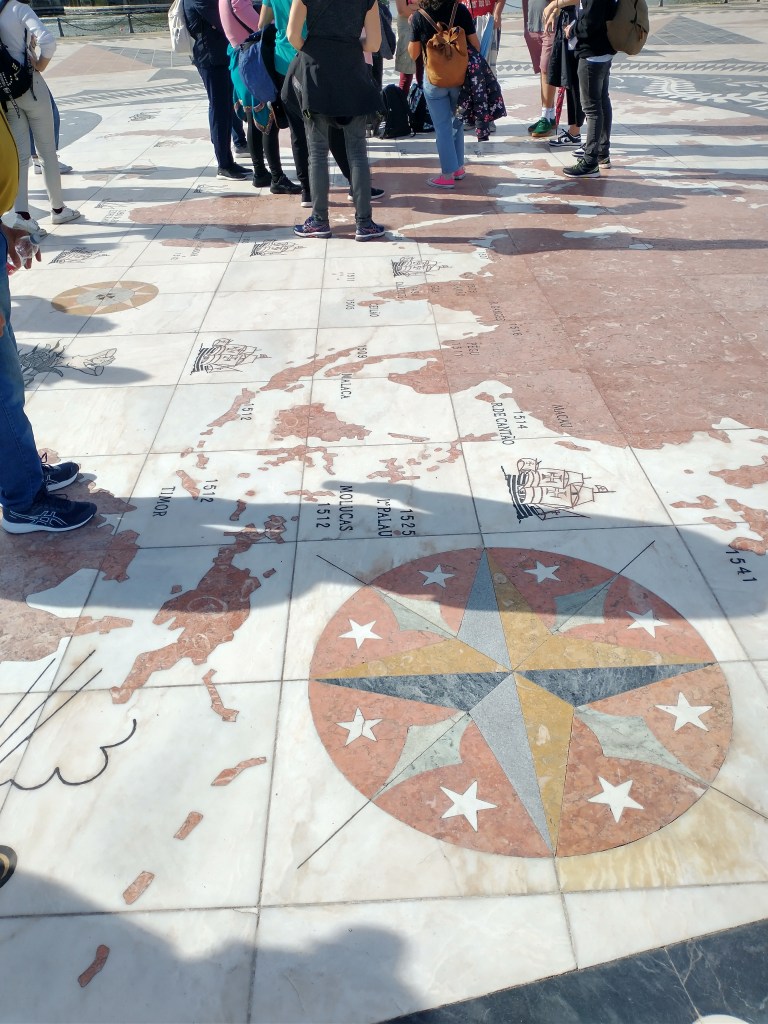
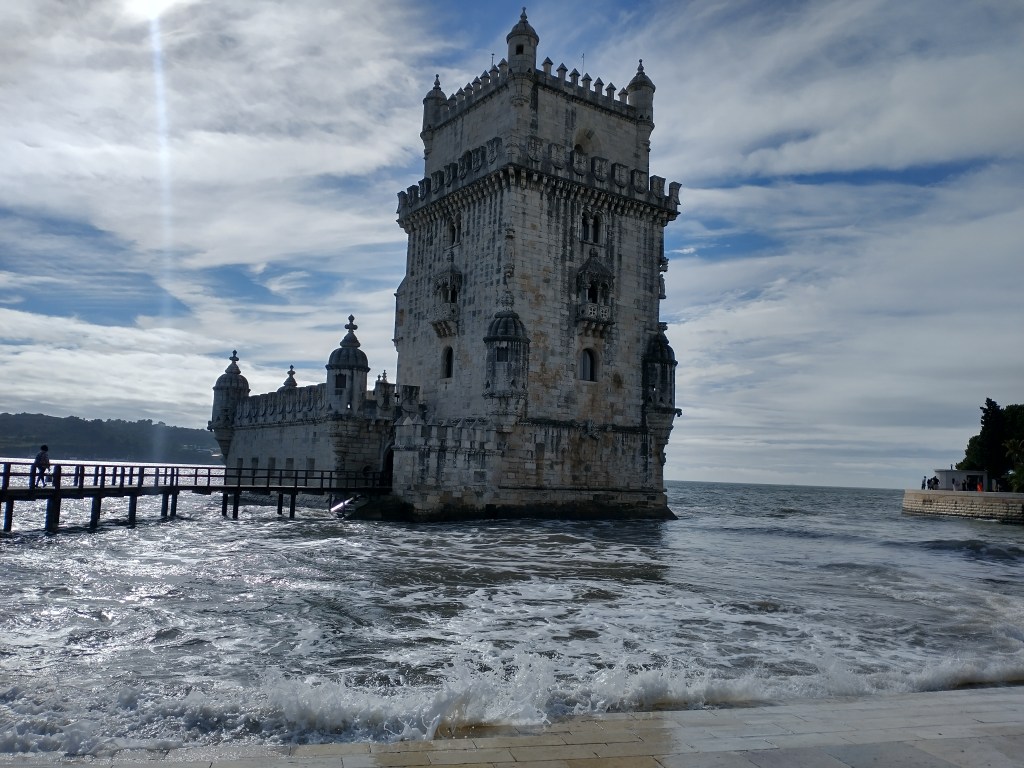
Portugal’s exploration of the world is quite astounding, as is its eventual control and influence over such a high percentage of the planet, especially for such a small place. Its slavery history is repugnant, and coincidentally while in Porto I watched the movie Woman King, where much of the film revolves around the Portuguese slavers buying humans in Africa. Luckily the spoken Portuguese was subtitled in English as well, perhaps because it was Brazilian Portuguese. One gets a sense of all the various cultures the Portuguese imperialists impacted just by walking the streets of Lisbon and seeing the different peoples. The Portuguese controlled parts of South America, Africa, India, China, and more. There are monuments and other reminders of the age of discovery all around Lisbon. While the following excerpt from Rick Steves is lengthy, it gives a nice tidy summary of Portuguese exploration around the world, along with the start of the rapid burnout.
From their tiny, isolated nation in Europe, the Portuguese first headed south to the coast of Morocco, conquering the Muslims of Ceuta in God’s name (1415) and trying to gain control of North African trade routes. They braved the open Atlantic to the west and southwest, stumbling on the Madeiras (1420), which Prince Henry planted with vineyards, and the remote Azore Islands (Açores, 1427). Meanwhile, the Portuguese slowly moved southward, hugging the African coast, each voyage building on the knowledge from previous expeditions. They cleared the biggest psychological hump when Gil Eanes sailed around Cape Bojador (western Sahara, 1434)—the border of the known world—and into the equatorial seas where it was thought that sea monsters lurked, no winds blew, and ships would be incinerated in the hot sun. Eanes survived, returning home with 200 enslaved Africans, the first of what would become a lucrative, abhorrent commodity. Two generations later, Bartolomeu Dias rounded the southern tip of Africa (Cabo da Boa Esperança, 1488), discovering the sea route to Asia that Vasco da Gama (1498) and others would exploit to establish trade and outposts in India, Indonesia, Japan, and China (Macao in 1557, on the south coast). In 1500, Pedro Cabral (along with Dias and 1,200 men) took a wi-i-i-ide right turn on the way down the African coast, hoping to avoid windless seas, and landed on the tip of Brazil. The country proved to be an agricultural treasure for Portugal, which profited from sugar plantations worked by enslaved African. Two hundred years later, gold and gemstones were discovered in Brazil, jump-starting the Portuguese economy again. In 1520, Portuguese Ferdinand Magellan, although employed by Spain, sailed west with five ships and 270 men, broke for R&R in Rio, stopped in Patagonia, and continued through the straits that were later named for him (tip of South America); along the way he suffered through mutinies, scurvy, and dinners of sawdust and ship rats before touching land in Guam. Magellan was killed in battle in the Philippines, but one remaining ship continued west and arrived back in Europe, having circumnavigated the globe after 30 months at sea. By 1560, Portugal’s global empire had peaked. Tiny-but-filthy-rich Portugal claimed (though they didn’t actually occupy) the entire coastline of Africa, Arabia, India, the Philippines, and south China—a continuous stretch from Lisbon to Macao—plus Brazil. The Treaty of Tordesillas (1494) with Spain had already divvied up the colonial world between the two nations, split at 45 degrees west longitude (bisecting South America—and explaining why Brazil speaks Portuguese and the rest of the continent speaks Spanish) and 135 degrees east longitude (bisecting the Philippines and Australia).
Rick Steves
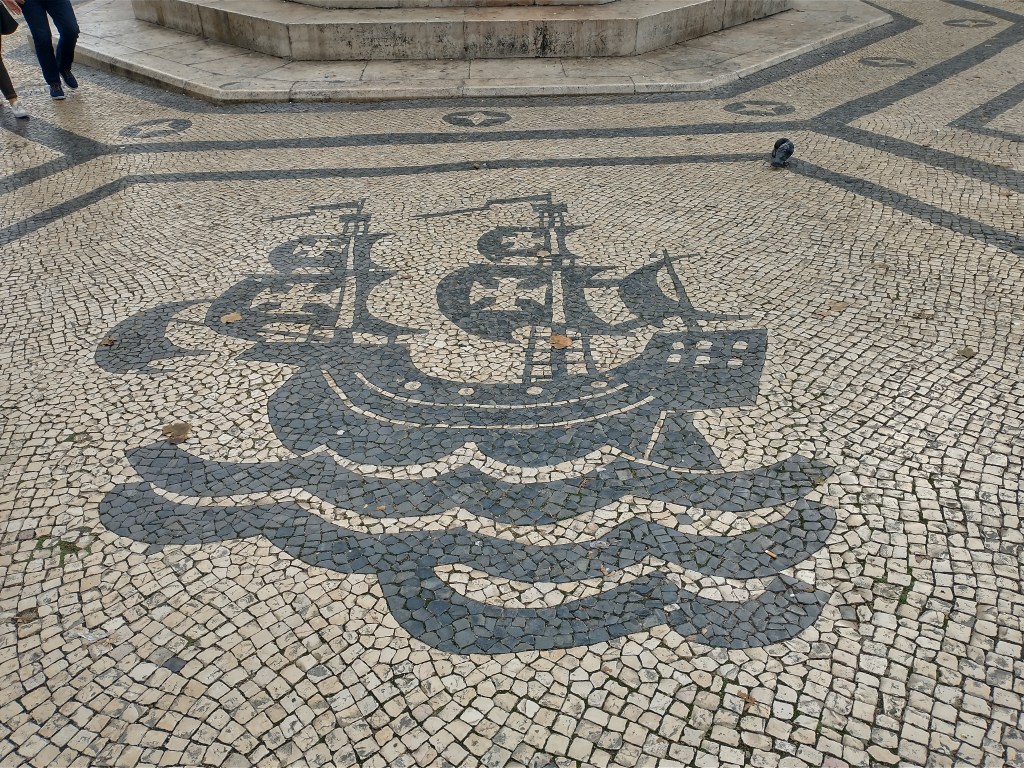
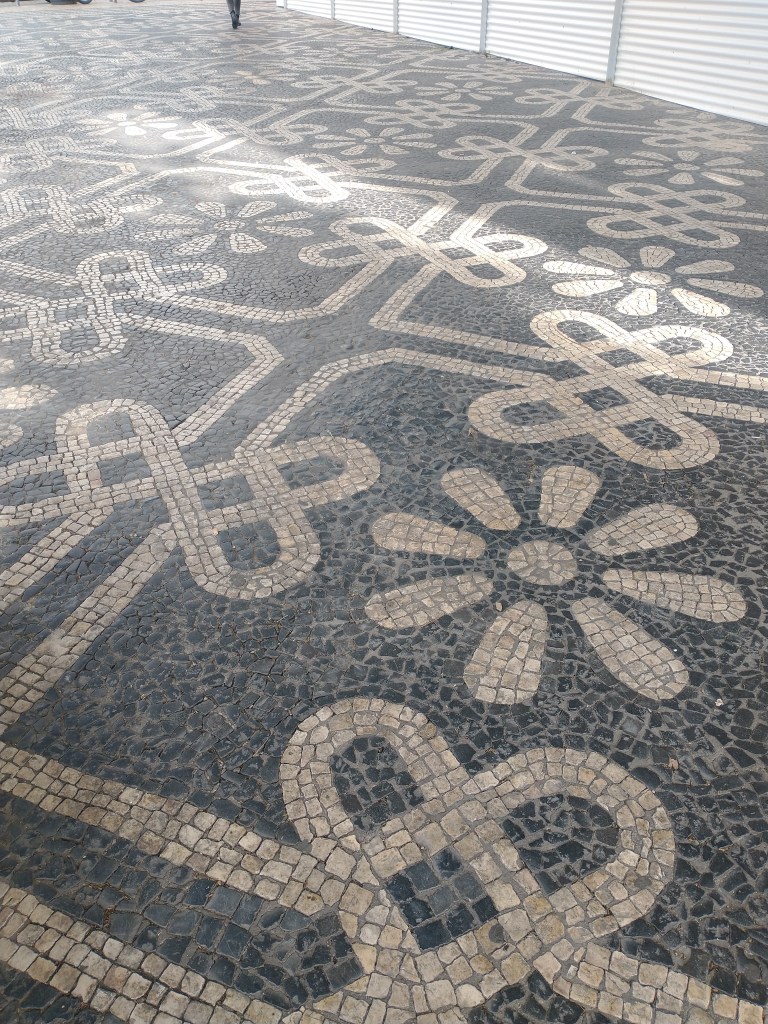
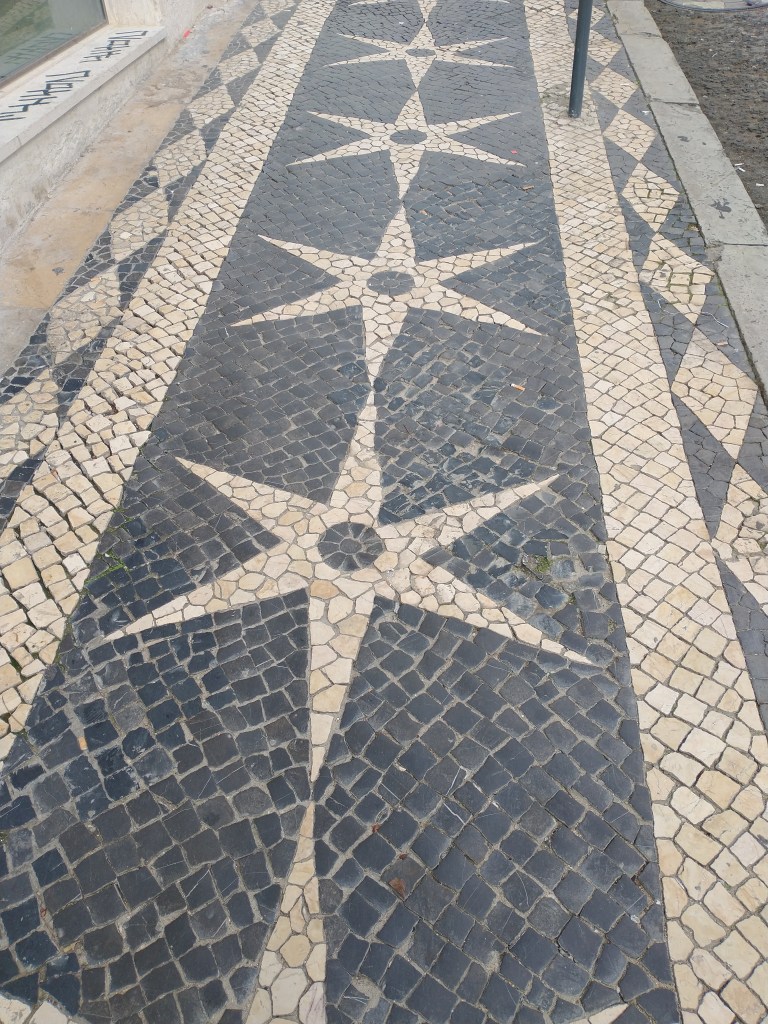
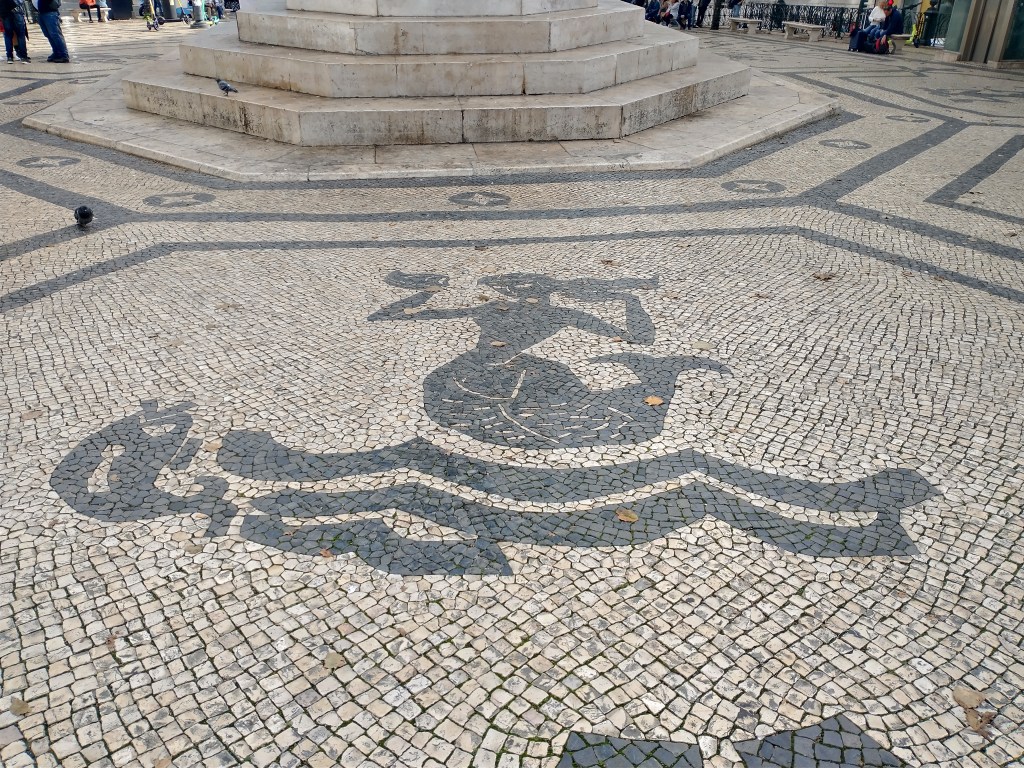
Like in Prague, Lisbon has a lot of artistic black and white mosaics in the sidewalks, but people seem to claim that this is a uniquely Lisbon thing. It’s obviously not. Anyway, they do a lot of it in Lisbon, all over the old parts of town, and it’s a nice touch. The only catch is that these stones become quite slick when wet, so during and after a rain storm, one must walk with care!

Today’s dad joke: What’s a superhero cape you wear around your waist instead of your shoulders?
A flying butt-dress!
Today’s limerick:
Lisbon sidewalk mosaics made of stone
Are black and white, basically they're two-tone
Flowers, waves, and even stars
Traversed by foot, not by cars
But after a rain you may end up prone.
Today’s travel quote:
Perhaps travel cannot prevent bigotry, but by demonstrating that all peoples cry, laugh, eat, worry, and die, it can introduce the idea that if we try and understand each other, we may even become friends.
Maya Angelou

 Major Meander
The sidewalk mosaics are really cool. Thanks for the Portuguese history lesson.