Happy Halloween! 🎃
Conde Nast Traveler readers voted Portugal the best country in the world to visit for the second year in a row. I can see why – it’s got a lot going for it. What’s even more interesting to me is to see that the rest of the top five countries are all in Asia. Hmm…
Language-wise, Portuguese looks so similar to Spanish. But it sounds like a tipsy Russian speaking Spanish, with all its “sh” and “zh” sounds, along with the close, but not quite Spanish pronunciation. At first glance you see all these common words and phrases that look identical or at least very close to Spanish, like “olá” and “por favor” for hello and please, like in Spanish. But then, thank you is “obrigado” – nowhere near “gracias”. And interestingly, you say thank you (as an adjective) based on your sex – “obrigado” if you’re male, and “obrigada” if you’re female. If you identify as neither, I’m not sure what you do. But it does mean that you can’t just parrot someone of the opposite sex when saying thanks.
Here’s an example Portuguese sentence that looks very similar to its Spanish counterpart:
- Spanish: “El gato amarillo come un pájaro.”
- Portuguese: “O gato amarelo come um pássaro.”
But then there are sentences in Portuguese that look quite dissimilar from Spanish, like this example:
- Spanish: “El perro juega.”
- Portuguese: “O cachorro brinca.”
Or how about the weekday names? I’ve commonly seen Europeans indicate that Monday is the start of the week, which actually makes more sense than Sunday, if you think about it. But in Portuguese, Monday is the second day, for historical religious reasons.
- Spanish: lunes martes miércoles jueves viernes (Monday through Friday)
- Portuguese: segunda-feira terça-feira quarta-feira quinta-feira sexta-feira
Before the 6th century AD, weekdays in Portuguese were very similar to other Romance languages. They were named in pagan Latin after Roman Gods.
However, when Archbishop Martin of Braga rose to power in the middle of the 6th century, he changed Catholicism and the Portuguese language forever. Martin of Braga (Martinho de Dume), emphasized the importance of Easter, and the observation of the Semana Santa, or Holy Week. This week was a week of rest prior to Easter Sunday, and the days of this week were named first through seventh feria, which in Liturgical Latin meant a day of rest.Martin of Braga disagreed with the reference to pagan Roman Gods that was used for weekdays at the time, and decided to use the names for the days in the Holy week instead. Saturday and Sunday were the only days that weren’t named after these Gods, and therefore kept their names.
https://www.fluentu.com/blog/portuguese/days-of-the-week-in-portuguese/
Speaking of Rome, Portugal (and part of Spain) was called Lusitania by the Romans. I didn’t know that. I was just familiar with the ship RMS Lusitania that was sunk by a German U-boat in 1915.
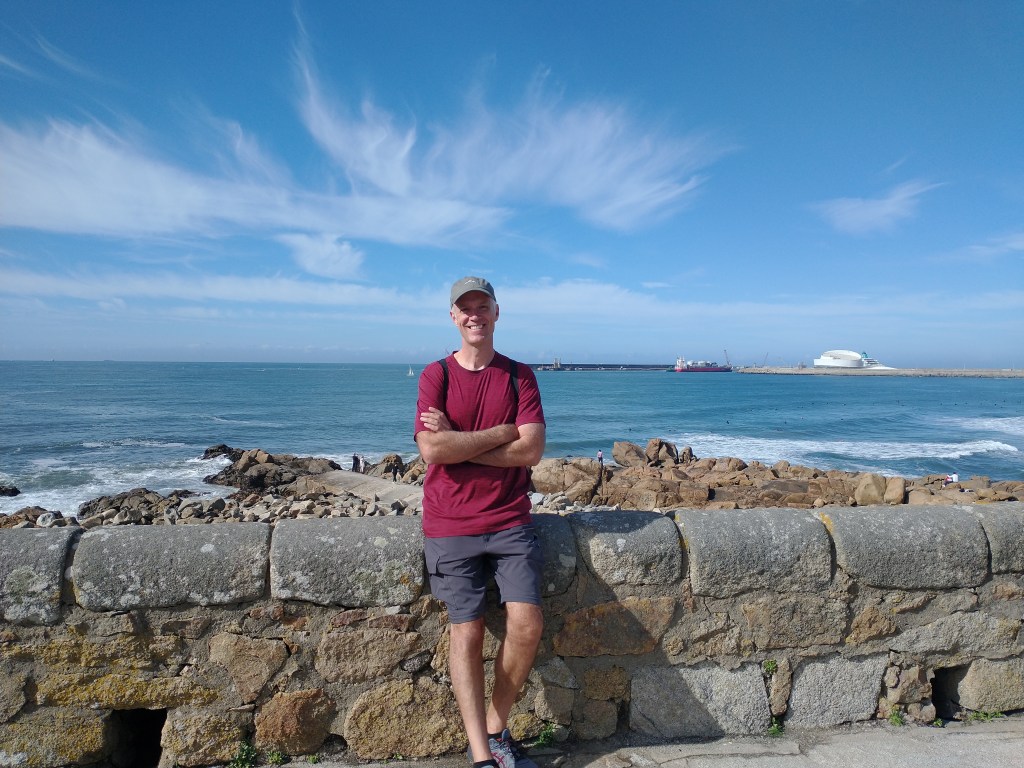
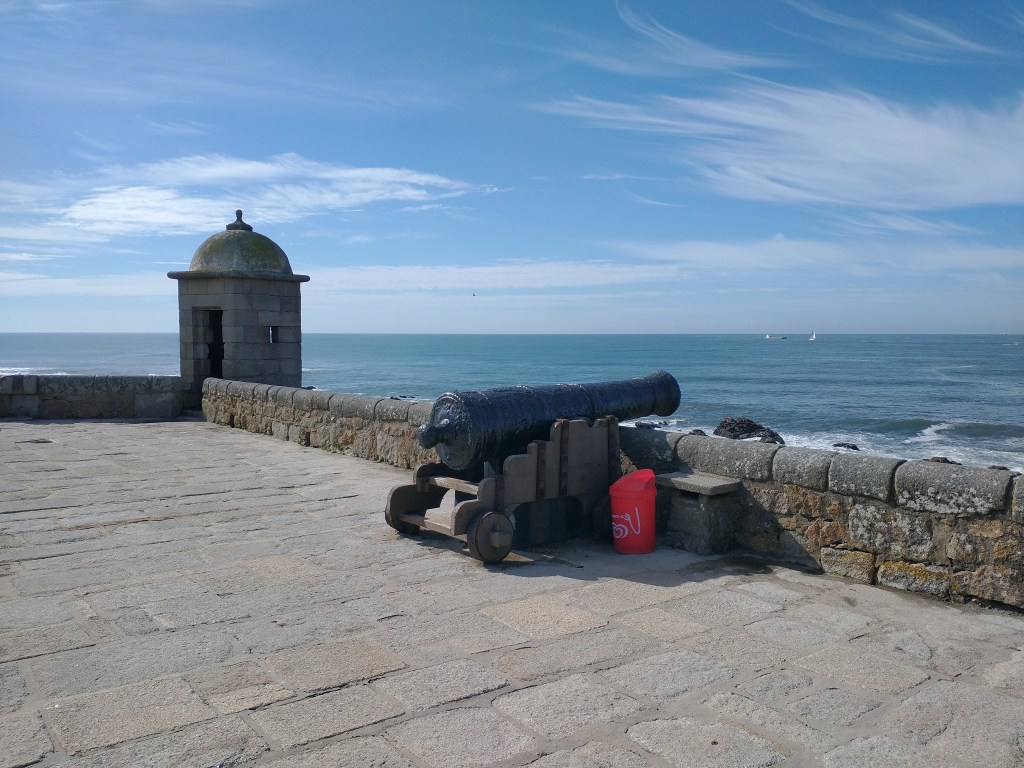
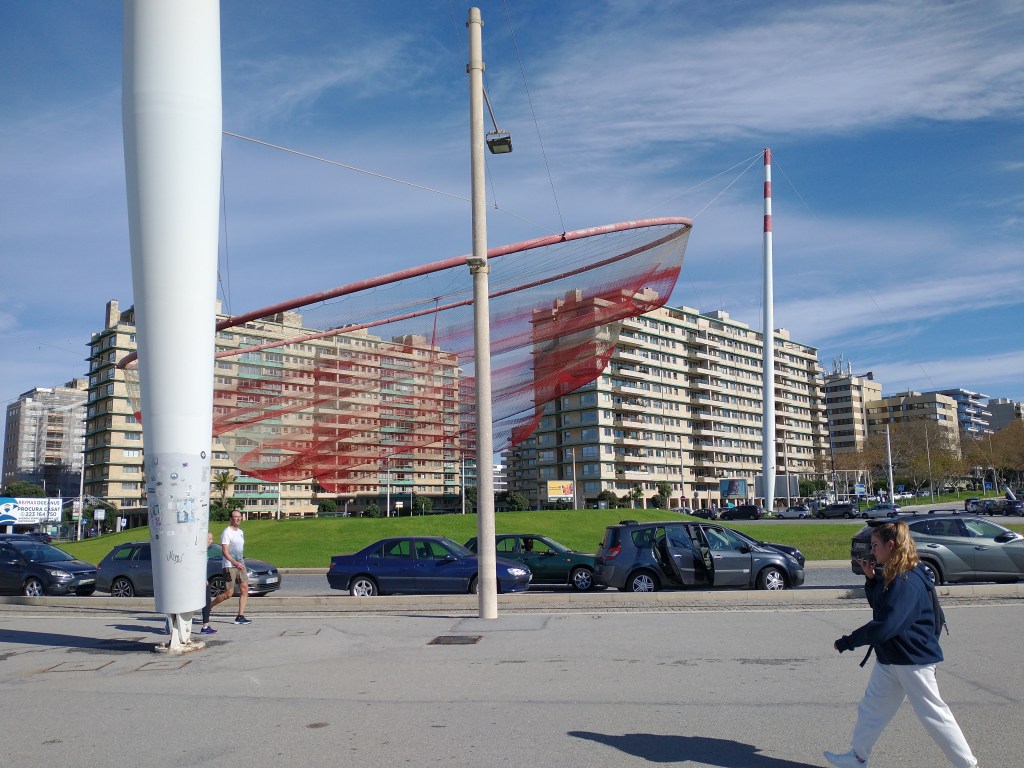
On Sunday, the first non-rainy day since I arrived on the previous Wednesday, I enjoyed a day at the beach. Thank frickin goodness for the incessant rain to end, though it’s supposed to rain hard tonight and tomorrow until about lunchtime. It’s beautiful out there at the ocean – sandy with large rocks as well, lots of cafes and restaurants, green parks, workout centers, fortresses, surfing, and more. The water was quite chilly, but there were kids out there swimming without wetsuits.
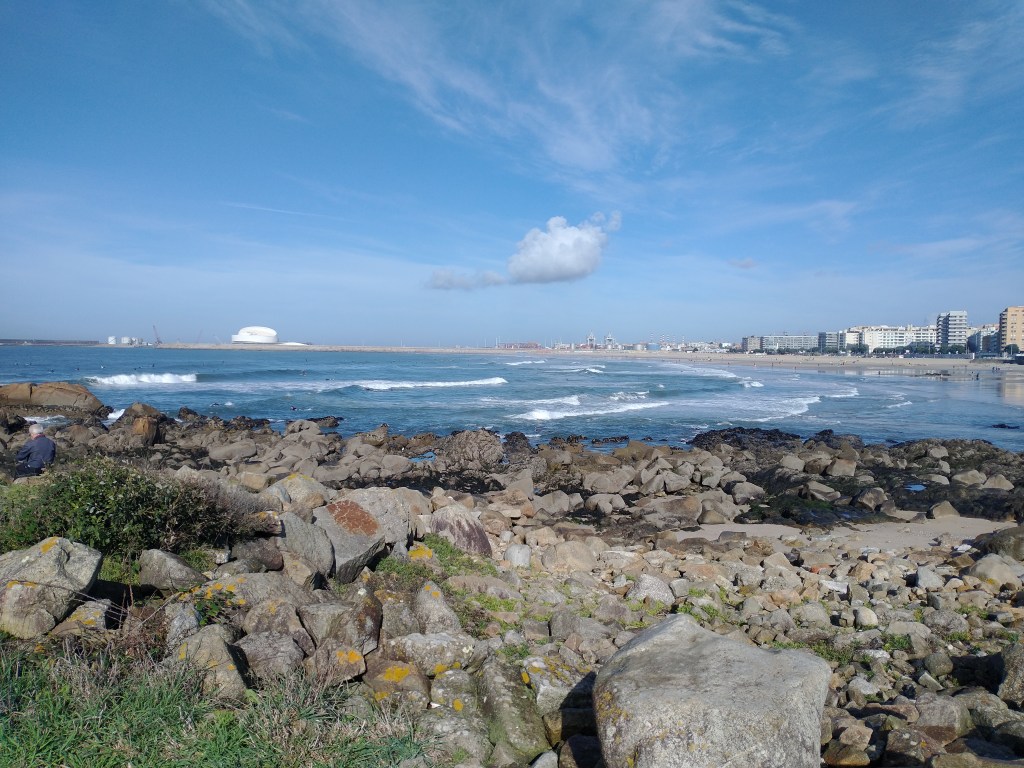
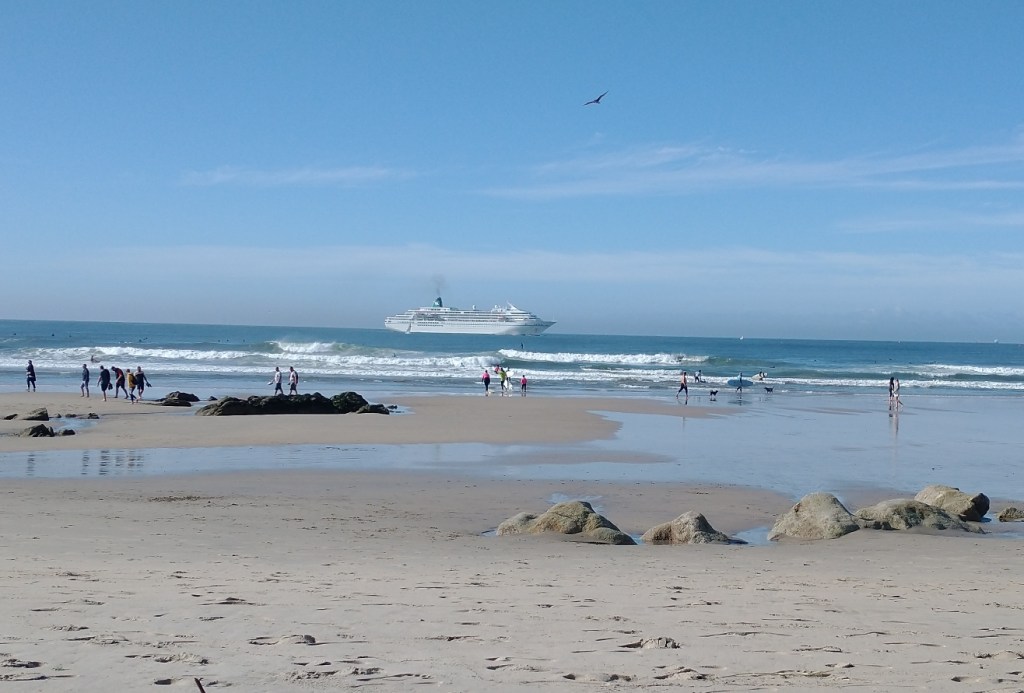
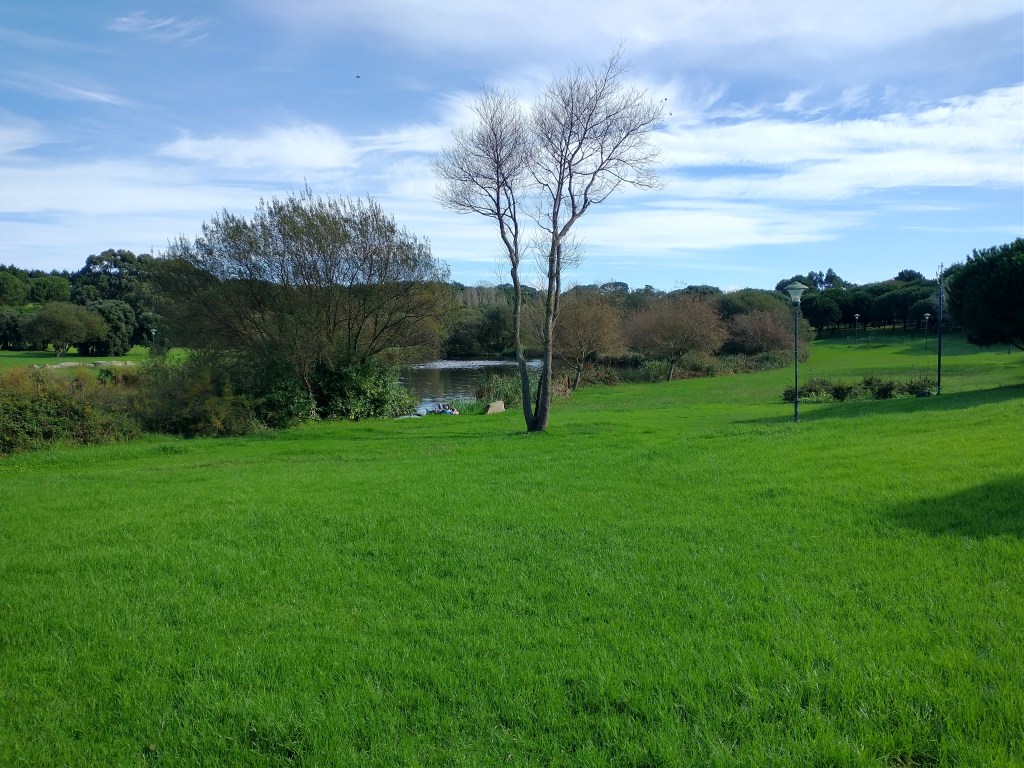
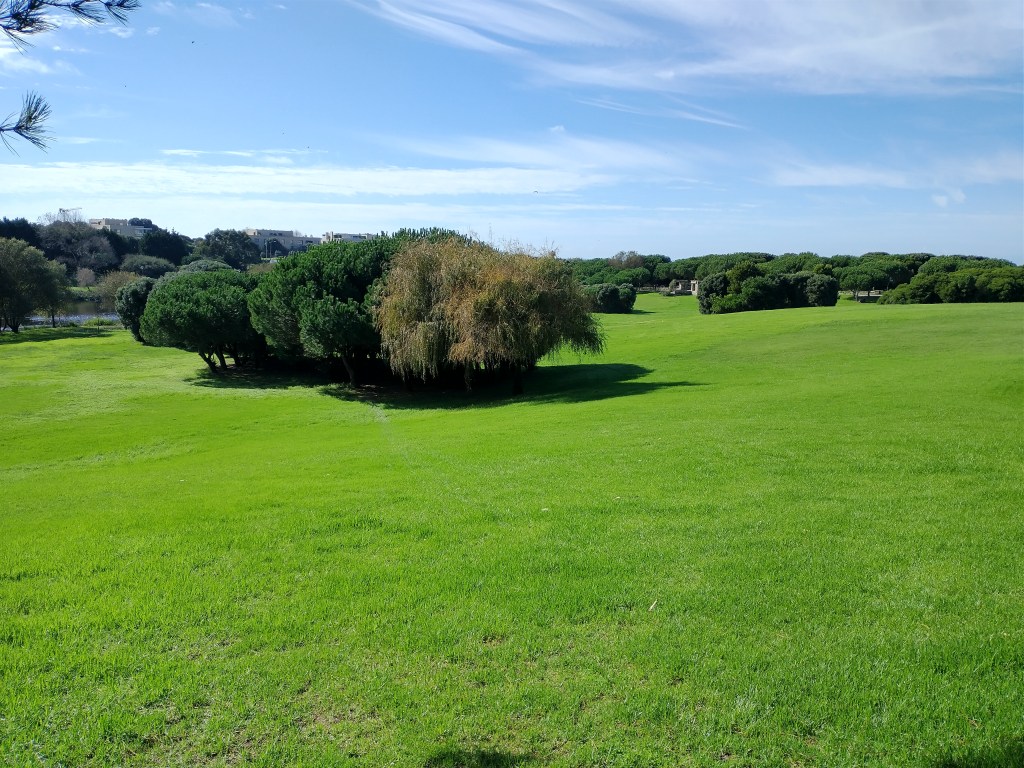
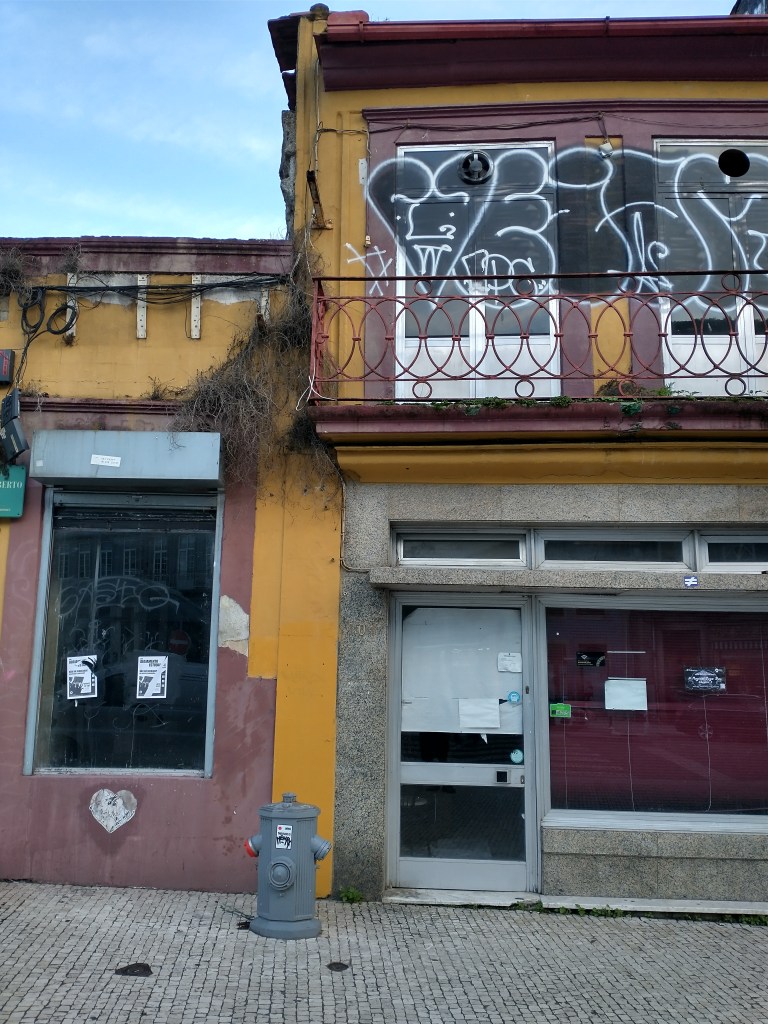
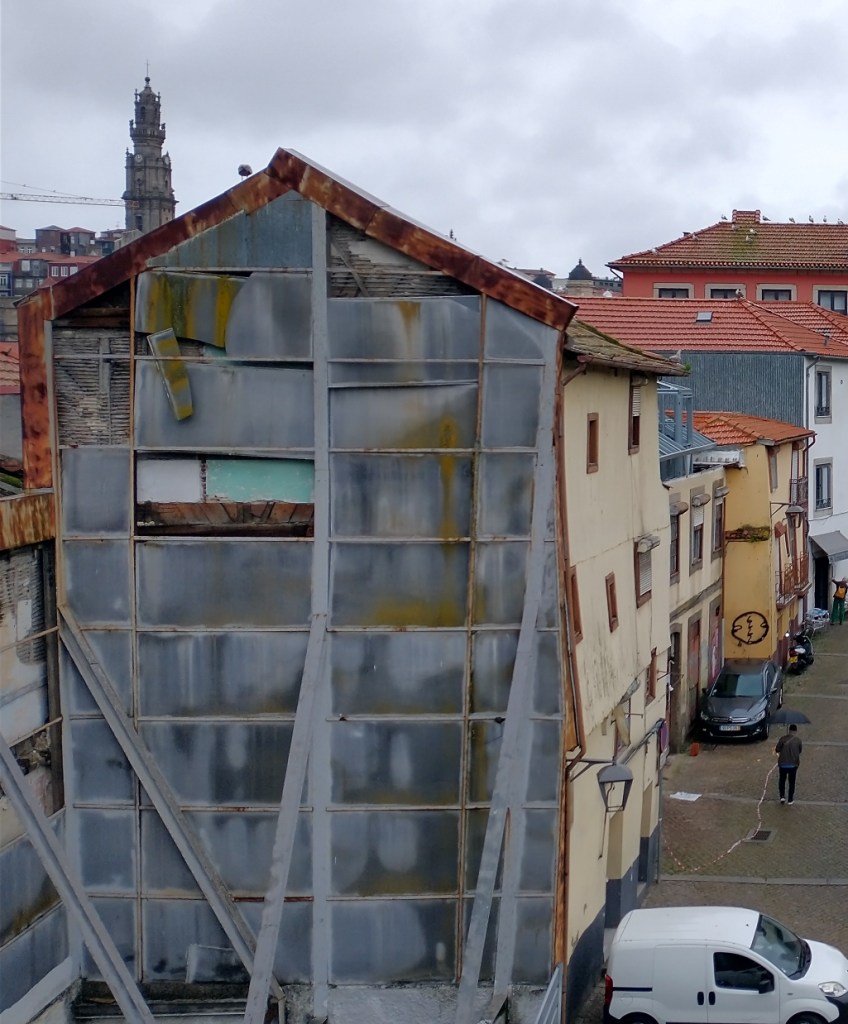
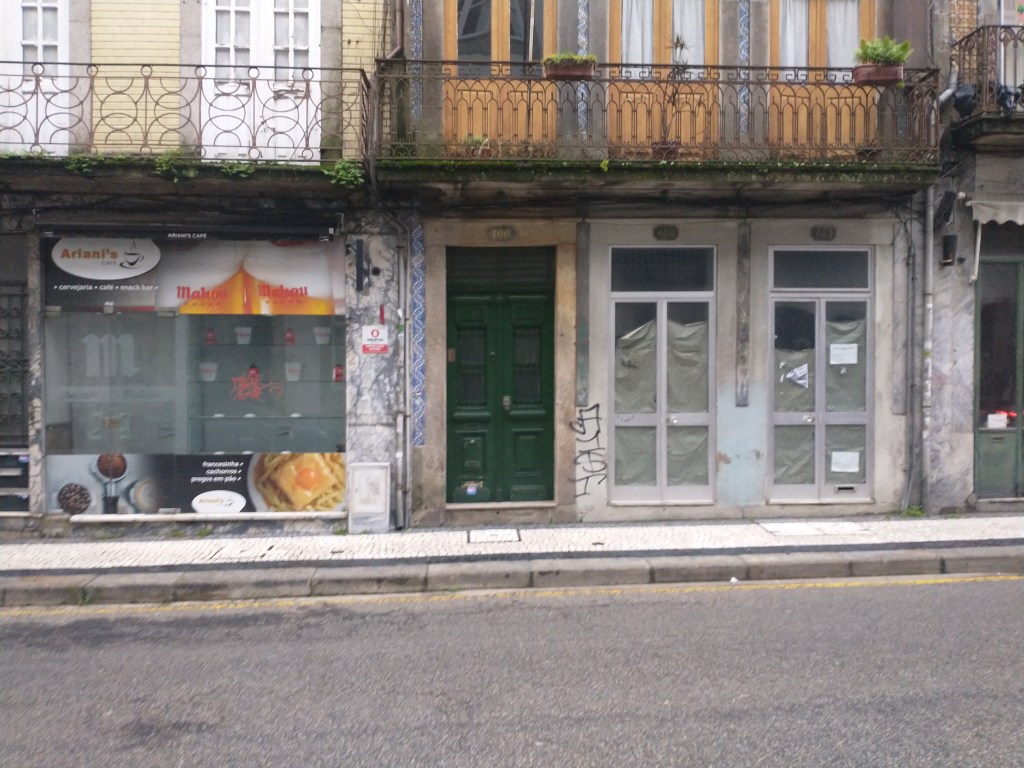
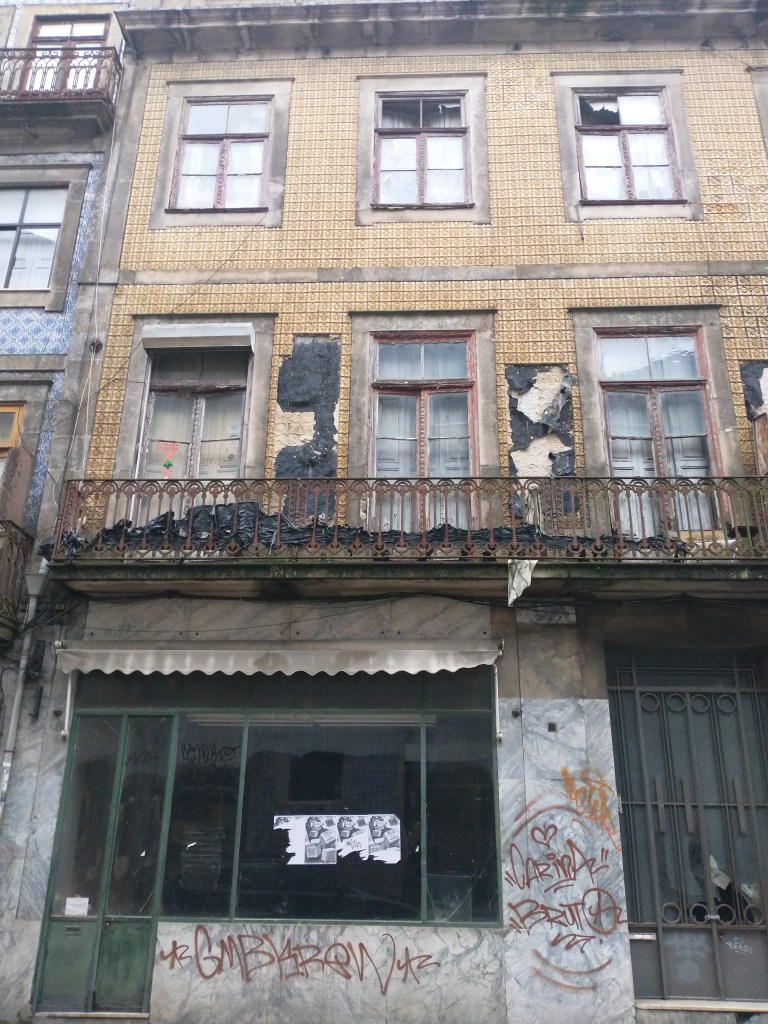
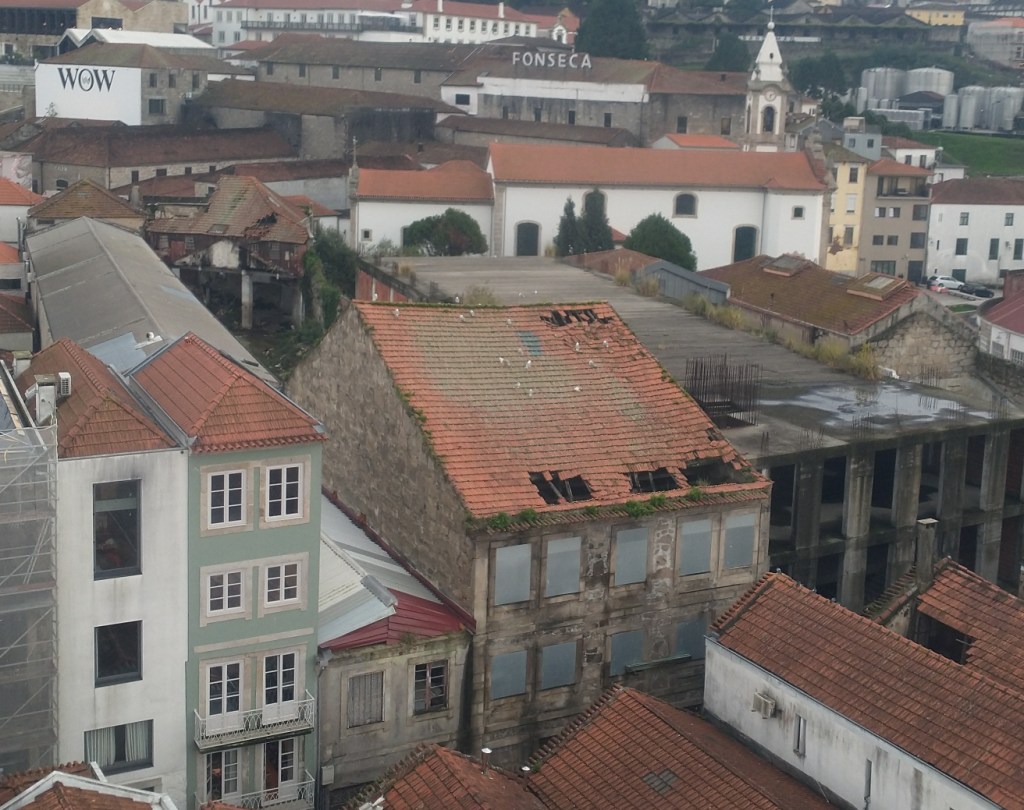
There are so many derelict and empty buildings around Porto. Plenty to choose from for investment! I don’t know what the deal is because directly beside most of these are thriving businesses, and all the neighborhoods are fairly nice otherwise. No random dudes or sketchiness.
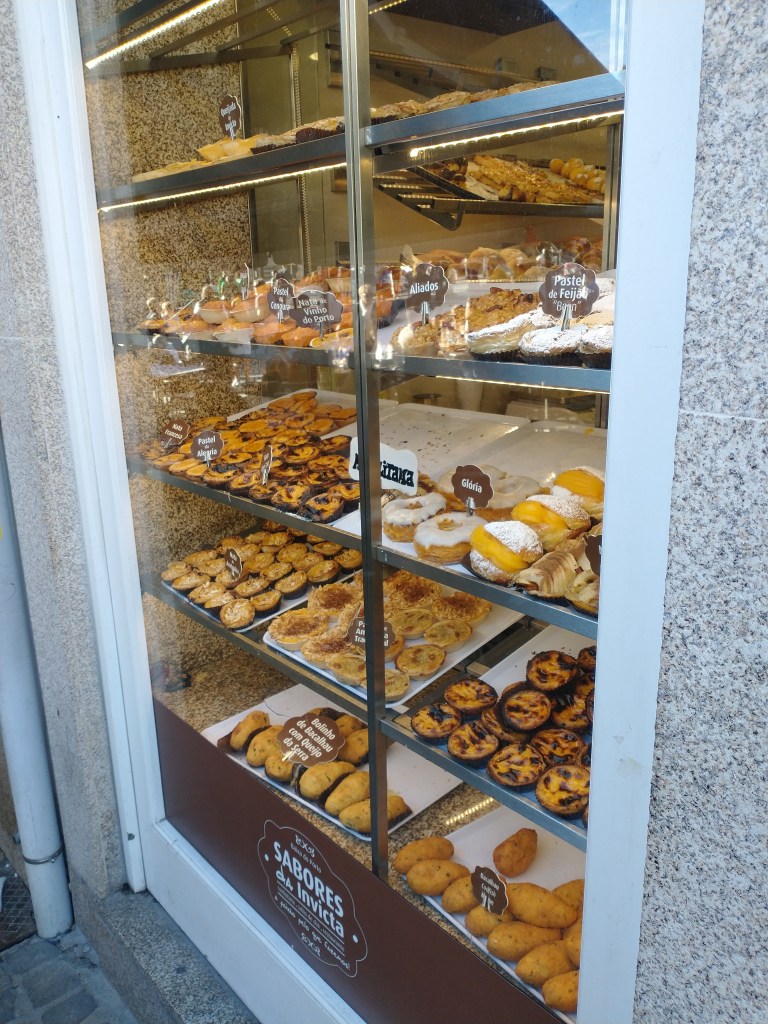
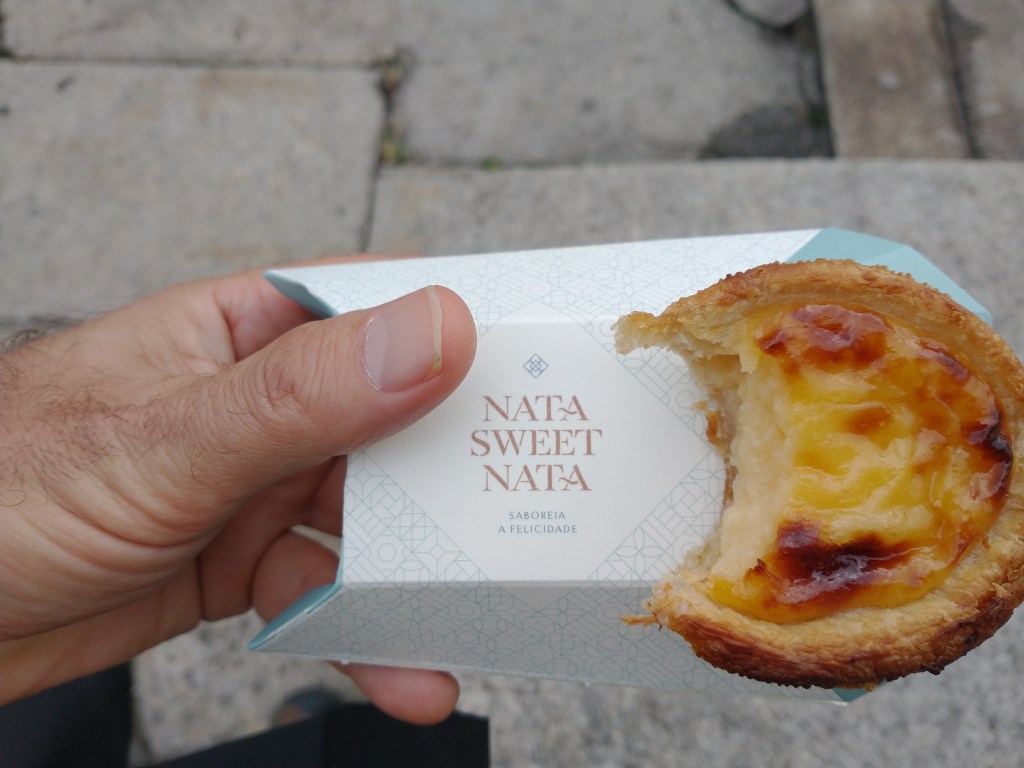
The pastries in Portugal are top-notch, especially the pastel de nata, which I’ve enjoyed every other day. On the days between I try another type of pastry!
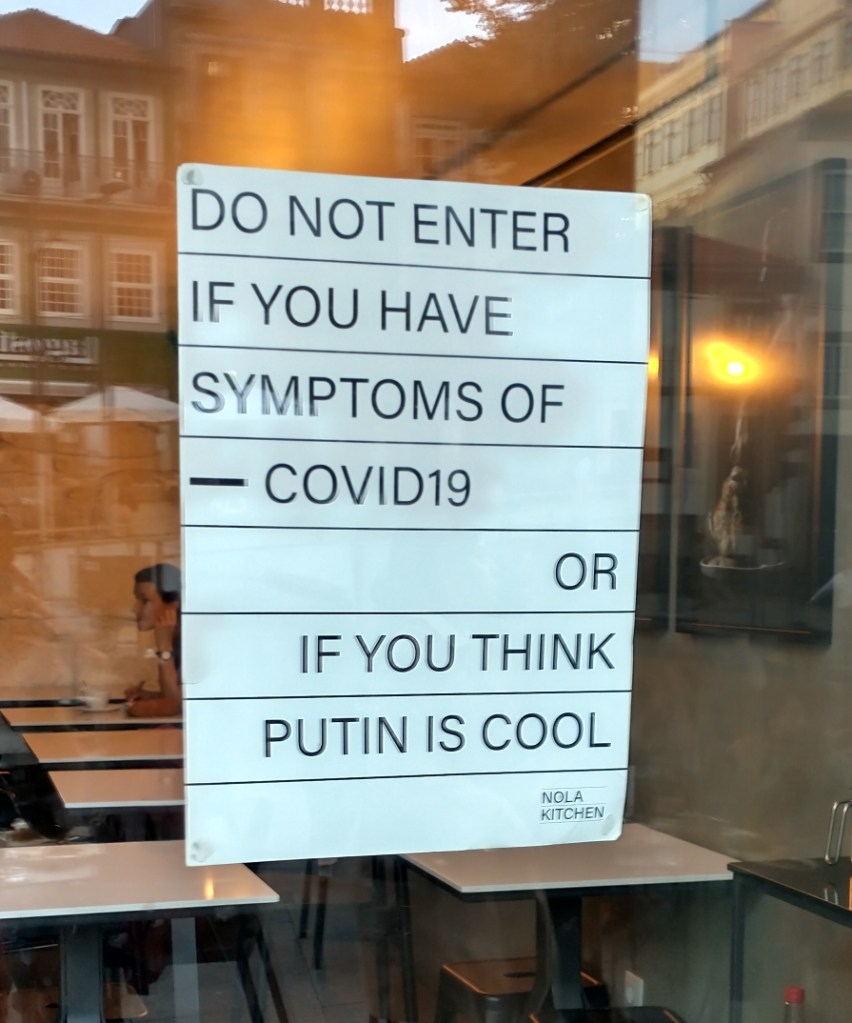
Today’s funny sign:
Today’s limerick:
Porto's buildings, many are crumbling
Local residents must be grumbling
Gray, forlorn, and rather bleak
Empty rooms with roofs that leak
Without repair, walls will be tumbling.
Today’s travel quote:
Your true traveler finds boredom rather agreeable than painful. It is the symbol of his liberty-his excessive freedom. He accepts his boredom, when it comes, not merely philosophically, but almost with pleasure.
Aldous Huxley

 Major Meander
It seems like it would be a language to learn from scratch. Spanish knowledge will help, but it’s like you’d need to put on your Portuguese brain. Beautiful photo of you in the sunny blue sky!
Perhaps no random dudes, but certainly graffiti. My observation is that Europe is far more into pastries than the U. S., which is a plus point in my view.
Loved your post on languages. ‘El cachorro brinca’ IS portugese….but cachorro is another word for “puppy” in Spanish, and brinca is a synonym with salta (brincar/saltar=to jump), so it seems roughly like “The puppy jumps” (pretty close to “the dog plays!” Fun to play with languages!
SO glad that you’re enjoying Portugal. Joe
Thanks, Joe – you clearly know Spanish better than I! Since you know it that well, then you’d be all set in Portugal, I’m confident. I look forward to seeing you on a trail soon! It would have been fun to hike together in Sintra today.