
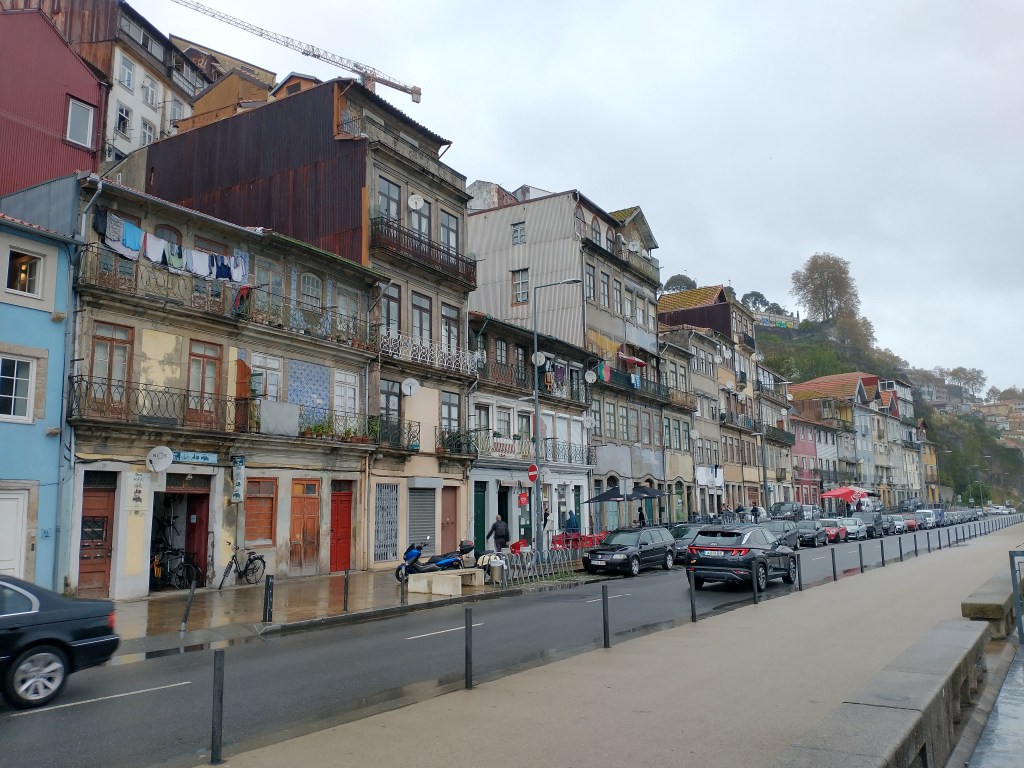
First I should say that Porto is a very different place than all those eastern and central European cities I visited earlier on this trip! Architecture, people, climate, and more are all notably different, as would be expected. It feels quite unique and very old.
It’s been raining off and on continuously since I’ve been here, and it’s supposed to continue doing so for the rest of my week in town, alas. I had bought a cheap and fragile little umbrella in Krakow, and just one burst of wind in Porto broke two of the retractable arms, rendering it basically useless against the rain. So I bought a big strong umbrella, since it looks like this is the reality for a while. It was almost 70 degrees F (over 20 C) this morning when I woke, and with the rain it’s quite humid.
I’ve been reading about Porto’s history, and to my surprise I learned that the history of port wine is strongly tied to England, who turned to the Portuguese for wines when the English were feuding with the French.
Port is actually a British phenomenon. Because Britain isn’t suitable for growing grapes, its citizens traditionally imported wine from France. But during wars with France (17th and 18th centuries), Britain boycotted French wine and looked elsewhere. At that time Portuguese wines often didn’t survive the longer sea journey to England. It’s said that the port-making process was invented accidentally by a pair of brothers who fortified the wine with grape brandy to maintain its quality during the long trip. The wine picked up the flavor of the oak, which the English grew to appreciate. The British perfected port production in the succeeding centuries; hence many ports carry British-sounding names (Taylor, Croft, Graham).
Rick Steves
Port is a medium-sweet wine (around 20 percent alcohol), usually taken as a digestif after dinner. The wine is fortified at a ratio of about 4:1 with aguardente, a grappa-like brandy distilled from the same grapes. The brandy is introduced before fermentation is complete—and kills the remaining yeast—which leaves more sugar in the port (standard wines ferment for 10-12 days; port for only 2-3 days). After the brandy is added, the wine ages for at least two years.
Rick Steves
Port wines are aged across the Douro River from Porto in Gaia, and you can see in one of photos below some of the port companies’ signs with English names, like Taylor’s. It’s big business, and Brits are definitely here doing their visits to some port wine lodges. I’ve had port before, and I didn’t find it to my liking. But apparently it’s an acquired taste, so perhaps I’ll need to try to make this acquisition while in town!
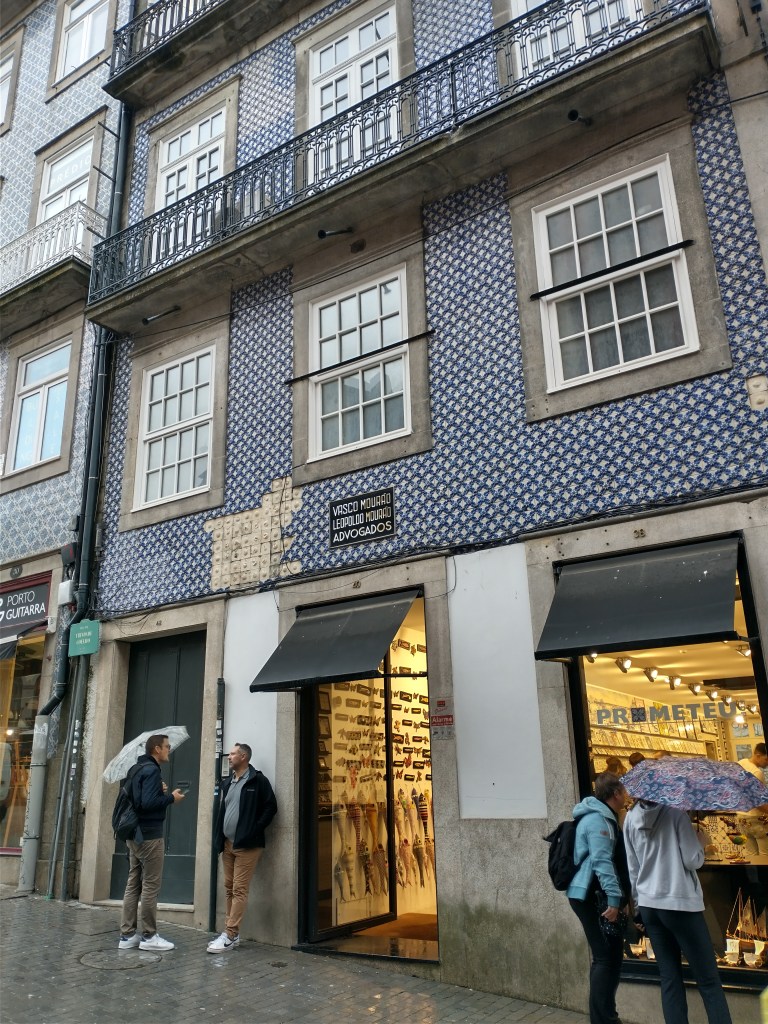
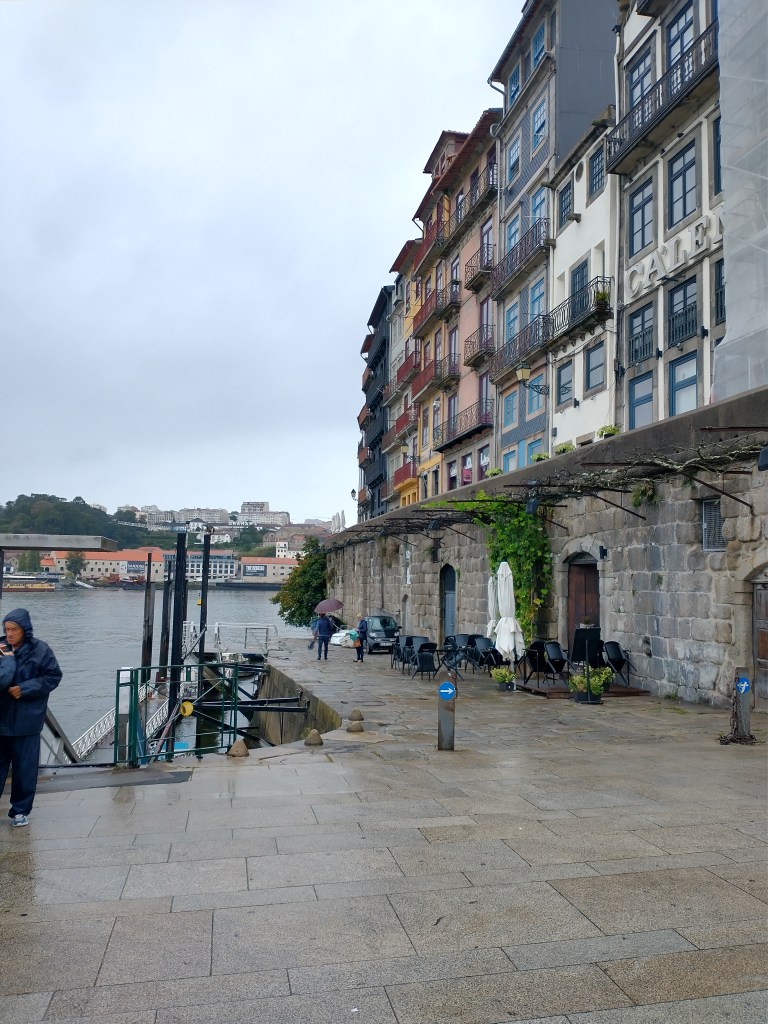
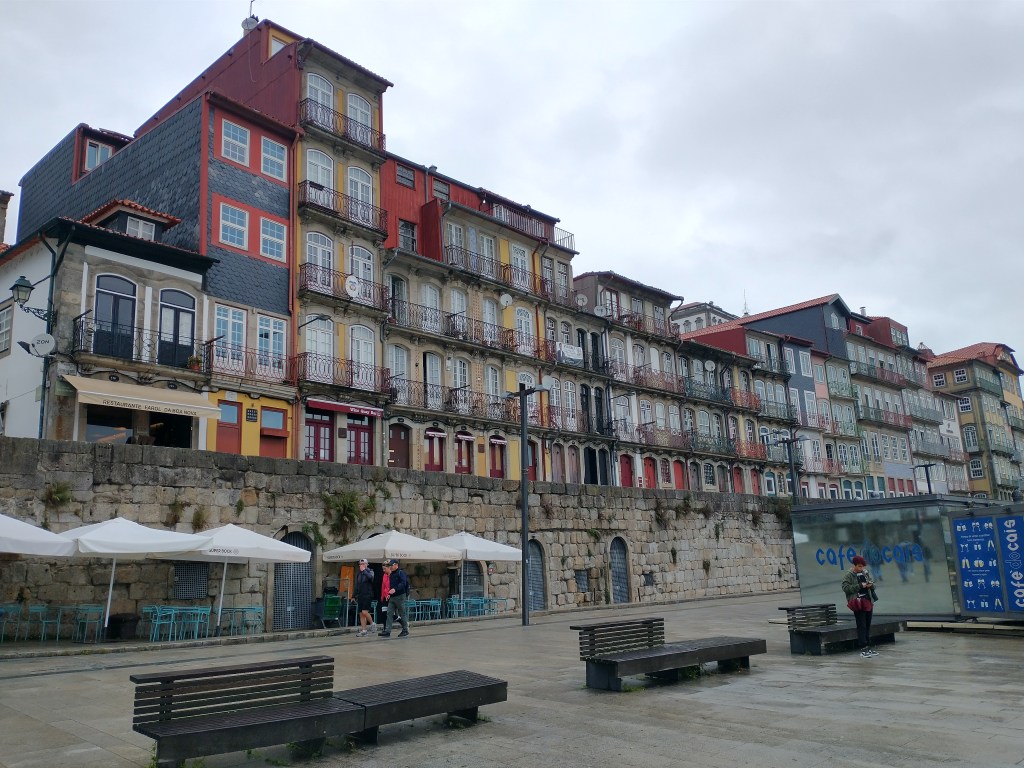
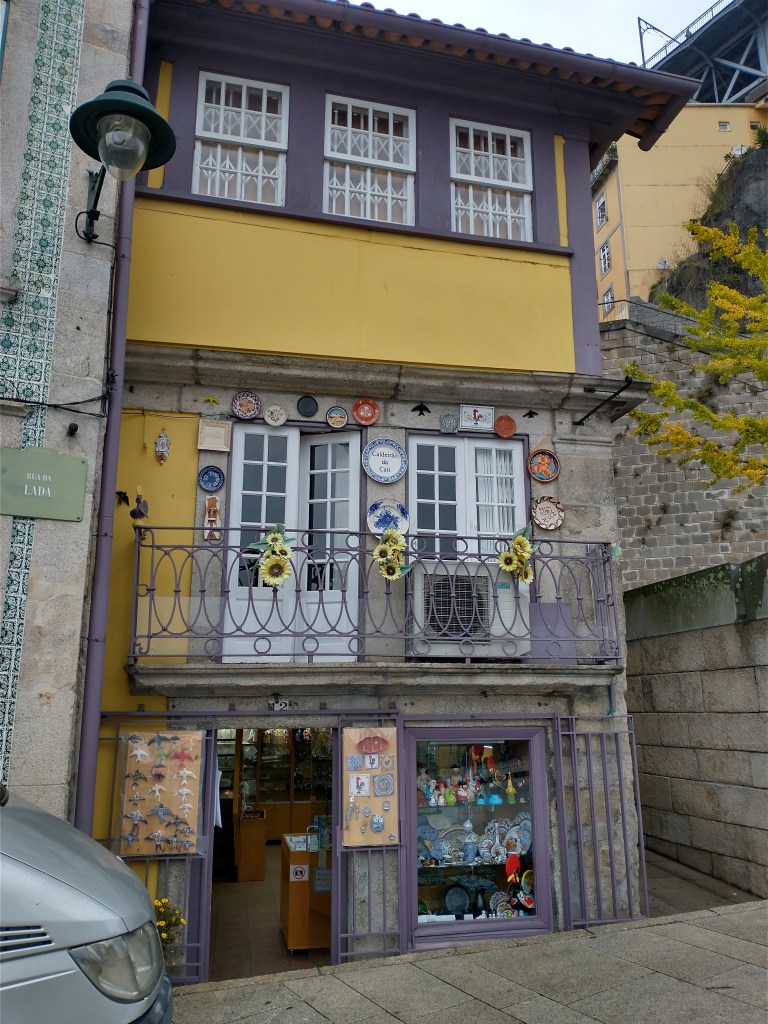


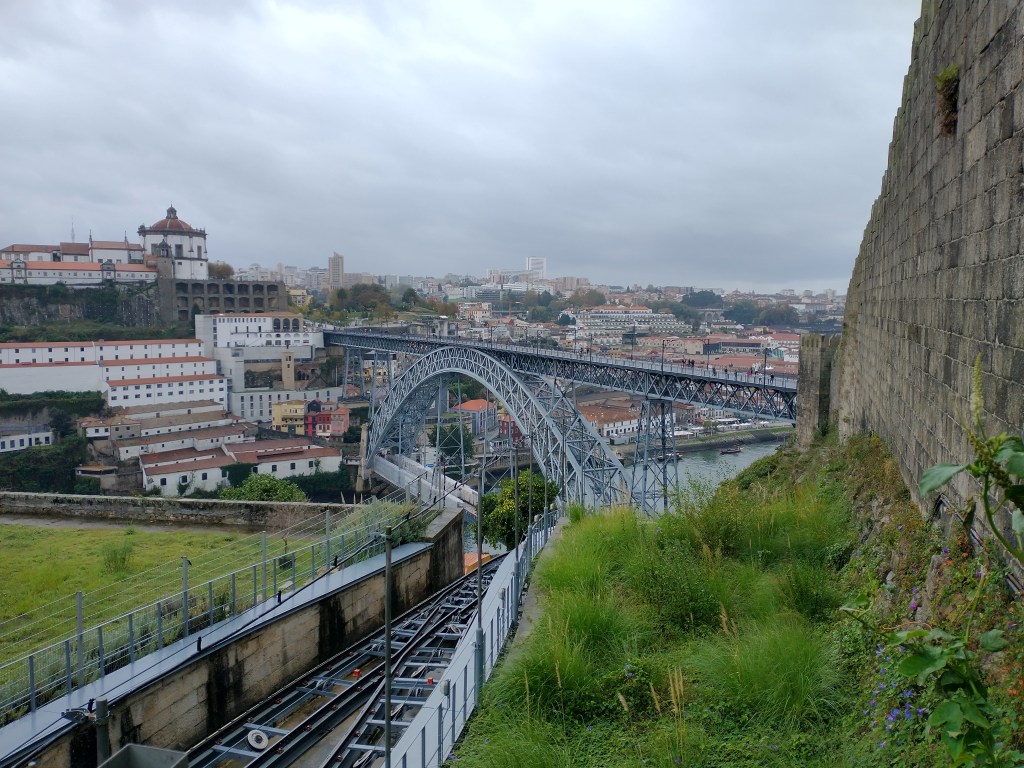
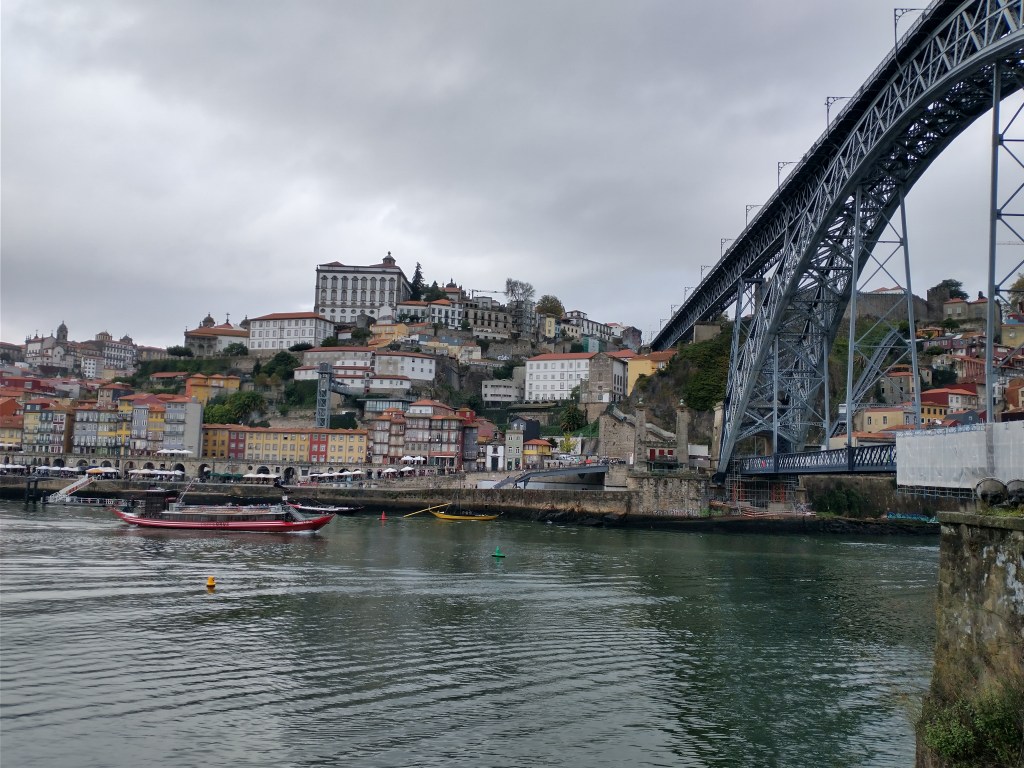
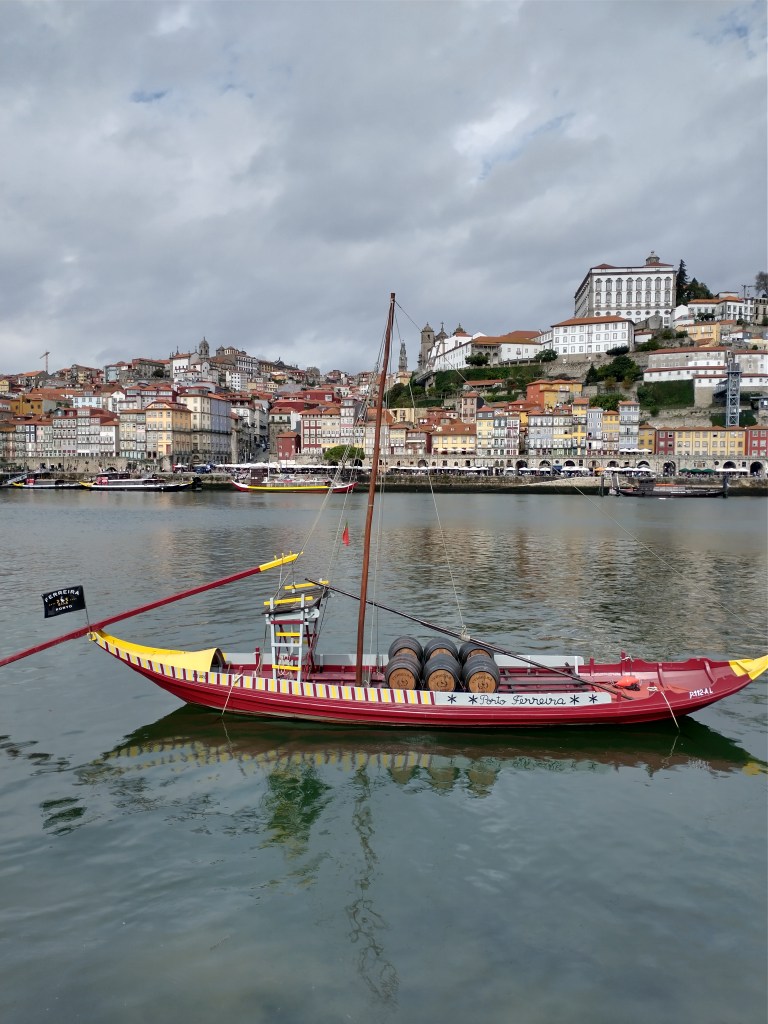
Today’s dad joke: Why is wine from the Douro river valley aged on the Gaia side of the river?
Because it’s im-PORT-ant to do it that way
Today’s travel quote:
Travel is glamorous only in retrospect.
Paul Theroux

 Major Meander
Bridge over the rail lines looks like a roller coaster.
Re: the French wine boycott, I am reading a novel currently called “The French House” that is about a female vineyard owner during Napoleon’s time, and trade with Britain and Russia is a big element of the struggles she had. Apparently it’s based on a true story and may be made into a movie sometime soon!
That definitely sounds interesting!