
“Ruin pubs” are a staple of the old Jewish quarter in Budapest, where I’m staying. This area of town, while quite central, remained largely deserted and dilapidated after the Communist takeover. Much of it is still dilapidated, but certainly no longer deserted! This is the prime party area of town (to my surprise), and this area is home to a collection of pubs within old buildings. Perhaps the original, but definitely the reigning king, is Szimpla Kert.
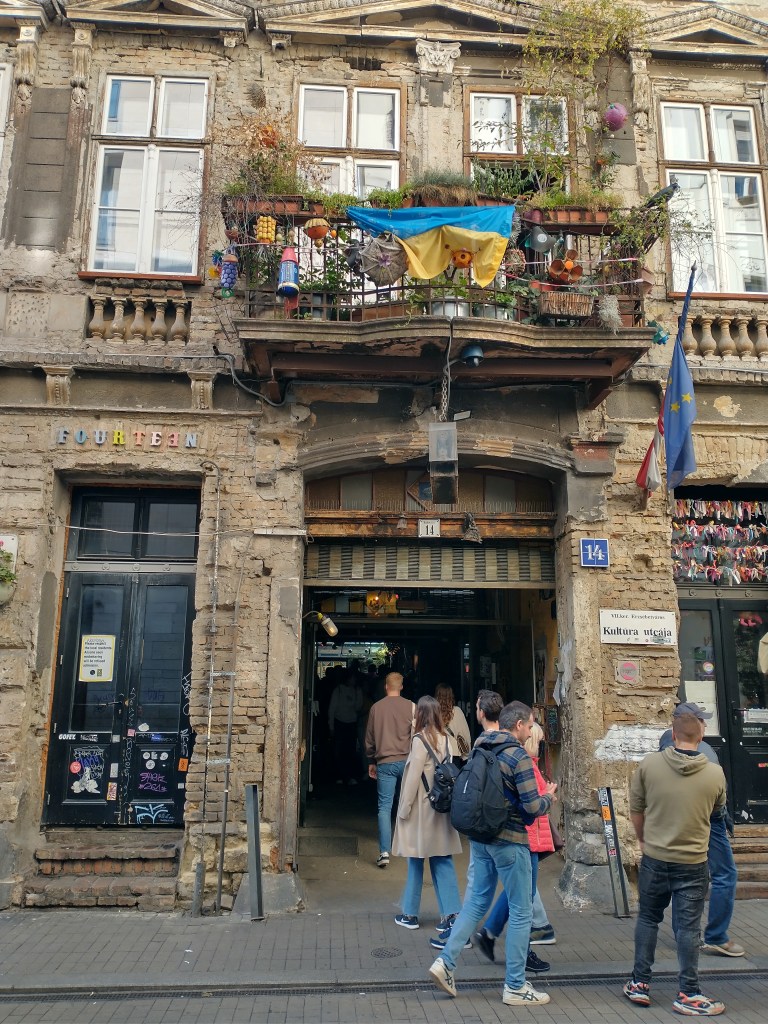
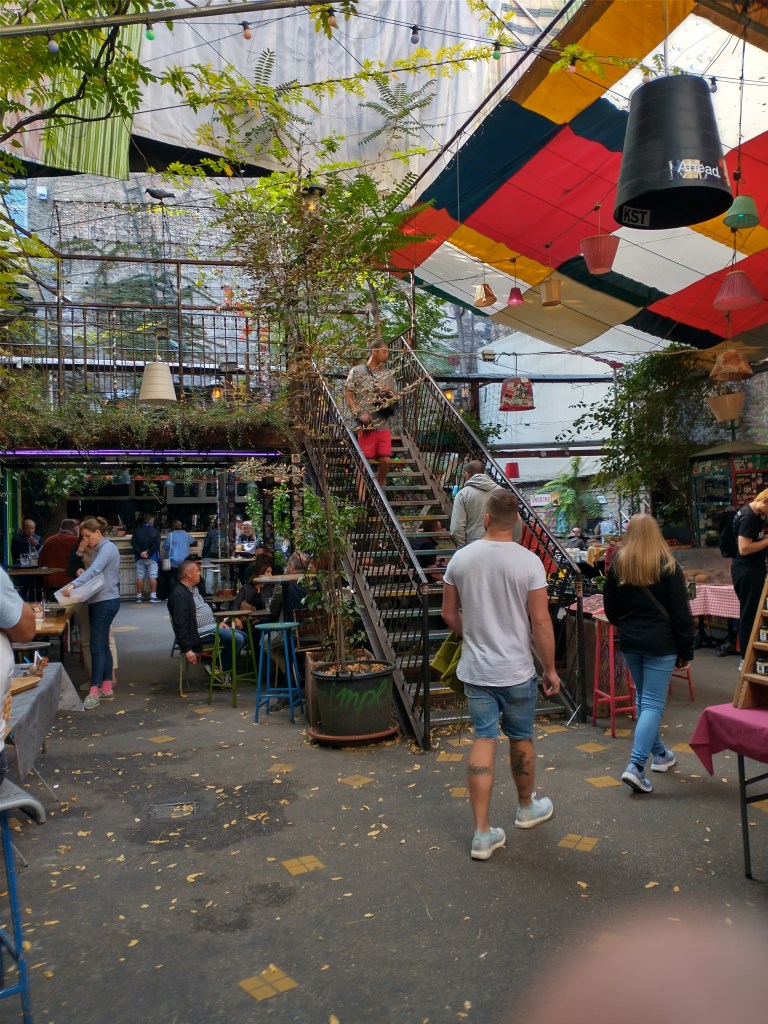
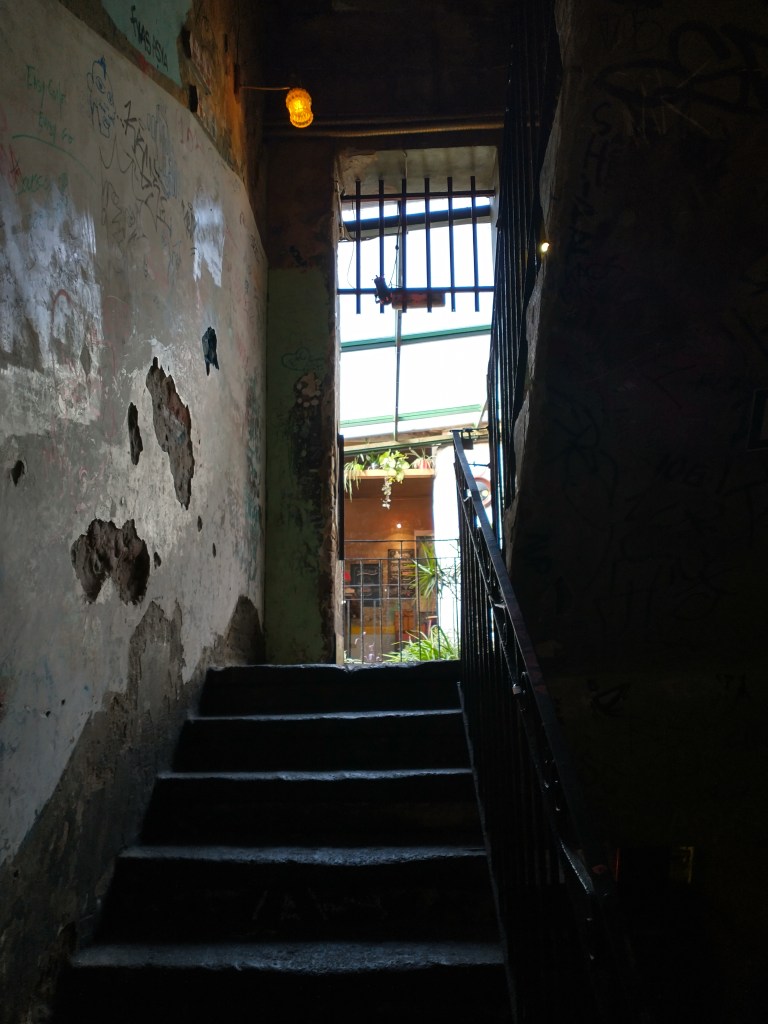
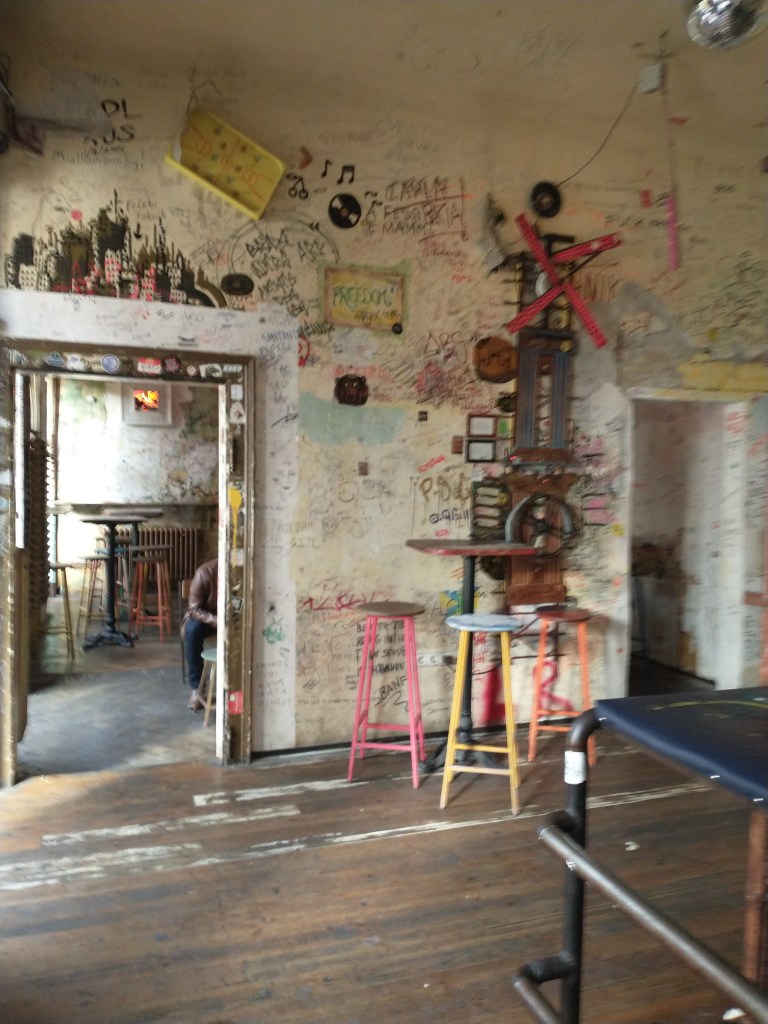
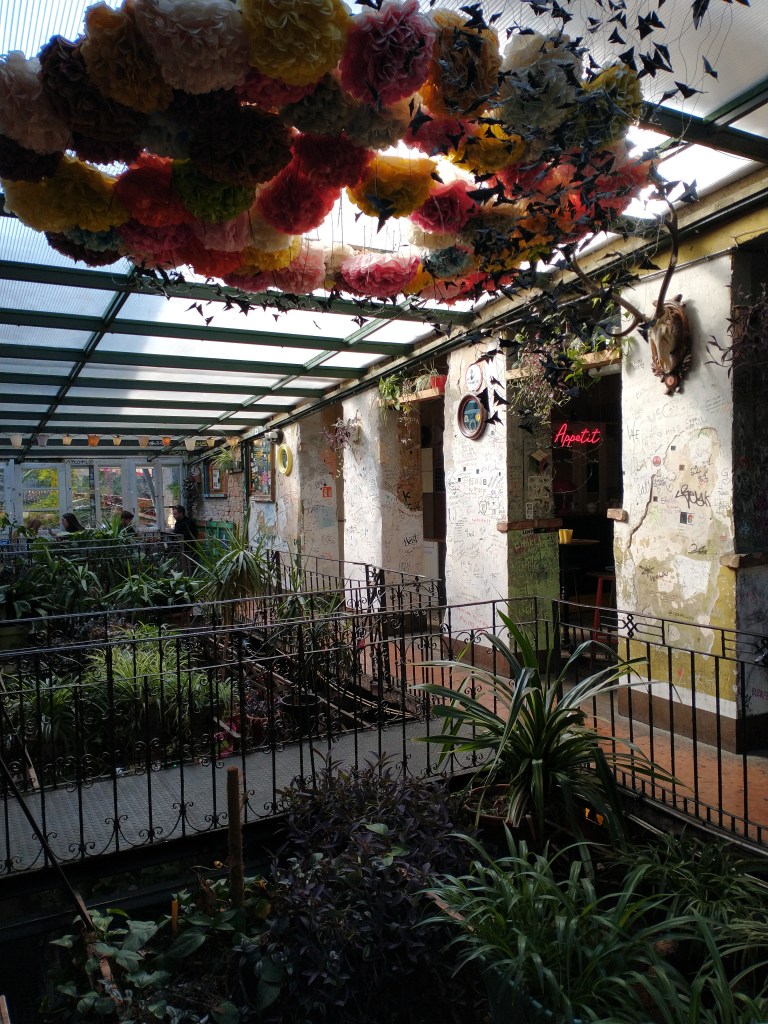
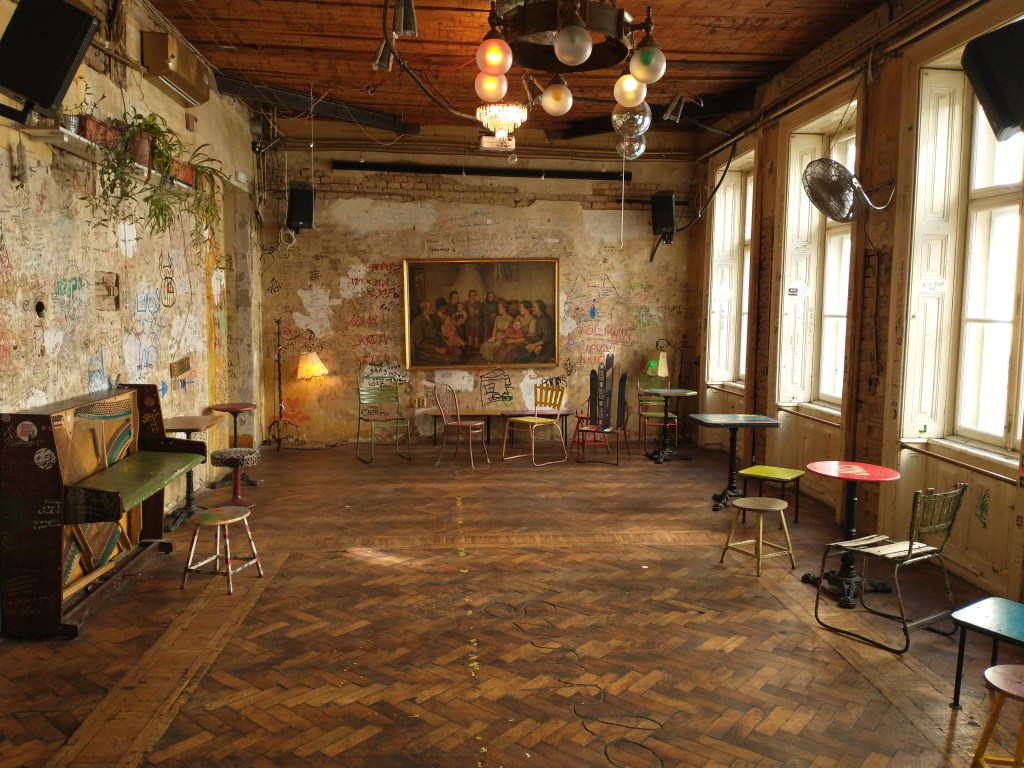
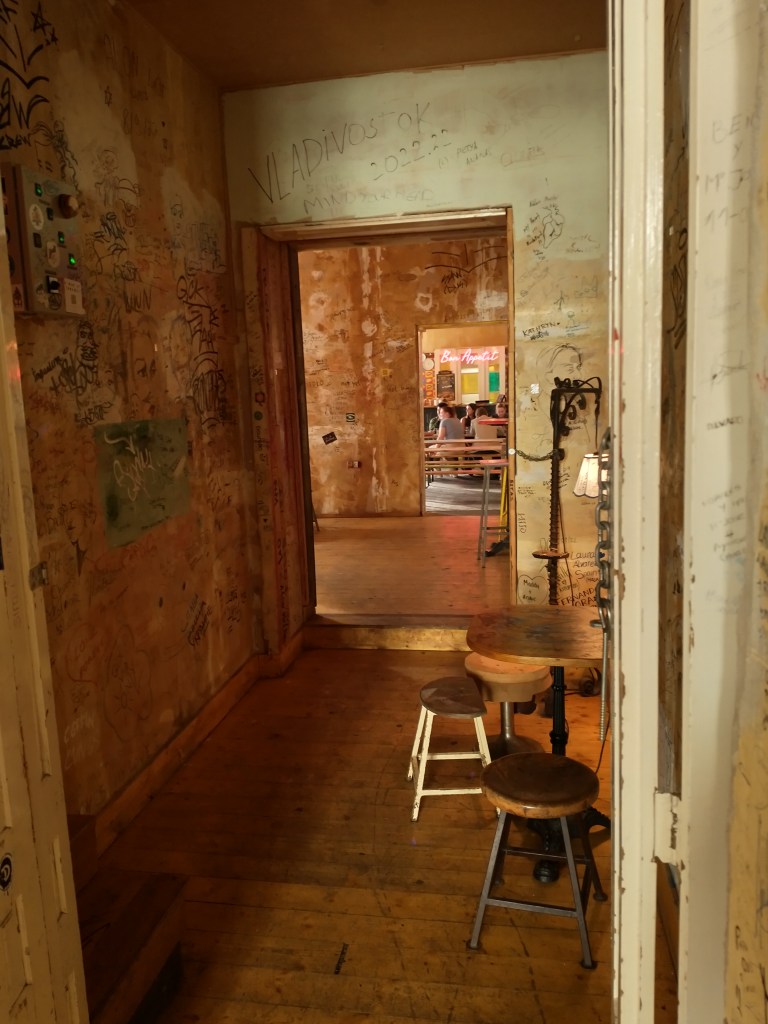
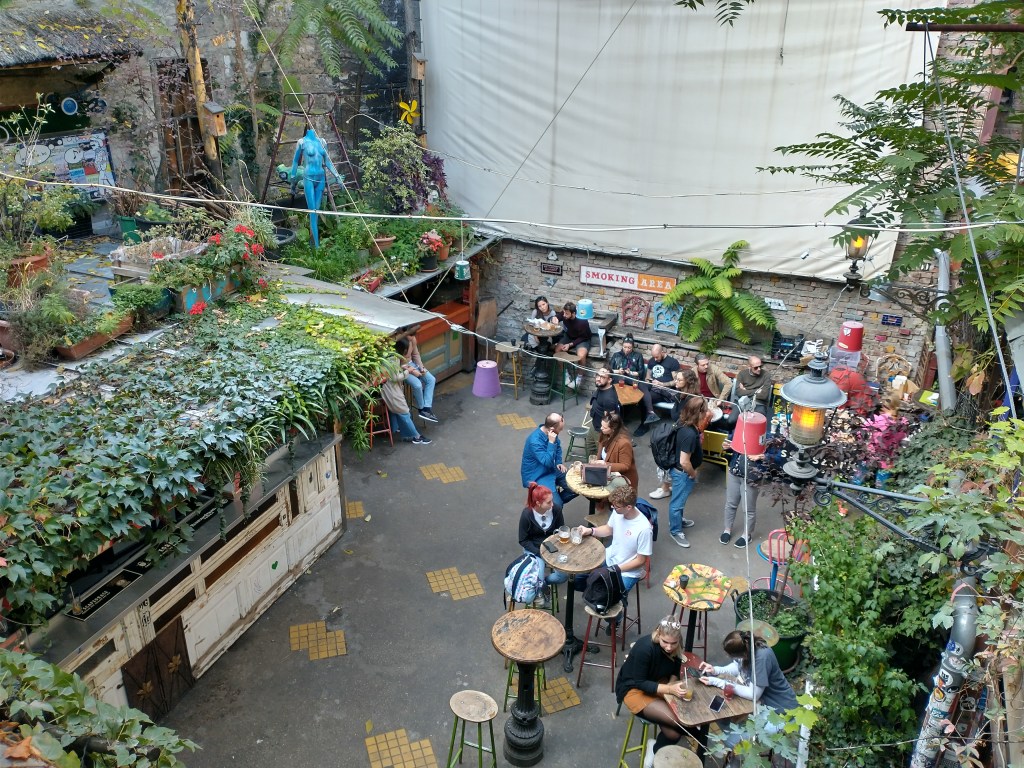
Szimpla Kert (“Simple Garden”) sprawls through an old building that ought to be condemned, and spills out into an equally shoddy courtyard. Surrounding the garden is a warren of tiny rooms—each one different.”
Rick Steves
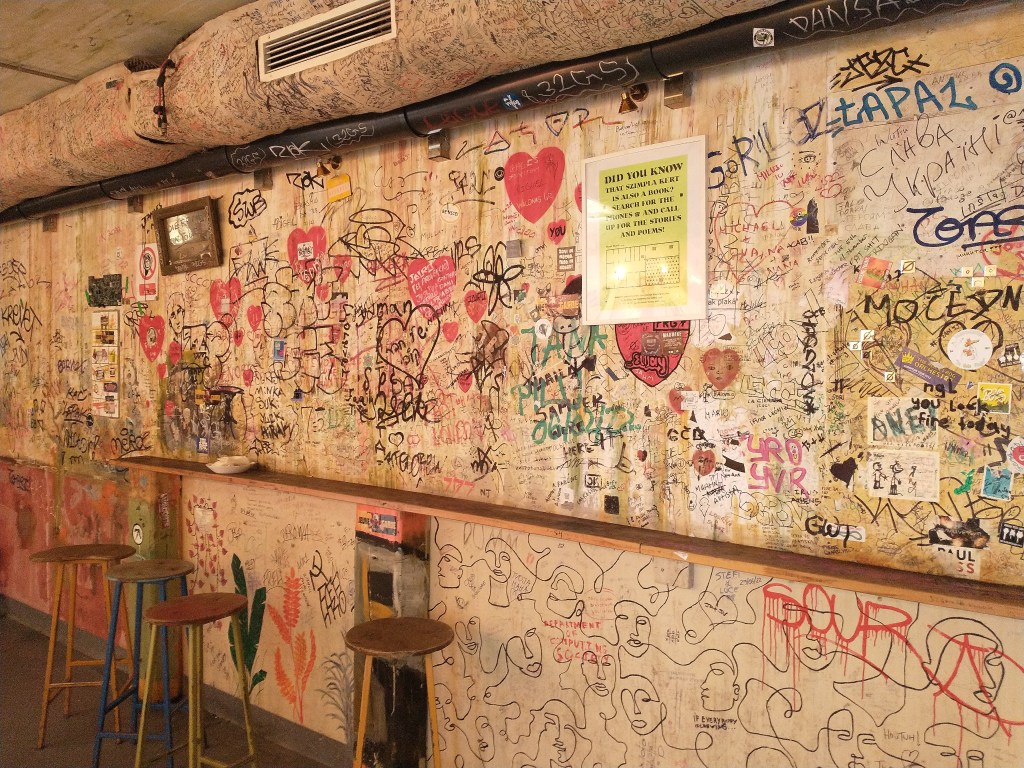
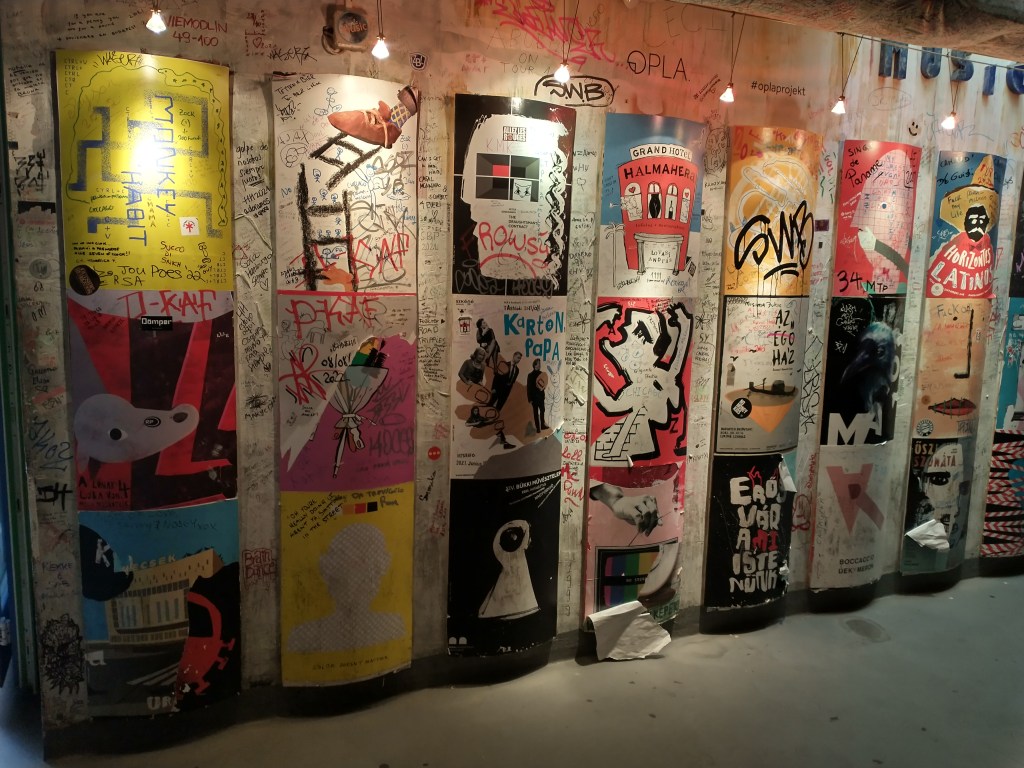
While I visited multiple ruin pubs, the photos below are from Szimpla Kert alone! One can wander through the old creaky-floored hallways, up and down stairwells, and in and out of various ramshackle and graffitied rooms. There are places to get food, along with multiple bars, all inside the one building. On an early Sunday afternoon, there was a farmers’ market being held in the entrance hallway and anterooms. Here’s a Google Maps link so you can see more photos, including from nighttime, if you want:
https://maps.app.goo.gl/zrFyfrqUed9xkBtc8
Sofia told me that she came here in 2021 when she and friends visited Budapest. It’s as if you put together a collection of hipster West Asheville establishments, like Wedge Brewing of the old days, plus Fleetwood’s, plus Odditorium, plus Battle Cat, and then made it bigger. It’s a weird juxtaposition of festive and eery.
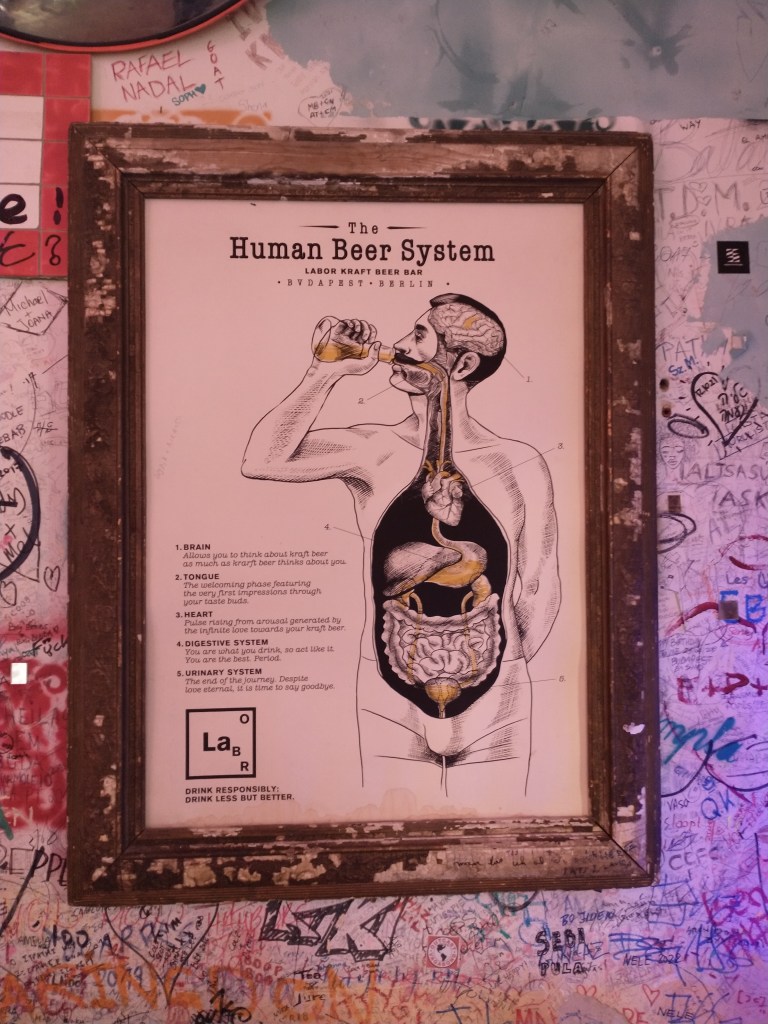
A little cultural tip for your future visit to Budapest: don’t clink your beer glasses together. 🍻
In the spring of 1849, the Hungarians mounted a bloody but successful offensive to take over a wide swath of territory, including Buda and Pest. But in June, Franz Josef enlisted the aid of his fellow divine monarch, the Russian czar, who did not want the Magyars to provide an example for his own independence-minded subjects. Some 200,000 Russian reinforcements flooded into Hungary, crushing the revolution by August. After the final battle, the Habsburgs executed 13 Hungarian generals, then celebrated by clinking mugs of beer. To this very day, clinking beer mugs is, for many traditional Hungarians, just bad style.
Rick Steves
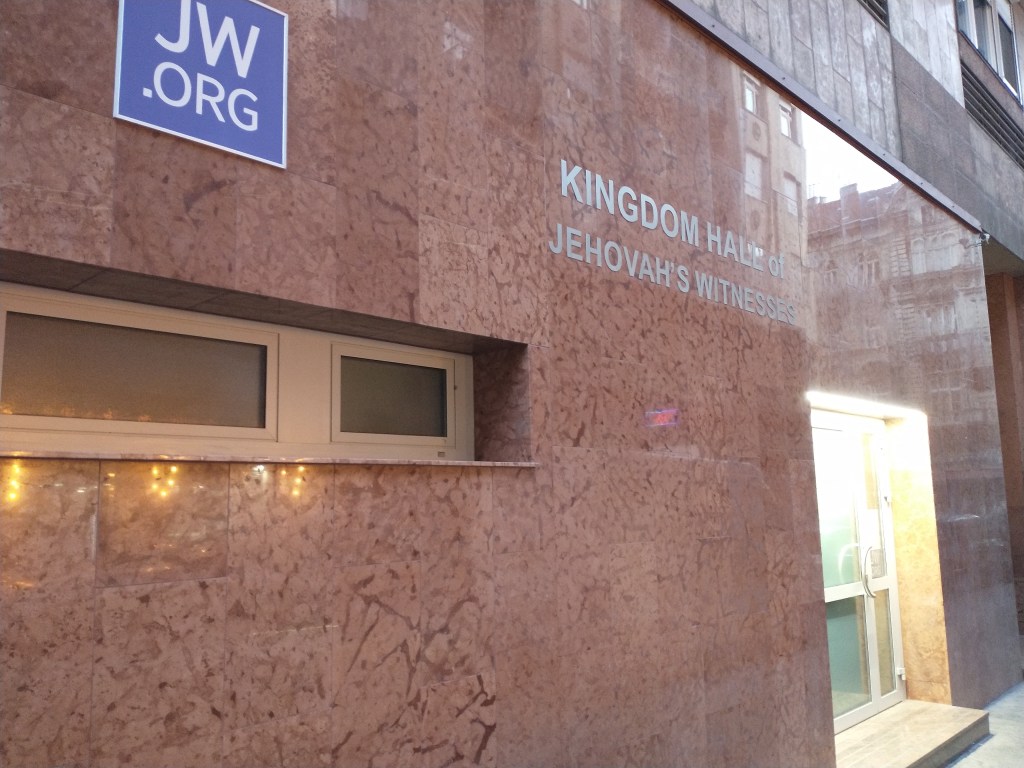
Side note #1: In all cities I’ve visited on this trip so far (Prague, Wrocław, Krakow, Bratislava, and Budapest), I’ve seen trios of Jehovah’s Witnesses offering their information and documentation to passersby. Not what I expected, especially in Catholic-dominated Poland. Yet another American export, though I doubt it’s as popular as McDonald’s or KFC, and it’s certainly not as upbeat in its messaging (unless the imminent destruction of the world at Armageddon is your cup of tea).
Side note #2: I recently visited the Hungarian National Museum, but instead of viewing their permanent exhibit, I paid to visit the temporary World Press Photo exhibit (which Sofia says she saw last year during her visit), which “recognizes and celebrates the best photojournalism and documentary photography produced over the last year.” It was very moving, and honestly a bit disturbing. Where are we heading as a species? Anyway, they had a Reporters Without Borders display which I found interesting. So I thought I’d share their press freedom map for those interested:
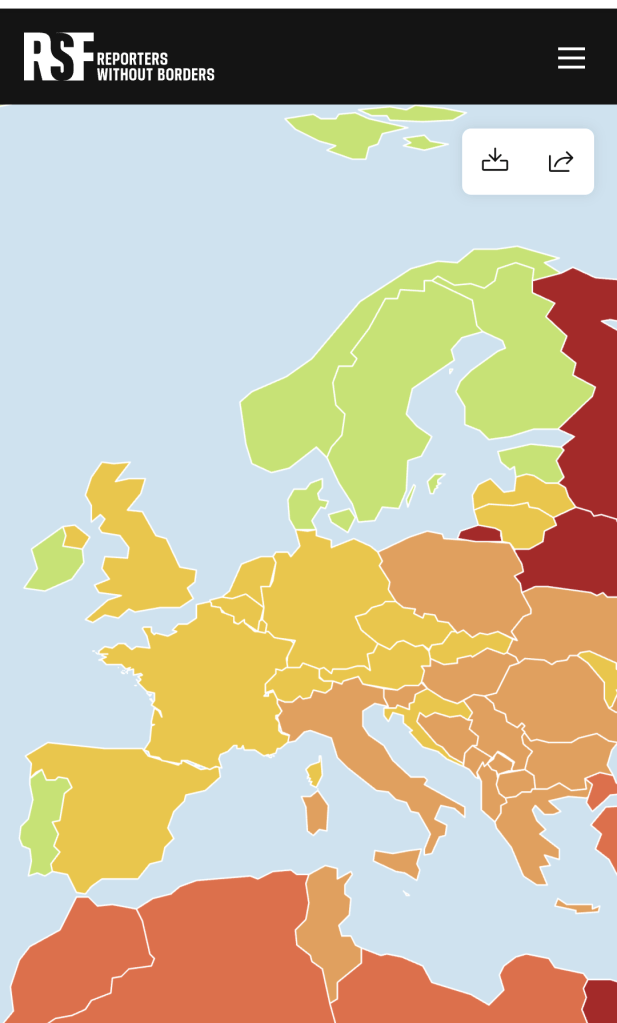
Green is good, yellow is satisfactory, light orange is problematic, dark orange is difficult, and dark red is very serious. So Portugal is good; Czechia, Slovakia, and Croatia are satisfactory; but Poland and Hungary are problematic; and Russia is very serious. (The US is “satisfactory”.)
More side notes (Budapest is the most interesting city I’ve visited in a long time, and I’m only telling you about a fraction of the things I’m noting):
There’s normally a 10 percent service charge at restaurants included in the bill. This is not something we’ve seen elsewhere in central/eastern Europe. But, waitstaff actually smile and are friendly (vs many Slavic experiences).
The Hungarian language basically stands alone. The Magyars came here from Asia, and the only slightly related languages are Finnish and Estonian. English has more in common with Hindi than it does with Hungarian. I’m mostly clueless here, though I finally learned the word for thank you, which folks seem to appreciate.
The Hungarians apparently have embraced American culture more than those in the Slavic countries, at least according to my personal experiences. At a brewery, they were playing great Motown tunes, and then as I wrote this post from an excellent Hungarian restaurant while eating delicious chicken paprikas and dumplings, and drinking an excellent Hungarian wine, they were playing rap music discussing different types of “niggas” (I quote), followed by a Jefferson Starship classic. Haha. You never know what you’re gonna get!
Today’s limerick:
Try a ruin pub while in Budapest
There's beer, music, and more - it's a real fest
Though one should perhaps fear
That danger is quite near
Buildings' weaknesses are put to the test.
Today’s dad joke: What’s a hair that is plucked from near the eye of a Budapest demon?
Hungarian ghoul-lash!
Today’s travel quote:
We live in a wonderful world that is full of beauty, charm and adventure. There is no end to the adventures we can have if only we seek them with our eyes open.
Jawaharlal Nehru

 Major Meander
Those ruin pubs look creepy and probably fun for a big party. What a unique and interesting place! It’s always funny to me too, sitting in a coffee shop abroad hearing foreign languages and at the same time hearing American music.
Who knew that West Asheville had a “ruin pub” vibe? I didn’t know such a thing existed, but I definitely see the resemblance!
Szimpla Kert is both funky and eerie. It reminds me a bit of the Fat Pelican in Carolina Beach on steroids! Both have a warren of rooms inside, an eclectic courtyard outside, and look as if they should be condemned.
I still haven’t been to Fat Pelican – I need to check it out the next time I’m in CB.