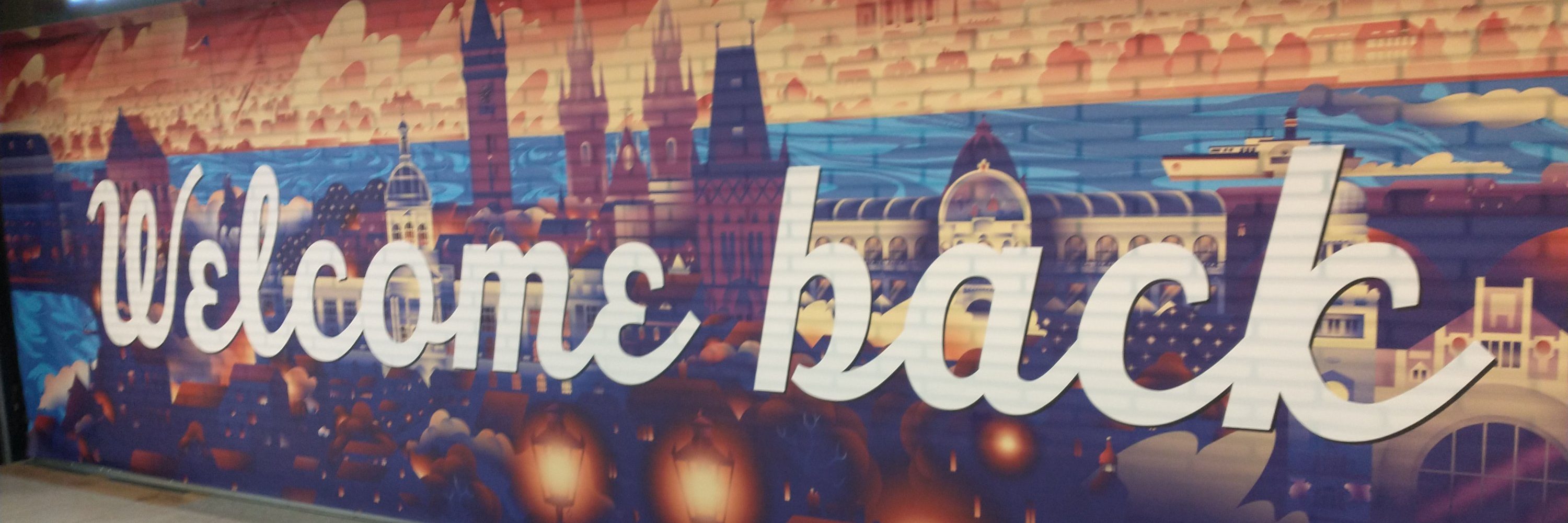
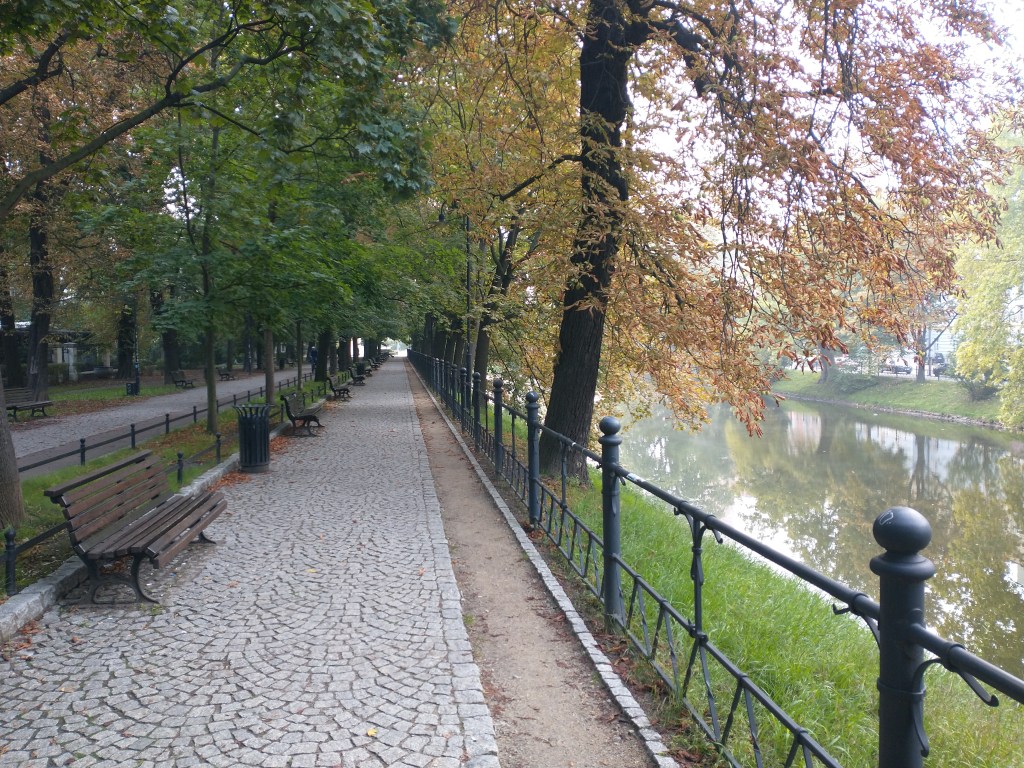
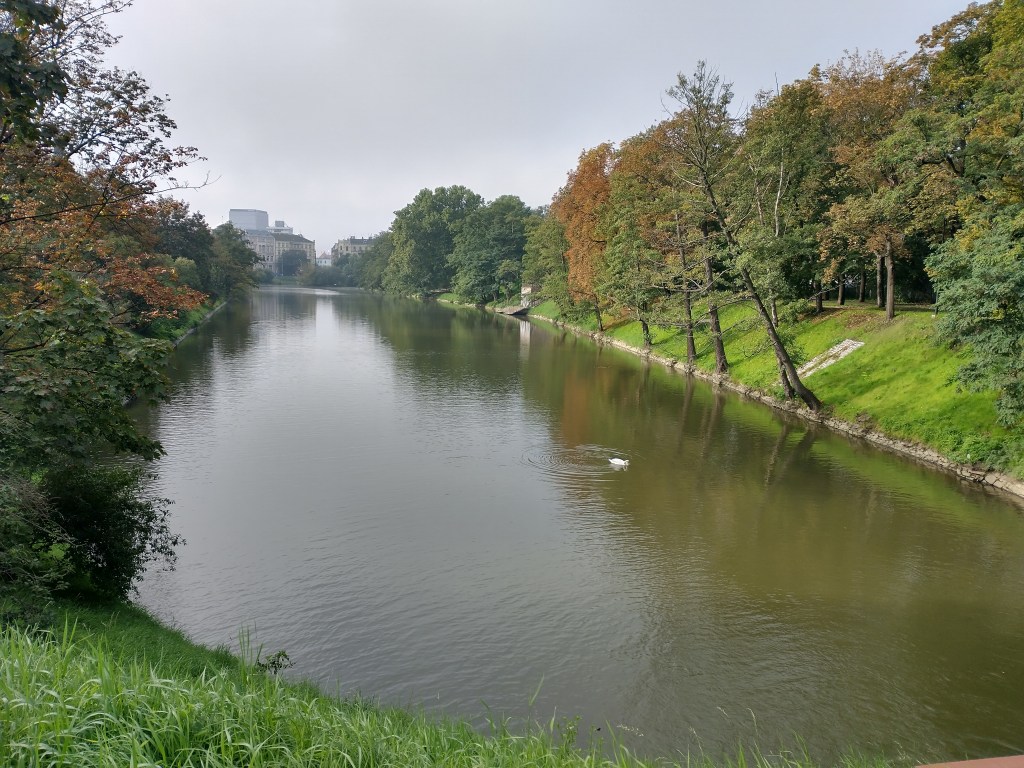
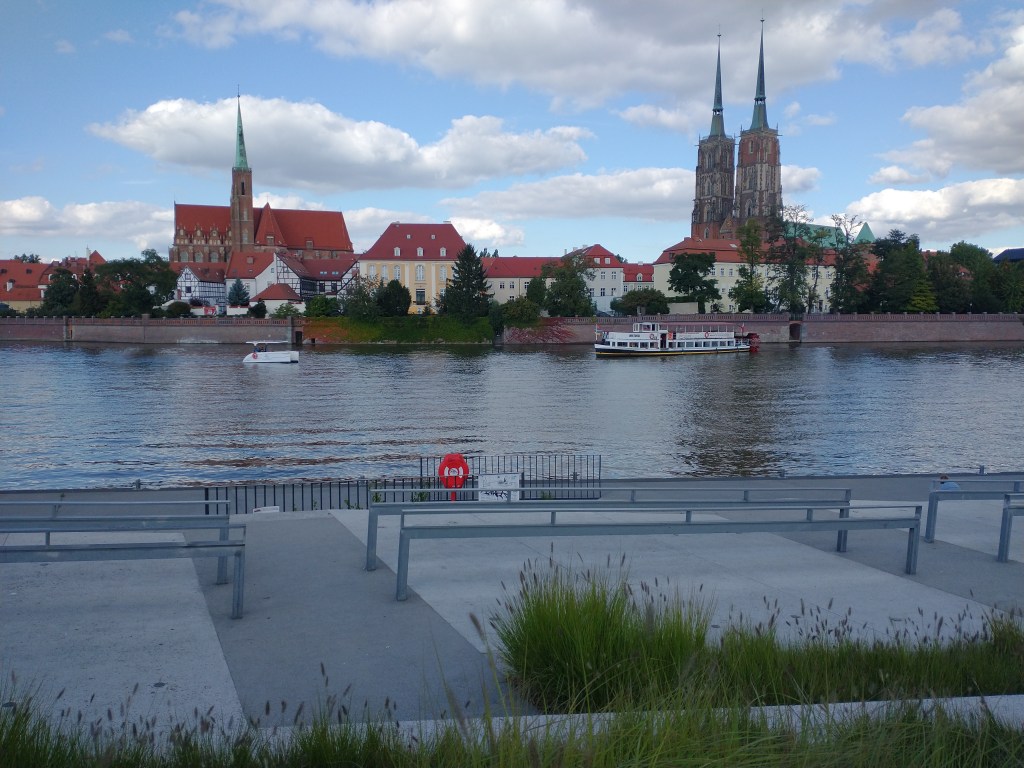
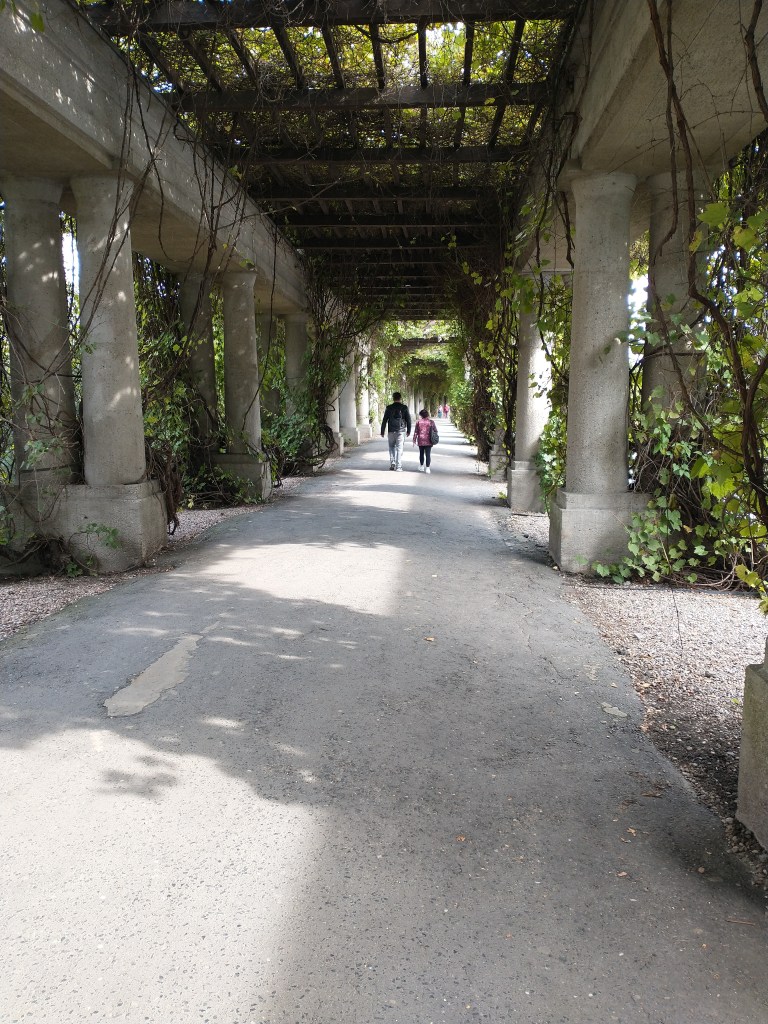
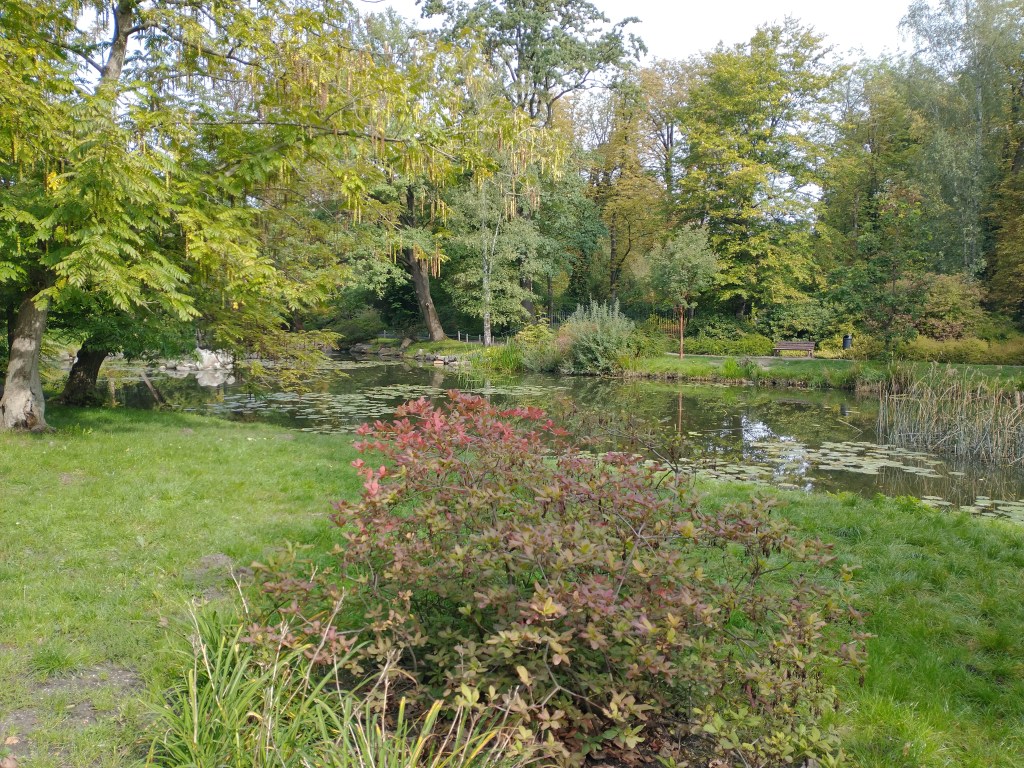
The river Oder passes through the middle of Wrocław, and along its banks are many nice parks. Additionally, there are several other parks around the city, including a couple of very large ones. While Wrocław itself is mostly pretty and not industrial or gritty, it’s still refreshing to get out into green spaces with loads of trees. The streets of this city are markedly unlittered, and the parks too are well maintained.
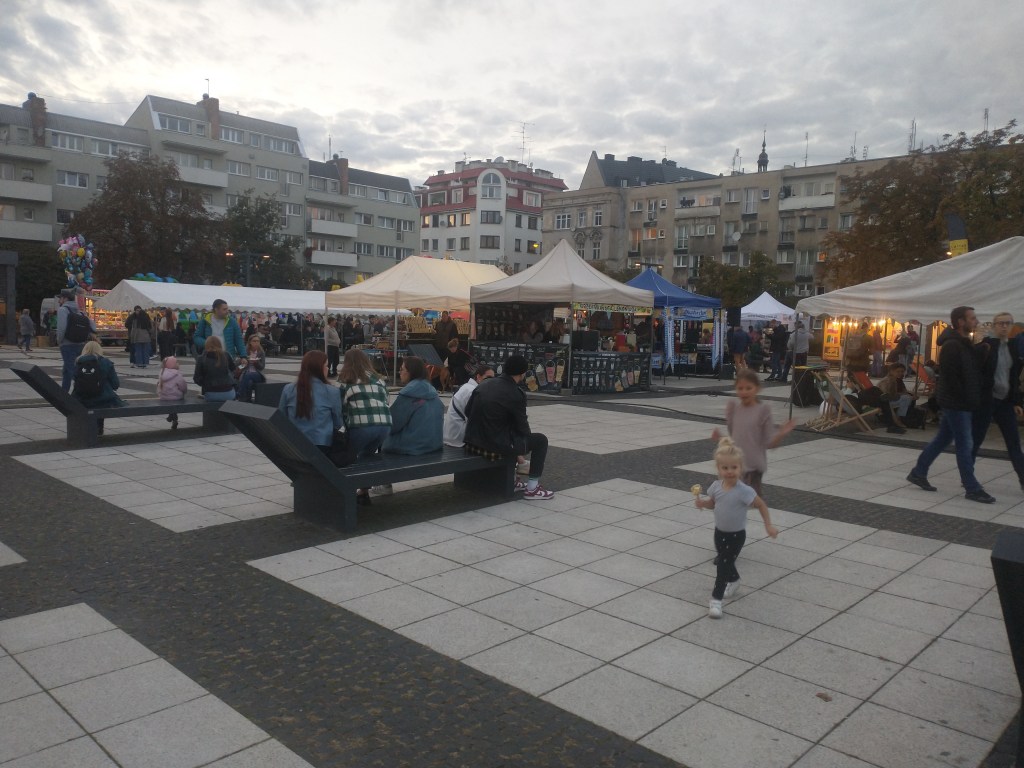
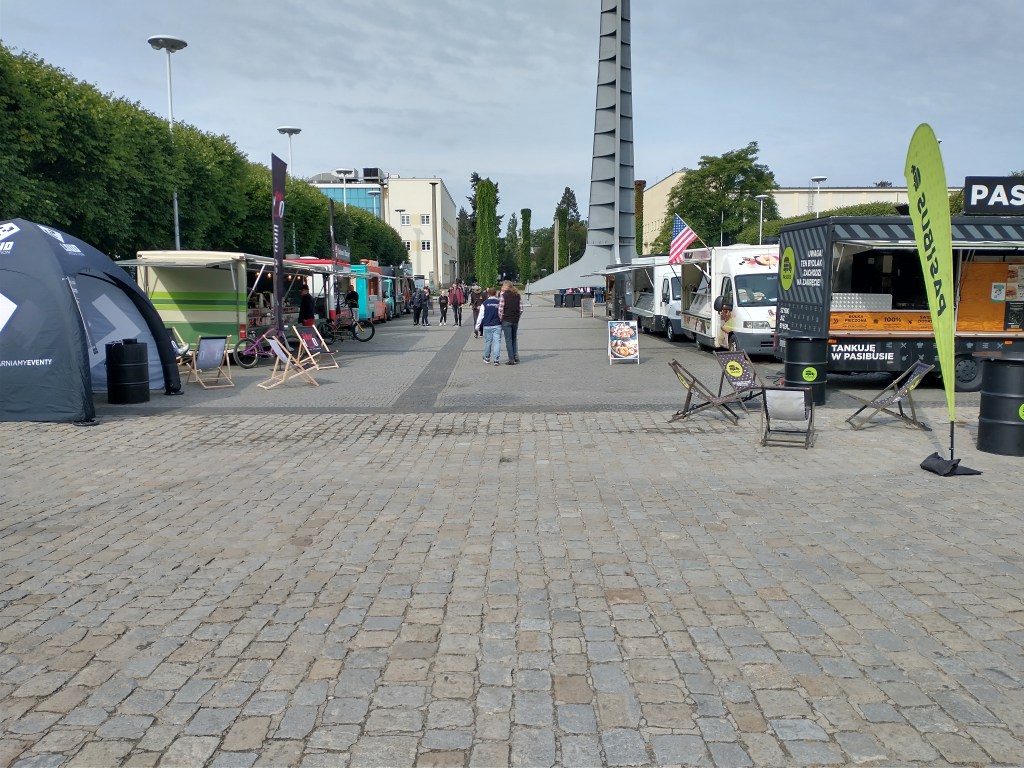
One evening I accidentally found a brewery and food truck festival – $2.70 beers and $5-6 meals were on offer. Wrocław has a flourishing and diverse beer scene, much to my surprise. I think that most traditional Polish beer was historically poorly-flavored swill, and the Poles in general really seem to like the US (like we found in Ireland), so they’ve gone all-in on craft beer. There are breweries all over town, and burger and pizza places tend to offer several varieties of craft beers on tap, just like in Asheville. I found a brewery with 15 beers and 1 cider on tap, and drank a 3.5% abv stout. They know how to go low here. The bartender was nice and gave me a stamp card to eventually earn a free beer! I don’t believe you can do that in NC! In Prague, on the other hand, they’ve got well-established pilsner breweries such that they don’t seem to feel much of a need to innovate anymore, so the craft brewery community is miniscule there.
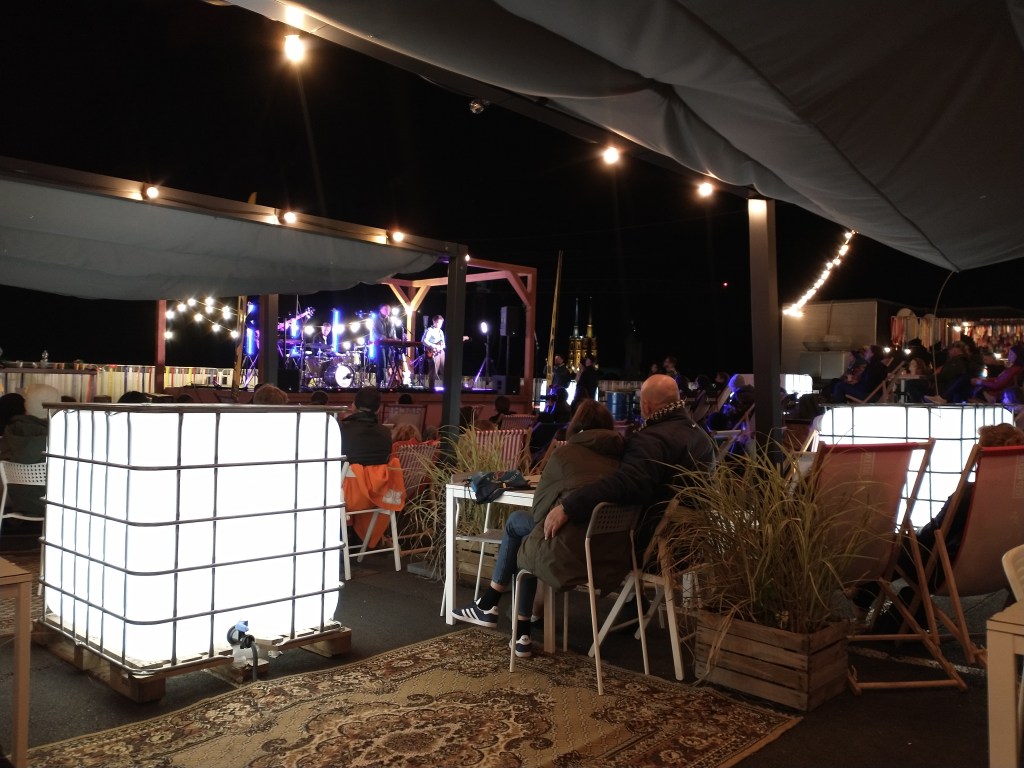
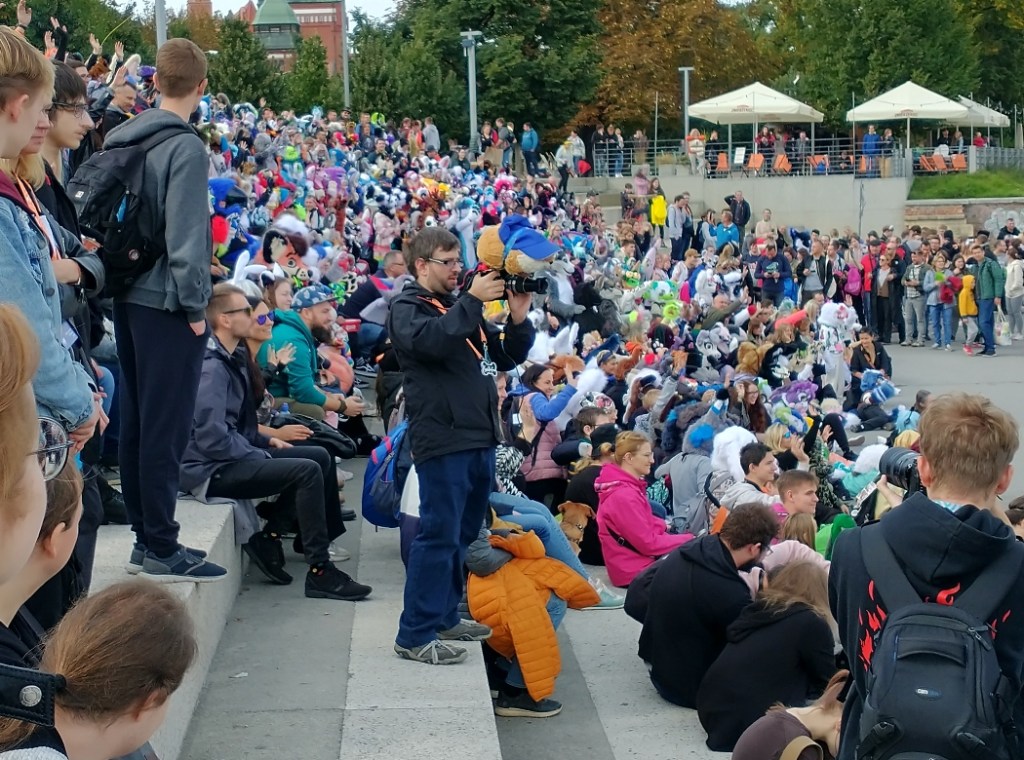
That night I went to a concert with a Polish band singing songs in Polish. And the next day I found yet another food truck cluster in another part of town. Later I ran into a large gathering of people dressed up in animal costumes, many head to toe. I never figured out what that was about – sometimes it’s nice to just live with mystery.
Plenty of events in this city on the weekend, wow!

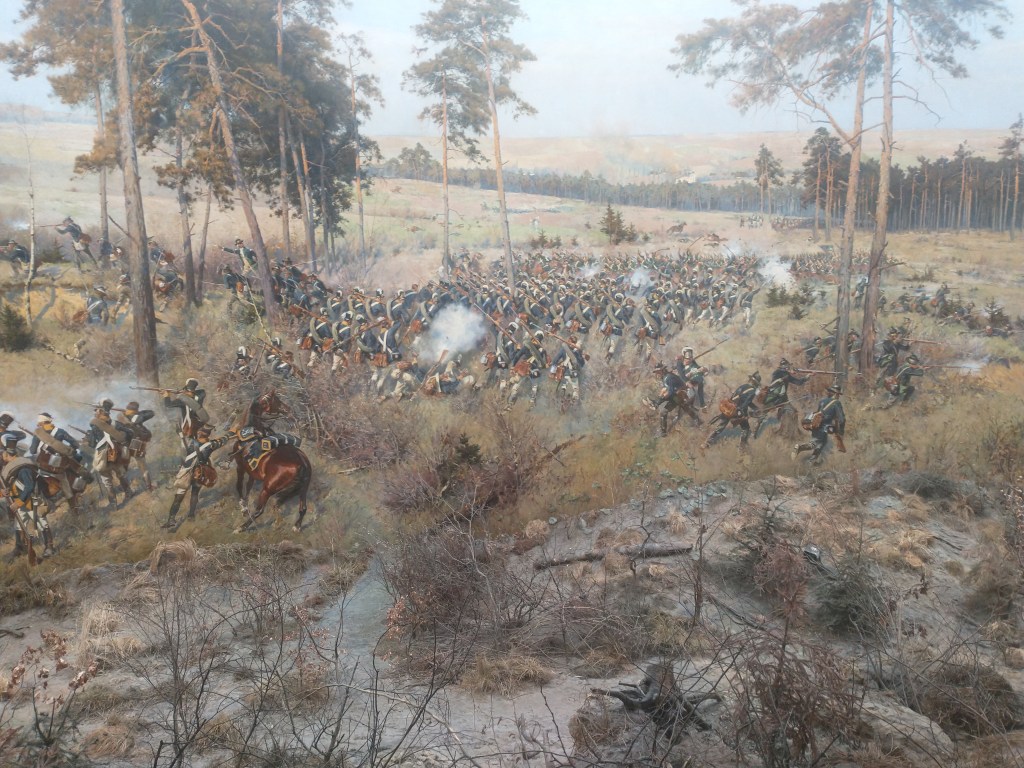
From what I’ve read, and I believe it based on the crowds, the museum housing the Panorama of the Battle of Racławice is the most popular tourist attraction in Wrocław. The panorama is a huge “cycloramic” (it’s in a cylinder) painting depicting this battle in 1794 when Polish insurrectionist forces (including peasant volunteers armed with scythes) defeated the Russian army. In 1791 Poles put together Europe’s first democratic constitution, which was the world’s second, after the US Constitution. But this was too much for the mighty surrounding powers, and Poland was not on the European map again until 1918! Poland had lost its independence and had been divided up into three parts between Prussia, Austria, and Russia, and so this 1794 victory meant a lot, even though it didn’t result in independence. I’m just guessing here, but I bet that this panorama is even more popular than ever in 2022 given the situation in Ukraine.
It was painted in 1894 to commemorate the 100th anniversary of this great victory, and took nine months to complete. It’s 114m (374 feet) long and 15m (49 feet) high, and used 750kg (1650 pounds) of paint!! Mom, can you imagine painting that? How long would it take you? But it’s not just a painting – panoramic perspective is used to introduce depth, and there’s also added lighting and scenography constructed in front of the picture make it look multidimensional.
Side note: I’ve seen this in many places, where old Covid rules continue to be prominently placed online and/or in the building, but without these Covid rules actually being in effect anymore: https://visitwroclaw.eu/en/place/panorama-raclawicka-wroclaw-1


The Poles I’ve met seem a bit friendlier than Prague-based Czechs, but their English is typically pretty darn poor, so it’s hard to tell. I’ve not yet found a single Polish person who understood everything I said, and I’m trying to speak slowly and clearly. So conversations are usually naturally brief, even at the tourist information center. I recall that when we lived in Sweden, I could understand the non-natives’ Swedish much better than I could understand native Swedes’ Swedish. I believe it was a combination of speaking slower and using more common words and phrases, without idioms. Similarly, I notice that Polish people understand foreigners’ English better than mine – me being a native English speaker makes it more difficult!
But the folks here that I say even a little Polish to seem genuinely appreciative – they smile or even chuckle a bit. Well, maybe they’re just getting a good laugh at my pronunciation, and for that they’re appreciative! Also, if I say thank you in Polish, they reply. You know, like if you say “gracias” in Spanish, you’ll get a reply like “de nada”, or in German a “danke” elicits a “bitte” or the like. Not so in Czech – in my three months there, I’ve never had someone reply when I say thank you in Czech. I believe I’m saying it correctly. Maybe they don’t typically reply to given thanks? I don’t know. Just an interesting anomaly, I feel.
Jeff, remember the three Polish phrases we learned for our Krakow trip many years ago? I’ve pulled them back out for use here, and then added goodbye as well, which sounds almost exactly the same as it’s said in Croatia! I’m hundreds of miles from Croatia, and yet they use the same phrase as Poles. You just never know – I suppose this is one of those things that makes learning the next language easier (my recent study of Portuguese is made much simpler by my knowledge of Spanish, for example).
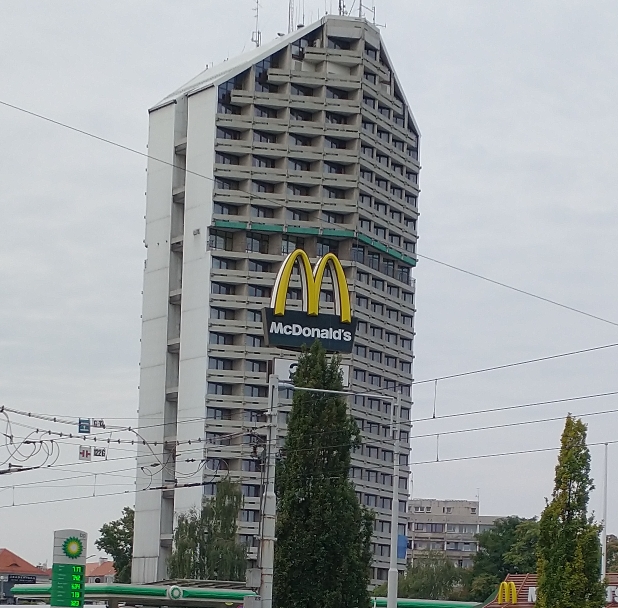
Bonus side note: Ever seen a black (instead of red) McDonald’s sign before? You have now:
Today’s dad joke: What do you call a person from Warsaw and a fellow from Wrocław who are very different from one another?
Poler opposites!
Today’s travel quote:
The traveler sees what he sees. The tourist sees what he has come to see.
G. K. Chesterton

 Major Meander
The cyclorama sounds amazing. You really seem to be taking advantage of everything Wroclaw has to offer.
I’m so enjoying reading your posts, learning and traveling vicariously through all your pics. Loved today’s quote, also. Thanks, Scott!
I’m glad, Joe – thanks for reading!
Jeff has often quoted those Polish phrases to me through the years, haha. Also – a battle with scythes? That sounds incredibly unpleasant to be a part of.
Yeah, it’s like that old saying: don’t bring a scythe to a gunfight!
Dwa piwa proszę! I recall fondly me trying to order beers at one place (likely after a few) and the beerkeep thanking me for my attempt at ordering in Polish but kindly letting me know that I said something close to gibberish.
Ha ha! I believe that sometimes you and I said goodbye upon arrival, or something like that. I’ve done that again this year – I went into a Croatian convenience store and wished the cashier a friendly goodbye. Ha! And now in Slovakia I often say Polish expressions. At the Swedish conversation group last night (see today’s post), I got so confused that I kept saying things to the Slovak server in Swedish – needless to say, she didn’t understand. Not only do I mangle foreign languages, I often use the wrong ones anyway! I notice that people from other foreign countries don’t tend to bother even trying Polish or Slovak. Probably the safest way to go – just speak English.
Hehe yes, I think it was something like: “Goodbye, I’d like two beers you’re welcome.”
One tip you taught me in Germany is to learn the phrase “that’s all” for simple transactions at a checkout counter since you can’t be sure if they’re asking something akin to “is there anything else you need” or “are you all set” where a yes/no could send you down a merry chase. I guess ultimately we can usually lean on English being the lingua “franca” but I agree with your desire to at least interact in the local language for the little stuff.